Largest Oil Reserves in the World: A Ranking of Leaders, Structure of Global Reserves, and the Impact of Reserves on the Market and Investment Decisions of Global Investors.
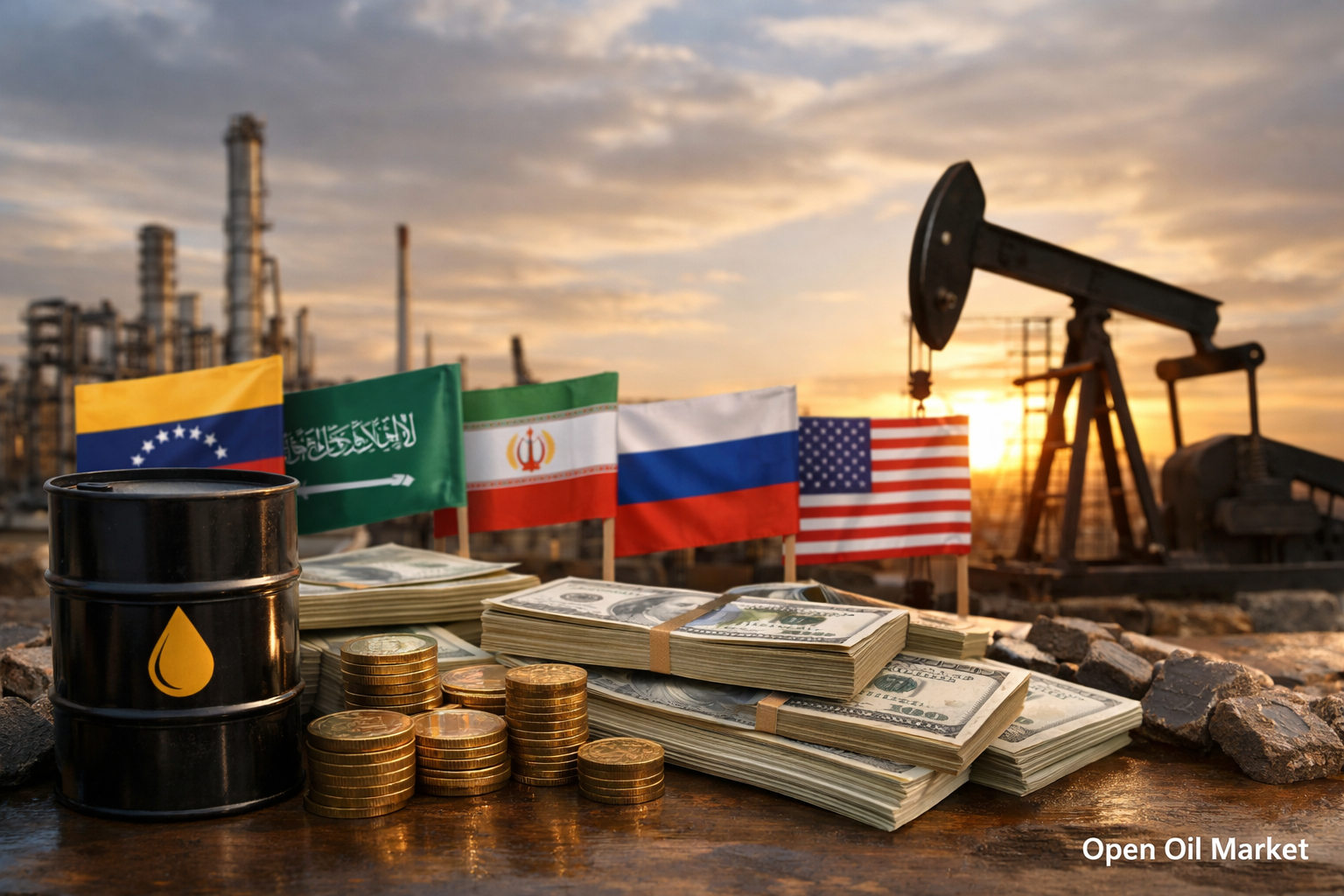
Despite the expansion of renewable energy, oil remains a key resource in the global economy. As of the end of 2023, total proven oil reserves worldwide are estimated at approximately 1.7 trillion barrels. Over 90% of these reserves are concentrated in a few countries, primarily Venezuela, Saudi Arabia, Iran, and other oil-producing nations. This uneven geographical distribution renders the global oil market particularly sensitive to regional upheavals.
Global Proven Oil Reserves
The world’s proven oil reserves amount to around 1.7–1.8 trillion barrels. Venezuela tops the global rankings with reserves of approximately 302 billion barrels (nearly 19% of the world total), followed by Saudi Arabia at about 266 billion barrels. Other notable countries include Canada, Iran, Iraq, and various other oil-producing nations, each possessing significant resources. This concentration of resources means that events in these countries can substantially influence the global oil market.
Leaders in Proven Oil Reserves
The following countries stand out by volume of proven oil reserves:
- Venezuela — approximately 302 billion barrels.
- Saudi Arabia — approximately 266 billion barrels.
- Canada — about 170 billion barrels (including oil sands).
- Iran — around 157 billion barrels.
- Iraq — roughly 145 billion barrels.
- Kuwait — close to 102 billion barrels.
- UAE — about 98 billion barrels.
- Russia — approximately 80 billion barrels.
- Kazakhstan — about 40 billion barrels.
- USA — approximately 35 billion barrels.
These estimates are based on international statistical reviews and may vary slightly. The inclusion of heavy oil and oil sands significantly increases the estimates for Canada, the USA, and Venezuela.
Regional Distribution and the Role of OPEC
Oil reserves are distributed very unevenly across regions:
- OPEC Countries (Middle East): more than 70% of global reserves. Leading players include Saudi Arabia, Iran, Iraq, Kuwait, and the UAE — countries with low extraction costs and large, easily accessible fields.
- Latin America: the largest reserve in the region is found in Venezuela (~19% of global reserves). Beyond Venezuela, significant reserves exist in Brazil and Mexico.
- North America: substantial reserves in Canada (oil sands) and the USA. In the USA, the increase in reserves in recent years is linked to the development of shale oil.
- Russia and CIS: Russia ranks among the top ten globally in reserves (~80 billion barrels). Kazakhstan and other Central Asian countries hold reserves in the tens of billions of barrels.
- Africa: substantial reserves in Libya and Nigeria (each in the tens of billions of barrels), though extraction there is heavily dependent on political stability and infrastructure.
Characteristics of Reserves Quality and Extraction
The characteristics and accessibility of oil reserves vary significantly:
- Heavy Oil and Sands: Venezuela, Canada, and the USA predominantly feature hard-to-extract reserves (bituminous sands and heavy oil), which increase extraction costs.
- Light Oil: The Middle East and Iraq primarily contain light oil, which is cheaper and easier to extract.
- Political Factors: Sanctions and instability (for example, Venezuela, Nigeria, Iran) limit the ability to fully develop fields even with large volumes of reserves.
- Extraction Technologies: Modern techniques (fracking, thermal recovery of sands) have significantly boosted proven reserves in Canada and the USA in recent years.
- Environmental and Economic Conditions: In developed nations, compliance with environmental standards and costs of disposal impact the profitability of extracting reserves.
Trends and Dynamics of Reserves Estimates
Proven oil reserves are growing very slowly and mainly due to new discoveries and technological shifts:
- New Fields: Major discoveries (such as in Brazil or Kazakhstan) can increase reserves. For instance, in 2023, Brazil's reserves grew by nearly 7% due to new projects.
- Technologies and Prices: At high prices, previously unprofitable resources (shale and deep-water fields) may become economically viable and classified as proven.
- Extraction Resilience: Despite annual withdrawals, global reserves remain about the same level — the exploration and accounting of new reserves balances extraction.
Investment Aspects
For investors, proven oil reserves are an important indicator of the potential of oil assets, though it is necessary to consider:
- Extraction Potential: Large reserves signify a long-term resource for business. Countries with low extraction costs (Saudi Arabia, UAE) remain attractive for production.
- Risks and Stability: Political instability or sanctions (Venezuela, Iran, Libya) can slow projects, even if reserves are large.
- Technological Requirements: Extracting heavy oil and sands requires significant investments in technology and infrastructure. Investors assess the market's readiness for such investments.
- Global Factors: Decisions by OPEC+ and leading producing countries (such as Russia and the USA) set price trends for oil. Investors closely monitor the policies of these players.
- Diversification of Assets: Spreading investments across different regions (Middle East, North America, Africa, etc.) helps balance risks and take advantage of regional benefits.
Conclusions and Prospects
Proven oil reserves are a key indicator of long-term opportunities in the sector. Although global energy policy is gradually shifting towards renewable energy, oil will remain a crucial resource for decades to come. Investors must analyse not only the absolute volumes of reserves but also the economic accessibility of fields, technological possibilities for extraction, and the geopolitical situation in export countries. In total, large oil reserves enhance energy security for nations and provide significant competitive advantages in the global market.