Pax Americana: How the Transformation of the “American World” is Changing Global Investors’ Strategies
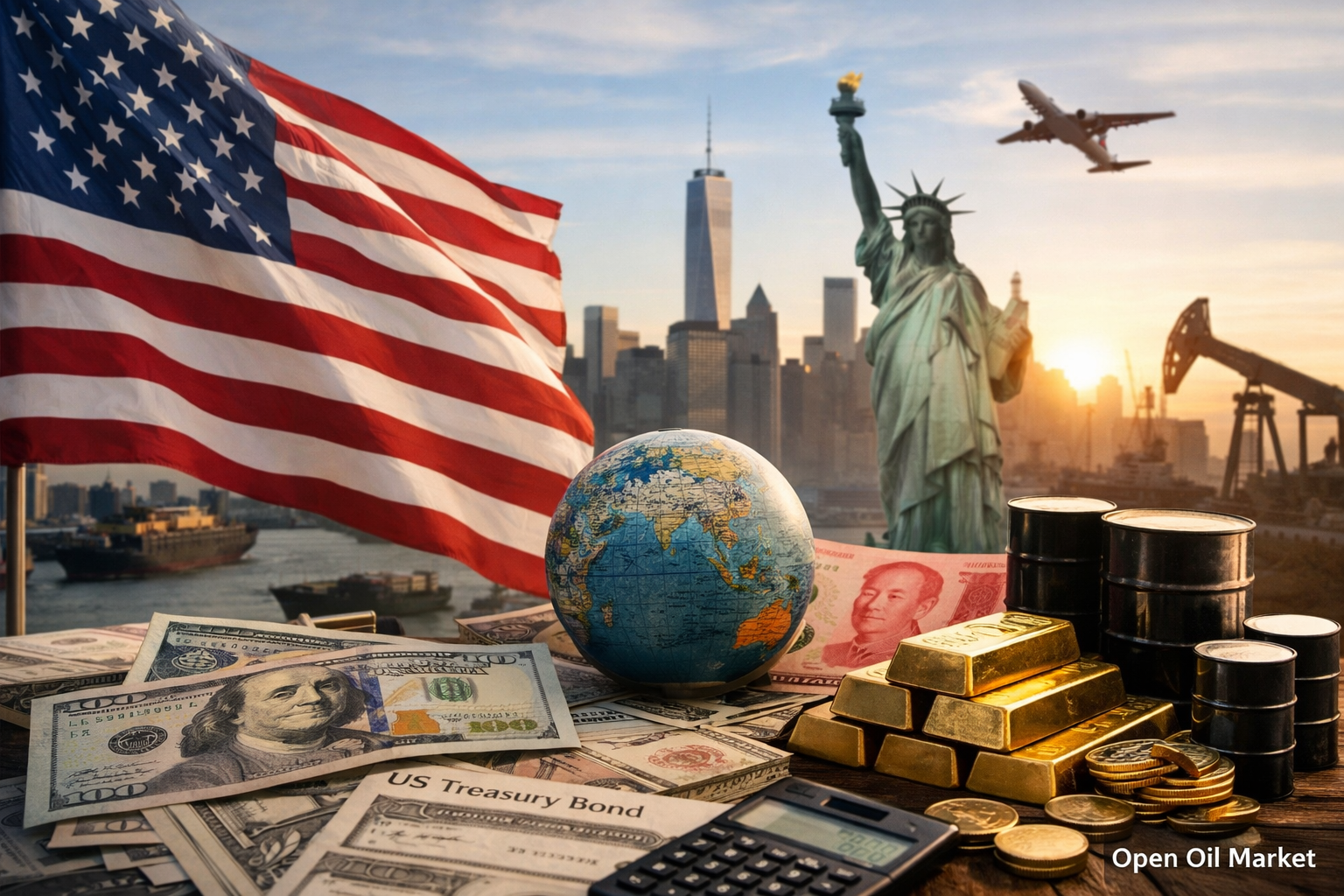
Pax Americana is not only a metaphor for the “American world” after World War II, but also a practical framework of the global order where the United States served as the key military, economic, and financial centre. For investors, this order signified relative predictability: the dominance of the dollar, the resilience of American institutions, and a developed system of international trade and security.
Based on post-war agreements, a system emerged where the dollar became the primary global reserve currency and the United States served as an anchor for global capitalisation, liquidity, and cross-border capital flows. Today, as many speak of the "end of Pax Americana" and a transition to a multipolar world, it is crucial for investors to understand which elements of this framework remain intact and which are irreversibly changing.
From Bretton Woods to Hyperglobalisation: The Construction of the “American World”
Following 1945, the United States offered the world an institutional framework: the Bretton Woods system, international financial organisations, trade rules, and a network of military alliances. For markets, this meant:
- a fixed, and later a managed-floating role for the dollar in international transactions;
- the dominance of American Treasury bonds as a fundamental “risk-free” asset;
- the rise of transnational corporations and an increase in global trade;
- a security infrastructure that reduced geopolitical risks for investments in developed economies.
For global investors, the second half of the 20th century was an era when the “American world” established both the rules of the game and the benchmark for returns: from US Treasury bonds to the listing of the largest companies on American exchanges.
The Dollar as the Heart of Pax Americana
The dollar emerged as a key instrument of Pax Americana, serving as the global reserve currency and the primary medium for international transactions. A significant portion of global trade in commodities and energy resources, a substantial share of credit and debt contracts, as well as the currency reserves of central banks are traditionally denominated in dollars.
For investors, this created several enduring mechanisms:
- Dollar liquidity as the primary driver of global risk cycles ("risk-on / risk-off").
- American Treasuries as the basic reserve asset and a benchmark for sovereign and corporate bonds.
- The dollar funding system — from petrodollars to the Eurodollar market and global dollar swap lines.
Even today, despite gradual diversification of reserves and the rhetoric of de-dollarisation, the dollar remains the dominant currency in the global financial order, with the American debt market being a key attraction for world capital.
Geopolitical Cracks: Sanctions, Conflicts, and Parallel Economic Contours
The intensification of sanction policies, the rise in regional conflicts, and the growing competition between the United States and other centres of power gradually undermine the universality of the "American world." The tools of Pax Americana — the dollar, payment infrastructure, and control over access to capital — are increasingly being used for geopolitical purposes.
For several countries, this has spurred the creation of parallel economic contours: transitioning to transactions in national currencies, establishing alternative payment and clearing systems, and enhancing the role of gold and commodities as stores of value. For investors, this signals an increased complexity in the risk landscape: geopolitics increasingly directly affects access to markets, transactions, and capital repatriation.
Multipolarity and De-dollarisation: Is the End of Pax Americana Real?
The debate about the "end of Pax Americana" is closely linked to the rising influence of other power centres — such as China, major emerging economies, and regional blocs. In practice, this is evident in:
- the expansion of cooperation formats like BRICS and regional currency agreements;
- a gradual increase in the share of national currencies in bilateral trade;
- the development of alternative payment systems and central bank digital currencies;
- the enhanced role of gold and “hard assets” in the reserves of a number of countries.
However, a complete replacement of Pax Americana with a new global architecture does not seem to be on the horizon. Rather, we are witnessing a transition to a multipolar system where the dollar retains its core influence, while regional power centres and competing currency and technological blocs are gaining strength.
The Role of the Dollar in Reserves and Its Evolution: Signals for Investors
The dollar's share of the foreign currency reserves of world central banks is gradually declining, but it remains dominant. Concurrently, interest in gold and “non-traditional” currencies is growing. For investors, this provides several important signals:
- The risk of US policy — budget deficits, debt dynamics, and trade conflicts are increasingly impacting the perception of the dollar as an "absolutely safe" asset.
- The alliance and security factor — the willingness of the US to support the alliance system and security guarantees is viewed as part of the fundamental support for the dollar's status.
- A slow, rather than a shock shift — the redistribution of reserves is evolving, which reduces the risk of a "currency collapse," but increases the importance of long-term currency planning for portfolios.
For long-term investors, it is vital to monitor not only the US macroeconomy but also the geopolitical trajectory of the country: changes in alliances, military commitments, and foreign policy can accelerate shifts in the world’s reserve structure.
Investment Consequences: Currency Risks and the Re-examination of Global Capital
The transformation of Pax Americana directly affects capital distribution, yield structure, and currency risks in portfolios:
- Currency risks. A more volatile dollar and strengthening regional currencies mean that “dollar neutrality” no longer guarantees risk reduction. Investors must more actively employ hedging and multi-currency strategies.
- The US government debt market. Increased uncertainty surrounding the dollar's status may lead to higher risk premiums on Treasuries and increased sensitivity of yields to political decisions.
- Reallocation to gold and real assets. The increase in gold reserves at central banks and the growing focus on commodity and infrastructure assets make these classes increasingly significant elements of diversification.
- Shifting geographical focus. The strengthening of regional blocs and local currency zones stimulates the growth of domestic capital markets in Asia, the Middle East, and other regions, opening new niches for investors.
Strategies for Investors in the Era of Transformation of the “American World”
The transition from classic Pax Americana to a more complex global architecture does not signal an immediate abandonment of the dollar and US assets. Rather, it indicates a change in the paradigm of risk management and diversification:
- Multi-currency approach. The formation of portfolios that take into account several key currencies (dollar, euro, yen, regional currencies) and conscious management of currency exposure.
- The growing role of real and alternative assets. Gold, commodity assets, infrastructure, and private capital are gaining additional importance as protection against geopolitical and currency shocks.
- Geopolitical risk management. Integrated analysis of sanction risks, the resilience of payment infrastructure, and capital repatriation opportunities in the investment process.
- Focus on institutional quality. In a multipolar world, the value of jurisdictions with predictable legal regimes, strong institutions, and reliable investor protections is increasing.
For global investors, the key question today is not simply whether "Pax Americana has ended," but how quickly and in what direction the global order will change. The answer to this question will determine which currencies, markets, and asset classes will form the core of portfolios in the next decade.
10-15 Year Horizon: Scenarios for the “American World” and Global Markets
Over the next 10-15 years, several fundamental scenarios can be identified:
- Soft transformation. The dollar remains the dominant reserve currency, but its share gradually declines; regional power centres strengthen, and investors adapt through more complex diversification strategies.
- Accelerated fragmentation. Intensifying geopolitical conflicts and trade wars lead to the rapid formation of competing currency and technological blocs, which increase volatility and liquidity risks.
- A technological leap. Widespread adoption of central bank digital currencies and new payment systems changes the infrastructure of global transactions but does not eliminate the need for a “anchor” currency and reliable institutions.
For investors, the main takeaway is simple: Pax Americana may cease to be an obvious foundation of the world, but its inertia remains powerful. The strategy for the years ahead must combine an understanding of the structural role of the United States and the dollar with a readiness to manage risks in a multipolar and increasingly fragmented financial system.