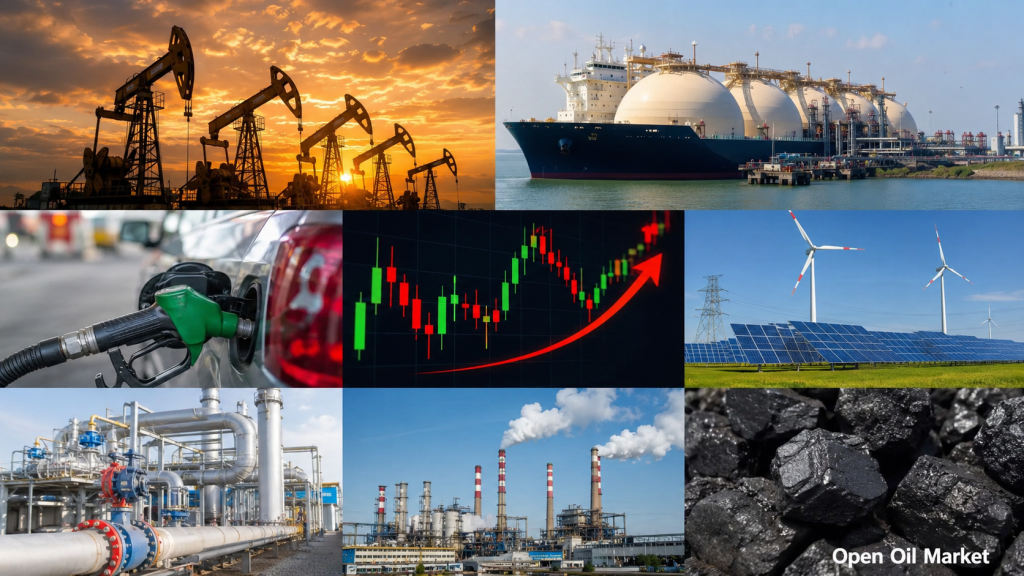
The Global Fuel and Energy Complex on 13 May 2026 Remains Under Pressure from Geopolitical Risks Surrounding the Strait of Hormuz: Oil Holds Above $100, Competition for LNG Intensifies, Coal's Role Strengthens, and Refining and Power Generation Gain Significance
The global fuel and energy complex enters Wednesday, 13 May 2026, amid high volatility. The primary concern for investors, market participants in the fuel and energy sector, oil companies, refineries, and traders is the persistent tension surrounding the Strait of Hormuz. This factor simultaneously impacts oil, gas, LNG, petroleum products, electricity, coal, and investment in renewable energy sources (RES).
In a typical market phase, investors primarily analyse demand, production, inventories, and refining margins. However, the focus has shifted to physical supply availability. Brent crude remains above $100 per barrel, the LNG market is facing increased competition for cargoes, and Asian power generation is partially reverting to coal as a more reliable source of generation during gas shortages.
Key Topic of the Day: The Strait of Hormuz Remains a Critical Risk for Oil and Gas
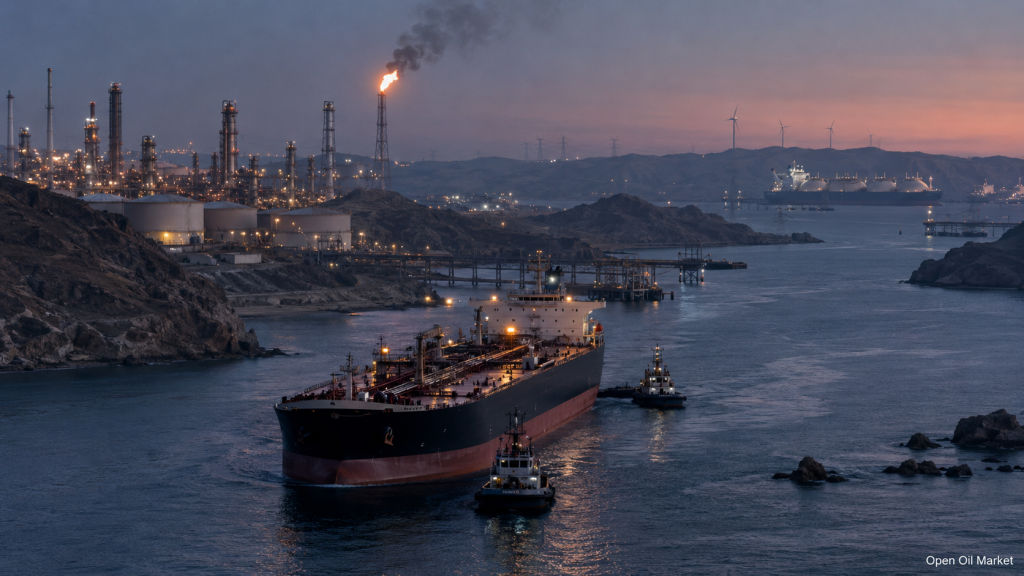
The Strait of Hormuz has again become a focal point on the global energy map. A significant portion of global flows of oil, petroleum products, and LNG transits through this route; therefore, any disruption in shipping quickly reflects on prices, insurance, freight rates, and the availability of crude for refineries.
For the fuel and energy sector, this means that energy security is once again as crucial as the price of a barrel. Investors are assessing not only the current oil price but also the likelihood of further supply reductions from the Middle East. In this environment, the risk premium remains included in the quotes for Brent, WTI, petroleum products, and LNG.
Oil: Brent Remains High, and the Market Awaits New Signals on Inventories
The oil market maintains a tense balance. Brent is trading near high levels, and WTI is also hovering around the psychologically important $100 per barrel mark. The main driver is concerns that supplies from the Middle East will recover slower than expected.
Three key factors are crucial for oil companies and investors:
- the continuation of supply disruptions through the Strait of Hormuz;
- the reduction of global oil inventories in the second quarter of 2026;
- the rising costs of logistics, insurance, and tanker freight.
High oil prices improve cash flows for upstream companies but simultaneously increase the risk of demand destruction. For consumers, refineries, and fuel companies, expensive oil means pressure on margins, increased working capital, and the need to manage inventories more cautiously.
OPEC, the Middle East, and the New Role of Reserve Capacities
Against the backdrop of disruptions in maritime supplies, the market is closely monitoring the reserve capacities of producers. Formally, additional oil volumes could alleviate shortages, but the key question is not just the extraction of a barrel but also the delivery to the consumer. Therefore, alternative routes, ports outside risk zones, and pipeline infrastructure gain significance.
For Gulf states, this enhances the strategic value of export routes bypassing narrow maritime passages. For buyers in Europe and Asia, it increases interest in diversifying suppliers. For investors, it makes companies with flexible logistics, access to multiple markets, and secure transport contracts more attractive.
Gas and LNG: Europe and Asia Compete for Flexible Supplies
The gas market also remains under the influence of the energy crisis. LNG has become a key balancing tool for Europe, Asia, and emerging markets. Amid risks in the Middle East, buyers are keen to secure summer and winter needs in advance, particularly regarding gas storage and preparation for the heating season.
In Europe, the demand for LNG is supported by the aim to build up inventories. In Asia, competition is intensifying due to the needs of Japan, South Korea, India, and other major importers. The USA continues to expand its export capacity, strengthening the role of American LNG in the global gas balance.
For investors, this implies increased focus on:
- LNG terminal operators;
- natural gas producers;
- shipping companies working with gas carriers;
- European and Asian energy companies with high reliance on imports.
Refined Products and Refineries: Margins Become Less Predictable
The refining sector is entering a complex phase. On one hand, high prices for petrol, diesel, jet fuel, and marine fuel can support refinery revenues. On the other hand, the sharp rise in crude oil prices is deteriorating refining economics, particularly for independent plants with limited access to cheap feedstock.
This is particularly sensitive for Asian refineries. Independent processors in China are facing a decline in margins due to expensive oil, weak domestic demand, and fuel export restrictions. This is a crucial indicator for the entire refined products market: if some refining processes reduce capacity, shortages of specific fuel types may intensify even with an ostensibly sufficient supply of crude oil.
For fuel companies and traders, the key indicators in the coming days will be:
- the capacity utilisation of refineries in China, the USA, India, and Europe;
- trends in gasoline, diesel, and jet fuel inventories;
- export restrictions and domestic price regulations for fuel;
- freight costs and tanker fleet availability.
Electricity and Coal: Asia Temporarily Strengthens Coal Generation
The electricity market is witnessing a reverse effect from the gas shortage. Major Asian LNG importers are increasing coal usage to decrease reliance on expensive gas and stabilise energy systems. For Japan and South Korea, this is particularly crucial, as both countries depend on energy imports and are sensitive to fluctuations in LNG prices.
In this context, coal once again serves as a resource of energy security. Despite long-term decarbonisation goals, in the short term, coal generation remains a tool for covering base load. This sustains demand for thermal coal in Asia and impacts exporters from Australia, Indonesia, South Africa, and other suppliers.
For investors, the coal sector remains contentious: while long-term it faces climate constraints, in the short term it receives support due to gas shortages, increasing grid loads, and the need for reliable generation.
Renewable Energy Sources, Grids, and Storage: The Energy Transition Accelerates but Requires Reserves
Renewable energy continues to be a strategic direction for the global fuel and energy complex. Solar and wind generation continue to attract investment as countries seek to reduce dependence on imported oil, gas, and coal. However, the current crisis demonstrates that mere RES is insufficient without grids, energy storage, and backup capacity.
The growing demand for electricity from data centres, artificial intelligence, industry, and the electrification of transport is creating additional pressure on energy systems. Therefore, the investment focus is shifting from merely installing new solar and wind capacities to comprehensive infrastructure:
- transmission and distribution grids;
- industrial batteries and energy storage systems;
- gas generation as a reserve for peak demand;
- digital management of energy consumption;
- long-term contracts for electricity supply.
This creates a broader market of opportunities for investors: not only in renewables but also in grids, storage systems, gas turbines, service companies, and equipment suppliers for the energy sector.
Market Geography: Who Wins and Who Bears the Main Risks
The global energy market is increasingly divided along regional lines. The Middle East remains the centre of supply and geopolitical risk. Europe focuses on gas storage, LNG, and reducing dependence on unstable routes. Asia vies for access to oil, gas, coal, and refined products. The USA is strengthening its role as an exporter of crude oil, LNG, and refined products while simultaneously confronting rising domestic fuel and electricity prices.
For oil and gas companies, the current situation presents opportunities in extraction, logistics, LNG, and trading. For industrial consumers, it increases costs. For refineries, it creates an uneven landscape: plants with access to cheap feedstock and export markets benefit, while independent refiners facing high procurement prices for oil are under pressure.
Key Considerations for Investors and Fuel and Energy Market Participants on 13 May 2026
On Wednesday, 13 May, key benchmarks for the oil, gas, electricity, renewable energy sources, coal, refined products, and refineries markets will hinge not only on quotations but also on signals regarding the physical balance of supplies. Investors should pay attention to several groups of factors.
- The Strait of Hormuz: any news regarding shipping, negotiations, and route security will directly impact Brent, WTI, LNG, and refined products.
- Oil and fuel inventories: a reduction in commercial inventories will heighten expectations of shortages and support prices.
- Refinery utilisation: a decrease in refining activity in Asia may alter the balance of gasoline, diesel, and jet fuel.
- LNG and gas: the competition between Europe and Asia for flexible supplies will determine gas and electricity prices.
- Coal and electricity: the rise in coal generation in Asia illustrates that energy security is temporarily prioritized over climate rhetoric.
- RES and grids: long-term investments will focus on solar energy, wind, storage systems, and modernising electrical grids.
The outlook for the fuel and energy market on 13 May 2026 is as follows: oil remains expensive due to the geopolitical premium, gas and LNG become instruments of strategic competition, coal temporarily strengthens its position in Asia, and the electricity sector is increasingly becoming a key area for investments. For global investors, this is not merely an energy crisis, but a test of the resilience of the entire model of supply, processing, and generation.