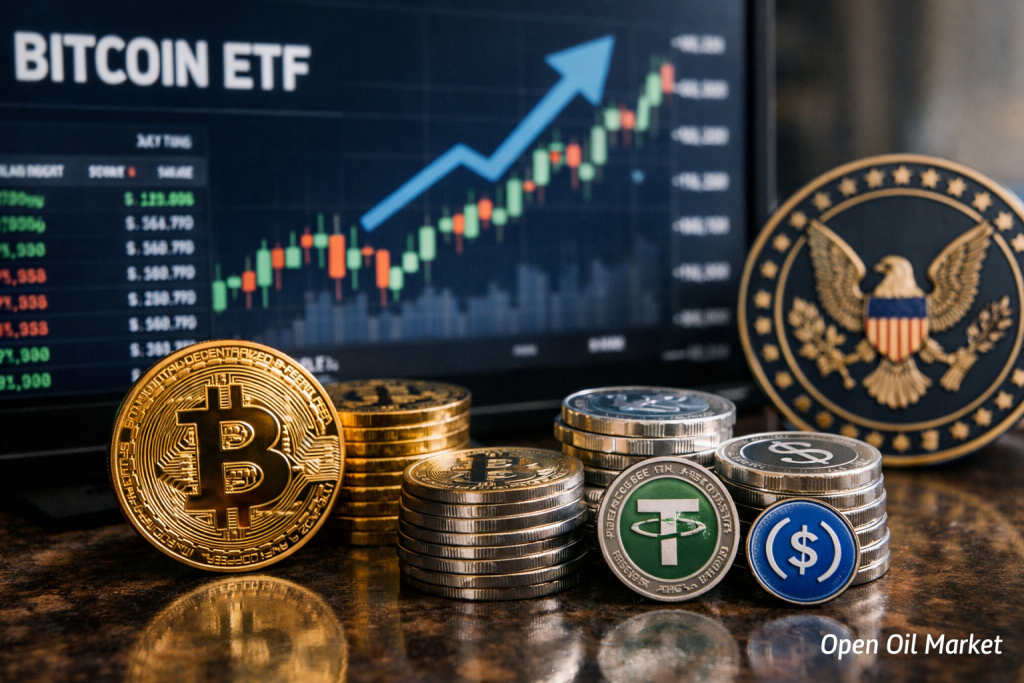
Cryptocurrency News, Saturday, 20 September 2025: Bitcoin Storms Towards $120,000, Altcoin Rally and Record Institutional Investment
As of the morning of 20 September 2025, the cryptocurrency market continues to exhibit a robust upward trend amidst a positive news backdrop. Bitcoin has once again approached the psychological barrier of $120,000, pushing the total market capitalisation of cryptocurrencies above $4.2 trillion. Major altcoins, including Ethereum, are exhibiting accelerated growth with many of the top 10 digital assets seeing double-digit percentage increases over the past few days. Investor optimism remains high following the recent interest rate cut by the US Federal Reserve, with expectations for additional liquidity flowing into the markets. The mood is further buoyed by record institutional capital inflows via exchange-traded crypto funds, the increasing integration of stablecoins by major corporations, and a gradual easing of regulatory pressures.
Bitcoin Aiming for New Heights
Bitcoin (BTC) continues to trade near record levels, consolidating around $119,000 to $120,000. In the first half of September, BTC gained approximately 10%, which is unusual for a month typically characterised by low volatility in the cryptocurrency space. The current price more than doubles the peak from the previous cycle in 2021, and Bitcoin’s market capitalisation (~$2.4 trillion) is comparable to that of the largest global companies. Despite some early investors taking profits at these levels, interest from major players remains high. For instance, MicroStrategy has once again increased its cryptocurrency holdings to nearly 640,000 BTC. The sustained demand from institutional investors even at near-peak prices highlights Bitcoin's role as a long-term reserve asset. Since the beginning of the year, BTC has risen by over 20%, and many analysts are anticipating the traditionally strong fourth quarter. The market is closely watching whether Bitcoin can decisively surpass the key barrier of $120,000 to pave the way for new all-time highs.
Ethereum Approaches $5,000
Ethereum (ETH), the second-largest cryptocurrency by market capitalisation, is experiencing upward momentum in the wake of Bitcoin’s surge. The price of ETH has approached $4,800, just under 5% away from its all-time high (~$4,950, set at the end of August). Following a summer correction, Ethereum is gaining altitude once again, with technical indicators signalling a stable bullish trend. Large holders or "whales" continue to accumulate positions, anticipating that Ethereum may outpace Bitcoin in terms of growth. The burgeoning institutional interest is providing additional momentum for the ETH market. Several spot ETFs for Ethereum have been launched in the US in recent months, allowing significant investors to actively engage with this asset. Industry estimates indicate that total assets under management for Ether ETFs now exceed $30 billion, with daily inflows reaching $400 to $500 million on some days. The decreasing supply of coins on exchanges, driven by such investments, is exerting upward pressure on prices. The proximity of Ethereum to the landmark level of $5,000 is attracting increasing attention, with a breakthrough above this psychological threshold potentially triggering a new wave of growth for the smart contract platform.
Altcoins and Altseason on the Rise
A broad rally has enveloped almost the entire sector of major alternative cryptocurrencies, suggesting the continuation of an "altseason". Bitcoin's share of the overall market capitalisation has declined to approximately 56-57% (down from around 65% mid-year), reflecting a capital inflow into altcoins in search of higher returns. Many leading altcoins are reaching multi-year highs or coming close:
- Binance Coin (BNB) has increased by over 15% in recent weeks, surpassing the $960 mark for the first time. Currently, BNB trades around $1,000 with a market capitalisation of about $150 billion. This growth is linked to positive news surrounding the Binance exchange, as investors anticipate reduced regulatory risks and note the potential return of Changpeng Zhao to active management of the company.
- XRP (Ripple) has strengthened to around ~$3.00 — a level unseen since early 2018. The market value of XRP has reached approximately ~$180 billion, reinstating the token among the top three market leaders. This growth is supported by legal clarity: following Ripple's victory in its case against the SEC, investor confidence in XRP has noticeably increased, with banks increasingly testing the use of RippleNet for cross-border payments.
- Solana (SOL) has risen in price to ~$240, approaching record levels from the end of 2021. SOL’s capitalisation exceeds $130 billion, placing it among the five largest cryptocurrencies. Investor confidence in Solana has revived after past technical issues have been resolved: in 2025, the network is operating steadily, and major investment funds are aggressively acquiring SOL in anticipation of further growth of projects within its ecosystem.
- TRON (TRX) has climbed to ~$0.35, setting a new all-time high. The market capitalisation of TRX has approached $30 billion. The TRON network is widely used for issuing stablecoins (a significant portion of USDT circulates on this blockchain platform) and for fast, low-cost transactions, particularly popular in Asia. The rise of TRX reflects strong demand for these services and an influx of new users.
- Cardano (ADA) has surpassed $0.90 (capitalisation around $32 billion), gradually recovering lost ground. Over recent weeks, ADA has gained over 10%, signalling a resurgence of interest in the Cardano platform. As technical updates are rolled out step-by-step, community confidence in the project's long-term prospects is strengthening.
The activity is also noticeable among more speculative crypto assets. Meme tokens, such as Dogecoin (DOGE), the most well-known meme cryptocurrency, have exhibited increased volatility amidst the overall rally, with DOGE rising approximately 20% over the past week and holding steady around $0.27. Although there has been a slight pullback due to profit-taking in DOGE and Shiba Inu (SHIB), the interest among retail investors remains elevated. Notably, a new exchange-traded fund (ETF) focused on a basket of meme tokens has emerged, further aligning them with traditional finance. Overall, the widespread altcoin rally confirms an increased risk appetite among investors and a desire to diversify investments beyond Bitcoin.
Institutional Investments Reach New Records
The substantial influx of institutional capital into digital assets remains one of the key drivers of the current market surge. Recent data shows record activity in the market for exchange-traded crypto funds (ETFs). In the first half of September alone, the net inflow of funds into spot Bitcoin ETFs exceeded $3 billion. The largest funds from leading managers, such as BlackRock (IBIT) and Fidelity (FBTC), are attracting hundreds of millions of dollars daily. The total assets under management for all Bitcoin ETFs are now estimated at over $150 billion, which equates to approximately 6-7% of Bitcoin's overall market capitalisation. Just a couple of years ago, such a level of institutional participation seemed unthinkable, but in 2025 it has become a reality, supporting sustained demand for the leading cryptocurrency.
Institutional interest in Ethereum-focused funds is also growing; since the launch of the world's first spot Ether ETFs last summer, investors have been actively reallocating a portion of their capital into Ethereum. Analysts estimate that on some days, inflows into ETH funds reach over $400 million, with many billions of dollars having flowed into Ether products since the start of the year. The growing involvement of institutional investors bolsters the legitimacy of the cryptocurrency market and helps to mitigate volatility, as a substantial portion of coins is held on fund balances and removed from circulation. Additionally, traditional financial institutions are displaying a heightened interest in the crypto sector: an increasing number of major banks and hedge funds are offering their clients cryptocurrency-related products. In the context of declining interest rates and limited yields on traditional assets, investment firms see Bitcoin and Ethereum as a means to enhance overall portfolio returns and simultaneously diversify risks. By 2025, the institutional foundation of the market has solidified considerably, creating more stable conditions for the further development of the industry.
Regulation: Global Progress
Many jurisdictions are continuing to establish clear regulations governing cryptocurrency operations, reducing uncertainty for market participants. In the US, the first spot exchange-traded funds for Bitcoin and Ethereum were approved this spring, alongside the passing of a framework law on stablecoins – these steps have significantly eased access for institutional investors to digital assets under regulatory supervision. In the European Union, comprehensive MiCA regulations are coming into effect, introducing uniform rules for the crypto industry across all EU countries. Even in nations that have previously imposed strict restrictions on private cryptocurrencies, gradual progress is being observed. For instance, China is launching pilot projects involving tokenised assets with government support through the Hong Kong financial centre, and Russia is implementing an experiment with the issuance of a digital rouble, allowing for specific international settlements in cryptocurrency (while maintaining the ban on the free circulation of private crypto assets within the country). The formation of a regulatory framework in major jurisdictions – the US, EU, China, and Russia – reduces legal risks and enhances the trust of large investors. However, regulators are continuing to monitor the industry closely; for instance, a new sanctions package by the EU affects cryptocurrency transactions, underscoring authorities' commitment to combatting the illegal use of digital currencies. Nonetheless, the global regulatory landscape in 2025 has become significantly clearer and more favourable, further facilitating the institutionalisation of the crypto industry.
Technological Integration: Stablecoins and Fintech
Major corporations are continuing to explore blockchain technologies, particularly in the realm of stablecoins. Google, for example, has announced the launch of an experimental open payment protocol that will enable automatic settlements between software agents using stablecoins. The project has involved specialists from Coinbase, the Ethereum Foundation, and over 60 partners, including American Express and Etsy. The new protocol will allow "agents" – for instance, trading AI applications and virtual sellers – to conduct secure and instantaneous settlements with one another. The system supports both traditional payment methods (such as bank cards) and digital currencies pegged to the US dollar. The interest of tech giants in stablecoins is attributed to their potential for lowering costs and speeding up international payments. Besides Google, several leaders in the IT industry (including Apple and platform X) are examining the integration of stablecoins into their payment services in 2025.
Fintech companies are also expanding their cryptocurrency services, making digital currencies more commonplace in everyday life. For example, the payment system PayPal has this week launched a feature allowing cryptocurrency transfers between users of its app. PayPal account holders can now send each other Bitcoin, Ethereum, as well as the new proprietary PayPal stablecoin, PayPal USD (PYUSD), facilitating the use of cryptocurrency for transactions. The expansion of functionality by major players like PayPal reflects the growing customer demand for crypto-asset operations. Overall, the involvement of the technology and financial sectors in the use of cryptocurrencies is enhancing their widespread acceptance and creating new use cases, underpinning long-term demand for digital assets.
Top 10 Most Popular Cryptocurrencies
As of the morning of 20 September 2025, the top ten largest and most popular cryptocurrencies by market capitalisation are as follows:
- Bitcoin (BTC) – the first and largest cryptocurrency, often referred to as "digital gold". BTC is trading around $119,000; its market capitalisation exceeds $2.3 trillion. Bitcoin serves as the primary indicator of the cryptocurrency market's health, possessing a capped supply of 21 million coins, and has set a new all-time high in 2025, reinforcing its role as a reserve asset for institutional investors.
- Ethereum (ETH) – the second-largest digital asset by market capitalisation and the leading platform for smart contracts. The price of ETH is around $4,800; its capitalisation is approximately $580 billion. Ethereum underpins ecosystems of decentralised finance (DeFi), NFTs, and numerous blockchain applications. Currently, Ether is close to its record price level, reflecting robust demand for the services offered by the Ethereum network.
- XRP (Ripple) – the token of the Ripple payment network for cross-border banking transactions. XRP is trading around $3.00, with a market value of approximately $180 billion. In 2025, XRP reached multi-year highs thanks to positive outcomes in legal disputes in the US and the increased use of RippleNet technology by banks. The token has returned to the ranks of the market’s top three.
- Tether (USDT) – the largest stablecoin pegged to the US dollar (1 USDT = $1.00). Issued by Tether and backed by fiat currency reserves, its current capitalisation is around $170 billion. USDT provides high liquidity on cryptocurrency exchanges, serving as the primary means of transactions between various cryptocurrencies and is widely used by traders for hedging against volatility.
- Binance Coin (BNB) – the proprietary token of the largest cryptocurrency exchange Binance and its blockchain platform, BNB Chain. The price of BNB is about $1,000; its capitalisation is approximately $150 billion. The token is used for paying exchange fees, as well as in smart contracts and applications within the Binance ecosystem. In 2025, BNB has set a new all-time high amid increased activity on the platform and an expansion of the token's use cases, despite regulatory pressures on Binance.
- USD Coin (USDC) – the second-most significant stablecoin issued by the Centre consortium (with participation from Circle and Coinbase). The rate of USDC is maintained at $1.00, with a capitalisation around $70 billion. USD Coin is fully backed by dollar reserves and is considered one of the most reliable stablecoins due to its transparent reporting and regulatory support. It is widely used by institutional investors and in DeFi protocols for transactions and capital storage.
- Solana (SOL) – a high-speed layer-one blockchain platform competing with Ethereum. The price of SOL is around $240; its capitalisation exceeds $130 billion. Solana attracts developers of decentralised applications due to its high throughput and low fees. In 2025, SOL has seen significant price appreciation, recovering from the downturn of 2022, and has entered the ranks of the largest cryptocurrencies.
- Dogecoin (DOGE) – the most well-known meme cryptocurrency originally created as a joke, but which has become a phenomenon. DOGE is trading near $0.27; its capitalisation is around $40 billion. Despite its ironic origins, Dogecoin has firmly remained among the leaders, largely thanks to its dedicated community and the support of notable entrepreneurs. In 2025, ETF products focused on DOGE have also emerged, demonstrating interest from the traditional market.
- Cardano (ADA) – a third-generation blockchain platform evolving with a scientific approach to upgrades. The price of ADA is about $0.95; its capitalisation is approximately $32 billion. The Cardano project is gradually implementing new features, with particular attention paid to code reliability. ADA remains among the ten largest coins and is used for staking, paying fees within the network, and participating in governance. The gradual development of the Cardano ecosystem is contributing to the recovery of ADA's price after a prolonged period of consolidation.
- TRON (TRX) – a blockchain platform for smart contracts and digital content, popular in Asia. TRX is trading around $0.35; its market capitalisation is approximately $30 billion. The TRON network is widely used for issuing stablecoins (a large portion of USDT circulates on this network) and for fast payments. In 2025, TRX has reached an all-time high, reflecting increased network activity and investor confidence.
Market Outlook
Sentiment in the cryptocurrency market remains predominantly optimistic in the latter half of September, although euphoria is still a distant prospect. The "fear and greed" index for cryptocurrencies sits in the zone of moderate greed (around 60 out of 100), indicating prevailing positive expectations while retaining a degree of caution. Many market participants are hoping for a continuation of the upward trend in the fourth quarter – traditionally the strongest period for Bitcoin and altcoins alike. A combination of factors, such as the easing of monetary policy by the Fed, institutional capital inflows, and the integration of cryptocurrencies into the traditional financial sector, creates a favourable backdrop for further market capitalisation increases.
However, analysts caution about the possibility of corrections following such a rapid rally. The market has partially "priced in" many positive news narratives into current prices, meaning that as anticipated events materialise (such as the final approval of new ETFs or additional stimuli from central banks), profit-taking may occur based on the principle of "buying the rumour, selling the news." Historical cycles suggest that after new highs, pullbacks of 20–30% are possible, so investors should approach risk management with caution. Nevertheless, compared to previous upswings, the cryptocurrency industry appears more mature in 2025. The increasing presence of institutional players, the establishment of clear regulatory frameworks, and the development of infrastructure (with the emergence of ETFs, banking crypto services, and reliable custodians) enhance trust in digital assets among a broader audience. Despite ongoing volatility, the cryptocurrency market is expected to continue its progressive development, and digital currencies are likely to solidify their positions as a crucial element of the global financial landscape.