Cryptocurrency News for Saturday, 4th July 2026: Bitcoin Recovers Amid Fed Expectations, ETF Show Unstable Flows, and MiCA Regulation Alters Rules for the Global Crypto Market. Overview of the Top 10 Cryptocurrencies for Investors
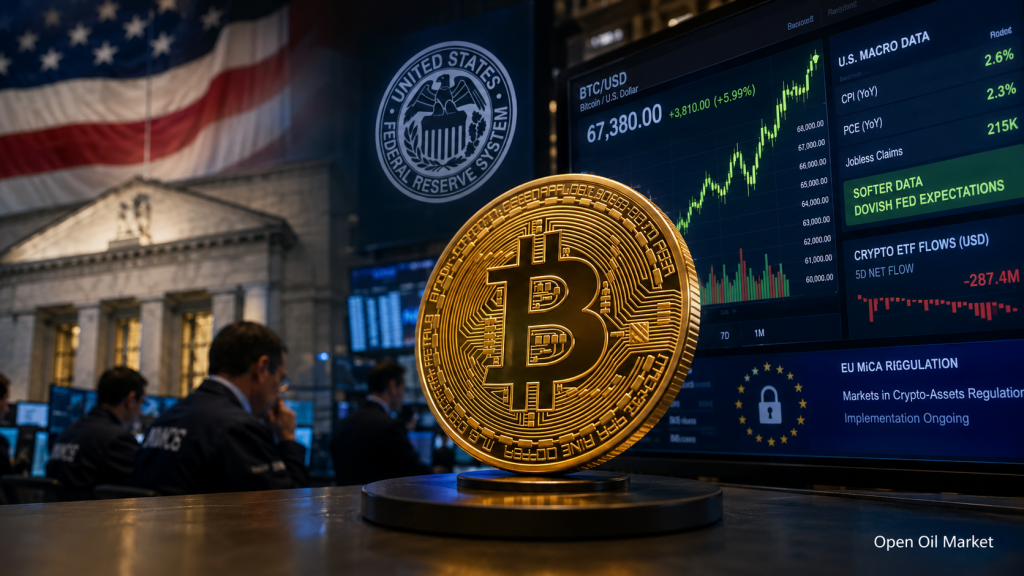
Cryptocurrency news for Saturday, 4th July 2026, presents an ambiguous picture for investors. On one hand, Bitcoin has rallied above $62,000 following weak macroeconomic data from the US, which bolstered expectations for a more accommodative stance from the Federal Reserve. On the other, institutional demand via spot cryptocurrency ETFs remains unstable, and European regulation through MiCA sharply increases requirements for exchanges, brokers, custodians, and stablecoin issuers.
This is a crucial juncture for the global cryptocurrency market: digital assets are transitioning away from being solely a speculative segment and are increasingly influenced by interest rates, capital flows, regulation, ETF liquidity, the US dollar, and the behaviour of large institutional investors. Therefore, the cryptocurrency market on 4th July 2026 should not be viewed as a short-term Bitcoin bounce but as a test of the resilience of the entire digital asset infrastructure.
Key Story of the Day: Bitcoin Attempts to Recover After a Weak First Half of the Year
Bitcoin remains the primary indicator of sentiment within the cryptocurrency market. After a marked decline in the first half of 2026, the largest cryptocurrency found support from the macroeconomic backdrop: disappointing US employment data heightened expectations that the Fed would not rush into tightening its monetary policy. This temporarily improved risk appetite among investors for high-risk assets, including Bitcoin, Ethereum, Solana, and other cryptocurrencies.
However, the recovery cannot yet be characterised as a definitive trend reversal. Investors note that Bitcoin remains below the peaks of 2025, and a substantial number of buyers entering the market via ETFs at elevated levels are still in a paper loss position. This limits the rally's strength and leaves the market sensitive to any signs of renewed capital outflow.
- Key Positive: Expectations for a more accommodative Fed policy.
- Key Risk: Weak ETF flows and fatigue among institutional investors.
- Main Area of Focus: Bitcoin's ability to maintain above the $60,000 zone.
ETFs Remain the Primary Channel for Institutional Demand
Spot cryptocurrency ETFs have become one of the central elements of the digital asset market. In 2024-2025, they facilitated capital inflows into Bitcoin and helped legitimise cryptocurrencies in the eyes of institutional investors. The situation changed in 2026: ETF flows became increasingly volatile, and June demonstrated that even large funds do not protect the market from sell-offs.
For investors, this means that cryptocurrency analysis can no longer be confined to Bitcoin's chart. It is essential to track:
- Net inflows and outflows from spot Bitcoin ETFs;
- Trends in Ethereum ETFs;
- Interest in new products on Solana, XRP, and other altcoins;
- Activity among the largest asset management firms;
- The correlation of cryptocurrencies with Nasdaq, the US dollar, and bond yields.
Should ETF flows stabilise, Bitcoin could gain support as a long-term digital asset. If outflows continue, the cryptocurrency market will maintain heightened volatility even in the face of a moderately positive macroeconomic backdrop.
Ethereum: Pressure Persists but Infrastructure Role Strengthens
Ethereum remains the second-most significant cryptocurrency and the leading blockchain for smart contracts, DeFi, asset tokenisation, stablecoins, and Layer 2 ecosystems. However, in 2026, ETH trades significantly weaker than many investors had anticipated. Pressure arises from multiple fronts: declining DeFi activity, competition from Solana and other networks, caution among institutional investors, and feeble flows into Ethereum ETFs.
But fundamentally, Ethereum remains a systemic asset in the cryptocurrency market. While Bitcoin is viewed as digital gold, Ethereum serves as the infrastructure platform for the digital economy. For investors, metrics beyond ETH pricing are crucial: transaction fees, staking volumes, developer activity, stablecoin issuance, and growth in tokenised real-world assets.
MiCA in Europe: Global Cryptocurrency Regulation Enters a New Phase
As of 1st July 2026, the transitional period for European MiCA regulation has concluded. This represents one of the most significant events for the global cryptocurrency market this year. Cryptocurrency companies operating with customers in the EU must now possess the appropriate authorisation or cease activities in the region.
For investors, this signifies a move from a fragmented market to a more stringent and transparent model. In the short term, MiCA may result in a reduction in the number of platforms, limitations on specific products, and a redistribution of clients among licensed players. In the long run, regulation could enhance trust in cryptocurrencies, particularly from banks, funds, payment companies, and major fintech platforms.
Geographically, the impact of MiCA extends beyond Europe. Asia, the Middle East, the UK, and the US will take into account European experiences when developing their regulations concerning cryptocurrencies, stablecoins, exchanges, and custodial services.
Stablecoins: The Centre of Liquidity and a New Regulatory Focus
Stablecoins continue to serve as the foundational settlement infrastructure for the cryptocurrency market. USDT and USDC are utilised for trading, settlements, transfers, DeFi operations, and maintaining dollar liquidity outside of the traditional banking system. This is precisely why regulators are paying increasing attention to stablecoins.
For global investors, stablecoins matter for three reasons:
- They indicate liquidity levels within the cryptocurrency market;
- They reflect demand for dollar-denominated digital instruments;
- They form a bridge between traditional finance and blockchain infrastructure.
Stricter requirements for reserves, transparency, and licensing may render the stablecoin market more institutional but will simultaneously intensify the pressure on less transparent issuers. For investors, this means it is essential to monitor not only Bitcoin and Ethereum but also the quality of dollar liquidity in the system when analysing cryptocurrencies.
Top 10 Most Popular Cryptocurrencies for Investors
As of 4th July 2026, the largest and most liquid cryptocurrencies by market capitalisation, recognition, and role in the digital asset infrastructure remain in focus for global investors:
- Bitcoin (BTC) — the primary reserve asset of the cryptocurrency market and a key indicator of institutional demand.
- Ethereum (ETH) — the primary platform for smart contracts, DeFi, tokenisation, and Layer 2 networks.
- Tether (USDT) — the largest stablecoin and the main tool for dollar liquidity on cryptocurrency exchanges.
- BNB (BNB) — the token of the Binance ecosystem and one of the largest infrastructure assets in the market.
- USD Coin (USDC) — a regulated dollar stablecoin crucial for institutional and payment scenarios.
- XRP (XRP) — an asset associated with cross-border payments and interest in niche ETF products.
- Solana (SOL) — a high-performance blockchain competing in DeFi, meme coins, NFTs, and payment applications.
- TRON (TRX) — a network with a significant role in stablecoin transfers and global retail crypto liquidity.
- Dogecoin (DOGE) — the largest meme coin, sensitive to retail demand and market sentiment.
- Cardano (ADA) — a blockchain project focusing on scalability, research, and long-term ecosystem development.
This list does not imply equal investment potential across all assets. Bitcoin and Ethereum continue to serve as foundational assets for institutional portfolios, while stablecoins provide liquidity functions, and Solana, XRP, BNB, TRON, Dogecoin, and Cardano pose more pronounced technological, regulatory, and market risks.
Altcoins: Investors Seek Growth While Avoiding Excessive Risk
At the beginning of July 2026, altcoins display a heterogeneous landscape. Solana retains its status as one of Ethereum's primary competitors, thanks to its high network speed and developer activity. XRP remains in the spotlight due to ETF-related discussions and cross-border payment topics. BNB's performance is tied to the state of the global exchange infrastructure, while Dogecoin and other meme coins continue to represent the most speculative segment of the cryptocurrency market.
For investors, it is essential to categorise altcoins into three groups:
- Infrastructure assets: Ethereum, Solana, BNB, Cardano;
- Payment and settlement assets: XRP, TRON, stablecoins;
- Speculative assets: Dogecoin and other meme coins.
In an environment of weak ETF flows and stringent regulation, investors are becoming more selective. Liquidity, transparency, real use cases, and ecosystem resilience are rising to prominence.
Macroeconomics: Cryptocurrencies Once Again Depend on the Fed, Dollar and Risk Appetite
The cryptocurrency market is increasingly integrated into the global financial system. Bitcoin no longer moves in isolation; its dynamics are linked to expectations around Fed rates, US Treasury yields, the dollar index, the stock market, and flows into the tech sector.
If investors anticipate a decrease in rates or more accommodating central bank policies, demand for riskier assets may rebound. Conversely, if the dollar strengthens, yields rise, and liquidity shifts to the money market, cryptocurrencies may again come under pressure. Therefore, cryptocurrency news on 4th July 2026 should be interpreted alongside the macroeconomic agenda of the US, Europe, and Asia.
What to Watch for Investors on 4th July 2026
The cryptocurrency market remains in a phase of reassessment. The short-term Bitcoin rebound has buoyed sentiment but has not eradicated the primary risks: weak ETF flows, pressure on Ethereum, regulatory restructuring in Europe, and caution from institutional investors.
Investors should keep an eye on several indicators:
- Will Bitcoin hold above the $60,000 level?
- Will net inflows return to spot Bitcoin ETFs?
- Will there be sustained demand for Ethereum ETFs?
- How will European platforms adapt to MiCA?
- Which stablecoins will retain dominance after regulatory tightening?
- Will capital flow from Bitcoin into Solana, XRP, and other altcoins?
- How will Fed rate expectations change following new macro data?
The key takeaway for global investors: cryptocurrencies remain a promising but high-risk asset class. In July 2026, the digital asset market will depend not only on technologies and blockchain industry news but also on regulation, ETF liquidity, central bank policies, and the ability of major cryptocurrencies to demonstrate their investment resilience.