Current Cryptocurrency News as of 4 April 2026 with Analysis of Bitcoin, Ethereum, Macroeconomics, and Key Market Trends
Bitcoin remains the primary reference point for investors managing capital in digital assets. The behaviour of the leading cryptocurrency largely determines whether the market is willing to expand risk towards Ethereum, Solana, XRP, and other major coins or prefers to focus on the most liquid and institutionally recognised asset.
At this stage, the market displays several important signs:
- capital continues to gravitate towards the largest cryptocurrencies;
- Bitcoin's share in the overall market structure remains high;
- investors are cautiously increasing positions following March's stabilisation;
- altcoins are rising selectively rather than en masse, as is typical in a full-fledged speculative rally.
For investors, this serves as a significant signal. When Bitcoin maintains its leadership, and the market does not transition into a state of unmitigated excitement across the token spectrum, it often indicates a more mature and selective phase of the cycle. In other words, capital is present in the market, but it is being allocated with caution.
The US Macroeconomy Again Becomes the Main Driver for Cryptocurrencies
Recent macroeconomic data from the US has intensified the influence of traditional financial factors on the cryptocurrency market. A strong employment report has prompted the market to assess the trajectory of the Fed's interest rates more carefully, which in turn affects liquidity prospects for risk assets globally.
This holds direct significance for cryptocurrencies for several reasons:
- more hawkish rate expectations limit aggressive capital flows into risky assets;
- a strong dollar typically complicates momentum growth for certain digital assets;
- increasing yields and nervousness in global markets elevate Bitcoin and Ethereum's sensitivity to external factors;
- investors are increasingly viewing cryptocurrencies not in isolation but as part of a broader capital allocation structure.
Consequently, today's agenda for digital assets is no longer confined to blockchain, exchanges, and tokens. It also encompasses inflation, employment, interest rates, oil, the dollar, and global monetary conditions.
The Regulatory Topic Remains Central for Sector Assessment
The cryptocurrency market continues to closely monitor legislative initiatives in the US, as the American regulatory architecture has the potential to significantly impact the industry's valuation on a global scale. For institutional investors, predictable rules are more critical than mere rhetoric supporting the industry.
Key focus areas include:
- the demarcation of powers among various regulators concerning digital assets;
- the legal regime for stablecoins;
- disclosure requirements, platform registration, and investor protection;
- conditions under which certain tokens may be perceived as digital commodities rather than investment contracts.
This clarity in regulatory regimes is critically important for the entire cryptocurrency market. The clearer the regulatory environment, the higher the likelihood of stable participation from banks, funds, payment companies, and major brokerage platforms. For Bitcoin, this represents a factor of institutional demand; for Ethereum and ecosystem coins, it signifies expanding infrastructure use; and for stablecoins, it embodies legitimisation as a means of payment.
Stablecoins Are Becoming a Distinct Strategic Segment of the Market
Previously, stablecoins were primarily viewed as a service layer for cryptocurrency exchanges; however, their role has significantly expanded. They are evolving into a key component of the global digital payment infrastructure and an important bridge between traditional finance and the blockchain economy.
Investors should consider several trends:
- the increasing importance of dollar-backed stablecoins is driving demand for blockchain payment infrastructure;
- stablecoin regulation is becoming an integral part of financial policy, not just crypto policy;
- ecosystems related to payment scenarios, tokenisation, and cross-border settlements are receiving additional momentum;
- the resilience of the largest stablecoins is increasingly influencing how the cryptocurrency market is perceived by substantial capital.
Practically, this means that the stablecoin segment can no longer be regarded as ancillary. It affects turnover, liquidity, trading activity, and market depth just as much as price movements in the largest tokens.
Ethereum Maintains its Status as a Key Infrastructure Asset
Ethereum remains the second most significant asset in the cryptocurrency market, but for investors, its role extends beyond just being the number one altcoin. It serves as a foundational infrastructure layer for DeFi, tokenisation, smart contracts, asset issuance, and a multitude of applied blockchain models.
The current market logic surrounding Ethereum revolves around three questions:
- how quickly user and transactional activity will recover;
- what volume of capital will flow into infrastructure products surrounding the network;
- whether Ethereum will be perceived by the market as an undervalued asset relative to Bitcoin in this new cycle phase.
For the global investor, this signifies that Ethereum is not just an object of speculation but a bet on the development of digital financial infrastructure. However, unlike Bitcoin, which is increasingly viewed as the most secure and institutionally understandable asset, Ethereum requires a more nuanced assessment: both technological parameters and real network usage dynamics are critical.
Top 10 Most Popular Cryptocurrencies: What the Global Market is Watching
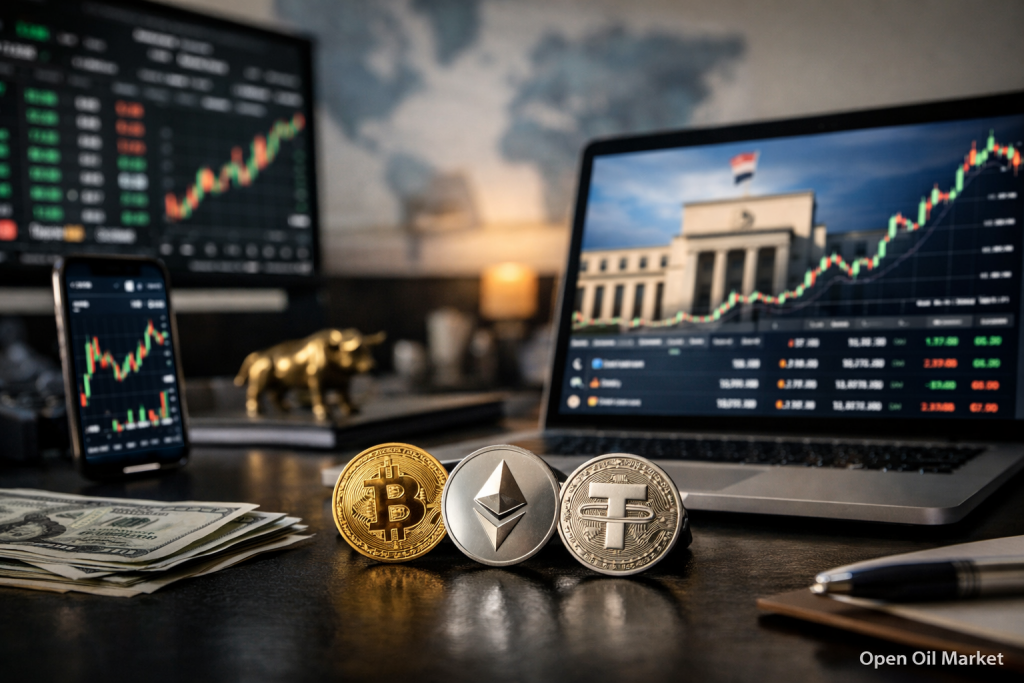
From the perspective of global investment interest and the largest liquidity, the following cryptocurrencies remain in the spotlight:
- Bitcoin (BTC) — a primary indicator of sentiment and liquidity in the sector;
- Ethereum (ETH) — a foundational infrastructure asset for smart contracts;
- Tether (USDT) — a key stablecoin for settlements and trading flows;
- XRP (XRP) — one of the most discussed assets for cross-border transactions;
- BNB (BNB) — an important ecosystem coin with a large user base;
- USD Coin (USDC) — one of the main regulated dollar stablecoins;
- Solana (SOL) — the largest high-speed network with significant speculative and infrastructure agendas;
- TRON (TRX) — a notable player in the transactional and stablecoin segments;
- Dogecoin (DOGE) — a highly liquid speculative asset with strong retail attention;
- Cardano (ADA) — a major platform attracting long-term interest.
This list is important not only for observation but also for risk management. Significant portions of global liquidity are concentrated in these assets, making them the first to respond to changes in capital flows, ETF sentiment, regulatory expectations, and central bank agendas.
What is Happening with Institutional Demand for Cryptocurrencies
Following a tumultuous and volatile phase, the market is once again attempting to ascertain whether sustainable institutional demand has returned. This question determines whether the momentum in cryptocurrencies will endure or remain merely a technical rebound.
Currently supporting a constructive scenario are the following factors:
- interest in exchange-based products featuring digital assets persists;
- Bitcoin is increasingly viewed as a distinct class of highly liquid alternative asset;
- major financial institutions continue to explore tokenisation and digital market infrastructure;
- stablecoins and blockchain settlements are becoming deeper-integrated into the strategic plans of the financial sector.
However, institutional capital remains sensitive to the cost of money, regulation, and political risks. Therefore, the growth of cryptocurrencies in 2026 appears more rational than in classic phases of retail euphoria: the market demands validation through figures, flows, and regulatory clarity.
Main Risks for Investors Over the Weekend
Despite a notable improvement in sentiment compared to the most nervous periods of the first quarter, the cryptocurrency market remains vulnerable to external shocks. For investors globally, the following risks are critical in the coming days:
- sharp changes in expectations regarding Fed rates;
- a strengthening dollar and deteriorating global liquidity conditions;
- increased geopolitical tensions and fluctuations in commodity markets;
- new regulatory disagreements surrounding digital assets and stablecoins;
- weakness in altcoins while Bitcoin remains strong.
In such a market, it is crucial for investors to differentiate between short-term trading impulses and medium-term investment trends. The rise of individual tokens does not necessarily indicate sustainable expansion across the entire market. True validation of the sector's strength will come from a synchronous improvement in flow structures, market breadth, and the quality of institutional demand.
What This Means for the Global Investor
As of 4 April 2026, the cryptocurrency market appears significantly more mature than in previous cycles. It no longer operates solely on internal industry narratives. Bitcoin, Ethereum, stablecoins, ETF flows, and major altcoins are now integrated into the global financial agenda.
The key takeaway for investors is as follows:
- Bitcoin remains the primary barometer of resilience in the cryptocurrency market;
- Ethereum retains its status as the infrastructural core of the digital economy;
- stablecoins are becoming a systematically important segment;
- regulation in the US and major financial jurisdictions will directly impact market valuations;
- top cryptocurrencies maintain precedence over the more speculative peripheral segment.
Consequently, the strategy for most participants in the global market remains selective in the near term. Investors are monitoring not just the price of Bitcoin or Ethereum but whether the current stability is fundamentally supported: through flows, regulation, institutional participation, and liquidity quality. The market currently provides grounds for a cautiously constructive outlook, but a fully-fledged acceleration still requires further validation.