Economic Events and Corporate Reports for the Week of 30 March - 5 April 2026: Eurozone Inflation, US Labour Market, PMI of Major Economies, and Reports from Nike, Conagra, and Acuity
The week of 30 March to 5 April 2026 promises to be eventful for global investors. Attention will be focused on inflationary signals from Germany, the Eurozone, and Switzerland, data regarding business activity in China, the US, the UK, and Russia, as well as the crucial block of statistics concerning the US labour market. Additional volatility may arise from the speech of Federal Reserve Chair Jerome Powell, the release of meeting minutes from the Bank of England and the Central Bank of Russia, and data on US oil and gas inventories.
Global market participants must also take into account shifts in trading schedules: Europe and the UK have switched to daylight saving time, which means the European trading session now starts earlier for investors from Russia and the CIS. Furthermore, the end of the week will be truncated: on Good Friday, some of the largest markets including the US and the UK will be closed. In this context, macroeconomic publications that are released even on a non-working day for some exchanges will gain particular significance.
Monday, 30 March: German Inflation, Eurozone Consumer Expectations, and Powell's Speech
The week kicks off with a tone-setting series of data. Investors will assess consumer expectations and confidence in the Eurozone before turning their attention to the preliminary inflation figures for Germany for March. The German CPI may serve as a critical benchmark ahead of the overall Eurozone inflation release on Tuesday. In the evening, the focus will shift to the speech of the Federal Reserve Chair, as the market seeks any hints regarding the trajectory of interest rates, inflationary pressures, and the resilience of American demand.
- Eurozone: Consumer inflation expectations and consumer confidence for March.
- Germany: Preliminary CPI for March.
- US: Speech by Jerome Powell.
The corporate landscape on Monday is particularly noteworthy in Asia and Europe. Among the most significant releases are the results from Agricultural Bank of China, Bank of China, Midea Group, and BOC Hong Kong. For investors in commodities and energy stories, reports from China Shenhua Energy and Metlen Energy & Metals are also critical. Notably, Siemens Energy's end-of-day earnings call could set the tone for expectations in the European industrial and energy sector.
On this day, it is crucial for the market to ascertain whether Germany is confirming an acceleration in price pressures and whether European consumers are prepared for weaker demand in the second quarter. For investors, this is a day to evaluate two fundamental risks: the persistence of a tight monetary policy in developed economies and the shift in expectations regarding cyclical sectors.
Tuesday, 31 March: Eurozone Inflation, UK GDP, US Consumer Confidence, and Nike's Report
On Tuesday, the influx of information is set to intensify. The main macro release of the day is the preliminary CPI for the Eurozone for March. This figure is crucial not only for the currency markets but also for the entire yield curve of European bonds as it will influence expectations for the ECB. It will be complemented by the UK GDP for the fourth quarter of 2025, Chinese PMIs, Canadian GDP, US consumer confidence indicators, and JOLTS statistics on job openings.
- China will provide an early impulse with the release of Manufacturing, Services, and Composite PMI.
- Europe will assess growth resilience through the UK's GDP and Eurozone inflation.
- US data will yield important signals on demand and the job market through Consumer Confidence, Chicago PMI, and JOLTS.
- The oil market will receive its initial inventory guidance overnight via API data.
On the corporate side, Nike stands out, publishing its quarterly results after the US market closes. This is one of the most significant reports of the week for the global consumer sector, providing insights into demand for this mass-market brand, profit margins in a highly competitive landscape, and the state of international sales. In Europe and the UK, A.G. Barr, Raspberry Pi Holdings, Hilton Food Group, and James Halstead will also draw investor attention, while in Asia, China Shenhua Energy and Shanghai Pudong Development Bank will be in the spotlight.
For investors, Tuesday presents a day to evaluate three key theses: is Eurozone inflation slowing down, does consumer resilience remain in the US, and how does the global consumer discretionary sector feel with the Nike earnings report? If these signals diverge, volatility in equities, bonds, and currencies could rise significantly.
Wednesday, 1 April: Global PMI Day, ADP, US Retail Sales, and a Packed Corporate Calendar
Wednesday will be one of the most critical days of the week. Starting from early morning, markets will receive a wave of business activity indices from Australia, Japan, China, Russia, Switzerland, Germany, the Eurozone, and the UK. Data on unemployment in the Eurozone and the Bank of England’s minutes will follow. In the second half of the day, attention will pivot to the US: ADP employment figures, retail sales, S&P Manufacturing PMI, and ISM Manufacturing PMI. In the commodities market, the EIA release on oil inventories will be key.
- PMIs of leading economies will indicate where the industrial cycle is accelerating and where it remains under pressure.
- ADP and retail sales in the US will help refine expectations ahead of Non-Farm Payrolls.
- The Central Bank of Russia's protocol and Russian CPI will add local context for ruble assets.
The corporate agenda on Wednesday appears among the strongest of the week. In the US, reports from Conagra Brands, Lamb Weston, and MSC Industrial Direct are confirmed. This entails a valuable overview across several domains: consumer goods, food demand, food service, industrial supply, and B2B activity. In Europe and Asia, investors will watch the publications from KBC Group and Sungrow Power Supply, which provide insights into the Eurozone banking sector and the solar energy supply chain.
For global investors, this day brings clarity on how industrial dynamics, consumer demand, and the labour market intertwine. If PMIs and retail sales exceed expectations, this could support cyclical shares while simultaneously heightening concerns regarding a prolonged period of high rates. Conversely, weak data could prompt the market to reassess growth prospects for the second quarter more actively.
Thursday, 2 April: Swiss Inflation, US Jobless Claims, and More Targeted Reports
Thursday appears calmer in terms of the number of releases, but not in significance. The Swiss CPI will indicate how resilient inflation cooling is within one of Europe's most stable economies. In the US, key indicators will include initial jobless claims and the trade balance for February. Weekly data on natural gas inventories from the EIA will be critical for the energy market.
From a corporate reporting perspective, investors should pay close attention to Acuity, which will release Q2 results for the 2026 financial year. This report is pivotal for assessing demand for lighting solutions, building automation, and industrial infrastructure. In Europe, Inwit stands out, providing insights into telecom infrastructure and tower businesses. Amid a less intense calendar, these targeted corporate publications may significantly impact individual stocks and sectors.
On this day, it is vital for investors to evaluate not just the absolute figures but also the market's preparedness for Friday’s US employment data. Weak jobless claims or a deterioration in the trade balance may heighten defensive rotations. Strong data, on the other hand, could support the dollar and US Treasury yields.
Friday, 3 April: Non-Farm Payrolls on a Non-Trading Day for Some Markets
Friday will be unconventional. Many major markets, including the US, UK, Canada, and Hong Kong, will be closed due to Good Friday, yet the US labour market statistics are still scheduled for release. This implies that reactions will shift to currencies, futures, bond instruments, and expectations for the next trading session's opening.
- US: Non-Farm Payrolls for March.
- US: Unemployment rate for March.
- US: S&P Services and Composite PMI.
- Japan, China, and Russia: Services and Composite PMI.
- Turkey: CPI for March.
The US employment data will be the climax of the entire week. These figures will either confirm the resilience of the US economy and the necessity for a cautious approach to rate cuts or intensify discussions about a slowdown. The peculiarity of the release occurring on a non-trading day for the stock market elevates the risk of a sharp reevaluation when the next week opens, especially in rate-sensitive equities such as technology, real estate, small companies, and cyclical sectors.
For investors, Friday necessitates a focus not only on the headline figure regarding new jobs but also on the report's structure: unemployment levels, employment dynamics in services, and indirect impacts on consumer demand. Services PMI data from Asia and Russia will further complement the picture regarding global demand outside the American market.
Saturday, 4 April: A Pause in the Calendar and Preparation for the Upcoming Week
Saturday will pass without significant scheduled macroeconomic publications or corporate reports. For investors, it serves as a convenient point for reassessing weekly signals: inflation in Europe, the state of the industrial cycle, the quality of US demand, and the robustness of the US labour market.
In practice, it is on days like this that new weekly scenarios for assets are formed:
- for equities—through sector rotation between defensive and cyclical sectors;
- for bonds—through the reassessment of expectations for Fed and ECB rate policies;
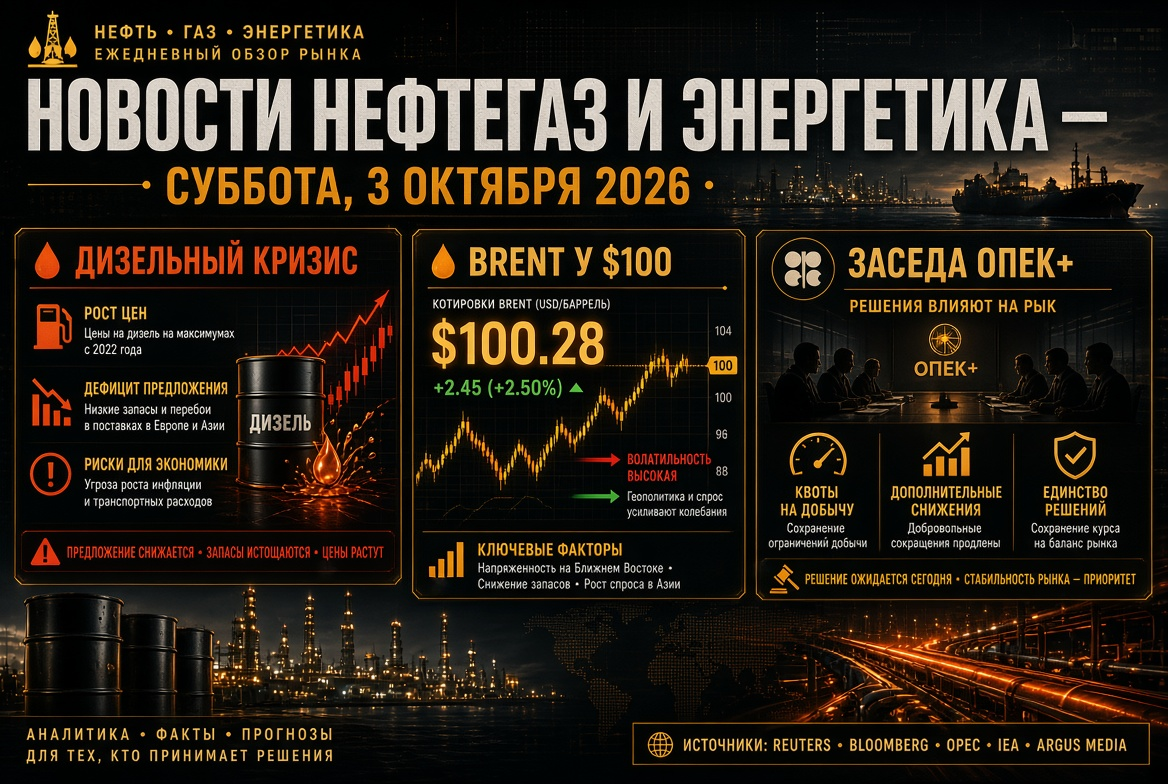
- for commodities—through a combination of inventory data and expectations regarding OPEC+;
- for currencies—through discrepancies in inflation rates and economic growth.
Investors should use this day to consolidate interim conclusions rather than rush into decisions. After a robust macro week, the market often opens with a revised set of expectations already in place.
Sunday, 5 April: OPEC Monitoring Committee Meeting and Focus on the Commodity Market
On Sunday, market participants will direct their attention to the OPEC monitoring committee meeting. Even if formal production parameters do not change, comments regarding participant discipline, market balance, and demand expectations could influence oil prices ahead of the new trading week.
For investors in the oil and gas sector, currencies of resource-rich countries, and inflation-sensitive assets, this is one of the key weekend events. After a week featuring releases on inflation, oil inventories, and industrial activity, a signal from OPEC could serve as the final touch for the market sentiment heading into April.
Key considerations for investors following the week include:
- Will a new inflationary vector in Europe emerge following the CPI releases from Germany, the Eurozone, and Switzerland?
- Will PMIs and retail sales confirm the recovery of global business activity?
- How do the reports from Nike, Conagra, Lamb Weston, MSC Industrial, Acuity, and major Asian companies align with the macro picture?
- Will there be adjustments to the Fed's rate trajectory following Powell's speech and Non-Farm Payrolls?
- Will OPEC signal a new balance in the oil market amidst high sensitivity in the energy sector?
Week's Summary for the Global Investor
The week of 30 March to 5 April 2026 encapsulates all that typically dictates the behaviour of global markets: inflation, business activity, the labour market, energy, and corporate reporting. It is not merely a packed calendar but a period where macroeconomic data and company reports will mutually intensify each other's influence.
The fundamental focus for investors should remain on three key pillars: inflation in Europe, employment in the US, and signals from global corporations regarding demand states. These will ultimately determine how the market approaches the second quarter of 2026—whether it continues in a mode of cautious growth, shifts towards defensive strategies, or embarks on a new wave of sector rotation.