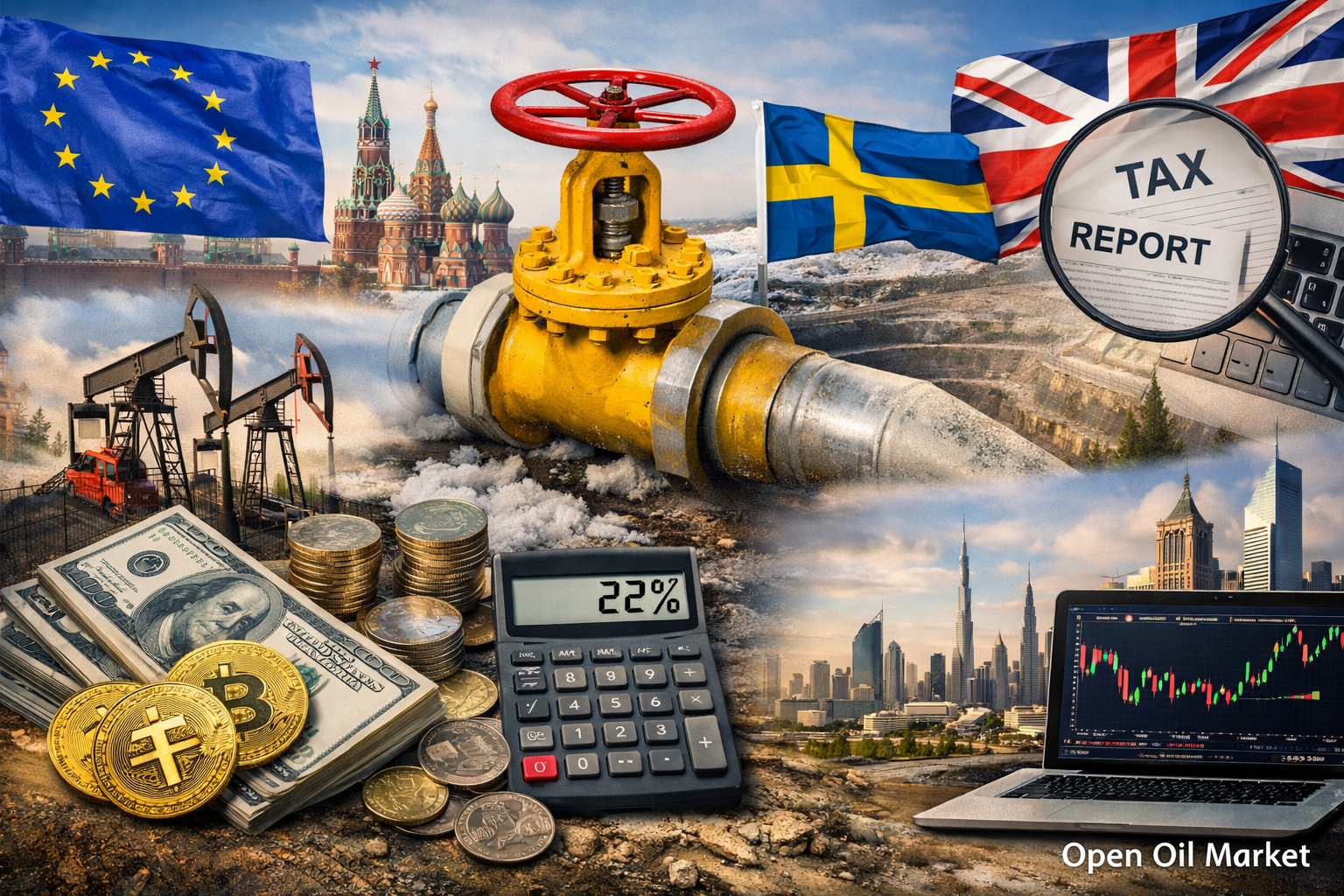
Economic Events and Corporate Reports for Thursday, 1st January 2026: VAT Increase in Russia, EU Ban on New Gas Contracts, Cryptocurrency Regulation in Europe and the UK, Global Market Closures, and Key Investor Indicators.
The start of the year is marked by significant changes in tax policy in Russia and important international developments on the energy and financial fronts. While most global markets are closed for the New Year holidays, investors should pay attention to a few key events: the European Union is implementing a ban on new gas contracts from Russia starting from 1st January, Sweden is lifting restrictions on uranium mining, the UK and EU are tightening reporting requirements for cryptocurrency exchanges, and new laws regulating digital currencies are being adopted in Central Asia. Furthermore, in Russia, the VAT rate is increasing to 22%, and preparations are underway to exclude the UAE from the blacklist of offshore jurisdictions. These factors will shape the agenda for the early days of 2026.
Macroeconomic Calendar (MSK)
- 1st January: Most countries worldwide celebrate the New Year. Due to the public holidays, no significant macroeconomic releases are scheduled for this day.
Markets on Holiday: Trading Closures
- Exchanges without Trading: China, Kazakhstan, the USA, the UK, most EU countries, Australia, New Zealand, Brazil, Canada, Turkey, and others are closed for the New Year holidays.
- Russian Markets: The Moscow Exchange is closed on 1st January, while the Saint Petersburg Exchange continues trading as usual.
Tax Changes in Russia
- As of 1st January 2026, the VAT rate in Russia increases to 22%. This hike may temporarily raise consumer prices and support inflation at the level of household expenditures.
- The Russian Ministry of Finance plans to remove the UAE from the blacklist of offshore jurisdictions. This decision is expected to facilitate financial operations of Russian companies with partners from the UAE and impact the international investment climate.
Energy Sector: EU Ban on Russian Gas
From 1st January, the European Union's ban on concluding new contracts for the supply of Russian natural gas comes into effect. This move continues the tightening of sanctions against Russia and may lead to a rise in gas prices in Europe, especially ahead of the heating season. For European countries, this will stimulate the search for alternative energy sources and accelerate the transition to renewable and LNG supplies.
- The ban does not apply to existing contracts but encourages a long-term reduction in Europe's dependence on Russian gas.
- Increased demand for LNG and domestic gas in the EU is expected to enhance volatility in energy markets and alter the strategies of major suppliers.
Sweden: Resumption of Uranium Mining
Sweden has officially lifted the ban on uranium mining as of January 2026. This decision opens up opportunities for the development of the country's nuclear sector, which was previously constrained by legislation. New licenses will allow for the resumption or initiation of mining activities in uranium deposits, supporting Sweden's plans to diversify its energy sector and strengthen fuel security.
Cryptocurrencies: UK and EU Strengthen Reporting Requirements
- United Kingdom: As of 1st January, cryptocurrency exchanges are required to provide full information about users and their transactions to tax authorities. These measures are aimed at combating money laundering and tax evasion.
- European Union: A directive comes into effect requiring crypto platforms to disclose data on transactions and clients to national tax authorities. The regulation is focused on enhancing transparency and control over the circulation of digital currencies in the EU.
Digital Currencies in Central Asia: Uzbekistan and Turkmenistan
- Uzbekistan: A special legal regime has been introduced, allowing the use of stablecoins for the payment of goods and services. This innovation could stimulate the growth of cashless transactions and interest in digital assets in the country.
- Turkmenistan: A new law on virtual assets has been enacted, legalising mining, the operation of cryptocurrency exchanges, and exchangers. The document recognises cryptocurrencies as legitimate assets, which opens new prospects for the IT sector and attracting investments.
Other Regions and Indices: S&P 500, Euro Stoxx 50, Nikkei 225, MOEX
- USA (S&P 500): On 1st January, American markets are closed for the New Year. Major corporations are not releasing reports, and investors are awaiting the commencement of full trading activity at the start of the week.
- Europe (Euro Stoxx 50): Major European exchanges are not trading amid holiday festivities. Indicators for the index are being shaped by external factors — changes in exchange rates and energy resource prices.
- Asia (Nikkei 225): Japanese and many other Asian markets are closed for the New Year holidays. The global political and economic agenda plays a crucial role for Asian indices at the beginning of the year.
- Russia (MOEX): The Moscow Exchange is closed on 1st January due to the public holiday. Current events, such as changes in taxes and geopolitics, will influence the MOEX and the ruble exchange rate following the resumption of trading.
Day's Summary: What Investors Should Pay Attention To
- Low Liquidity: During the New Year holidays, trading volumes typically decline. In such conditions, even minor news can cause sharp price fluctuations. It is crucial for investors to exercise caution and account for increased volatility.
- VAT and Inflation in the Russian Federation: The VAT increase to 22% will affect consumer demand and the inflation level. It is essential to monitor the response from the Central Bank of Russia regarding monetary policy in light of new tax revenues and price pressures.
- Energy Markets: The introduction of the EU ban on Russian gas increases uncertainty in the energy market. It is advisable to keep an eye on the dynamics of natural gas and oil prices, as well as the response of LNG suppliers.
- Cryptocurrency Regulation: The tightening of reporting requirements for cryptocurrency exchanges in the UK and EU may affect liquidity and trust in digital assets. Investors should consider new regulatory risks when dealing with cryptocurrencies.
- Central Asia and Blockchain: The legalisation of cryptocurrencies in Uzbekistan and Turkmenistan creates new opportunities for local IT companies and investors. These changes signify the growing interest of the region in innovative financial instruments.
Open Oil Market wishes all investors a Happy New Year 2026 and best wishes for successful and well-considered investment decisions. Stay tuned for updates and keep informed about key events in global markets and the economy.




