Economic Events and Corporate Reports on Friday, 12 June 2026: US Consumer Sentiment Index, UK GDP, Eurozone and Japan's Industry, OPEC Report, Baker Hughes Data and Key Benchmarks for Investors
Friday, 12 June 2026, concludes a busy macroeconomic week, which continues to centre around inflation, interest rates, the state of consumer demand, and the resilience of the industrial sector. For investors from the CIS countries, this day is important not so much for extensive corporate reporting, but rather for the set of indicators that will assist in evaluating the prospects of the stock market, the dynamics of the dollar, euro, pound, oil, gas, and global bonds.
The key focus of the day will be the preliminary University of Michigan Consumer Sentiment Index for the US for June. Following strong inflationary signals and rising energy prices, this figure will become a crucial reference point for assessing the behaviour of the American consumer, inflation expectations, and future Fed policy. Additionally, investors will be monitoring the UK GDP, Japan and Eurozone's industrial production, China's credit statistics, the OPEC report, and Baker Hughes drilling activity data.
Main Topic of the Day: US Consumer Sentiment and Inflation Expectations
The US remains the central liquidity hub for the global market, and therefore the University of Michigan Consumer Sentiment Index for June could be the most sensitive event of the day. Investors will evaluate not only the confidence index itself but also the inflation expectations over the next year and the long term.
Why this is important:
- Weak consumer sentiment may enhance concerns regarding a slowdown in the US economy;
- Increased inflation expectations might reduce the likelihood of a swift easing of Fed policy;
- The combination of weak demand and high inflation creates the risk of a stagflation scenario;
- The market reaction may impact the S&P 500, Nasdaq, dollar, gold, and US Treasury yields.
For investors, the baseline scenario for 12 June suggests heightened market sensitivity to any data confirming persistent inflation. Should consumer expectations remain elevated, the stock market may amplify the re-evaluation of future corporate profits, particularly within the retail, real estate, financial, and growth technology sectors.
US: Baker Hughes, Rate Expectations and Energy Impact
In addition to the consumer index, the US will also release Baker Hughes data on the number of active drilling rigs. This data point is particularly significant for the oil and gas sector as it reflects the activity levels of oil and gas producers in North America.
For the energy market, rig count data is critical for three reasons:
- They indicate whether producers are willing to increase output at current oil and gas prices;
- They influence expectations regarding future supply of raw materials;
- They help assess the investment activity of oil service companies.
If the number of rigs increases, it may suggest that producers are confident about maintaining high prices. Conversely, a decreasing count might be interpreted as a cautious signal within the oil and gas sector. For investors in energy stocks, oil service contractors, and commodity ETFs, this indicator remains one of the key weekly benchmarks.
UK: GDP, Industry and Trade Balance
One of the major European data releases will be the UK statistics for April. The calendar includes monthly GDP, industrial production, manufacturing output, construction sector performance, and trade balance. This is a significant data package for the pound and British assets, as it will reveal how well the economy is coping with high borrowing costs and the pressures on consumer budgets.
Investors should pay attention to the following indicators:
- Monthly GDP dynamics for the UK;
- Industrial production;
- Manufacturing sector performance;
- Trade balance;
- Construction activity.
Strong data could bolster the pound and UK stocks, while simultaneously tempering expectations for a rapid easing of the Bank of England's policy. Conversely, weak data may intensify discussions about economic slowdown and risks for firms reliant on domestic demand.
Eurozone and Germany: Industry, Trade and Inflation Context
For Europe, Friday will hold importance in terms of the industrial cycle. Investors will monitor Eurozone industrial production, trade balance, and final inflation data for Germany for May. These figures will help assess the health of the largest economic bloc in Europe following a period of sluggish growth, expensive energy, and a cautious policy stance from the European Central Bank.
For the Euro Stoxx 50 index, the most sensitive sectors remain:
- Banks and insurance companies - through expectations regarding ECB rates;
- Industry - due to order, export, and production cost dynamics;
- Automakers - through trade balance and external demand;
- Energy sector - influenced by oil, gas, and electricity prices;
- Consumer sector - through inflation and real household income.
Should Eurozone industrial statistics disappoint, the market may revisit concerns about low growth rates in Europe. Conversely, if the data beats expectations, it could support cyclical stocks but perhaps also strengthen caution over further rate trajectory.
Asia: Japan, China and Credit Impulse
In Asia, the key indicators for the day will be the final industrial production data for Japan for April and credit statistics for China for May. For the Nikkei 225, Japanese industry remains a vital indicator of the health of exporters, equipment manufacturers, automotive companies, and the technology sector.
Chinese statistics on new loans, money supply M2, total social financing, and credit growth will reveal how actively the financial system supports the economy. For global investors, this is essential, as China remains a key source for demand for raw materials, industrial metals, energy resources, and equipment.
Three signals carry particular significance:
- An acceleration in lending may support commodity markets and stocks linked to infrastructure;
- A weak credit impulse could heighten fears over domestic demand in China;
- Money supply trends influence expectations regarding potential stimulus measures from Chinese authorities.
Commodity Market: OPEC Report and the Oil and Gas Sector
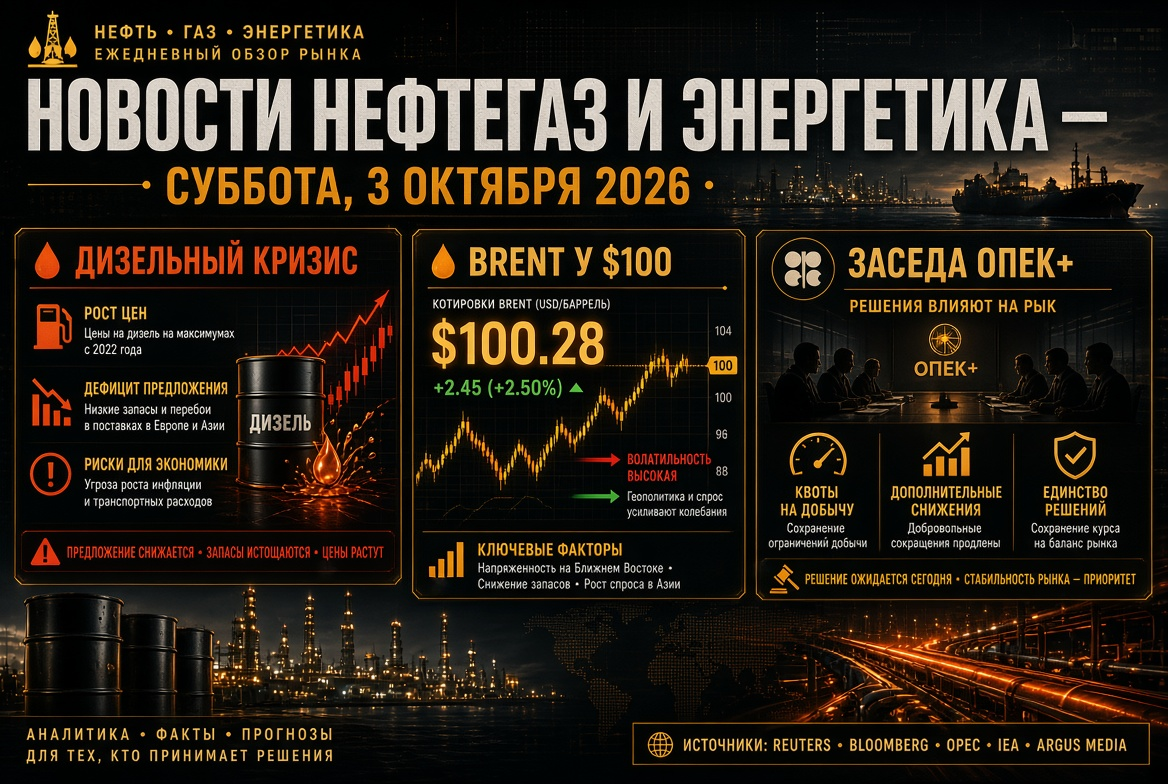
Special attention on 12 June will be directed to the monthly OPEC report. For investors in the oil and gas sector, this document is crucial as a source of assessments regarding global oil demand, supply estimates from non-OPEC countries, inventory levels, and market balance.
Against a backdrop of geopolitical risks and heightened volatility in energy markets, the OPEC report could impact expectations for Brent, WTI, energy stocks, and currencies of resource-exporting countries. For the CIS audience, this is particularly important as the oil market is directly linked to budget revenues, currency exchange rates, export earnings, and the dynamics of energy companies' stocks.
Investors should not only assess demand forecasts but also consider comments regarding production discipline, inventory levels, seasonal fuel consumption, and prospects for Asian demand.
Corporate Reports: A Calm Day without Major Blue-chip Releases
The corporate reporting for 12 June appears significantly quieter compared to the macroeconomic calendar. On this day, no major results are expected from companies within the S&P 500, Euro Stoxx 50, Nikkei 225, and MOEX. Consequently, investors will focus on individual public companies with smaller capitalisations and on macroeconomic data.
Among the noteworthy reports for the day are:
- The Children’s Place — an American retailer of children's clothing; investors will evaluate margins, sales dynamics, consumer demand status, and the impact of household expenses;
- 51Talk Online Education Group — an online education company with a focus on Asia; the market will watch for revenue, growth rates, and prospects for international expansion;
- Coffee Holding — a company involved in the coffee market; interest will centre on raw material prices, demand, and profitability;
- Sofgen Pharma — a small-cap pharmaceutical issuer; the report may be significant for a niche group of investors in the healthcare sector;
- Aridis Pharmaceuticals — a biotechnology company sensitive to financing news, research developments, and cash position.
For major global indices, these reports are not systemically important, but they help evaluate individual market segments: consumer sector, online education, pharmaceuticals, biotechnology, and the coffee supply chain.
Russian Market and MOEX: Holiday Break
For the Russian market, 12 June 2026 holds special significance: the Moscow Exchange will be closed due to a public holiday. This means liquidity in Russian stocks, bonds, and derivative instruments will be limited, and the primary reaction to external events may be postponed until the next trading day.
For investors in MOEX, the oil and gas sector, banks, metallurgists, and exporters, it is crucial to consider the external backdrop: oil prices, dollar exchange rates, global index dynamics, geopolitical news, and bond yields. Since the Russian market cannot immediately react to Friday's events, there is a potential for a cumulative reaction effect following the resumption of trading.
What Investors Should Watch For
Friday, 12 June 2026, shapes a significant picture for evaluating the global market ahead of the next trading week. Despite a calm corporate earnings calendar, macroeconomic events may exert noticeable influences on currencies, bonds, commodity assets, and stock indices.
Investors should focus on five areas:
- US: The consumer sentiment index and inflation expectations will indicate the resilience of American demand.
- Europe: Eurozone industrial performance and German inflation will help assess prospects for the Euro Stoxx 50 and ECB policy.
- UK: GDP and industrial data will determine short-term expectations for the pound and British assets.
- Asia: Data from Japan and China will be important for the Nikkei 225, commodity markets, and the global industrial cycle.
- Commodities: The OPEC report and Baker Hughes data will set the tone for oil, gas, and energy companies.
The main takeaway for the day is that 12 June is a day for macroeconomic checks rather than a day for significant corporate reports. For CIS investors, the key task is to evaluate whether risks of high inflation and a global economic slowdown are intensifying. If the data confirms pressure on consumers and industry, markets may shift towards a more defensive behaviour. If the statistics prove resilient, interest in equities, commodity assets, and cyclical sectors may persist.