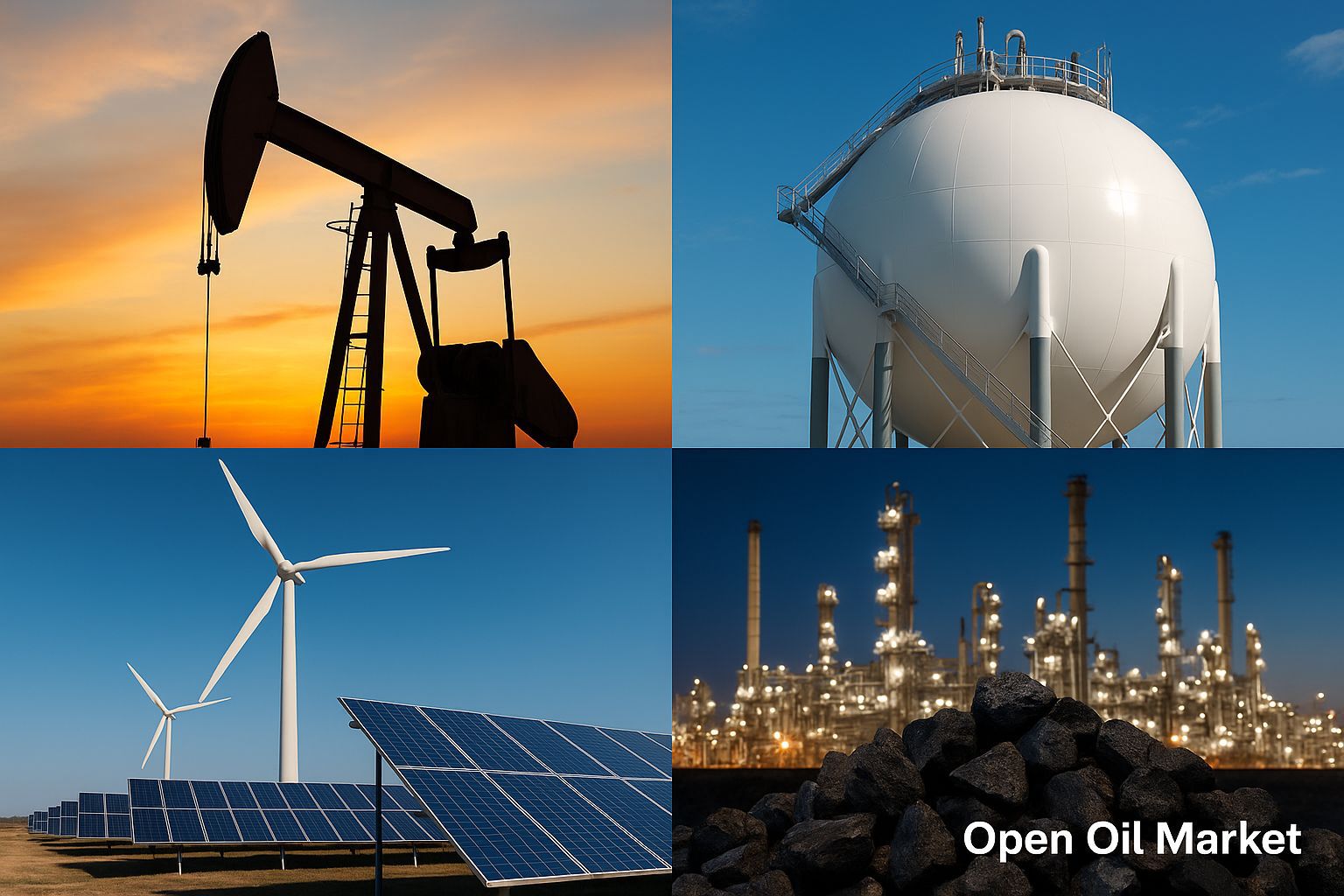
Current Energy Sector News as of 25 September 2025: Analysis of the Global Oil, Gas, Oil Products, and Electricity Markets. Key Trends in the Raw Materials and Energy Sector for Investors and Companies.
Today's review of the fuel and energy complex (FEC) news covers key events and trends in global and regional markets. Investors and market participants are analysing the situation against a backdrop of high oil prices, a stable gas market ahead of the winter season, and regulatory measures in the oil products market. We will further examine the global trends and news from the oil, gas, oil products, electricity, renewable energy sources (RES), and coal sectors.
Global Trends in the Energy Sector
The global energy market is demonstrating relative stability, although it remains impacted by several factors. The world economy is growing at moderate rates while the energy sector is adapting to changes in supply and demand. Below are the main factors influencing fuel and energy market dynamics:
- Economic Conditions. The slowdown in growth in major economies, including China and the Eurozone, is restraining the increase in demand for oil and gas. Central banks in leading countries are maintaining high interest rates to combat inflation, which cools business activity and energy resource consumption.
- OPEC+ Production Policy. OPEC+ countries continue to coordinate their oil production restrictions in an effort to support prices. Voluntary production cuts from leading exporters such as Saudi Arabia and Russia have helped to keep oil prices at a high level in recent months.
- Geopolitics and Sanctions. Sanction restrictions and trade disputes continue to affect global energy flows. However, periodic negotiations between countries inspire hope for a reduction in geopolitical tension. Any signals of de-escalation are quickly reflected in market sentiment.
Collectively, these factors lead to a relatively balanced state in the industry: energy prices remain stable without sharp fluctuations, and volatility decreases compared to periods of crisis. Global investors are closely monitoring macroeconomic indicators and OPEC+ decisions, evaluating the market's future outlook.
The Oil Market
As of the end of September 2025, oil prices remain high. The North Sea Brent is trading near $90 per barrel, while American WTI stands at around $85 per barrel. Price support is provided by the extension of production restrictions by OPEC+ countries and steady global demand for fuel. Analysts note that global oil demand has approached pre-crisis highs, despite the increase in electric vehicles and energy-saving technologies.
Russian Urals export oil continues to be sold at a discount relative to Brent, though the gap is gradually narrowing. Redirecting supplies to the Asia-Pacific markets and linking contracts to alternative price benchmarks have helped Russian oil companies maintain export revenues. Experts estimate that the average price of Urals has stabilised in the $70–75 per barrel range, which favourably impacts the Russian budget.
Overall, oil companies are seeking to enhance efficiency and reduce costs, given the risk of future price fluctuations.
The Gas Market
The gas market in Europe and Eurasia as the autumn of 2025 approaches is characterised by stability and an active preparation for the winter period. EU countries have proactively filled underground storage facilities, with the average stock level exceeding 90% of capacity, significantly higher than previous years at the same date. These reserves provide a safety cushion in the event of a cold winter and reduce the risk of sharp price spikes.
Spot prices for natural gas (European TTF index) remain at a relatively moderate level of around €40 per MWh, significantly lower than the peaks of 2022. The price drop has been facilitated by the diversification of supplies – European countries have increased LNG imports from the USA, Qatar, and other regions, compensating for the decrease in pipeline imports from Russia. At the same time, the development of renewable energy and energy-saving measures in the EU have reduced gas demand in power generation.
For Russia, gas exports via pipelines to Europe remain limited due to sanctions, prompting Gazprom to strengthen its focus on the East. Deliveries via the Power of Siberia pipeline to China are steadily increasing, and negotiations for launching the Power of Siberia-2 project are progressing, which in the future will enhance export capacities. On the global LNG market, a relative equilibrium persists: demand in Asia is growing moderately. Investors are considering weather risks ahead of winter.
The Oil Products Market
The oil products market, particularly for gasoline and diesel fuel, is demonstrating mixed trends in 2025. In Russia, the domestic fuel market has periodically faced shortages of motor fuel in certain regions, leading to price increases at gas stations. Contributing factors include seasonal demand spikes, planned maintenance on refineries, and the weakening of the rouble, which increases export profitability for oil companies.
The Russian government has taken several measures to stabilise oil product prices. Temporary export restrictions on gasoline and diesel fuel were introduced, and sales norms for oil products on the domestic market were raised for vertically integrated companies. Furthermore, the damping mechanism that compensates refiners continues to operate, mitigating the impact of high export prices on the domestic market. These measures have helped saturate the domestic market and curb price increases, although refining margins within the country have decreased.
On the global oil products market, the situation is more balanced. In the Northern Hemisphere, the summer road transport season is nearing its end, leading to a seasonal decline in gasoline demand, while demand for diesel fuel remains high due to active industrial and agricultural activities. Global diesel prices have stabilised after fluctuations last year. Increased refining in Asia and the Middle East compensates for the reduction in fuel output in Europe, where environmental regulations limit the operations of several refineries.
Electricity and Renewable Energy Sources (RES)
The electricity sector continues to transform under the influence of the global energy transition. In 2025, new capacities based on renewable energy sources are being introduced at an accelerated pace worldwide. Solar and wind power plants are achieving record levels of installation: large projects executed in China, Europe, and the USA have increased the share of RES in the energy balance. Experts estimate the cumulative share of renewable generation in global electricity production has exceeded 30%, gradually reducing the demand for fossil fuels in the energy sector.
In Europe, electricity prices have stabilised following the recent crisis. The rise in RES generation, moderate gas prices, and measures to reduce consumption have led to a decrease in wholesale electricity prices. However, the energy system requires modernisation of networks and the development of energy storage solutions to ensure reliable electricity supplies with a high share of renewable generation.
In Russia, the share of RES in electricity production remains small (less than 1% excluding large hydropower plants), but this segment is evolving. In 2025, new wind farms and solar stations have been commissioned; state support programmes have persisted. Traditional thermal generation (gas and coal-fired power plants) has ensured reliable coverage of demand during the summer heat, when electricity consumption reached peak values.
The Coal Sector
The global coal market in 2025 is in a transitional period. Globally, demand for coal is gradually stagnating: developed countries are accelerating the phase-out of coal generation as part of climate policy (carbon taxes are being introduced, financing for new mines is decreasing). Simultaneously, major developing economies in Asia – primarily China and India – are not yet ready for a sharp departure from coal, continuing to use it for baseload electricity and industry.
Prices for thermal coal have stabilised after the spikes of recent years. Increased exports from Indonesia and Australia are compensating for demand fluctuations. The Russian coal sector, having lost the European market due to embargoes, is strengthening its position in Asia. Exports of Russian coal to China, India, and Turkey have significantly increased in the past two years, partially replacing former supplies to Europe. Increased volumes are being actively shipped via ports in the Far East and the Northern Sea Route during the summer navigation period. Investors are focused on cost reduction, as the outlook for coal demand remains uncertain.
Investments and Corporate News
Energy companies are adapting to new conditions, focusing on financial stability and technological development. Below are some current corporate events and investment projects in the FEC:
- “Rosneft”: is implementing the strategic project “Vostok Oil” in the Arctic, expanding infrastructure at fields and constructing new oil loading terminals. The project is expected to significantly increase production by the end of the decade.
- “Gazprom”: is focusing on increasing gas exports to China and developing the “Power of Siberia-2” project. Concurrently, plans to increase LNG production in the Far East for supply to Asia are being explored.
- International Companies: BP and Shell continue to diversify their businesses: in 2025, new investments in RES and hydrogen were announced, alongside the optimisation of oil and gas assets. Middle Eastern giants (Saudi Aramco, ADNOC) are expanding cooperation in petrochemicals and strengthening their positions in Asian markets.
On the stock market, shares of energy companies are showing mixed dynamics. High raw material prices support profitability and allow companies to maintain stable dividends; however, investors are increasingly paying attention to environmental risks. These trends are encouraging FEC companies to invest more actively in emission reduction and new technologies to retain long-term attractiveness for investors.
Forecast and Prospects
In the coming months, the situation in FEC markets will depend on seasonal factors and geopolitical decisions. The start of the heating season will serve as a test: a mild winter will preserve reserves and avoid gas price spikes, while severe cold may provoke a price increase. The oil market is anticipating the OPEC+ decision in November: it will become clear whether participants will continue to restrict production or begin to gradually increase quotas. Geopolitics remains a key variable: easing sanctions or new agreements could modify supply routes and the investment climate, while escalation of conflicts threatens price shocks. Investors will closely monitor developments to respond promptly to changes.
Overall, by the beginning of the fourth quarter of 2025, the FEC demonstrates resilience. Expensive oil supports exporters' revenues, gas reserves are filled, and technological advancement instils moderate optimism in the sectors.