Current TЭК News – Wednesday, 1 October 2025: Measures Against Fuel Crisis, OPEC+ Decision Expectations, Stability of Europe's Gas Market, and Renewable Energy Records
The end of September was marked by a tense situation in the internal fuel market of Russia and significant changes in global commodity markets. Russian authorities are implementing strict restrictions and controls to overcome the fuel shortage, while global oil prices stabilise ahead of a crucial OPEC+ decision. The European natural gas market is entering the heating season with a comfortable level of reserves, and renewable energy is setting new records. Below is an overview of key events in the fuel and energy sector that are relevant for investors and market participants.
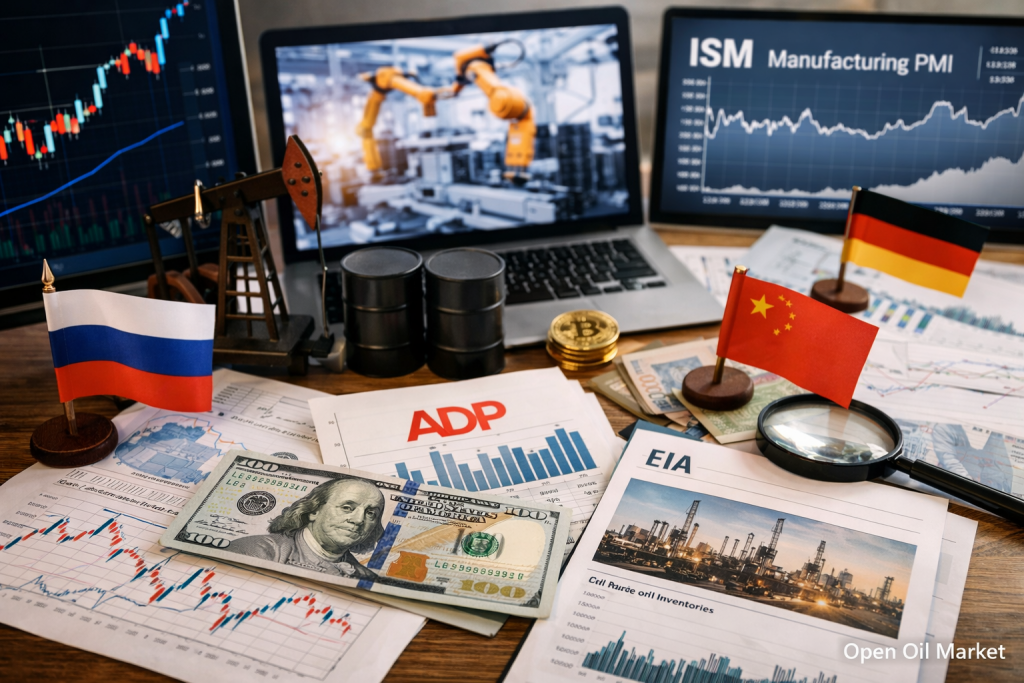
Fuel Crisis in Russia: Shortage, Price Controls, and Export Restrictions
At the end of September, the shortage of motor fuel intensified in many regions of Russia. Independent filling stations began to limit the sale of gasoline – not more than 10-20 litres per person; some major chains temporarily ceased the sale of fuel in canisters. Exchange prices for petroleum products reached historical highs, prompting an increase in retail prices: the average cost of AI-92 gasoline exceeded 60 rubles per litre. In several regions, small non-network filling stations suspended operations as government-fixed retail prices rendered fuel trading unprofitable. The gasoline deficit is most acutely felt in regions remote from major oil refineries, such as Crimea and the Far East; by the end of the month, supply issues even affected central parts of the country (Moscow Region, Volga Region, etc.).
- Causes of the Crisis: A combination of factors disrupted the fuel market's equilibrium. A seasonal surge in demand (the autumn harvesting campaign and increased road transport activity) coincided with a reduction in supply due to planned and emergency repairs at refineries, exacerbated by rising drone attacks on oil infrastructure. An additional factor is the disruption of the damping mechanism: the compensatory scheme ceased to function effectively with a sharp rise in exchange prices, leading to interruptions in wholesale supplies.
- Export Restrictions: The Russian government has introduced emergency measures to saturate the domestic market. The complete ban on the export of automotive gasoline, which was previously introduced as a temporary measure, has been extended at least until the end of 2025. The export of diesel fuel is also restricted – independent traders are prohibited from exporting DТ until the end of the year (oil companies with their own refineries are allowed partial exports to maintain incentives for processing). Furthermore, adjustments to the parameters of the damping subsidy in favour of refiners are being considered to compensate for rising costs. These steps aim to redirect maximum volumes of gasoline and diesel to the domestic market and curb prices at filling stations.
- Price Controls at Filling Stations: Simultaneously, oversight of the retail fuel market has intensified. The Ministry of Energy and the Federal Antimonopoly Service (FAS) are sending requests to filling station owners to justify the recent rise in gasoline prices. According to officials, warnings have been issued to several filling stations in the Tver and Tyumen regions for unjustified price increases. In case of identified violations, companies face fines and directives to reduce fuel prices, up to the suspension of operations in cases of systematic violations. Such a stringent response from regulators is due to the situation whereby individual stations are closing or limiting gasoline sales due to shortages and an inability to operate at a loss.
Comment. This time, unexpected repairs at refineries have led to the risk of gasoline shortages in the domestic market, notes Sergey Tereshkin, CEO of the OPEN OIL MARKET fuel marketplace. The export ban will not solve the problem — the surplus capacity in the gasoline market even in normal periods does not exceed 15%, so to saturate the domestic market, it will be necessary to partially attract imports, for example, from Belarusian refineries, the expert emphasised in an interview with Izvestia.
Oil Market: Stable Prices Ahead of OPEC+ Meeting
The global oil market is concluding September with a relative calm after recent price peaks. Brent quotes are holding at around $68–69 per barrel (slightly below last week's highs), while American WTI trades in the range of $64–65. Investor sentiment has been influenced by expectations of increased supply: OPEC+ countries signal readiness to boost production, and actual shipments to the market have already begun to rise. According to industry sources, the alliance is considering a slight increase in quotas – by about +130–150 thousand barrels per day from November. A final decision will be made on 5 October during the upcoming OPEC+ meeting, and market participants are cautiously monitoring any news from the cartel.
- Geopolitical Risks: Despite hints of increased supply, factors remain that could once again drive prices up. Washington is urging allies to intensify sanctions pressure on the Russian oil sector – up to a complete halt in purchases and the introduction of 100% tariffs on imports of Russian oil for Asian countries. Any tightening of sanctions threatens to reduce global supply and create a new wave of tension in the energy market. At the same time, conflicts in the Middle East and Eastern Europe remain unresolved, which could disrupt production or oil exports at any moment, further embedding a risk premium in prices.
- Limited Production Reserves: Experts note that while OPEC+ declares readiness to increase production, the actual potential for growth is limited. Many alliance members are already close to their maximum production capacities, so even a confirmed increase in quotas may yield only a moderate increase in actual supply. Nevertheless, the very fact of coordinated easing of restrictions by OPEC+ is expected to keep Brent in the $65–70 per barrel range in the coming weeks.
- Russian Oil Exports: Despite sanctions, Russia is successfully redirecting export flows. Key importers in Asia continue to purchase Russian oil: it is estimated that raw materials from Russia now cover up to one-third of India’s needs. There has not yet been a significant reduction in these volumes, although threats of new restrictions persist. Russian supplies to alternative markets help to smooth global supply and demand balance, but further sanctions pressure could narrow this channel.
Natural Gas: Full Reserves in Europe Ensure Stability
The natural gas market is experiencing a relatively favourable situation as it enters the heating season. EU countries have accumulated record gas reserves in advance: underground storage facilities in Europe are filled to over 90% of total capacity – significantly above last year’s levels. This volume serves as a serious “safety cushion” and reduces the risk of a repeat of last year’s price shocks in winter. Wholesale gas prices (TTF index) are holding in a comfortable range of around €30–35/MWh, and market volatility is noticeably lower than in the turbulent year of 2022.
- Successful Injection and LNG Imports: The mild summer weather and conservation measures allowed European consumers to fill storage facilities without urgency. Additional volumes flowed to the European market through record liquefied natural gas (LNG) imports – weak demand for LNG in Asia freed up some supplies that were redirected to the EU. As a result, even with reduced pipeline supplies from Russia, Europe has ensured a high level of gas security ahead of winter.
- Moderate Demand and Prices: Industrial gas consumption in Europe remains moderate, partly due to the implementation of energy-saving technologies and a transition of some enterprises to alternative fuels. This, combined with full storage, keeps prices stable. The TTF index fluctuates at relatively low levels, far from the peaks of 2022, easing the energy cost burden for the European economy as cold weather approaches.
In addition to the European situation, it is important to note the development of gas cooperation in the post-Soviet space. Russia and Belarus have agreed on key parameters for natural gas supplies over the next five years. It is expected that Minsk will retain preferential conditions for Russian gas, allowing the republic to plan its economy with predictable energy prices. Expansion of cooperation in nuclear energy is also being discussed: Belarus is considering the construction of another nuclear power plant with technological support from Russia (such plans were announced by President A. Lukashenko at a recent energy forum).
Record Demand for Electricity and Energy Systems
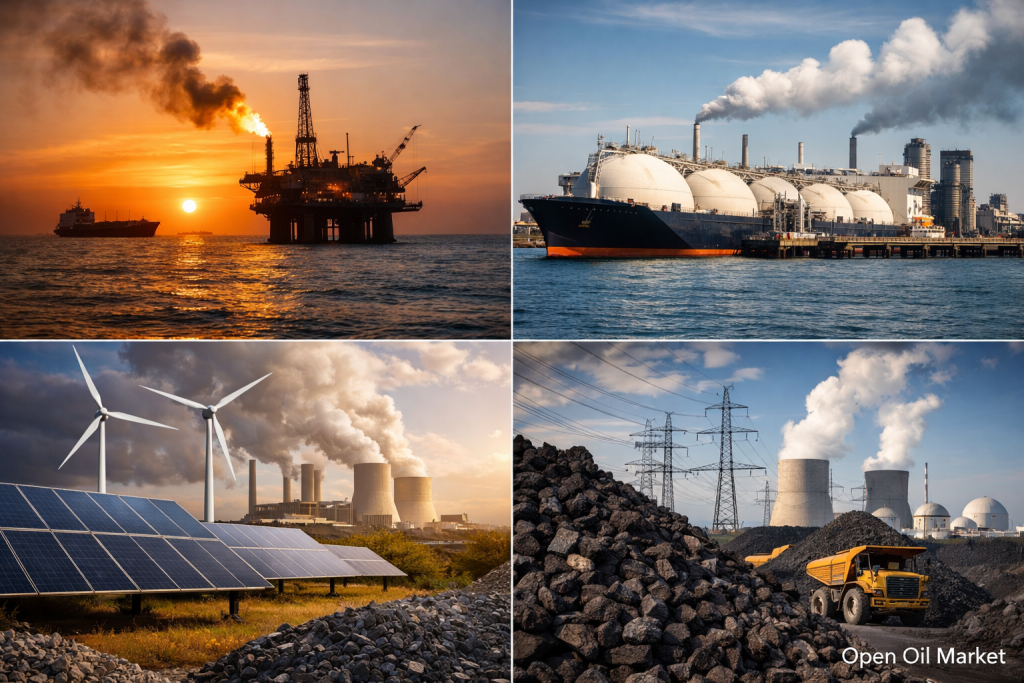
Global electricity consumption continues to set new records with increasing economic activity and technological shifts. It is projected that 2025 will be a record year for the volume of electricity generation and consumption worldwide. The primary contribution comes from large economies: in the USA, a historical maximum of over 4.1 trillion kWh is expected, significantly exceeding last year’s level. This growth is explained by several factors: rapid development of data centres and infrastructure for artificial intelligence, the mass adoption of electric vehicles, and a transition of some industrial and residential heating from gas to electricity. Similar trends are observed in developing economies in Asia and the Middle East, where population growth and industrialisation lead to record electricity demand.
The rapid increase in load presents new challenges for energy systems in various countries. On one hand, high energy consumption reflects economic growth and opens opportunities for energy companies. On the other hand, it increases pressure on infrastructure, necessitating modernisation and expansion. Several countries have announced large-scale investment programmes to develop electricity networks and generating capacities to avoid power shortages and prevent outages. Current forecasts for Russia and CIS countries show more moderate demand growth (around +2–3% in 2025 in Russia), but even in our region, amidst geopolitical factors, adaptations to energy systems are required: electricity exports from Russia to neighbouring countries have decreased, and focus is placed on maintaining the reliability of internal networks.
- Shifting Generation Structure: The global energy balance is gradually shifting towards clean energy. In the USA, the share of natural gas in electricity generation is set to decrease in the coming years from ~42% to 40%, the share of coal has stabilised around 16%, and nuclear generation continues to gradually decline (from 19% to ~18%). Simultaneously, the share of renewable energy sources is steadily increasing: the commissioning of new solar and wind stations adds to their contribution to electricity generation year after year.
- Regional Characteristics: In CIS countries, the pace of energy consumption growth is more restrained, yet modernisation is in full swing. Regional countries (Russia, Kazakhstan, Uzbekistan, etc.) are investing in upgrading electricity networks and constructing modern generation facilities, including RES. The goal is to meet growing demand and increase energy efficiency while avoiding outages even during peak loads.
Renewable Energy: Investments and New Records
The renewable energy sector is demonstrating unprecedented growth in 2025. Global investments in “green” energy are breaking records: in the first half of the year alone, about $390 billion was invested in solar, wind, and other clean technology projects, which is 10% more than in the same period last year. Capital is primarily directed towards the construction of new solar and wind power plants, as well as the development of energy storage infrastructure (industrial batteries) and modernising networks to integrate distributed generation.
High rates of capacity growth are confirmed by statistics: in the first six months of 2025, around 380 GW of new solar power plants were installed worldwide – that’s two-thirds more than in the first half of 2024. This leap is significantly attributed to large-scale projects in China, India, and the USA, along with accelerated construction of solar parks in the Middle East and Europe. Wind energy is also advancing actively: large offshore wind farms have been commissioned off the coasts of the UK, China, and Vietnam, adding tens of gigawatts of capacity. Thanks to this, the aggregate share of RES in global electricity production is reaching new highs.
- Increasing Share of RES: Clean energy sources are taking on an increasingly significant role in generation. On average globally, solar, wind, hydro, and other renewable energy account for about 30% of electricity generation. In the European Union, this figure exceeds 45% thanks to the implementation of an ambitious "green transition" programme. In China, the share of RES is approaching 30%, while absolute volumes of the Chinese energy system continue to expand rapidly.
- Government Support: The governments of major economies are enhancing their support policies for RES. New climate goals have come into effect in the EU, requiring accelerated deployment of clean capacities; in the USA, the implementation of subsidy and tax relief programs for equipment manufacturers and investors continues (under the "Inflation Reduction Act", IRA). CIS countries are also not lagging behind: Russia, Kazakhstan, and Uzbekistan are announcing tenders for the construction of solar and wind stations, guaranteeing capacity selection and providing other incentives for investors.
- Industry Challenges: Record growth does not come without challenges. Demand for materials and components (such as polysilicon for solar panels) remains high, creating tension in production-logistics chains. In many countries, energy infrastructure requires modernisation to accept a larger share of intermittent generation. Despite these issues, the course towards decarbonisation of the energy sector remains unchanged – investments in RES are expected to continue increasing, bringing global energy closer to new environmental standards.
Coal: Asian Demand and Coal Phase-Out Policies
The global coal market has shown a temporary surge in activity after a prolonged decline. In August, the volume of global thermal coal supplies reached a maximum in the past year. This is primarily due to a sharp increase in imports from East Asian countries: China, Japan, and South Korea have ramped up coal purchases for their power plants. The combined imports of these three economies in August rose by nearly 20% compared to the previous month. The main reason is internal factors in China: coal production has temporarily been reduced (safety measures and environmental restrictions), while electricity demand in industry has recovered. The missing generation volume was compensated by additional coal imports, which pushed regional prices up: the price of Australian Newcastle coal exceeded $110 per tonne (a maximum over the past five months).
Analysts note that this surge is likely to be short-lived. If Chinese production returns to normal and winter in Asia is mild, demand for imported coal may decrease again. It is already projected that by the end of 2025, global coal trade will likely lower compared to last year, continuing a long-term trend. Meanwhile, Western countries are steadfastly implementing coal phase-out policies: the share of coal generation in the EU’s electricity sector has fallen below 10% (compared to 15-16% a few years ago), and 11 EU countries intend to fully phase out coal-fired power plants by 2030. Transitioning to gas and RES, along with imposing carbon taxes, render coal increasingly uncompetitive in the West. Even in traditionally "coal-producing" Germany, electricity generation from coal-fired plants has decreased in 2025, despite the surge in 2022-2023.
At the same time, some major economies are not yet ready to part with coal entirely. In the USA, federal authorities have announced plans to support the coal industry: expanding mining licensing and allocating around $600 million for the modernisation of coal power plants, thereby extending their operational lifespan. These measures are motivated by a desire to strengthen energy security and preserve jobs in mining regions but draw criticism from environmentalists. Experts warn that such steps could complicate the achievement of climate goals, especially considering the parallel ramp-up of oil and gas production in several countries.
Forecasts and Expectations
The beginning of Q4 2025 keeps participants in the fuel and energy market on edge for several reasons. First, the upcoming OPEC+ decision (the meeting is scheduled for 5 October) largely determines the direction of oil prices: if the alliance officially confirms even a slight increase in production, this may anchor Brent quotes in the $65–70 per barrel range. However, much will depend on the realisation of these plans and the overall supply situation – markets suspect that any additional production growth may prove symbolic. Secondly, winter approaches in Europe and Asia: record gas reserves reduce the likelihood of shortages, but the weather remains unpredictable. A mild winter would strengthen the stability of the gas market and help avoid price spikes, while extreme cold can lead to a price rise even with full storage.
In the Russian domestic market, all efforts are focused on normalising the fuel situation. Experts expect that in October, the effects of the measures taken will begin to be felt: as unscheduled repairs at some refineries are completed and export volumes are redirected to domestic filling stations, the gasoline deficit should gradually decrease. The government prioritises restoring stable supplies and maintaining retail prices, including through an updated damping mechanism and manual control over filling station margins. If new force majeure circumstances can be avoided, the Russian fuel market may enter winter without acute disruptions. Nonetheless, volatility persists: any unforeseen factors—from new geopolitical shocks to technological breakdowns—could once again exacerbate the situation. Market participants are aware of these risks as they plan their activities, hoping for a gradual stabilisation by the end of the year.