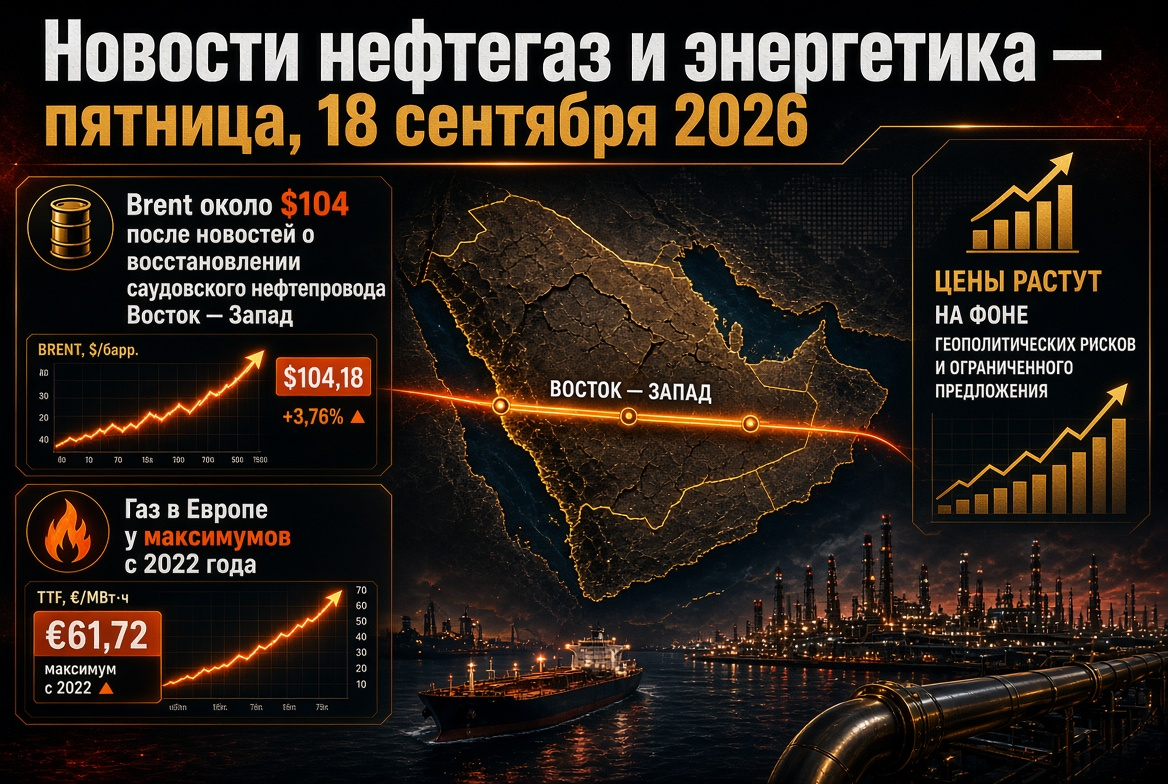
Oil and Gas News and Energy Update for Thursday, 29 January 2026: Global Oil and Gas Market, Electricity, Renewables, Coal, Refineries and Key Trends in the Energy Sector for Investors and TEP Participants.
The global fuel and energy complex (TEK) is facing new challenges amidst extreme winter cold and geopolitical tensions. Investors and market participants are closely monitoring the situation, assessing the impact of weather-related disruptions, sanctions policies, and the energy transition on the oil and gas sector and electricity generation.
- An extreme winter storm in the USA temporarily knocked out up to 15% of oil production and significantly reduced gas output.
- Oil prices (Brent ~ $65/barrel) are stable; OPEC+ signals maintenance of current production restrictions.
- Escalation of the US–Iran conflict increases supply disruption risks, despite ongoing peace negotiations concerning Ukraine.
- Natural gas prices in North America and Europe have surged amid freezing conditions; gas inventories in the EU have dropped to multi-year lows.
- Renewable energy has achieved a record share in Europe’s electricity generation, but weak grids and harsh winter conditions have highlighted the need for backup capacities.
- The USA is easing sanctions against Venezuela following a change in government, opening the door for increased heavy oil exports to the global market.
Oil: Storm in the USA and Price Stability
In the USA, a powerful winter storm led to a temporary halt of up to 2 million barrels per day in oil production (approximately 15% of the national total). The Permian Basin bore the brunt, but production began to recover within a few days. In this context, oil prices stabilised after a spike earlier in the week: Brent held steady at around $65 per barrel, while WTI was around $60. Despite temporary disruptions, both benchmark grades managed to maintain a growth of approximately 2–3% for the week.
Extreme cold also impacted oil refining. Several major US refineries reduced operations due to equipment freeze-up, resulting in a spike in petroleum product prices—particularly for diesel fuel and heating oil. Nevertheless, a serious fuel shortage was averted thanks to existing inventories and the swift resumption of operations as temperatures rose.
Meanwhile, global oil supply is returning to previous levels. In Kazakhstan, oil production is set to resume at the largest field following repairs to the export pipeline, thus increasing the flow of Caspian crude. OPEC+ countries, ahead of their upcoming meeting, are signalling their commitment to current quotas, which means that no production increases are planned for March. Therefore, despite natural disruptions, the global oil market remains relatively balanced.
Geopolitical Risks: Iran, Sanctions and Negotiations
Geopolitical tensions continue to cloud the energy market. The conflict between the USA and Iran has intensified, with President Donald Trump announcing the deployment of a “fleet” off Iran’s shores and threatening measures over the suppression of protests and Tehran's nuclear ambitions. Iran has responded by promising to treat any attack as a "total war." Such statements add a risk premium to oil prices, as traders fear supply disruptions from the Middle East.
Simultaneously, cautious optimism surrounds the ongoing negotiations between Russia, Ukraine, and the USA. Successful dialogue could lead to a gradual easing of Western sanctions against the Russian oil and gas sector, altering the configuration of global energy flows. However, for now, the sanctions regime remains strict: the export of Russian oil and gas is limited by price caps and redirected primarily to Asia. Investors continue to assess geopolitical risks, keeping an eye on both Middle Eastern events and potential shifts in sanctions policy.
Natural Gas: Cold Snap and Price Surge
The natural gas market has faced severe impacts from extreme cold weather. In the USA, widespread “freezing” of wells occurred during the winter storm: up to 16% of gas production was temporarily halted—more than during the 2021 crisis. Daily gas production fell from approximately 110 to 97 billion cubic feet (from 3.1 to 2.7 billion cubic metres), prompting a sharp price surge. Henry Hub futures soared more than twice, exceeding $6 per million British thermal units (MMBtu), equating to around $210 per thousand cubic metres. As the cold subsides, prices have retreated, but the situation remains extremely volatile and weather-dependent.
Europe is also confronting a gas supply deficit. By mid-winter, European storage facilities had fallen to below 50% capacity (a minimum in recent years), as prolonged cold drastically increased gas withdrawal. Spot prices in the EU skyrocketed to around $14 per MMBtu (approximately $500 per thousand cubic metres), the highest in recent months. The supply-side factors played a crucial role: LNG exports from the USA were temporarily halved due to issues at terminals, limiting gas inflows into Europe and pushing prices higher. Some LNG cargoes were redirected to the domestic US market for better revenue, exacerbating the situation on the global market.
In the coming weeks, gas prices in Europe will hinge on weather developments. A mild February could offer respite to the market, though gas inventories will still be significantly lower than normal by the end of winter. EU governments and companies will need to actively replenish storage during the interseason, competing for LNG on the global market. Analysts warn that a new cold wave or delays in deliveries could trigger another price spike, as the global gas market has become more interlinked and sensitive to local disruptions.
Electricity and Coal: Strain on Grids
Energy systems in the Northern Hemisphere are under increased strain. In the USA, the operator of the largest eastern power grid (PJM) initiated a state of emergency: daily peak consumption exceeded 140 GW, threatening rolling blackouts. To maintain balance, authorities had to activate backup diesel generators and oil-fired power plants until the end of January. This averted a blackout but required burning more oil and coal instead of gas. Amid the arctic cold, wind and solar generation sharply dropped, leading to maximum utilisation of traditional (hydrocarbon) capacities to meet demand.
A similar situation is observed in Europe: electricity demand surged, and several countries temporarily reinstated coal-fired power plants to manage peaks. Although coal's share in the EU's electricity generation fell to a record 9.2% in 2025, its usage has locally increased during the current winter. Simultaneously, infrastructural limitations have become apparent: insufficient grid capacity forces restrictions on wind farms at peak production, resulting in lost cheap energy and increased prices at other times. Experts are urging the acceleration of grid modernisation and the implementation of storage systems to enhance the resilience of the energy system and reduce dependence on coal in emergencies.
Growth of Renewables and Energy Transition
The transition to clean energy is continuing at an accelerated pace. In 2025, EU countries generated more electricity from wind and solar (30% of generation) than from all fossil sources (29%) for the first time. Overall, low-carbon sources (renewables and nuclear power) accounted for 71% of electricity production in the EU. This record generation was supported by the introduction of new capacities: the total installed capacity of solar parks increased by 19% over the year. In some countries (Spain, the Netherlands, Hungary, etc.), solar energy already covers more than one-fifth of national consumption.
Despite these successes, Europe is grappling with issues of energy affordability and network constraints. Price increases in 2025 coincided with periods of peak gas plant utilisation and forced outages of some wind farms due to grid overloads. To reduce prices and ensure stable integration of renewables, investment in expanding electrical grids and energy storage systems is essential. At the political level, some governments (e.g., Germany and the Czech Republic) have achieved relief from EU climate measures, while Brussels has simultaneously reached a deal with Washington for the purchase of additional volumes of American energy resources. This has sparked discussions about the balance between environmental objectives and energy security.
The trend towards clean energy development is also strengthening on a global scale. In 2025, China and India commissioned record amounts of solar and wind power, resulting in the first reduction in carbon emissions in their electricity sectors in over 50 years, despite rising overall consumption. In 2026, further investment inflows into green projects are anticipated worldwide. However, the current crisis has underscored the critical importance of reliable traditional capacities for meeting peak demand and emergency situations. In the coming years, countries will face the challenge of balancing accelerated development of renewables with maintaining sufficient backup capacities based on fossil fuels.
Venezuela: Returning to the Oil Market
An important development has been the easing of the sanctions regime against Venezuela. In January, following a change in government in Caracas, Washington announced plans to lift some of the restrictions imposed in 2019 to increase oil supply on the global market. A general licence is expected to be issued, allowing foreign companies to expand their operations in Venezuela's oil and gas sector. Recipients will include partners of the state-owned PDVSA—Chevron, Repsol, Eni, Reliance, and others, who have already submitted applications to increase production and exports.
Experts forecast that Venezuelan oil exports will begin to grow rapidly. By the end of 2025, shipments had fallen to 500,000 barrels/day due to sanctions (down from 950,000 barrels/day in November), but in 2026 they could exceed 1 million barrels per day. The USA has already agreed with Caracas on the first deal worth $2 billion to replenish its strategic reserve and is also discussing an investment plan of around $100 billion for rehabilitating Venezuela's oil industry—from production fields to refineries and electrical networks. The first tankers of Venezuelan oil have already arrived at US ports under special permits, partially relieving PDVSA's storage facilities. Refineries on the American Gulf Coast that are designed for heavy Venezuelan oil are preparing to resume processing this crude. Additional volumes from Venezuela may adjust the balance in the OPEC+ market; however, it is expected that production recovery will take time due to aged infrastructure.
Market Expectations and Conclusions
Despite all the upheavals, the global energy market is entering February 2026 without panic, although it is in a state of heightened readiness. Short-term risks (weather and politics) are sustaining price volatility for oil and gas, but the systemic balance of supply and demand has yet to be disrupted. OPEC+ is preventing the oil market from facing shortages, and the rapid recovery of production and international supplies is smoothing over local disruptions. Unless new extraordinary events occur, oil prices are expected to remain near current levels (~$60–65 for Brent) until the next OPEC+ summit.
In the gas market, much will depend on weather conditions: a mild end to winter could further reduce prices, while a new cold front may again lead to spikes. Europe will need to replenish its depleted gas reserves before next winter, and competition with Asia for LNG will remain a factor of high pricing. Investors are also monitoring political developments: any changes regarding Iran and Venezuela or a shift in the war in Ukraine could significantly alter market sentiment.
In the long term, the energy transition remains highly relevant; however, recent events have reaffirmed the critical importance of reliable traditional capacities. Companies and governments will need to seek a balance between investing in renewables and ensuring reserves based on fossil fuels. In 2026, a key objective will be achieving this balance: maintaining energy security while simultaneously progressing towards climate goals.