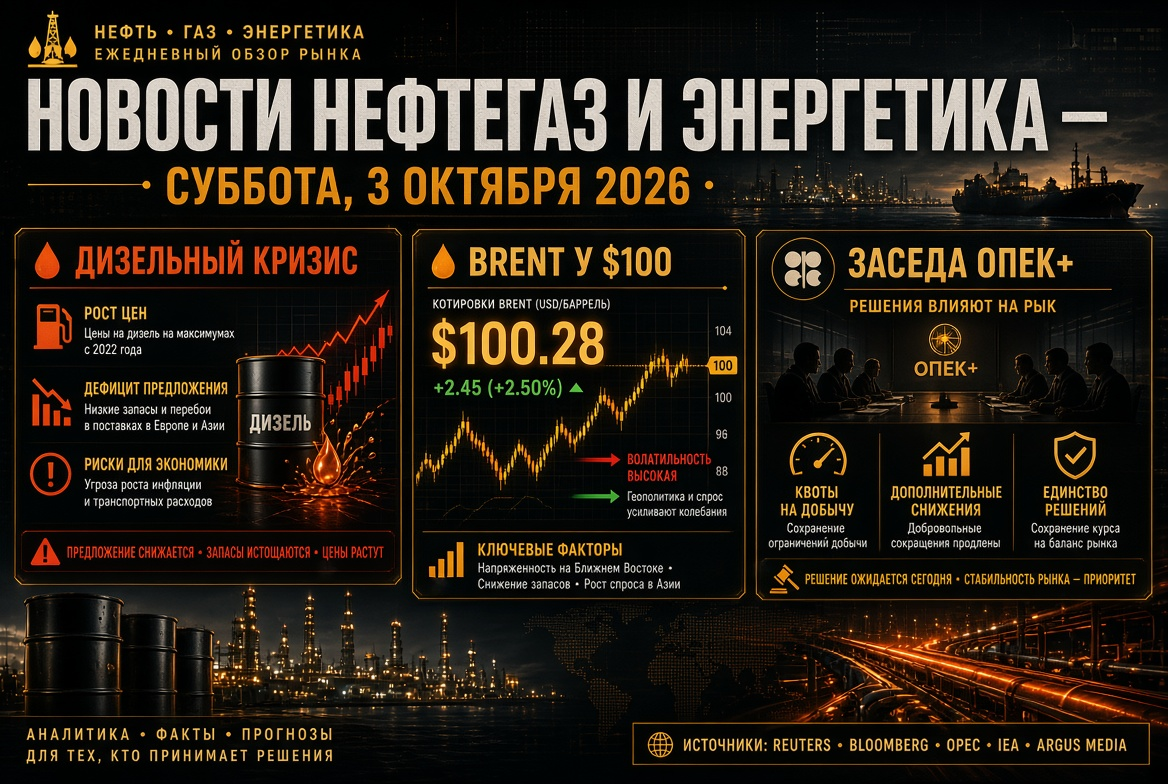
Oil and Gas News and Energy Market Update for Wednesday, 10 June 2026: Oil Corrects after Lowering Military Premium, but Risks Surrounding the Strait of Hormuz, LNG, Oil Stocks, Refining, Electricity, and Renewables Keep Tension in the Global Fuel and Energy Sector
The global fuel and energy sector approaches Wednesday, 10 June 2026, in a state of sharp risk reassessment. Following several weeks of heightened volatility, oil has corrected in light of signals indicating a pause in direct confrontations in the Middle East. However, a key issue for investors and stakeholders in the energy sector remains: logistics through the Strait of Hormuz continue to be constrained, oil and product stocks are declining, and the gas and LNG markets remain subject to supply chain routes and competition between Europe and Asia.
For oil companies, fuel traders, refineries, electricity producers, and investors, the main takeaway of the day is that the market has transitioned from a phase of panic-driven price increases to a more complex phase: the geopolitical premium has partially dissipated from quotations, yet a fundamental supply deficit, high energy security costs, and structural demand for electricity continue to sustain tension in both the raw materials and energy sectors.
Oil: Brent and WTI Correction Does Not Imply Removal of Systemic Risk
A key event for the oil market has been the decline in global prices following reports of the cessation of direct attacks between Iran and Israel. Brent has dipped to around $90 per barrel, while WTI has fallen below $87. This has signalled to the market that a portion of the military premium priced in has begun to exit rapidly.
However, it is crucial for investors not to confuse short-term correction with a full market normalisation. Oil remains sensitive to three key factors:
- the availability of maritime logistics through the Strait of Hormuz;
- the pace of recovery in production in the Middle East;
- demand dynamics from China, India, the USA, and Europe.
If logistics recover slowly, the oil market could quickly revert to growth, especially in the event of new supply disruptions. Conversely, should political resolution accelerate, investor focus may shift from raw material shortages to risks of slowing demand.
Oil Stocks: The Main Hidden Risk for the Global Market
Even amidst declining prices, the fundamental picture remains tense. Oil inventories in the world’s largest economies are reportedly moving toward multi-year lows, indicating that the market is currently balancing not only through current production but also through active utilisation of accumulated reserves.
For the oil and gas sector, this creates a dual effect. On one hand, falling inventories support oil prices and improve cash flows for producing companies. On the other hand, overly rapid consumption of reserves increases the global economy's vulnerability to any new disruption—from infrastructure accidents to sanctions or climatic factors.
As of 10 June 2026, investors should monitor the following indicators:
- weekly oil stock statistics in the USA;
- utilisation rates of oil refineries;
- exports of crude oil and petroleum products;
- spreads between Brent, WTI, and regional grades;
- dynamics of strategic reserves among the largest consumers.
OPEC+: Quota Increases are Here, but Physical Supply is Limited
OPEC+ has agreed to a further increase in target production levels starting from July. Formally, this appears as a signal of additional supply in the oil market; however, the practical significance of this decision is limited. While parts of export routes and production chains remain disrupted, increases in quotas do not always translate into real barrels for buyers.
For oil companies and traders, this is an important nuance. The market will assess not only OPEC+ declarations, but also actual production, export shipments, the availability of tankers, and cargo insurance. If logistical constraints persist, oil prices may remain elevated above levels justified solely by supply-demand balance.
Moreover, following the restoration of supplies, the market may face the opposite risk: if the closed volumes quickly return to export, oil prices could shift from a fear of shortage to a fear of oversupply.
Gas and LNG: Asia Returns to Purchasing, Europe Competes for Volumes
A central theme in the gas market remains LNG. After the shock associated with supply constraints through the Middle East, Asian demand has begun to recover. China and Japan are increasing purchases, India is seeking alternative routes, and some US LNG is once again being redistributed between Asia and Europe.
For Europe, this signifies increased competition for available gas shipments as the next heating season approaches. The European gas market remains more resilient than during the crisis periods of 2022-2023, yet its dependence on LNG makes prices sensitive to any resurgence in demand from Asia.
The primary factors for the gas market in the coming weeks are:
- the pace of filling European underground gas storage;
- supplies of LNG from the USA, Qatar, Africa, and Australia;
- summer electricity demand in Asia;
- prices for gas for industry and energy;
- generational shifts between gas and coal.
Refineries and Oil Products: Margins Remain High, Diesel in Focus
The refining sector remains one of the most sensitive segments of the global fuel and energy sector. Supply restrictions for crude oil and oil products from the Persian Gulf region have already led to an increase in refining margins. Particular tension persists in diesel fuel, aviation kerosene, and certain types of middle distillates.
For refineries, a high margin appears positive, but only with stable access to crude oil. Plants that have reliable procurement channels and the ability to export oil products gain an advantage. Conversely, refiners in regions with expensive logistics and weak domestic demand face the risk of reduced utilisation rates.
For fuel companies, not only oil prices matter, but also the end prices of gasoline, diesel, fuel oil, bitumen, and aviation fuel. In an environment of costly logistics and unstable supplies, oil products may rise in price faster than crude oil.
Electricity and Renewables: Energy Transition Accelerates Due to Price Volatility
The global electricity market is becoming a separate focus of investment attention. Amidst the volatility in oil and gas prices, countries are increasingly promoting the electrification of transport, industry, and the residential sector. At the same time, investments are rising in networks, energy storage, solar generation, wind farms, and nuclear energy.
Renewables remain the fastest-growing segment in the electricity sector, but their development increases the demands on energy system flexibility. The higher the share of solar and wind generation, the more important backup capacity, batteries, gas plants, intersystem transfers, and digital network management become.
For investors, three areas remain particularly promising:
- electricity networks and power transmission infrastructure;
- energy storage and balancing systems;
- contracts for the supply of clean electricity to industry.
Coal: Structural Decline Worldwide, but High Importance in Asia
Coal remains a controversial asset in the global energy market. In the long run, its share in electricity generation is declining under the pressure of renewables, gas, nuclear generation, and climate regulation. However, in the short term, coal continues to hold significance as a backup energy source, especially in Asia.
High LNG prices and interruptions in gas supplies are prompting some countries to utilise coal-fired plants more actively to cover peak demand. This is particularly pronounced in economies where the energy system must simultaneously ensure industrial growth, affordable tariffs, and network reliability.
For investors, the coal sector is now not a growth story, but rather one of cash flows, logistics, and regulation. Companies with low costs, access to ports, and long-term contracts remain resilient, yet political and environmental risks for the industry continue to rise.
Major Oil and Gas Companies: Focus Shifts to Efficiency
At the corporate level, global oil and gas companies continue to reshape their strategies. The focus is on capital expenditure discipline, reducing debt loads, enhancing production efficiency, and adopting a more cautious approach to low-margin energy transition projects.
Major international players are increasingly segmenting their businesses into several logical blocks: oil and gas production, refining, trading, petroleum products, low-carbon technologies, and gas projects. This is significant for investors, as the market demands transparency: which assets generate cash flows today, and which require long-term investments.
By 2026, oil and gas companies will be evaluated not only on reserves and production, but also on their ability to manage geopolitical, logistical, and investment risks.
What Investors and Energy Market Participants Should Pay Attention To
Wednesday, 10 June 2026, presents a mixed picture for the global energy sector. Oil has declined following a reduction in military premiums, but the market remains vulnerable due to inventory levels, logistics, and supplies through key maritime routes. Gas and LNG are transitioning into a phase of heightened competition between Europe and Asia. Refineries are benefitting from high margins but rely heavily on raw material availability. Electricity, renewables, and networks are becoming strategic avenues for capital.
For investors, oil companies, fuel traders, and energy market participants, the main indicators to monitor in the coming days are:
- the situation surrounding the Strait of Hormuz and maritime logistics;
- statistics on oil, gasoline, and diesel stocks;
- actual OPEC+ production relative to new quotas;
- prices for LNG in Asia and gas in Europe;
- refinery margins and the demand dynamics for oil products;
- investments in electricity, renewables, networks, and storage;
- the role of coal as a backup fuel in countries experiencing rising demand.
The main investment idea of the day is that the global energy market is no longer solely driven by oil prices. The focus is on supply chain resilience, flexibility in energy infrastructure, gas and LNG accessibility, oil product costs, electricity reliability, and companies' ability to adapt to the new geography of energy security.