Current News in the Oil, Gas and Energy Sector for Friday, 30 January 2026: Oil, Gas, LNG, Electricity, Renewables, Coal and Key Global Energy Market Events for Investors and Industry Participants
At the end of January 2026, the global fuel and energy complex faces a series of new challenges. Extreme winter cold and geopolitical tensions are impacting the oil, gas, and electricity markets, while the transition to clean energy continues. Investors and market participants in the energy sector are analysing how weather anomalies, sanctions policies, and new agreements are altering the balance of supply and demand in the oil and gas industry and the energy sector.
- Cold Weather and Production: An Arctic storm in North America has temporarily reduced oil production by approximately 2 million barrels per day (about 15% of US output) and gas production by around 16%, causing a short-term spike in prices.
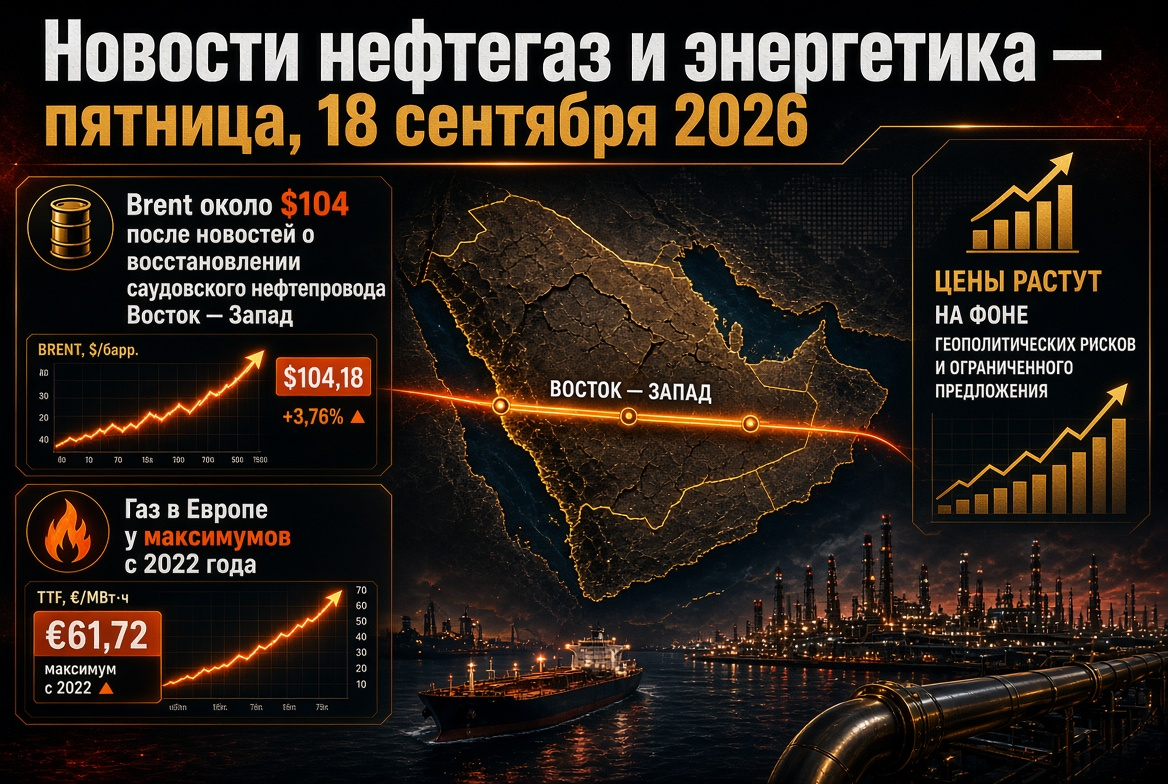
- Oil Prices: Brent remains around $65 per barrel amid cautious OPEC+ policies – the alliance signals its intention to maintain current production restrictions.
- Geopolitics: The intensifying conflict between the US and Iran increases the risks of supply disruptions, although peaceful negotiations regarding Ukraine are underway, raising hopes for a relaxation of sanctions.
- Gas Market: Harsh winter conditions have depleted European storage levels to the lowest in recent years (<50%), triggering a price rise to approximately $500 per thousand cubic metres.
- Energy System: A record share of renewables in Europe coincides with peak demands on networks; several countries have been forced to reactivate coal and oil-fired power plants to prevent rolling blackouts.
- Venezuela: Following a change in leadership, the US is easing oil sanctions, paving the way for increased exports of heavy Venezuelan crude and the country's return to the global market.
Oil: Storm Impacts and Price Stability
Extreme Cold in the US. A powerful winter storm that struck US oil-producing regions led to the freezing of wells and a temporary reduction in oil production by about 2 million barrels per day. The Permian Basin was particularly affected. However, production began to recover within days as temperatures rose. Despite a short-term spike in prices during the storm, the situation stabilised: the benchmark Brent crude trades around $65 per barrel, while American WTI is approximately $60.
The Role of OPEC+ and Market Balance. The stability of prices remains heavily influenced by OPEC+ policies. The oil-exporting alliance decided to maintain current production quotas at its January meeting, signalling its intention to prevent oversupply. In 2025, OPEC+ countries increased their output, regaining lost market shares, leading to an oversupply of about 2–2.5 million barrels per day. Now, the cartel is more cautious: in the face of slowing demand (especially in China) and the threat of overproduction, leading exporters are prepared to cut output again if necessary to keep prices from falling. Analysts predict that in the absence of new shocks, oil prices will trade within the $60–65 range during the first half of 2026, with an annual average Brent price around $55–60 per barrel.
Recovery and New Players. Overall, the oil market shows resilience in the face of short-term upheavals. The rapid recovery of American production and the stable performance of other major producers (Middle East, Latin America) smooth local disruptions. Additional supply is also beginning to emerge from Venezuela following the easing of sanctions (discussed below), which may recalibrate market balance in the future. Meanwhile, geopolitical risks remain the primary factor of uncertainty for prices.
Geopolitical Risks: Iran, Sanctions and Negotiations
Escalation in the Middle East. The international situation continues to influence energy markets. The conflict between the US and Iran has intensified: Washington responded sharply to Tehran's nuclear ambitions and internal protests, deploying a carrier strike group to Iranian shores. President Trump has threatened Tehran with "serious measures," demanding a revision of its policies. In response, Iran has stated it would interpret any attacks as a declaration of total war. Such rhetoric heightens traders' nerves and adds a geopolitical premium to oil prices due to concerns over supply disruptions from the Middle East.
Western Sanctions Policy. Concurrently, Western sanctions against Russia remain in place, although there is cautious optimism in diplomatic circles. The European Union is preparing to lower the price cap on Russian oil to $45 per barrel (down from the current $60) starting 1 February 2026, increasing pressure on Russian exports. Moscow has already extended its own embargo on oil supplies to countries supporting the price cap until 30 June 2026. Nonetheless, Russian exports of oil and oil products remain relatively high due to the redirection of flows to Asia, where China, India, and others are purchasing crude at a discount. Furthermore, the US Treasury Department has extended a license allowing operations with some foreign assets of one major Russian oil company, effectively softening certain sanctions.
Negotiations and Hopes for De-escalation. Amidst the confrontation, glimmers of hope emerge from negotiations between Russia, the US, and Ukraine. Dialogue continued in January, and experts do not rule out the possibility of gradually reducing sanctions pressure if progress is made in the conflict resolution in Ukraine. Any thaw in relations could significantly alter the configuration of global energy flows. Investors are closely monitoring political signals: developments regarding Iran, Venezuela (sanctions easing), or the success of peace initiatives can substantially affect market sentiment and redistribute risks in the commodity market.
Natural Gas: Cold Weather and Price Spike
Cold Winter and Production Decline. The natural gas market is experiencing a real stress test due to abnormal cold weather. In the US, the winter storm caused widespread freezing of gas wells, resulting in a temporary halt of up to 16% of gas production. Daily production during the worst of the weather fell from 110 to around 97 billion cubic feet (from 3.1 to 2.7 billion cubic metres). This instantly reflected in prices: Henry Hub gas futures more than doubled, surpassing $6 per million British thermal units (approximately $210 per thousand cubic metres). With the cold abating, supply is gradually recovering, and prices have receded from their peaks, but volatility remains elevated.
Europe on the Brink of Deficit. In Europe, prolonged cold weather has led to a sharp increase in demand for gas for heating and power generation. By the end of January, levels in underground storage facilities of the European Union had dropped below 50% of total capacity – the lowest level for this time of year in several years. Spot prices at the TTF hub reached over $14 per MMBtu (approximately $500 per thousand cubic metres), although still significantly below the record peaks of 2022. The situation was exacerbated by supply issues: LNG exports from the US dropped by nearly 50% due to disruptions at several terminals during the storm, which temporarily reduced tanker arrivals in Europe. Some cargoes of LNG were rapidly rerouted from the EU to the US domestic market, where prices were even higher – such a market rerouting intensified the pressure on the global gas market.
Diversification and Prospects. To navigate the heating season, European countries are compelled to utilise all alternative gas sources. LNG imports remain at peak levels: a total of around 109 million tonnes of liquefied gas was imported into the EU in 2025 (+28% compared to 2024), with around 9.5 million tonnes expected in January 2026 (+18% year-on-year) to meet winter demand. Norway, Algeria, and other traditional suppliers are increasing pipeline exports, although fully compensating for the absence of Russian volumes (which ceased following the halt of pipeline gas from Russia from January) is challenging. In Eastern Europe, logistics are undergoing restructuring: Ukraine, having lost transit and faced declining domestic production, increased imports from the EU by approximately 20% (to around 30 million m³ per day) via Slovakia and Poland. Turkey and the Balkans are negotiating to procure additional Azerbaijani gas and increase LNG supply from the US. Simultaneously, Russia is accelerating the redirection of exports to the East: in 2025, 38.8 billion m³ of gas were supplied to China via the Power of Siberia pipeline, surpassing Gazprom's total exports to Europe and Turkey for the first time. In the coming weeks, the situation in the EU gas market will depend on the weather: if February is milder, prices will gradually decrease; however, in the case of another cold front, the region will face deficits once again. By spring, European countries will need to actively replenish depleted inventories, competing with Asian importers in the LNG market.
Electricity and Coal: Strain on Networks
Peak Loads in Winter. Winter colds are putting energy systems in northern latitudes to the test. In the US, January saw record electricity demand: the operator of the largest eastern grid (PJM) declared a state of emergency when daily peak consumption exceeded 140 GW, threatening to overload infrastructure. To prevent rolling blackouts, authorities had to resort to emergency measures– activating backup diesel generators and oil-fired power plants. These steps managed to avert a blackout but resulted in increased burning of oil and coal due to gas shortages and reduced renewable energy output during the extreme cold.
Return of Coal and Infrastructure Limitations. A similar picture emerged in Europe: high demand forced some countries to temporarily reactivate decommissioned coal-fired power plants to cover peak loads. Although coal's share in EU electricity generation dropped to a record low of 9% by the end of 2025, its usage has locally increased this winter. Simultaneously, infrastructure bottlenecks have emerged: insufficient grid capacity meant that during peak production periods of wind farms, operators had to limit the dispatch of "green" energy to avoid accidents. This resulted in lost cheap electricity on windy days and higher prices during calm periods. Experts note that enhancing the resilience of energy systems requires accelerated network modernisation and development of energy storage systems, otherwise, even with an increase in renewable shares, dependence on hydrocarbon sources during extreme situations will remain high.
Global Coal Generation Trends. Despite the climate agenda, coal still plays its role in the world. In Asia, particularly in China and India, coal consumption remains high to support industry and power generation. However, the symbolic outcome of 2025 was the concurrent reduction of coal-fired generation in these two largest countries – a first since the 1970s. In China, electricity production from coal decreased by approximately 1.6% year-on-year, while in India it fell by 3%, primarily due to the record roll-out of solar and wind capacities, which covered the increase in demand. This small decline signals the beginning of structural changes: the share of coal-based electricity generation is gradually decreasing, which is important for curbing greenhouse gas emissions. Nonetheless, in the short term, coal will continue to support energy systems during peaks and crises until renewables and storage solutions can fully take on this role.
Growth of Renewables and Energy Transition
Record Levels of Green Energy. The transition to clean energy is gaining momentum worldwide. In 2025, many countries achieved historic highs in the installation of renewable generation capacities. The European Union added about 85–90 GW of new solar and wind power in total, enabling it to generate more electricity from solar and wind (approximately 30% of total EU generation) for the first time in a year than from all fossil fuels combined (around 29%). Overall, the share of low-carbon sources (renewables plus nuclear) exceeded 70% in the EU's electricity generation structure. China also demonstrates impressive growth: over the year, more than 300 GW of solar panels and around 100 GW of wind farms were installed, allowing it to slightly reduce coal generation and slow the rise of emissions, even with increasing electricity consumption. The renewables market is also growing rapidly in India, the US, and the Middle East.
Growth Challenges and Trade-offs. The rapid growth of renewable energy presents new challenges. The main one is ensuring the reliability of energy supply amidst a high share of intermittent sources. This winter's experiences have shown that without adequate backup capacities and energy storage, even advanced "green" energy systems are vulnerable to weather anomalies. Governments in several countries are already taking action: large-scale projects are being launched for the construction of battery farms and implementation of energy storage technologies (including using hydrogen) to smooth peak loads. Simultaneously, some countries are revisiting their approaches: in Germany, a new coalition announced possible resumption of nuclear reactor operations, acknowledging the previous abandonment of nuclear generation as a mistake. Faced with rising electricity prices in 2025, Berlin and Prague achieved temporary relief from certain EU climate norms to avert an energy crisis.
Investments and International Cooperation. Despite challenges, the global energy transition will continue. In 2026, further growth in investments in solar and wind projects, as well as in grid modernization, is expected. Many countries are entering into new cooperation agreements in clean energy and energy resource trading. The EU and US signed an agreement at the end of 2025 to increase American energy resource supplies to Europe, which should help the EU meet its needs amid reduced imports from Russia. Such agreements spark discussions about balancing climate goals with energy security, but in the long term, the course towards decarbonisation remains unchanged – it simply requires a more flexible and balanced approach to implementation.
Oil Products and Refineries: A Fuel Market Under Pressure
High Prices Amidst Abundance of Crude. The global oil products market entered 2026 amid contradictory trends. On one hand, there is an overall abundance of crude oil across the globe which should contribute to lower prices for gasoline, diesel, and other fuels. On the other hand, several countries are facing local fuel shortages and rising prices due to logistical disruptions and low inventories. In the US, wholesale gasoline prices fell this winter from last autumn's peaks, but remain above average levels as refiners initially scaled back output due to oversaturation of crude, only then to be forced to sharply increase fuel production to meet the surge in demand during cold weather. In Europe, gasoline and diesel inventories are also insufficient – the harsh winter is draining oil product storage, maintaining high fuel prices in several EU countries.
Government Measures and Redistribution of Flows. To stabilise the fuel market, authorities are resorting to manual management and encouraging the redistribution of supplies. In Russia, following a record hike in gasoline prices in 2025, a temporary export ban on essential oil products was implemented; this restriction has now been extended until the end of February 2026, and there are discussions about introducing permanent export quotas to prevent shortages in the domestic market. Meanwhile, Russian refineries are gradually adjusting their logistics – increasing fuel supplies to friendly countries in Asia and Africa, compensating for the decline in exports to Europe. In the EU, conversely, some refineries are reorienting themselves to produce and export additional volumes of fuel to third countries in order to curb rising domestic prices and profit from high demand outside the EU. Strong demand for diesel and fuel oil in South Asia and Latin America is supporting refining margins, prompting global producers to increase output at the first opportunity. Infrastructure is also adapting: new storage tank facilities for fuel are being built in key ports, and traders are actively renting tankers for floating storage, awaiting favourable conditions for sales.
Impact of the Energy Transition. In the long term, the development of electric vehicles and tightening environmental regulations will reduce the growth in gasoline and diesel consumption, but over the next year or two, demand for oil products will stay high, especially in developing economies. Energy companies are trying to balance: they are investing in refinery modernisation for more efficient processing (for example, producing sustainable aviation fuel), while maintaining a focus on main fuel types that generate the bulk of profits. Thus, the oil products market is under dual pressure – the need to ensure stable supplies and simultaneously prepare for the structural reduction in the role of fossil fuels in the transport sector.
Venezuela: A Return to the Oil Market
Easing of Sanctions and New Opportunities. One of the most significant events at the start of 2026 has been Venezuela's partial return to the global oil market. After a change in leadership in Caracas, Washington has announced its willingness to lift some sanctions imposed since 2019, aiming to increase global oil supply and reduce prices. Shortly, a general licence is expected to be issued by the US, allowing foreign companies to expand their activities in Venezuela's oil and gas sector. Among potential beneficiaries are partners of state-run PDVSA, such as Chevron, Repsol, Eni, and India's Reliance, who have already stated plans to increase production and export of Venezuelan crude.
Production Increase and Initial Deals. Experts predict a rapid increase in exports from Venezuela over the year. If at the end of 2025 shipments dropped to about 500,000 barrels per day due to sanctions (down from nearly 1 million barrels per day the year before), the country may surpass the 1 million barrels per day mark again by the second half of 2026. The US, seeking to replenish its strategic reserves with cheap heavy oil, was the first to strike a $2 billion deal with Caracas – these funds will be allocated for the recovery of Venezuela's oil sector. In January, several tankers carrying Venezuelan oil arrived at US ports under special permits, allowing the unloading of PDVSA's storage. Refineries on the Gulf Coast, historically geared towards processing heavy Venezuelan crude, are preparing to increase their throughput, replacing it with costly blends from other sources.
Implications for the OPEC+ Market. Venezuela's return is shifting the balance of power within OPEC+. Although the country will need time and investment to significantly ramp up production (infrastructure has deteriorated over years of sanctions), any additional volume will exert downward pressure on prices. Saudi Arabia and its allies will closely monitor developments: if Venezuelan oil begins to make a significant presence in the market, OPEC+ may adjust its own production policies to prevent a new oversupply. Nonetheless, at the current stage, the allies welcome Caracas' return as a means to mitigate potential shortages in certain segments (such as heavy oil for refineries) and as part of a broader normalisation of global energy cooperation.
Market Expectations and Conclusions
Despite a series of shocks this winter, the global energy market enters February 2026 without panic. Short-term factors – extreme weather and geopolitics – uphold price volatility in oil and gas, but the systemic balance of supply and demand remains generally stable. OPEC+ continues to play the role of stabiliser, preventing oil markets from facing shortages, while operational redirection of supplies and output increases (as noted with the US and other countries) offset local disruptions. Unless new contingencies arise, oil prices are likely to remain close to current levels until the next OPEC+ meeting, when the alliance may reconsider quotas based on the situation.
For the gas market, the coming weeks will be decisive: milder weather in late winter will allow prices to fall and inventories to start recovering, whereas another cold front could again threaten spikes and challenges for Europe. In spring, EU countries will have to undertake an extensive campaign to replenish gas storage ahead of the next heating season – and competition with Asia for LNG is expected to be fierce, keeping prices elevated.
In strategic perspective, the events of this winter have highlighted the critical importance of reliable traditional capacities even amid an accelerated energy transition. Governments and companies around the world will seek a balance in 2026 between investments in renewables and ensuring energy security. The new conditions require flexibility: simultaneously increasing "green" generation and modernising networks, while also maintaining adequate thermal backup capacities. Investment decisions will be made with an eye on the lessons of recent crises: the priority remains energy system resilience. Thus, the coming year promises to be a time of careful balancing of interests – between growth, ecology, and security – that will define the trajectory of the global fuel and energy complex.