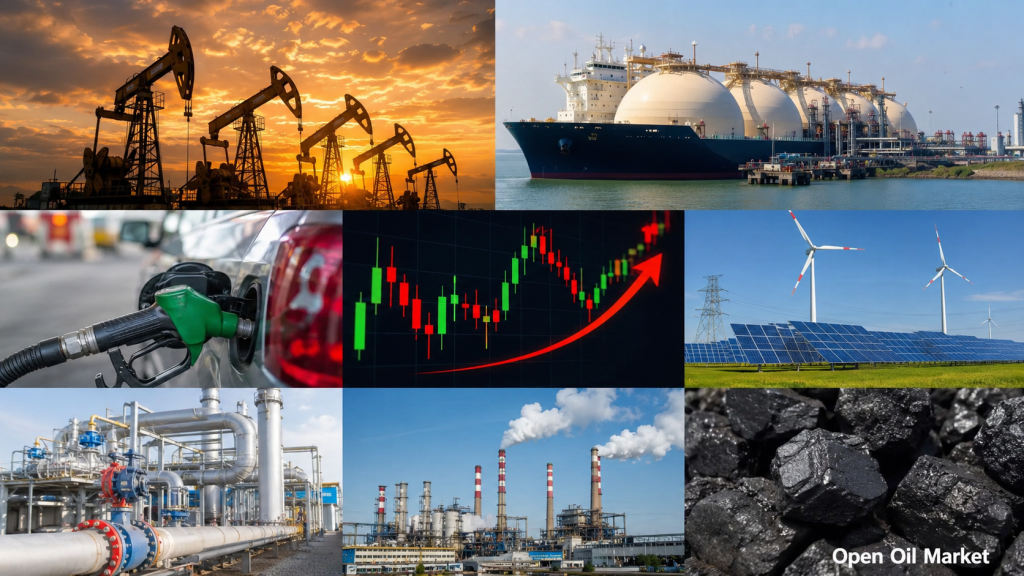
Oil and Gas and Energy News for Saturday, 2nd May 2026: The Hormuz Crisis, Expensive Oil, Tensions in the LNG Market, Refineries, Oil Products, Renewable Energy, Coal, and Key Investor Indicators in the Global Energy Sector
The global fuel and energy complex enters Saturday, 2nd May 2026, in a state of high uncertainty. The primary concern for investors, oil companies, refineries, oil product suppliers, gas traders, and electricity market participants is the ongoing tension surrounding the Strait of Hormuz. This factor continues to dictate oil prices, LNG costs, refining margins, coal generation dynamics, and investment demand for renewable energy.
For the global energy market, the current situation has become not just another geopolitical episode, but a test of the entire energy architecture. Oil remains expensive, gas markets are competing for limited LNG parcels, oil products are increasing in price faster than crude oil in certain regions, and the electricity sector is increasingly divided between countries with a high share of renewable energy and states dependent on imported fuels.
A key takeaway for investors is that the energy market has shifted from a short-term reaction to the crisis towards a reassessment of long-term risks. While previously oil, gas, coal, and electricity operated within separate cycles, now all segments of the energy sector are governed by a single logic: supply security has become more critical than the lowest price.
Three factors are coming to the forefront:
- Raw material logistics — availability of maritime routes, tanker fleet, and alternative export corridors;
- Refining resilience — the ability of refineries to procure raw materials and produce gasoline, diesel, jet fuel, and other oil products;
- Generation structure — the share of gas, coal, nuclear energy, and renewable energy in the energy balance of countries.
Oil: Brent Remains in the Geopolitical Premium Zone
The oil market continues to exhibit heightened sensitivity to any statements regarding negotiations, military risks, and the movement of vessels through the Strait of Hormuz. Even when Brent and WTI prices adjust in response to news of possible diplomatic contacts, the underlying risk premium remains high. For oil companies, this translates to increased revenue from production, whereas for refiners and consumers, it results in higher costs and pressure on demand.
Investors should note that expensive oil has a dual effect. On one hand, it supports cash flows for producing companies, especially in countries and regions with low production costs. On the other hand, excessively high prices accelerate demand destruction: consumers reduce travel, industries optimise energy costs, and airlines and logistics companies pass increased expenses onto tariffs.
OPEC+ After UAE's Exit: The Market Loses Some Predictability
A significant factor for the oil and gas sector has been the UAE's exit from OPEC and OPEC+. This event alters the balance within the producer group and diminishes the manageability of supply in the future. Currently, physical supply constraints from the Middle East are limiting the potential for rapid production increases, but once logistics normalise, the market may face a new phase of competition for market share.
For investors, this means the oil market is presented with two opposing scenarios:
- Deficit scenario — if supply constraints persist, oil and oil products could remain at high levels;
- Surplus scenario — if routes are restored and producers begin actively returning volumes, prices could sharply correct;
- Volatility scenario — the most likely option, where the market will quickly react to every news piece regarding production, export, and negotiations.
Refineries and Oil Products: Margin Becomes a Regional Story
The oil refining market is experiencing an uneven period. Globally, the shortage of crude oil and supply disruptions are supporting prices for diesel, jet fuel, and other middle distillates. However, refinery margins vary significantly across regions. In Europe, rising physical oil costs and competition from Asian buyers are pressuring refining economics, particularly for simpler plants with limited processing depth.
For fuel companies and oil product traders, this generates several practical implications:
- The significance of long-term crude contracts is increasing;
- The premium for access to stable logistics is growing;
- Complex refineries with high processing depth gain an advantage over simpler plants;
- The diesel and jet fuel market remains one of the most sensitive to disruptions.
Gas and LNG: Europe and Asia Compete for Flexible Supplies
The gas market remains under strain due to limited available LNG parcels and the need to replenish European storage before the next heating season. Following a weak end to the winter period, Europe is compelled to compete more aggressively for spot cargoes, while Asia also maintains a high demand for imported gas.
For the global gas market, not only the price level but also the availability of physical volume is key. The US remains an important supplier of LNG; however, high utilisation of export terminals restricts the ability to quickly ramp up supplies. This sustains investor interest in LNG infrastructure, gas transport assets, storage facilities, and companies capable of ensuring flexible fuel delivery.
Electricity: Countries with Renewables and Nuclear Gain a Protective Buffer
The electricity market increasingly demonstrates a divide between countries with high gas dependency and those where a significant portion of generation comes from renewables, hydropower, or nuclear. In Europe, gas-dependent economies face greater volatility in wholesale prices, whereas energy systems with developed low-carbon generation enjoy a natural protective buffer.
This trend is significant for investors for two reasons. Firstly, it increases the investment attractiveness of grids, energy storage, solar and wind projects. Secondly, it indicates that the energy transition is increasingly viewed not only as a climate policy but also as a tool for national energy security.
Renewables: The Energy Crisis Accelerates Demand for Independent Generation
Renewable energy is receiving an additional boost against the backdrop of expensive oil and gas. Solar energy, wind farms, battery systems, and grid modernisation are becoming part of strategies to shield against external shocks. For funds and strategic investors, this signifies a growing interest in projects capable of reducing dependence on imported fuels.
Moreover, renewables can no longer be viewed in isolation from grid infrastructure. The higher the share of solar and wind generation, the more crucial energy storage, balancing capacities, digital load management, and flexible tariff models become. In the coming months, infrastructure companies may find themselves in the spotlight alongside manufacturers of renewable energy equipment.
Coal: Energy Security Revives Old Fuel on the Agenda
Coal remains a contentious yet essential element of the global energy balance. Amidst heatwaves in Asia, rising electricity consumption, and limited gas supplies, coal generation is once again being utilized as a tool to cover peak demand. This is particularly apparent in countries with rapidly growing electricity consumption, where reliability of energy supply remains a political and economic priority.
For investors, the coal sector remains a market with high regulatory risk, but in the short term, it may benefit from increasing demand for backup generation. Most importantly, attention should be paid to Asia, where the combination of heat, industrial load, and limited gas resources may sustain coal demand even amidst long-term growth in renewables.
What Investors Should Pay Attention To
On Saturday, 2nd May 2026, news from the oil and gas and energy sectors offers investors several key indicators. The primary one is the continued high volatility across the global energy sector. Oil is dependent on the Strait of Hormuz and OPEC+ decisions, gas is contingent on LNG availability and storage replenishment rates, oil products are influenced by refinery utilisation and regional margins, electricity relies on generation structure, while renewables depend on the investment cycles in grids and storage systems.
In the coming days, market participants should monitor:
- The dynamics of Brent and WTI following news of negotiations and supply;
- OPEC+ decisions on production quotas and the reaction from producing countries;
- The situation with LNG supplies to Europe and Asia;
- The refining margins and prices for diesel, gasoline, and jet fuel;
- The growth rate of electricity demand in Asia;
- New investments in renewables, batteries, grids, and energy infrastructure.
The overall conclusion for the global investor audience is this: the global energy market has entered a phase where not only production and reserve volumes matter, but also the resilience of the supply chain. In such an environment, companies that control logistics, have access to flexible refining, maintain diversified generation, and can adapt to the new economy of energy security stand to gain.