Global Oil, Gas and Energy Market Outlook for 25 May 2026: Brent Oil, Gas and LNG Markets, OPEC+, Oil Products, Refineries, Electricity, Renewable Energy and Global Trends in the Energy Sector
The global energy market kicks off on Monday, 25 May 2026, amidst heightened volatility. For investors, participants in the energy sector, oil companies, fuel traders, refiners, and energy holdings, the key theme remains the balance between raw material shortages, sustained demand for oil products, tensions in the natural gas market, and rising electricity consumption.
Oil, gas, LNG, coal, electricity and renewable energy are increasingly influenced by geopolitical risks, logistics and the energy system's ability to handle peak demand during the summer season. In this context, the oil market maintains a risk premium, refining benefits from high margin spreads, while the electricity sector faces pressures from heat waves, data centres, and industrial consumption.
Oil: Market Remains in Shortage Mode with High Risk Premium
The main theme for the oil and gas sector is the reduction in available oil supply and the depletion of commercial reserves. Following a sharp deterioration in the situation concerning key maritime routes during spring, the oil market has shifted from expectations of surplus to a deficit scenario. Brent remains sensitive to any signals regarding supply, reserves, and diplomatic negotiations.
For oil companies and investors, this means that short-term price dynamics will be determined not only by demand but also by the availability of physical barrels. Three factors are particularly important:
- the state of supplies from the Middle East;
- dynamics of strategic and commercial oil reserves;
- willingness of producers outside OPEC+ to compensate for lost volumes.
High oil prices support cash flows for production companies, but simultaneously increase inflationary pressure and raise the risk of demand slowing in importing countries.
OPEC+ and Non-OPEC Producers: Market Awaits Signals on Production
The policy of OPEC+ remains an important benchmark for the global energy sector. Market participants are closely monitoring how quickly the largest producers can ramp up supply without disrupting the price balance. Available spare capacity remains a strategic factor, but its utilisation is constrained by technical, political, and logistical conditions.
Producers outside OPEC+, including the USA, Canada, Brazil, and Guyana, also have an opportunity to increase their influence in the market. However, rapid production growth requires time, investment, and a stable pricing environment. For investors, this creates heightened interest in companies with low production costs, strong balance sheets, and access to export infrastructure.
Refineries and Oil Products: Refining Margins Remain High
The refining sector remains one of the main beneficiaries of energy volatility. Limited raw material availability, restructured trade flows and sustained demand for diesel, petrol, and jet fuel support high margins for refiners.
Fuel companies are currently focused on the following areas:
- diesel and middle distillates;
- petrol ahead of the summer driving season;
- aviation kerosene amid recovery in passenger traffic;
- export shipments of oil products from the USA, Asia, and the Middle East;
- refinery loadings and scheduled maintenance risks.
For the oil products market, it is critical to note that even at high oil prices, fuel demand does not dissipate instantly. This supports refiners but increases the burden on consumers, the transport sector, and industry.
Gas and LNG: Competition between Europe and Asia Intensifies
The natural gas and LNG market remains tight. Europe continues to build stockpiles in preparation for the upcoming heating season, while Asia ramps up purchases due to heat, industrial demand, and the need to ensure stable electricity generation.
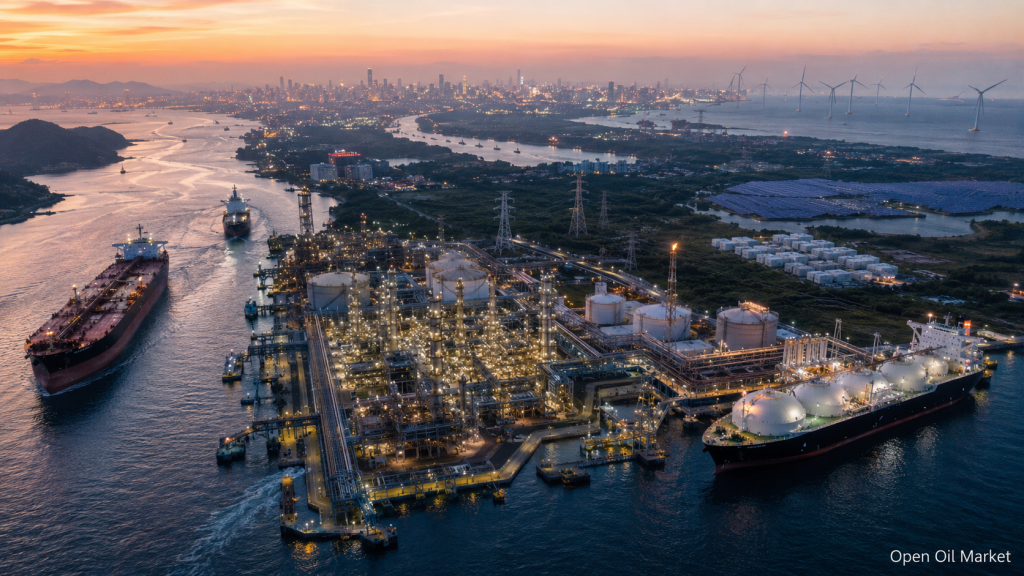
Liquefied natural gas becomes a key tool for energy security. Nevertheless, the LNG market remains constrained: new capacities are coming online gradually, and logistical disruptions quickly impact spot prices. For energy companies, this translates into growing interest in long-term contracts, floating terminals, gas infrastructure, and storage projects.
Gas remains a transitional fuel for many economies, particularly where energy systems require flexible generation to balance solar and wind energy.
Electricity: Summer Demand Becomes a Global Stress Test
The electricity sector enters a period of heightened demand. Heat in Asia, increasing air conditioning consumption, development of data centres, and rising industrial loads create additional pressure on energy systems. The Indian market is particularly noteworthy, as peak electricity consumption is already setting new records.
For investors, this amplifies the importance of companies operating in the following segments:
- network construction and modernization of power grids;
- gas generation;
- energy storage;
- energy services and demand management;
- provision of equipment for high-voltage infrastructure.
Electricity is becoming a separate investment megatrend. Rising consumption from artificial intelligence, data centres, and industrial electrification makes energy systems one of the critical bottlenecks in the global economy.
Coal: Asia Retains Demand Despite Energy Transition
The coal market remains resilient, especially in Asia. Despite the development of renewable energy, many countries continue to rely on coal generation as a primary source of electricity. High temperatures, increased air conditioning demand, and instability in the gas market sustain imports of energy coal.
For coal companies, the situation is ambiguous. On one hand, demand remains high in India, Southeast Asia, and several developing economies. On the other hand, long-term financing for coal projects is restricted by the climate policies of banks, funds, and governments.
The metallurgical coal market follows a separate logic: demand depends on steel, infrastructure, and the industrial cycle, rather than solely on energy balance.
Renewable Energy and Energy Storage: The Energy Transition Accelerates through Security
High prices for oil and gas are amplifying interest in renewable energy sources. Solar power, wind energy, and energy storage are becoming not only climate strategies but also key strategic directions for governments and corporations.
The significance of energy storage systems is growing rapidly. They provide flexibility to smooth peaks in demand, maintain grid stability, and integrate more renewable energy into the energy mix. For investors, this creates long-term demand for batteries, network equipment, energy management solutions, and hybrid power plants.
However, the development of renewable energy does not eliminate the need for gas, coal, and nuclear energy. The global energy transition is not an instantaneous fuel replacement but a complex restructuring of the entire energy infrastructure.
What Matters to Investors and Energy Sector Companies on 25 May 2026
For investors, oil companies, fuel traders, and energy market participants, the coming days are crucial for assessing the resilience of the global energy balance. The market will respond to news concerning oil, gas, oil products, LNG, electricity, and coal in near real-time.
Key Benchmarks of the Day:
- Price dynamics for Brent and WTI crude oil.
- Status of commercial oil and oil product reserves.
- Statements from OPEC+ and major producers.
- Refining margins for diesel, petrol, and aviation fuel.
- Spot prices for LNG in Europe and Asia.
- Peak load on energy systems in heated regions.
- Investments in renewables, energy storage, and grid infrastructure.
The main takeaway for the market is that the global energy sector enters summer 2026 with limited resilience. Oil remains influenced by geopolitics; gas and LNG are shaped by the competition among importers; electricity demand pressures are at record highs, while renewables and storage gain additional momentum as tools of energy security.
For investors, this presents not only risks but also opportunities. Focus remains on companies with stable cash flows, access to infrastructure, strong resource bases, and the capability to operate in an environment of high energy costs and increased volatility.