Global Oil and Gas and Energy News for 14 July 2026: Dynamics of Brent and WTI, Competition between Europe and Asia for LNG, Shortages of Oil Products, High Refining Margins, Increasing Electricity Demand, Development of Renewable Energy, and the Coal Market Situation
On Tuesday, 14 July 2026, the global energy market enters a new trading day marked by heightened volatility. Investors, participants in the energy market, fuel companies, and oil firms remain focused on three interrelated themes: the geopolitical risk premium in oil, the redistribution of LNG flows between Asia and Europe, and the tension in the oil products market. For global energy, this has become not just a local crisis but a comprehensive stress test across the entire supply chain: oil production, gas supplies, refinery operations, availability of aviation fuel, electricity, renewable energy, coal, and storage infrastructure.
A key feature of the current moment is the divergence between crude oil prices and the state of product markets. Even if Brent and WTI undergo periodic corrections due to expectations of supply growth, the gasoline, diesel, and aviation fuel markets remain tighter. This enhances refinery margins, supports the value of oil products, and creates a distinct inflation risk for transport, industry, and consumers.
Oil: Brent and WTI Re-trade Geopolitics
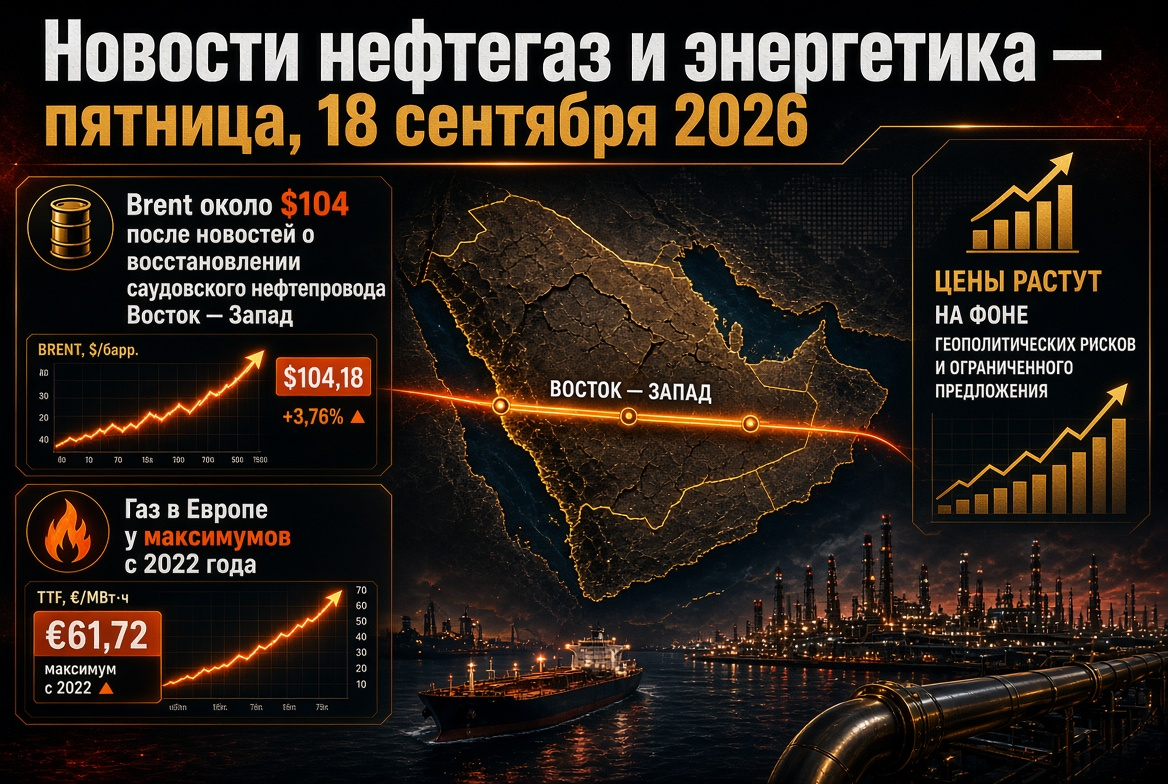
The main theme in the oil market is the resurgence of the risk premium due to tensions surrounding the Middle East and supply routes through the Strait of Hormuz. For oil, this implies that traders are reassessing not only the balance of supply and demand but also the physical availability of tanker flows. Against this backdrop, Brent remains sensitive to news, while WTI tracks global risk dynamics.
For investors, three factors are crucial:
- the speed of restoration of maritime traffic through key straits and routes;
- the ability of Gulf countries to reroute exports through alternative pipelines;
- OPEC+'s reaction to volatility, particularly concerning quotas and actual production.
The oil market remains heterogeneous: on one hand, some forecasts suggest increased supply and potential stock builds; on the other hand, any disruption in logistics instantly brings back the risk premium. For oil companies, this sustains cash flows but complicates capital expenditure planning, procurement, hedging, and raw material supplies to refineries.
OPEC, IEA and EIA: Divergent Views on Demand and Supply
Forecasts from major energy agencies diverge more than usual. OPEC maintains a more constructive outlook on global oil demand, emphasising growth in consumption outside of OECD countries. In contrast, the EIA points to a decrease in price pressure in the third quarter of 2026 due to increasing supply and more moderate consumption. The IEA highlights weaknesses in production, refining, and oil product supply.
This means that the baseline scenario for the energy market is no longer the sole benchmark. Companies and investors are operating with multiple scenarios:
- Stabilisation Scenario: supply increases, Brent gradually declines, and refining margins normalise.
- Logistics Stress Scenario: oil remains expensive, tanker rates rise, and refineries face supply disruptions.
- Product Shortage Scenario: there is plenty of raw material, but gasoline, diesel, and aviation fuel remain scarce due to refining constraints.
The third scenario appears particularly significant for fuel companies: not only the price of oil but also the availability of finished oil products in specific regions comes to the forefront.
Refineries and Oil Products: Refining Margins at Multi-Year Highs
The global refinery market remains one of the most stressed segments of the energy sector. Refining margins and crack spreads for oil products have surged to multi-year highs, as the gasoline, diesel, and aviation fuel markets remain narrow. Even with increased crude oil supply, refiners are not always able to swiftly ramp up production of the required fuel types.
Factors pressuring refineries include:
- partial limitations on Middle Eastern export capacities;
- reduced throughput at certain Asian refineries;
- damages and disruptions in Russian energy infrastructure;
- structural capacity shortages in Europe following long-term refinery closures;
- increased seasonal demand for gasoline and aviation fuel.
For refiners, this situation is positive in terms of margins but negative in terms of operational risks. Expensive logistics, unstable raw material supplies, and rising storage requirements make the business more capital-intensive. For consumers of oil products, including industry, transport, and airlines, this implies sustained high price pressure even with a moderate correction in oil prices.
Gas and LNG: Asia Gaining Cargoes, Europe Struggling for Stocks
The gas and LNG market is becoming the second focal point of tension following oil. Asia is ramping up imports of liquefied natural gas, especially from China, Japan, South Korea, and Singapore. Meanwhile, Europe faces weaker LNG inflows and the need to accelerate the filling of underground storage ahead of the winter season.
A key risk for Europe is competition with Asia for spot cargoes. As Asian demand rebounds, shipments from the US and other exporters increasingly head to more attractive markets. This poses a threat of rising gas prices in Europe, especially if supplies from Qatar and the Middle East remain constrained.
For investors in the energy sector, the following indicators are crucial:
- the level of filling in European gas storage facilities;
- prices on TTF and Asian JKM;
- volumes of LNG supplies from the US to Europe and Asia;
- the speed of recovery of Middle Eastern routes;
- China's demand for imported gas.
Gas remains a strategic fuel for electricity generation, industry, and balancing renewable energy. Thus, the LNG market in July 2026 serves as a key indicator of global energy security.
Electricity: Demand is Growing due to Heat, Data Centres, and Electrification
The global electricity market continues to expand amid the electrification of transport, industry, and rapid expansion of data centres. In the US, electricity generation achieved record levels in the first half of 2026, with net generation increasingly competing with fossil fuels for the status of the main power source in certain months.
However, natural gas remains a key balancing resource. Gas-fired power plants quickly respond to spikes in demand, especially during heatwaves when air conditioning drastically increases consumption. For energy companies, this emphasises the value of flexible generation, energy storage, and grid modernisation.
Three investment themes are gaining traction in the electricity sector:
- Flexibility of the Energy System: gas capacities, batteries, demand management, and backup power.
- Grid Investments: upgrading transmission lines, distribution networks, and inter-regional connections.
- Reliability of Supply: balancing renewable energy, gas, nuclear generation, and coal.
For the global energy market, electricity is becoming a central segment rather than a secondary one. The growth in electricity consumption directly impacts demand for gas, coal, renewables, batteries, and infrastructure projects.
Renewable Energy: Growth Continues, but the Grid Becomes the Main Constraint
Renewable energy maintains a long-term growth trajectory; however, the market is increasingly encountering infrastructural limitations. India is tightening control over renewable energy projects that have gained access to the grid but have not commenced actual generation. The regulatory focus is shifting from merely announcing capacities to delivering actual electricity supply.
This is an important signal for the global renewable energy sector: capital will increasingly scrutinise not only installed capacity but also project quality. Investors need to consider grid connectivity, availability of electricity buyers, bank guarantees, construction timelines, and the ability of the project to generate cash flow.
Concurrently, major oil and gas companies continue to revise their portfolios in favour of more lucrative assets. The sale of specific wind and solar businesses does not indicate a global economy stepping away from renewables but demonstrates that energy giants require the same financial discipline from green assets as they do from oil, gas, and petrochemicals.
Coal: Asia Sustains Demand Despite the Energy Transition
Coal remains a significant component of the energy balance, particularly in Asia. China, India, and Southeast Asia continue to utilise coal generation for energy security and protection against high gas prices. In China, a rebound in coal generation is anticipated in 2026 after a period of decline, as expensive LNG makes gas generation less competitive.
This suggests stable demand from the power sector for coal, even amid the expansion of renewables. However, long-term risks remain substantial: climate regulations, emission costs, investor pressures, and competition from solar generation gradually restrict the investment attractiveness of new coal projects.
In global energy, coal serves as an insurance resource. It is becoming more expensive from both an ecological and financing perspective, yet remains in demand where systems are not ready to entirely replace baseload generation with gas, nuclear, renewables, and storage.
Aviation Fuel and Transport: Europe Remains the Most Vulnerable Region
The aviation fuel market has become one of the most sensitive segments of oil products. Europe is particularly vulnerable due to the closure of part of its own refineries in previous years and dependence on external supplies. With the summer tourist season underway, stocks of aviation fuel are thin, forcing suppliers to source cargoes from the US, Asia, Africa, and the Middle East.
For airlines, this means maintaining a high proportion of fuel in operating costs. For refineries, it presents an opportunity to boost production of high-margin products. For investors, it signals the need to closely monitor companies involved in refining, logistics, storage, and supply of oil products.
The aviation fuel segment also illustrates a broader trend: the global economy may face not so much a shortage of crude oil as a deficiency of specific fuel types in the right region at the right time.
What is Important for Investors and Participants in the Energy Market on 14 July 2026
On Tuesday, 14 July 2026, the energy market remains one of high uncertainty, where logistics, refining, and regional balances are crucial. For investors, fuel companies, oil firms, traders, and industrial consumers, it is vital to assess not only the prices of Brent, WTI, gas, and coal but also the state of the entire supply chain.
Key indicators of the day include:
- Oil: dynamics of Brent and WTI, risk premium for the Middle East, actual tanker traffic.
- Gas and LNG: competition between Europe and Asia for cargoes, prices on TTF and JKM, filling of storage facilities.
- Refineries: refining margins, production of gasoline, diesel, and aviation fuel.
- Electricity: demand driven by heat, data centres, and electrification.
- Renewables: grid constraints, project quality, access to energy buyers.
- Coal: Asian demand, the role of standby generation, climate constraints.
- Oil Products: regional shortages, logistics, inventories, and import routes.
The fundamental conclusion for the global audience is this: the energy market in July 2026 is transitioning from a focus on raw materials to an analysis of infrastructure. Success will not only be found with those companies extracting oil, gas, or coal but also with those controlling refining, storage, transportation, LNG chains, electricity grid networks, and flexible generation. These assets are becoming pivotal for global energy security and investment returns in the energy sector.