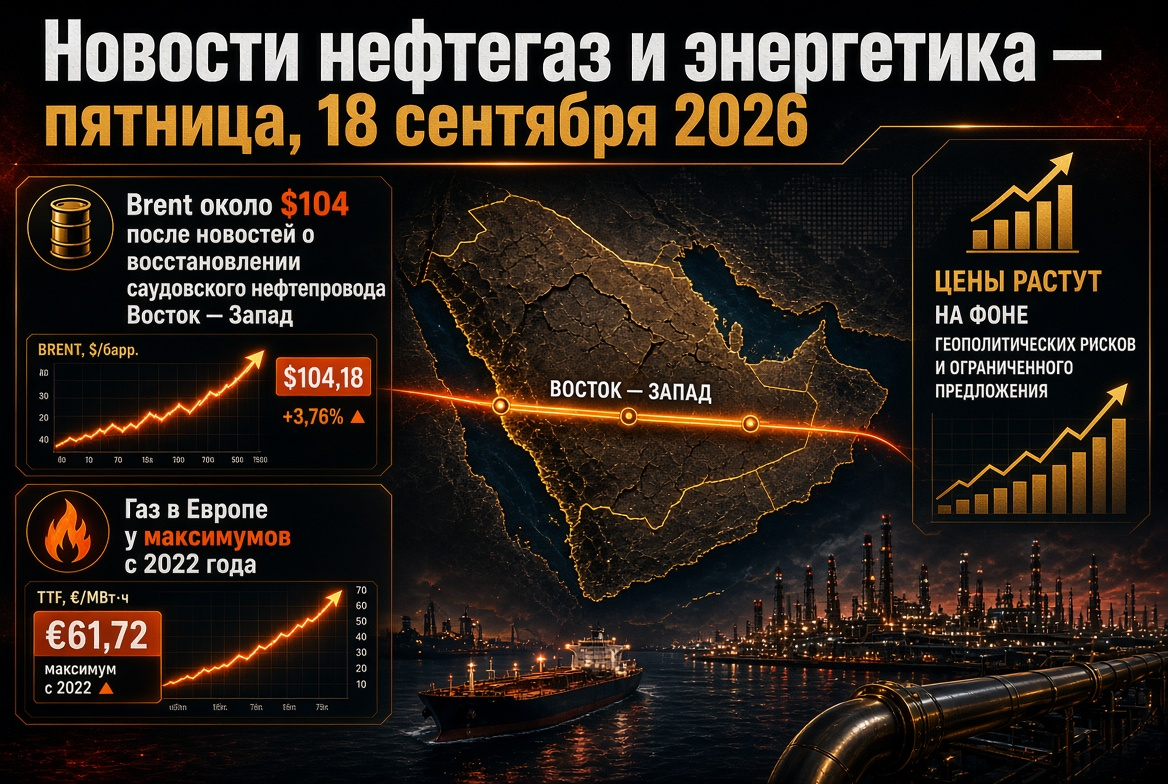
Current News in Oil, Gas and Energy as of 21 February 2026: Prices for Brent and WTI Oil, Gas and LNG Market, Refinery Margins, Diesel and Petrol, Electricity and Renewables, Coal and Global Risks for Energy Sector Investors
The global energy market concludes the week with heightened sensitivity to supply risks. Oil prices remain close to several-month highs due to geopolitical premiums and expectations surrounding production decisions by key producers. In the gas and LNG sector, the key issue is the fragile balance between weather conditions, inventories, and logistics, while in petroleum products, the focus shifts to refining margins, refinery maintenance schedules, and availability of diesel. For investors and market participants in the energy sector, this combination of factors signifies increased volatility and a heightened value on risk management discipline.
Oil: Geopolitical Premiums and OPEC+ Expectations
Oil (Brent/WTI) enters the weekend with a pronounced risk premium. The market is factoring in the probability of disruptions in supply chains through key maritime routes while simultaneously assessing the prospect of gradual production increases from OPEC+. In the short term, oil prices are supported by:
- geopolitical factors and increased uncertainty regarding transportation safety;
- demand structure in the physical market and inventory reactions in major economies;
- positioning of market participants in the futures market, which amplifies price fluctuations.
The risk for bulls is the return to discussions around supply surpluses should producers exhibit a softer rhetoric or geopolitical tensions ease. Conversely, the risk for bears involves any widening of the risk premium amid news from oil-producing and transit regions.
Physical Market and Logistics: Key Factors for Supply
The focus is on the resilience of exports from specific regions, as well as the capacity of logistics. Participants in the physical oil market are observing the differentials between grades, tanker availability, and freight costs. Three practical indicators that the market tracks daily are:
- spreads between near and far futures (a signal of scarcity/surplus);
- shipping costs and tanker availability in the Atlantic and Pacific;
- quality of crude and refinery demand for light/heavy grades.
For upstream companies, the critical question is not only the level of oil prices but also the stability of premiums on specific grades, as well as the availability of services and insurance for transport in "challenging" directions.
Petroleum Products and Refineries: Maintenance Season, Diesel and Petrol
Petroleum products (gasoline, diesel, jet fuel, fuel oil) are entering a phase where refining plays a decisive role. On one hand, there are seasonal maintenance activities at refineries and capacity constraints, while on the other hand, there is a normalisation of demand following winter peaks. Currently, critical elements for the petroleum products market include:
- refining margins (crack spreads) and their stability amid changing demand;
- availability of diesel in regions facing logistical bottlenecks;
- inventory imbalances in specific hubs and their impact on regional premiums.
The "tight diesel" scenario increases sensitivity to unforeseen refinery outages, particularly during a period when certain capacities are undergoing maintenance. For traders and fuel companies, the key skill of the week is the flexible optimisation of product baskets and refinery margin hedging.
Gas and LNG: A Delicate Balance Between Weather, Asia and Europe
The gas and LNG market remains "tightly balanced": moderate weather changes can quickly shift prices, while logistics and delivery schedules add inertia. In Europe, attention is focused on inventory levels and the speed of replenishment for the next season. In Asia, sensitivity of demand to price and competition for spot cargoes is paramount.
For LNG, two layers of factors are critical:
- fundamental: consumption levels, inventories, generation flexibility, and industrial demand;
- logistical: LNG tanker charter rates, port bottlenecks, and route risks.
If spot LNG prices decline, part of the "elastic" demand in Asia may return, but this simultaneously decreases incentives for fuel switching in Europe. The result is potential abrupt reversals based on news regarding weather or supply disruptions.
Electricity: Low Prices, Supply Excess and the Role of Renewables
In several regions, the electricity market continues to experience downward pressure on prices due to a combination of: growth in renewable energy generation, limited grid capacity, and weak industrial demand dynamics. For energy companies, this means a squeeze on profits amid high capital needs (grid modernisation, new capacity, energy storage).
A central intrigue for investors in the electricity and renewables sectors is how quickly demand from new energy-intensive segments will grow:
- data centres and artificial intelligence infrastructure;
- electrification of industry and heating;
- development of batteries and demand flexibility.
For network operators, the primary focus is on the speed of resolving grid constraints; without this, the excess renewable generation will be unable to reach consumers.
Coal: Local Shortages Versus Energy Transition
Coal remains an important component of the energy balance in several countries, especially as backup generation during periods of unstable renewable energy production. The coal market is sensitive to logistics (port infrastructure, rail transport), weather, and regulation. In the short term, demand is often determined not by "transition strategies" but by gas prices, electricity availability, and the needs of the energy system.
For market participants, the key risk is sharp shifts in balance during weather anomalies or transport constraints, which could quickly raise spot premiums even amid a long-term decarbonisation trend.
Oil and Gas Companies and Services: Where to Seek Resilience
For oil and gas companies, the central question is the quality of cash flow amidst volatile oil and gas prices. Investors are examining three parameters of resilience:
- production costs and sensitivity to price scenarios (Brent/WTI);
- sales structure (proportion of long-term contracts, grade premiums, access to markets);
- capital discipline and dividend/buyback policies.
In the services sector, the focus is on rig fleet utilisation and order stability in regions with low political risks. In midstream and logistics, attention shifts to tariff structures, insurance, and the ability to operate amid increased compliance requirements.
Sanctions and Compliance: Impact on Oil, Gas, and Petroleum Product Chains
Sanction regimes and compliance requirements continue to reshape trade routes for oil, petroleum products, and equipment. For the market, this means:
- increased transaction costs (insurance, freight, documentary checks);
- changes in price differentials between regions;
- reorientation of flows and an increased role for intermediary logistics.
For fuel and raw material purchasers, the practical takeaway is the necessity to diversify sources, have alternative logistics plans in place, and hedge supply risks in advance.
What This Means for Investors: A Short Checklist for the Coming Week
In the near-term sessions, the key driver will be a combination of news flow and the physical market. To effectively manage risk in the energy sector, investors and traders should keep a keen eye on:
- oil: dynamics of the risk premium and signals from producers regarding output levels (OPEC+);
- petroleum products: refining margins, maintenance schedules, and diesel/petrol availability by region;
- gas and LNG: weather, inventories, and logistics (freight rates, availability of cargoes);
- electricity and renewables: grid constraints, data centre demand, and the effect of low prices;
- coal: local bottlenecks and sensitivity to fuel switching.
The baseline scenario for the immediate future is heightened volatility amid relatively stable demand, where any supply shock is quickly reflected in price. In such conditions, companies with low production costs, strong balances, diversified markets, and transparent capital policies are positioned to succeed.