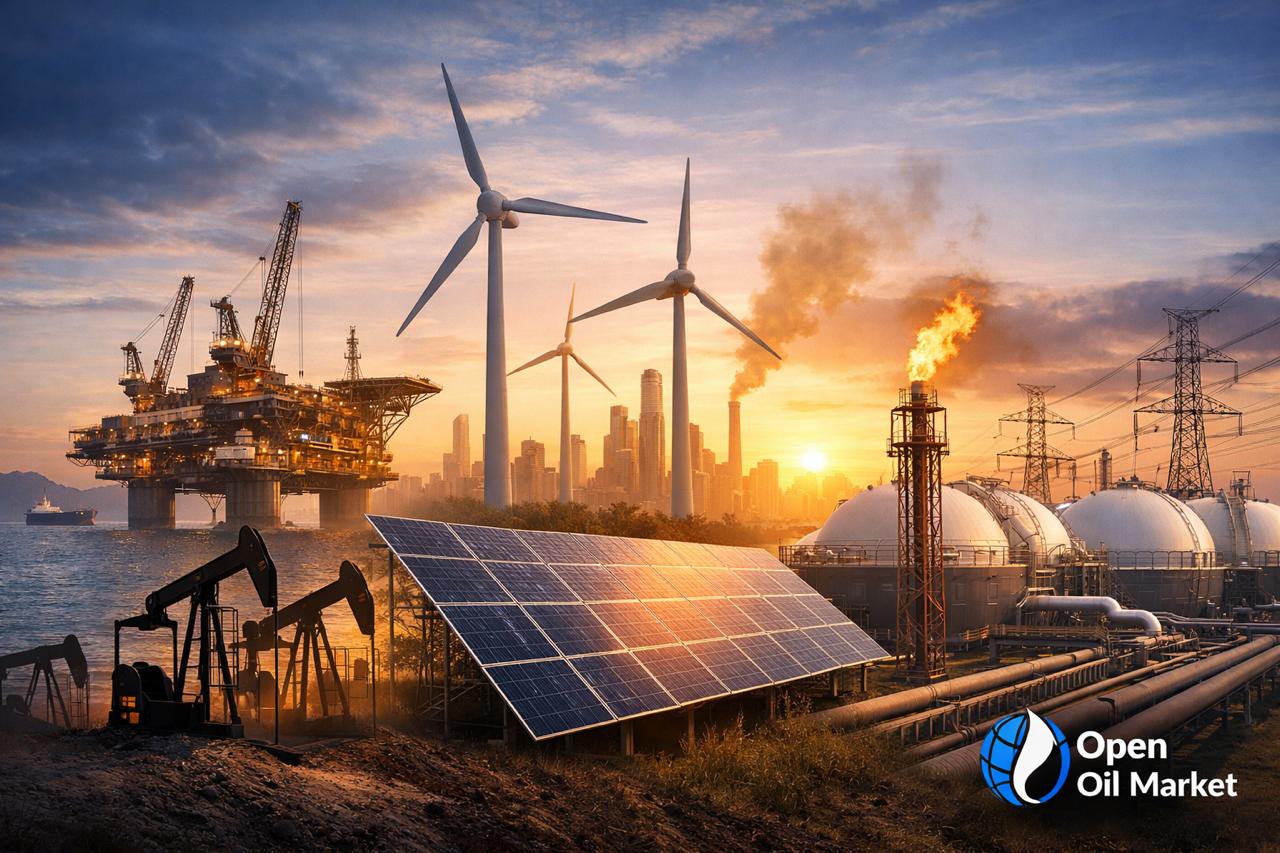
Current News in the Oil, Gas, and Energy Sector for Saturday, 27 December 2025: Oil, Gas, Electricity, Renewable Energy, Coal, Petroleum Products, and Key Trends in the Global Energy Sector — Overview and Analysis for Investors and Market Participants.
On the diplomatic front, intense efforts to resolve the protracted conflict in Eastern Europe continue, but tangible results remain elusive. The United States and European allies have offered Kyiv unprecedented security guarantees in exchange for a ceasefire, instilling cautious optimism for a potential peace agreement. Nevertheless, negotiations have ended the year without any breakthrough, and the stringent sanctions regime on the Russian energy sector remains fully in place.
The global oil market is coming to the end of the year under pressure from an oversupply and moderate demand. Prices for the benchmark Brent crude are hovering around $62–63 per barrel—close to the lowest levels since 2021, indicating a shift towards a surplus of crude. The European gas market demonstrates resilience: even at the peak of winter consumption, underground gas storage facilities in the EU are filled to about two-thirds capacity, virtually eliminating the risk of shortages. Stable supplies of liquefied natural gas (LNG), alongside alternative pipeline fuels, are keeping wholesale prices at moderate levels significantly below the peaks of 2022, alleviating the cost burden for consumers.
Meanwhile, the global energy transition is gaining momentum. Many countries are achieving new records in electricity generation from renewable sources, although traditional coal and gas-fired power plants still play a vital role in maintaining system reliability. Simultaneously, several regions are reinvigorating their interest in nuclear energy as a stable low-carbon energy source capable of reducing reliance on fossil fuels.
OPEC+ Maintains Quotas to Stabilise the Market
- At its December meeting, OPEC+ members decided to maintain current oil production quotas for the first quarter of 2026 in order to prevent a possible oversupply in the market.
- Since spring 2025, OPEC+ countries have cumulatively brought approximately 2.9 million barrels per day back onto the market from previously reduced volumes, yet the aggregate production limit of around 3.2 million barrels per day remains in effect and has been extended until the end of 2026.
- The meeting occurred against the backdrop of a new attempt by the United States to achieve a peace agreement between Russia and Ukraine. OPEC+ is aware that the success of negotiations and potential easing of sanctions could bring additional oil volumes to the market, whereas a failure would intensify the existing sanctions pressure and further restrict Russian exports.
Oil Prices Remain Low
Global oil prices are concluding 2025 without sharp fluctuations, settled within a relatively narrow range owing to a balance of steady demand and sufficient supply.
- At the beginning of this week, oil prices rose by about 2% amid strong macroeconomic data from the United States: GDP growth in Q3 exceeded forecasts, heightening expectations for increased fuel demand.
- Prices received additional support from supply disruption risks. New US sanctions against Venezuela's oil sector, along with strikes on export infrastructure in the Black Sea, have heightened market concerns regarding supply stability.
- Nevertheless, by the end of 2025, Brent crude prices have fallen by approximately 15%. The market has displayed an unusually tight price corridor (~$60–80 per barrel) despite geopolitical upheavals—largely due to record production in the US (over 13.5 million barrels per day) and increased supplies from non-OPEC countries that compensated for local disruptions.
- Refineries have ramped up production of petroleum products, and commercial crude and fuel inventories in the US increased in December. This has prevented petrol and diesel prices from spiking at the year-end, positively impacting consumers.
Natural Gas: Comfortable Reserves and Stable Prices
The natural gas market is entering winter relatively calmly. Even periods of cold weather in Europe have not triggered panic, given the high level of reserves and diversified supplies.
- EU underground gas storage facilities were filled to over 70% by early January, which is significantly above the long-term average. This buffer reduces the risk of fuel shortages, even in the event of further cold spells.
- LNG imports remain high, allowing for compensation of halted pipeline supplies from Russia. Major European consumers (Germany, Italy, etc.) are actively procuring liquefied gas from the spot market, diversifying their energy supply sources.
- In the US, natural gas prices (Henry Hub) are maintaining around $5 per million BTUs. Record levels of production and high LNG export volumes are keeping the balance in the American market, although periods of extreme cold do lead to short-term price spikes.
Geopolitics and Sanctions: Impact on Energy Supplies
Political conflicts and sanctions continue to significantly impact global energy markets, posing both threats of disruptions and hopes for improved conditions in the future.
- The US administration has tightened measures against Venezuela's oil sector: sanctions have targeted tankers carrying Venezuelan oil. In December, several vessels were detained and forced to return, raising the risk of overflowing local storage and enforced production cutbacks in the country.
- Amid the ongoing conflict in Ukraine, attacks on energy infrastructure have increased. In November, a Ukrainian drone damaged the CPC terminal near Novorossiysk, reducing December exports of Kazakhstan's CPC Blend oil by approximately one-third (to around 1.14 million barrels per day) and necessitating the redirection of some volumes away from the Black Sea.
- Despite the tightening of US sanctions in autumn against leading Russian oil companies (Rosneft and LUKOIL), the direct impact of these measures on the global market has been limited. Russian oil exports remain near multi-month highs due to the reconstruction of logistical chains, although Urals crude is trading at a significant discount to Brent.
- According to Reuters calculations, oil and gas revenues for the Russian federal budget in December 2025 are estimated at around 410 billion roubles, nearly half the level seen a year earlier, and close to minimal levels in recent years (comparable to the disastrous August 2020). The total income from oil and gas for 2025 is projected at approximately 8.44 trillion roubles—almost 25% lower than in 2024 and below the revised forecast from the Ministry of Finance—highlighting the severe impact of low prices and sanctions on Russia's revenues.
- Russia, in turn, does not plan to reduce exports: the pipeline monopoly Transneft has announced that oil pumping volumes in 2026 will remain roughly at the 2025 levels. This indicates an intention to maintain stable supplies of Russian oil to the external market despite the sanctions pressure.
Renewable Energy: Records and Investments
The renewable energy sector continues its vigorous growth, setting new records for capacity additions and capital inflows, despite certain political and economic risks.
- The UK recorded a historic peak in wind power generation on 5 December — around 23,825 MW, covering over half of the country's demand at the time. The record achievement was aided by strong winter winds and the expansion of offshore wind farms.
- According to BloombergNEF, global investments in new renewable energy projects reached a record $386 billion in the first half of 2025. The majority of funds are directed towards the construction of solar and wind power plants, as well as energy storage systems to integrate renewable sources into the energy grid.
- In the US, a federal court lifted an earlier ban on new wind energy projects on federal lands and offshore. This decision paves the way for the implementation of large offshore wind farms and supports several states' plans to increase the share of clean energy.
- China maintains its global leadership in renewable energy: the total installed capacity of renewable sources in the country exceeds 1.88 TW (around 56% of total power plant capacity). The massive deployment of solar and wind stations, alongside storage systems, has allowed China to keep CO2 emissions stable despite economic growth.
Nuclear Energy: The Return of Large Capacity
Following a prolonged downturn, a revival is evident in the global nuclear industry, with many countries reassessing the role of nuclear generation as a stable low-carbon energy source in the drive to reduce dependence on fossil fuels.
- In Japan, preparations are underway for the phased restart of the country's largest nuclear power plant, Kashiwazaki-Kariwa. The energy company TEPCO has received approval from local authorities in Niigata Prefecture and plans to launch reactor unit No. 6, with a capacity of 1,360 MW, on 20 January 2026—the first reactor to come online since 2011. The full restoration of the 8.2-gigawatt station will occur in stages over several years.
- The Japanese government has announced support measures for the nuclear sector aimed at doubling the share of nuclear generation in the energy balance. A system of government loans and guarantees for modernising existing reactors is being introduced; currently, 14 of the 33 reactors shut down after the Fukushima disaster have resumed operations.
- A return to nuclear energy is also being observed in other countries. In Europe, Finland has commissioned the new Olkiluoto-3 reactor, while France and the UK are investing in the construction of modern nuclear power plants, and the US is considering extending the life of existing reactors and financing the development of small modular reactors.
Coal Sector: Peak Consumption Before Decline
The global coal market reached a historical peak in 2025; however, experts expect a trend reversal in the coming years. According to the International Energy Agency (IEA), global coal consumption grew by approximately 0.5% and reached around 8.85 billion tonnes for the year. By the end of the decade, a gradual decline in coal demand is forecast as renewable energy, nuclear, and natural gas progressively replace it in the power sector.
- In the US, coal combustion at power plants increased in 2025. This was the result of last year's spike in gas prices and an executive order issued by the administration extending the operation of some coal-fired power plants initially slated for closure.
- China remains the largest coal consumer, accounting for about 60% of the country's electricity generation. In 2025, coal demand in the PRC stabilised; gradual decreases are expected leading up to 2030, bolstered by the mass introduction of renewable capacities. Beijing's policy aims to peak emissions by 2030, envisioning a diminished role for coal in energy generation.
Petroleum Products and Refining: High Margins for Refineries
By the end of 2025, the global petroleum products market exhibits heightened profitability for refineries. The decline in oil prices, combined with sustained demand for petrol, diesel, and aviation fuel, has led to increased refining margins in many regions. Refiners are benefiting from relatively inexpensive crude, while fuel consumption remains robust.
- Global indicative refining margins have surged to their highest levels in several years. Notably, diesel sales exhibit particularly high profitability, with strong demand from the transport sector and industry.
- The active construction of new refineries in Asia and the Middle East (including significant complexes in China and Gulf countries) is expanding global refining capacities. However, simultaneous closures of outdated plants in Europe and North America maintain the equilibrium in the petroleum products market, preventing oversupply and keeping margins high for operational refineries.
- In Russia, authorities have extended the ban on petrol and diesel exports following a fuel crisis in the summer to saturate the domestic market and lower prices. These measures have stabilised the situation within the country but simultaneously reduced diesel supply in the global market, which also contributed to maintaining high margins for European and Asian refiners.
Corporate News: Deals and Strategies of Energy Companies
The end of the year is marked by significant corporate moves in the energy sector, reflecting companies' efforts to optimise their asset portfolios and adapt to new market conditions. Major oil and energy corporations are reassessing their strategies, focusing on both enhancing the efficiency of traditional operations and investing in energy transition and environmental projects.
- BP announced the sale of 65% of its subsidiary Castrol (a producer of lubricants) to the American investment fund Stonepeak for $6 billion. The deal values the entire Castrol business at $10.1 billion; BP will retain a 35% stake in the new joint venture. The funds raised will be utilised for debt reduction and dividend payments, aligning with the strategy to enhance returns in the traditional oil segment.
- Despite sanctions, foreign partners are showing interest in Russian oil and gas projects. Notably, Indian ONGC and Japanese SODECO have retained their stakes in the Sakhalin-1 project, and a preliminary agreement between ExxonMobil and Rosneft to compensate past losses signals major players' readiness to resume collaboration as soon as the political situation normalises.
- The convergence of the technology and energy sectors continues. For instance, American tech giant Alphabet (the parent company of Google) announced in December the acquisition of Intersect Power for $4.7 billion, a company involved in renewable energy and energy infrastructure projects (including power supply for data centres). This move will enable Alphabet to accelerate its development of renewable energy generation and reduce its data centres' dependency on overloaded power grids.




