Current Oil and Gas News and Energy Insights as of 24 March 2026 with Analysis of Oil, Gas, LNG, Refineries and Electricity
The oil market remains in a state of heightened nervousness. For Brent and WTI, the key factor is not the traditional debate over supply and demand, but rather the risk of disruptions through the Strait of Hormuz and the associated reassessment of the availability of physical crude. Even if some flows are maintained, the mere fact of constrained logistics alters the behaviour of buyers, sellers, and hedge funds.
- Buyers are pricing in a higher premium for the security of oil and petroleum product supplies.
- Traders are reallocating cargoes towards regions experiencing the greatest fuel shortages.
- Oil companies and governments are increasingly focusing on strategic reserves and alternative export routes.
For the oil market, this signifies a shift from a scenario of potential surplus to one of severe local shortages. Whereas investors were discussing an oversupply at the beginning of the year, the focus has now shifted to the actual availability of barrels and the resilience of export infrastructure. As a result, the oil and gas sector is once again trading with a pronounced geopolitical premium.
OPEC+ and Production: Formal Increase in Quotas No Longer Resolves the Problem
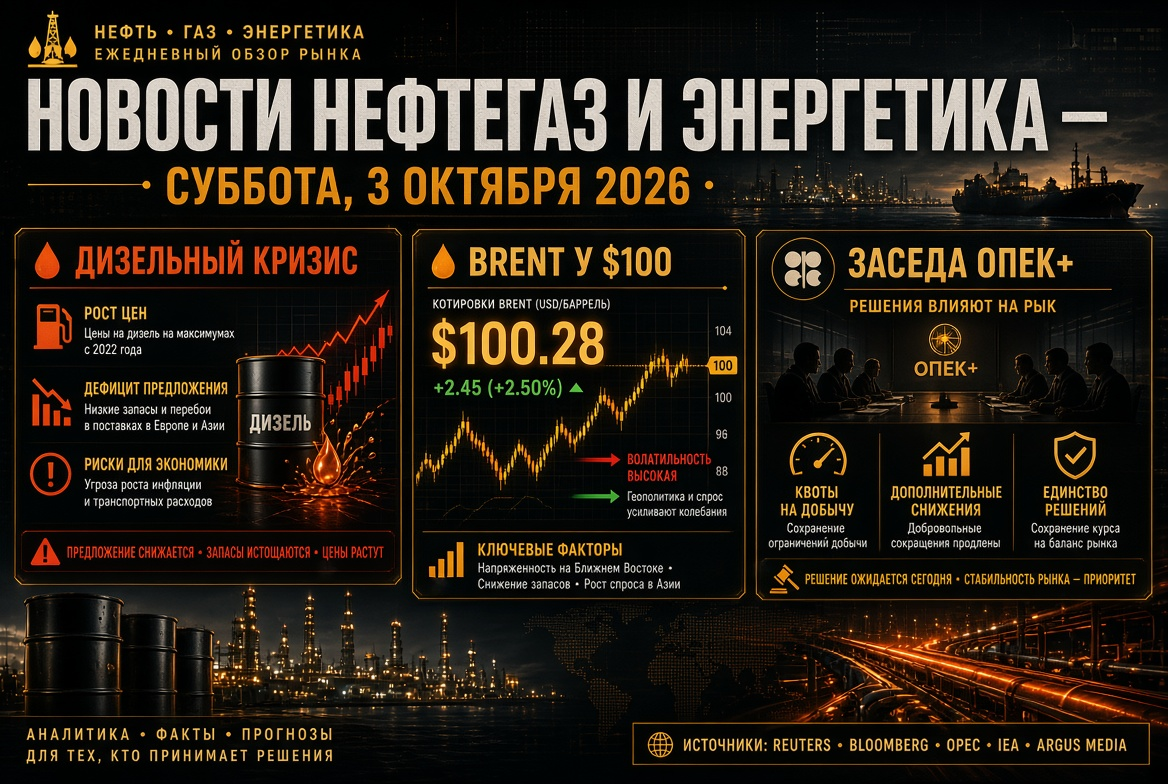
OPEC+’s decision to increase production from April appears to be an important political signal, but its effect on the global energy market is limited. In the context of transportation disruptions, even the additional increase in production seems modest compared to the scale of the risk. For investors, this is a crucial takeaway: today, not every additional tonne of oil automatically becomes available to the global market.
In the current configuration, the oil, gas, and energy sectors are reliant on three variables:
- the actual capacity of export routes;
- the speed of recovery in production and shipments from the Gulf countries;
- the volume of commercial and strategic reserves that can be quickly brought to market.
This is why oil companies that are oriented towards steady exports outside of risk zones are gaining a relative advantage. For the global energy market, suppliers able to provide a predictable flow of oil, gas, and petroleum products without complex geopolitical logistics are particularly valued at this time.
Gas and LNG: Europe Once Again Sensitive to External Shocks
The gas market is entering a new phase of tension. Disruptions in LNG and uncertainty surrounding supplies from the Middle East are increasing pressure on the European gas balance. This is particularly acute for Europe, as the active replenishment season begins at relatively low storage levels and with higher spot prices.
Several signals are forming in the gas and LNG market:
- European countries are being forced to start injecting gas into underground storage facilities under less favourable price conditions;
- Competition for LNG between Europe and Asia may intensify as soon as the second quarter;
- Any supply disruption from Qatar, the UAE, or through the Strait of Hormuz has an immediate impact on gas and electricity prices.
For the oil and gas sector, this denotes an increase in the value of flexible contracts, floating logistics, and alternative supply sources. For Europe’s energy market, it signifies a return to a model where gas pricing directly affects electricity costs, industrial margins, and the competitiveness of energy-intensive industries.
Electricity and Renewables: Green Generation Cushions the Blow, But Does Not Eliminate It
The electricity market is in a dual situation. On one hand, the rise of renewables, primarily solar and wind generation, is helping to contain price spikes in several European countries. Conversely, gas-fired plants continue to frequently set the marginal price of electricity during peak demand hours, meaning that gas price increases rapidly permeate the entire market.
For the global energy sector, this represents an important pivot. Renewables have ceased to be merely a long-term energy transition topic and are becoming a tool for short-term price stabilisation. However, the structural issue does not disappear:
- When gas is in short supply, power generation begins to reconsider coal and backup capacities;
- Investors are increasingly interested in grid infrastructure, energy storage, and flexible generation;
- Energy companies are more actively assessing combinations of renewables, gas, nuclear generation, and storage systems.
This is why the electricity sector in 2026 is becoming just as crucial as the oil market itself. For participants in the energy sector, this is no longer a separate narrative but part of an overarching raw material and energy cycle.
Refineries and Petroleum Products: Refining Becomes the Main Beneficiary of Imbalance
The refinery and petroleum products segment appears to be one of the strongest in the current market phase. Refining margins are growing against the backdrop of shortages of certain fuel types, and the logistics of gasoline, diesel, and jet fuel are shifting rapidly. Global petroleum product flows are increasingly directed not to where basic demand is highest, but to where fuel availability is most acute.
For refineries and fuel companies, this creates a new reality:
- Asian and European refining margins remain high;
- Supplies of gasoline and diesel are being redirected between regions in search of better economics;
- Reduced utilisation of certain Asian refineries limits the supply of naphtha, diesel, and jet fuel.
In practice, this means that oil refining is once again becoming the profit centre within the oil and gas value chain. For investors, not only oil prices matter but also petroleum product spreads, access to feedstock, depth of processing, and the capacity of refineries to quickly adjust their product mix. Companies with strong positions in diesel, jet fuel, and export logistics may perform better than the broader market.
Asia: Raw Material Shortages and Export Restrictions Heighten Tension
Asia remains the largest zone for processing and consuming energy resources, but it is also here that the consequences of the logistical shock are most pronounced. Some refineries are reducing their output, export restrictions on petroleum products are exacerbating shortages, and competition for LNG and liquid fuels is becoming fiercer.
Particularly significant is the simultaneous tightening of supply across several fronts in Asia:
- Oil and condensate supplies are less evenly distributed;
- Exports of diesel, gasoline, and jet fuel from certain countries are decreasing;
- Energy companies are forced to reassess the balance between oil, gas, coal, and renewables.
For the global market, this signifies that Asia remains the primary driver of prices for petroleum products and LNG. Any reduction in supplies to this region immediately impacts the global energy sector, as a substantial portion of energy, raw material, and fuel demand is formulated here.
Coal: A Temporary Return as a Safety Resource
Rising gas prices and LNG shortages increase the likelihood of more active coal use in power generation. This does not negate the trend towards decarbonisation but demonstrates that in times of crisis, the energy sector prefers reliability over ideology. For several markets, coal is once again becoming a safety net tool that helps maintain the stability of the energy system and mitigate physical electricity shortages.
As a result, the coal segment is receiving short-term support:
- Interest in coal generation as a reserve is increasing;
- Fuel companies and traders are more actively hedging price risks related to solid fuels;
- The significance of a diversified energy balance is growing in the electricity market.
For investors, this indicates that the raw material cycle of 2026 may be broader than anticipated: not only oil and gas stand to gain, but also certain participants in the coal sector, infrastructure, and freight logistics.
What This Means for Investors and Energy Market Participants
As of 24 March 2026, the global picture for oil, gas, and energy is characterised by high uncertainty, but within this uncertainty, clear beneficiaries are already emerging. Companies that control logistics, have access to stable raw materials, possess strong refineries, flexible petroleum product exports, and a diversified energy portfolio are at an advantage.
Key indicators for the coming days include:
- The situation regarding supplies through the Hormuz Strait and any signals regarding the recovery of shipping;
- The price dynamics of Brent, LNG, and European gas;
- The refining margins, particularly for diesel, gasoline, and jet fuel;
- Decisions from governments and regulators regarding gas, electricity, and fuel security reserves;
- The responsiveness of renewables, backup generation, and coal capacities to new shocks.
The day’s conclusion for the global energy sector is clear: oil, gas, electricity, renewables, coal, petroleum products, and refineries are once again trading as a unified system. For oil companies, fuel firms, and investors, this is a period of not passive observation, but rather pinpoint selection of assets capable of profiting from volatility, rather than suffering from it.