Current News in the Oil and Gas Industry and Energy as of 22nd July 2026: Oil Market, OPEC+, LNG, Natural Gas, Oil Products, Refineries, Electricity, Renewable Energy, Coal, Global Energy Markets and Key Events for Investors and Participants in the Fuel and Energy Complex
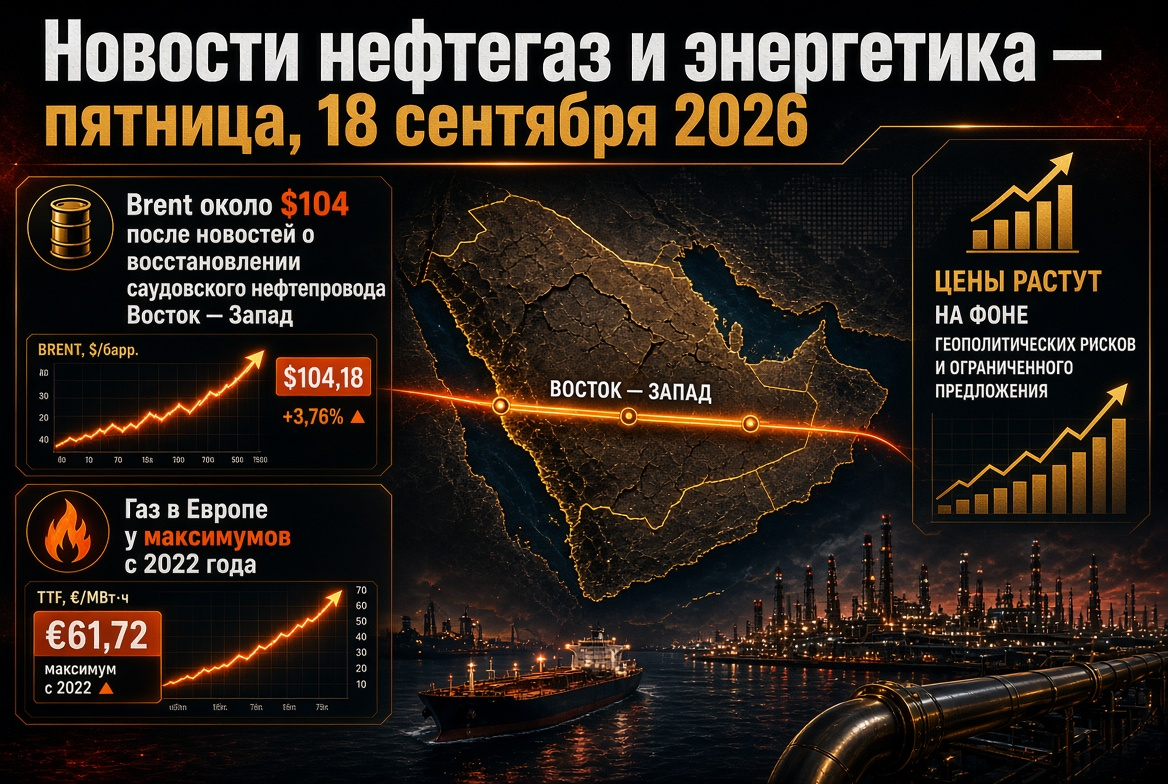
The main topic over the last 24 hours has been the escalating tensions surrounding the Middle East region. Following the further deterioration of the military-political situation, market participants have once again begun to factor in an additional risk premium into oil prices.
Several factors remain crucial for the global oil market at present:
- Continued risks to shipping;
- Potential supply restrictions via strategic routes;
- Rising costs of maritime logistics;
- Increased insurance expenses for carriers;
- Heightened volatility in oil futures.
For investors, this means a return to heightened sensitivity of oil quotes to almost any news from the region. Even in the absence of actual production cuts, the market continues to factor in the likelihood of supply disruptions.
OPEC+ Maintains Course for Stability in the Global Oil Market
OPEC+ countries continue to adhere to a policy of managed recovery in production. The alliance still asserts that its key objective remains to maintain a balance between supply and global demand.
Market participants expect that in the event of further deterioration in the geopolitical situation, producers may swiftly adjust their production parameters to prevent excessive volatility.
Points of focus include:
- The pace of recovery in global oil consumption;
- The level of commercial inventories;
- The trajectory of production outside OPEC+;
- The state of export infrastructure;
- The developing situation in the Middle East.
For oil companies, such a policy creates more predictable conditions for investment planning.
The Oil Products Market Remains More Tense than the Crude Oil Market
Despite the gradual recovery of crude oil supplies, the oil products segment continues to experience a shortage of certain types of fuel.
This is particularly true for:
- Diesel fuel;
- Aviation kerosene;
- Certain grades of gasoline.
In many regions of the world, refineries continue to operate under limited capacity following recent supply disruptions. Additional pressure is exerted by high seasonal fuel consumption in the summer months.
For global refineries, this means a continuation of attractive refining economics, as refining margins remain significantly above long-term average levels.
The Global Natural Gas and LNG Market Continues to Adapt
The gas market remains one of the most dynamic segments of the global energy sector. Europe is actively replenishing its reserves ahead of the upcoming heating season, while Asian buyers are intensifying competition for liquefied natural gas supplies.
Key market trends include:
- Growth in the significance of long-term contracts;
- Expansion of LNG export capacity;
- Increased investments in new terminals;
- Diversification of supply routes;
- Heightening the role of flexible logistics.
For gas companies, the global environment remains favourable due to robust demand from the power generation and industrial sectors.
The Electricity Sector Faces Record Loads
The summer season has brought high electricity consumption in several regions worldwide. Hot weather is increasing the use of air conditioning systems, leading to a rise in load on energy systems.
Network operators are increasingly utilising gas generation to cover peak demand, while simultaneously increasing the share of energy storage systems and demand management systems.
In many countries, large-scale investments are ongoing in:
- Transmission grids;
- Digitalisation of energy systems;
- Construction of new power lines;
- Enhancing the resilience of national energy infrastructure.
Renewable Energy is Accelerating Development
Solar and wind generation continue to increase their share in the global energy balance. Europe maintains record levels of solar energy generation, while many governments are accelerating the implementation of new renewable energy projects.
Concurrently, energy companies are increasingly investing in:
- Energy storage systems;
- Hydrogen technologies;
- Hybrid power plants;
- Smart distribution networks.
At the same time, traditional energy sources remain the foundation of the global energy system, ensuring the necessary stability of energy supply.
Coal Remains Significant for Global Energy
Despite the acceleration of the energy transition, coal remains an important component of the global fuel balance. High electricity consumption in Asian countries continues to support demand for coal generation.
Leading energy companies are simultaneously modernising existing plants and investing in emission reduction technologies, striving to enhance the efficiency of operational capacities.
Investment Activity in the Oil and Gas Sector Remains High
Global oil companies continue to actively invest in the development of new fields, the modernisation of refineries, the expansion of natural gas production, and the construction of LNG infrastructure.
Special attention is given to projects that can ensure long-term energy security and supply stability.
The most attractive directions remain:
- Oil production;
- Gas fields;
- Oil refining;
- Maritime logistics;
- Export infrastructure;
- Power generation;
- Energy storage.
What is Important for Market Participants Today
As of 22nd July, global energy markets are influenced by several long-term factors. The geopolitical situation remains the primary driver of short-term oil price dynamics; however, fundamental indicators in the sector continue to point to a resilient global demand for energy resources.
Investors are carefully assessing the balance between the recovery of oil production, the development of the LNG market, the state of refining, demand for electricity, and the acceleration of the energy transition. Concurrently, oil companies, gas corporations, refinery operators, electric utilities, and participants in the global fuel and energy market continue to adapt to a new model of energy security, where key factors become the reliability of supply, diversification of energy sources, and the resilience of the global infrastructure.