Current News in the Oil, Gas, and Energy Sector for Friday, 9 January 2026: Oil and Gas Markets, Energy, Renewables, Coal, Oil Products, Refineries, and Key Global Trends in the Energy Sector.
The current events in the global fuel and energy complex as of 9 January 2026 have drawn the attention of investors and market participants due to a combination of oversupply and rising geopolitical tensions. In the early days of the year, Brent crude oil fell below the psychological threshold of $60 per barrel amid an oil glut and subdued demand. Simultaneously, unprecedented actions by the United States in Venezuela — the capture and arrest of President Nicolás Maduro, followed by plans to restart Venezuelan oil exports — are reshaping supply routes and exacerbating relations between Washington and Beijing. The European gas market is experiencing a stable winter: high storage levels and record LNG imports are keeping prices at moderate levels. The global energy transition is also gaining momentum: new records for electricity generation from renewable sources (RES) are being reported worldwide, although traditional resources still provide necessary support for system reliability. In Russia, following last year’s fuel crisis, measures of state regulation of the domestic oil product market remain in force, including the extension of export restrictions. Below is a detailed overview of key news and trends in the oil, gas, electricity, and raw materials sectors as of this date.
Oil Market: Oversupply Pressures Prices, OPEC+ Signals Readiness to Act
Global oil prices at the beginning of 2026 are under significant pressure due to supply exceeding demand. A barrel of North Sea Brent has dipped to ~$58–59, falling below the $60 level for the first time in years, while US WTI is trading around $55 per barrel. Industry experts estimate that total oil production increased significantly in 2025 (OPEC countries ramped up exports, while non-OPEC output saw even more substantial growth), making a supply surplus of 2–3 million barrels per day possible in the first half of 2026. At the same time, global economic growth is slowing, with oil demand rising by only about 1% annually (versus the typical 1.5% before the crisis), exacerbating market oversupply. Another factor putting pressure on oil is geopolitics: the unexpected US operation in Venezuela and Washington's plans to lift the oil embargo on Caracas have raised expectations of significant volumes of "new" Venezuelan oil entering the market. Market participants are factoring this potential supply increase into prices, contributing to further declines. Under these circumstances, the OPEC+ alliance is compelled to consider emergency measures to support the market. Saudi Arabia and its partners have signalled their readiness to return to production cuts if oil prices continue to fall below a comfortable level for producers. While no new official agreements have been announced, the rhetoric of key players allows investors to hope for co-ordinated actions that could stabilise the oil market.
Gas Market: Europe Navigates Winter Confidently Thanks to Stockpiles and Record LNG Imports
In the gas market, Europe continues to be the focus, demonstrating a much more resilient position compared to the crisis winters of 2022–2023. EU countries welcomed 2026 with gas storage facilities filled to an average of over 60% of capacity — a record high for mid-winter, significantly exceeding historical norms. Mild weather in December, coupled with record LNG deliveries, allowed Europeans to reduce fuel withdrawals from storage. As a result, early January gas prices in Europe are being maintained at relatively low levels: the Dutch TTF index hovers around €28–30 per MWh (approximately $9–10 per MMBtu). Although a winter chill has caused a slight increase in demand and prices have seen a modest uptick in recent weeks, they remain several times lower than the peak values seen two years ago.
European energy companies are successfully compensating for the cessation of pipeline supplies from Russia by increasing LNG imports from around the world. In 2025, LNG imports to Europe rose by approximately 25% year-on-year, reaching about 127 million tonnes, with the main increases supplied by the US, Qatar, and various African countries. Newly introduced floating regasification terminals (in Germany, the Netherlands, and other nations) have expanded receiving capacities and strengthened the region's energy security. Analysts expect that by the end of the heating season, the European Union will maintain significant reserves (around 35–40% of storage capacity by spring), which instills confidence in a lack of gas shortages for the next winter period. In Asian countries, LNG prices are traditionally slightly higher than European prices (the Asian JKM index remains above $10 per MMBtu); however, the global gas market is generally in a state of relative balance, thanks to abundant supply and subdued demand.
International Politics: US Redirects Venezuelan Oil, Sanction Confrontation Continues
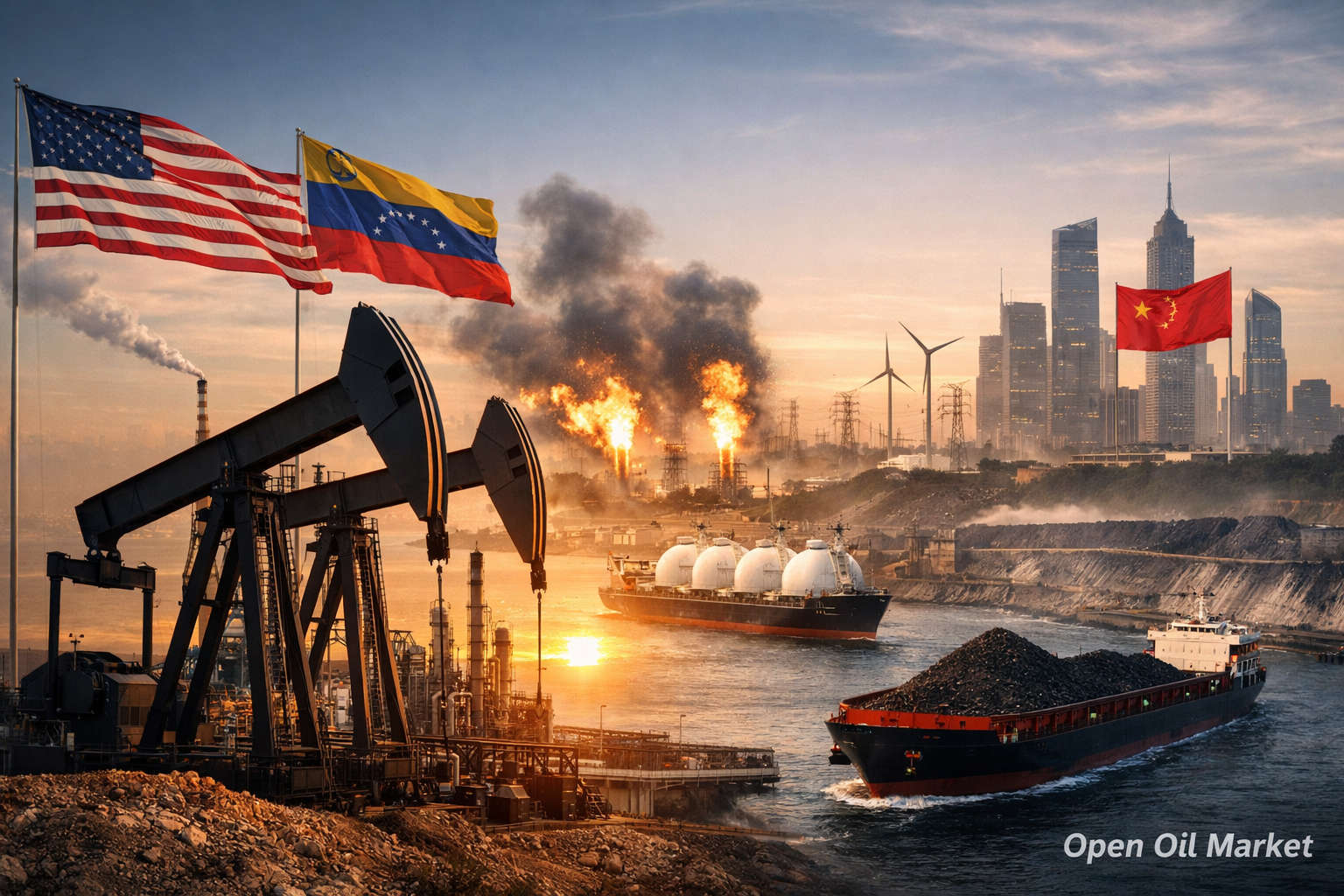
Geopolitical factors have come to the forefront in early 2026 and are significantly impacting the energy sector. In the first days of the new year, the United States conducted an unprecedented operation, effectively changing the regime in Venezuela: Washington announced the detention of President Nicolás Maduro and the intention to lift some oil sanctions against the country. The Trump administration had already arranged for the delivery of up to 50 million barrels of Venezuelan oil to the US, redirecting a significant portion of Venezuela's exports that previously went to Asian markets, primarily China. The US positions this deal as a step towards enhancing its energy security and controlling Venezuela's largest oil reserves. However, such actions have strained relations with Beijing: China, which had previously been the main buyer of Venezuelan oil, sharply condemned US intervention as a violation of sovereignty. Beijing has indicated its intention to protect its energy interests — notably, it is expected that China will increase its purchases of Iranian and Russian oil to compensate for the potential loss of Venezuelan volumes.
Meanwhile, the sanctions confrontation between Russia and Western countries in the energy sector remains virtually unchanged. Moscow has extended the decree prohibiting the supply of Russian oil and oil products to buyers adhering to the G7/EU price cap until 30 June 2026, reiterating its stance of non-recognition of Western restrictions. The EU and the US have also maintained all previously imposed sanctions against the Russian energy sector, and the global trade in energy resources has fundamentally adapted to these restrictions — Russian oil and gas have been redirected mainly to Asia, the Middle East, and Africa. Expectations for a rapid easing of the sanction regime are low: direct dialogue between Russia and the West is stagnating, and energy companies must operate in a new paradigm divided by sanction barriers. Nonetheless, continued sporadic contacts (for instance, on grain deals or prisoner exchanges) maintain minimal chances for a partial thaw in relations in the future, which could also impact energy markets. For now, however, investors are incorporating the preservation of strict sanction confrontations and associated reorientations of oil and gas flows into prices.
Asia: India Upholds Energy Security, China Increases Resource Extraction
- India: Despite unprecedented pressure from Western countries demanding reduced cooperation with Russia, New Delhi steadfastly adheres to a course of ensuring its energy security. India continues to actively procure Russian oil and gas, asserting that a sharp reduction in imports from Russia is impossible without harming its economy. Moreover, Indian refiners are securing advantageous terms: Russian companies are offering increased discounts on Urals crude (estimated at around $5 off the Brent price) to maintain their market presence in India. As a result, Russian oil continues to constitute a significant portion of India's import balance, and the Indian government publicly states that external pressure threatening the country's access to critically important energy resources is unacceptable.
- China: Against the backdrop of increased geopolitical uncertainty, Beijing is prioritising the development of its own resource base. In 2025, China raised oil and natural gas production to record levels, investing in the exploration of fields both onshore and offshore. Concurrently, the country has increased coal production (over 4 billion tonnes per year) to ensure power supply for both industry and households. These measures aim to reduce dependency on imported energy sources, especially given the potential for supplies to become targets of sanctions or geopolitical pressure. Additionally, China is diversifying its external sources — increasing purchases from Middle Eastern countries, Africa, and also from Russia and Iran, striving to avoid shortages even amid changing global conditions.
Energy Transition: Records in Renewable Generation and the Role of Traditional Energy
The global transition to clean energy reached new heights in 2025 . Many countries reported record electricity production from renewable sources — solar, wind, and hydroelectric power. Rapidly deployed solar and wind farms are increasing, and investments in energy storage technologies and hydrogen energy are growing. Preliminary data suggests that total installed capacity from RES worldwide increased by more than 15% over the past year. Major energy companies and oil and gas corporations are also embracing this trend by investing in renewable energy projects and low-carbon fuels, seeking to adapt to the changing market.
At the same time, experts emphasise that traditional generation — gas, coal, and nuclear — remains crucial for the resilience of energy systems. Renewable energy sources are weather-dependent and subject to seasonality; therefore, to cover peak loads and ensure uninterrupted electricity supply, reserves of traditional capacities are still necessary. Many countries declaring goals for a phased transition away from fossil fuels are nonetheless planning a transitional period of 10–20 years during which oil, gas, and especially natural gas as the cleanest fossil fuel will play the role of a "bridge" to fully green energy. Thus, the current energy transition is not an instantaneous transformation but a gradual process blending record growth in RES with a balance between new and old energy sources.
Coal: High Demand Sustains Market Stability
Despite environmental concerns, the global coal market continues to demonstrate resilience due to consistently high demand. Most notably, demand for coal remains elevated in the Asia-Pacific region: economic growth and power sector needs in China, India, and Southeast Asia drive intense consumption of this fuel. China — the world's largest consumer and producer of coal — burned coal almost at record levels in 2025 , extracting over 4 billion tonnes and meeting the lion’s share of its demand from domestic mines. India, possessing substantial reserves, is also increasing its coal use: over 70% of the country's electricity is still generated at coal-fired power plants, and absolute consumption of fuel is growing in parallel with the economy. Even other developing economies (Indonesia, Vietnam, Bangladesh, etc.) are introducing new coal-fired power plants in an effort to meet the electricity demands of their populations and industries.
Supply in the global coal market is adapting to this demand, allowing prices to remain within a relatively narrow and predictable range. The largest exporters — Indonesia, Australia, Russia, and South Africa — have increased extraction and export of thermal coal in recent years, stabilising the supply situation. After price peaks in 2022, the cost of thermal coal has returned to normal levels: current quotes at the European ARA hub stand around $100 per tonne (down from over $300 two years ago). The balance of supply and demand in the sector appears to be even: consumers are guaranteed access to necessary fuel, while producers enjoy stable sales at advantageous prices. While many countries announce ambitious plans to reduce coal usage in pursuit of climate goals, in the near-term outlook, this energy source will remain indispensable for many nations, especially in Asia. Thus, the coal sector is currently experiencing a period of relative equilibrium, providing for the needs of the global economy while ensuring the profitability of extracting companies.
The Russian Oil Products Market: Continuing Measures to Stabilise Fuel Prices
In the domestic fuel market of Russia, emergency measures aimed at preventing a renewed spike in gasoline and diesel prices remain in effect following the crisis phenomena of the previous year. In the summer of 2025, the country experienced a severe fuel crisis: wholesale prices for gasoline reached historic highs, and in some regions, there was a fuel scarcity due to high seasonal demand (during the harvest season) and reduced supply (several major refineries were forced to halt operations due to accidents and drone attacks). The government intervened promptly, creating a special task force led by the Deputy Prime Minister and adopting various decisions to saturate the domestic oil product market. As a result, by autumn, wholesale prices were stabilised; however, the regulatory framework remains in place in the new year:
- Extension of the export ban on fuel. The complete export ban on automotive gasoline and diesel fuel, introduced in August 2025, has been repeatedly extended and remains in effect (at least until the end of February 2026). This measure directs additional volumes of oil products to the domestic market — hundreds of thousands of tonnes monthly, which were previously exported.
- Partial resumption of export shipments for large refineries under government control. As market balance has improved, restrictions have been partially eased for vertically integrated oil companies. Since October 2025, some major refineries have been allowed limited export supplies under government supervision. However, independent producers, oil traders, and smaller refineries remain under embargo, preventing the outflow of scarce resources abroad.
- Increased monitoring of fuel distribution within the country. Authorities have intensified monitoring of oil products movement in the domestic market. Oil companies are mandated to prioritise domestic consumers' needs and avoid stock market resales that inflate prices. Regulators are developing long-term mechanisms — for example, a direct contract system between refineries and service stations bypassing the stock market — to eliminate unnecessary intermediaries and smooth price fluctuations.
- Continuation of subsidies and price damping measures. The government continues to provide financial support to refiners, compensating part of their lost revenue due to export limitations. Budgetary subsidies and the reverse excise mechanism (the "damping" system) help cover the difference between high world prices and lower domestic prices, motivating refineries to direct sufficient volumes of gasoline and diesel fuel to the domestic market.
The cumulative effect of these measures has already yielded results: the fuel crisis has been brought under control. Despite record exchange prices last summer, retail prices at service stations rose by only 5–6% since the year's start, approximately in line with inflation. Filling stations across the country are now adequately supplied with fuel, and wholesale prices have stabilised. The government has stated its readiness to continue export restrictions on oil products throughout 2026 and, if necessary, to deploy state reserves for the rapid supply of problematic regions. Monitoring the situation in the fuel market will continue at a high level to prevent new price surges and to ensure stable supplies of oil products for the economy and the population.