Energy for Artificial Intelligence: A New Frontier for Venture Mega-Rounds
The shortage of energy capacity for artificial intelligence data centres has finally evolved into a distinct investment class. This week, the market is discussing two billion-dollar rounds in the energy segment: a small modular nuclear reactor manufacturer secured a Series B round of approximately one billion dollars with support from leading venture funds and a credit line from a major investment bank, while a developer of backup battery systems for energy grids closed a similarly scaled Series D round, valuing the company at over thirteen billion dollars.
These deals affirm a key thesis among venture investors: the next wave of value creation in the artificial intelligence economy is being formed not so much in applications, but in the "physical layer" — generation, storage, and transmission of energy. Venture capital is increasingly competing with infrastructure and sovereign funds for stakes in projects that can alleviate the bottleneck of energy shortages for hyper-scalable data centres.
- Small modular nuclear power is becoming a priority focus for general partners working with deep tech;
- Backup and distributed energy systems are attracting institutional investors alongside strategic funds from banks;
- Credit lines from major financial institutions are increasingly supplementing traditional venture rounds in capital-intensive projects.
AI Infrastructure: Inference, Computing, and Corporate Platforms
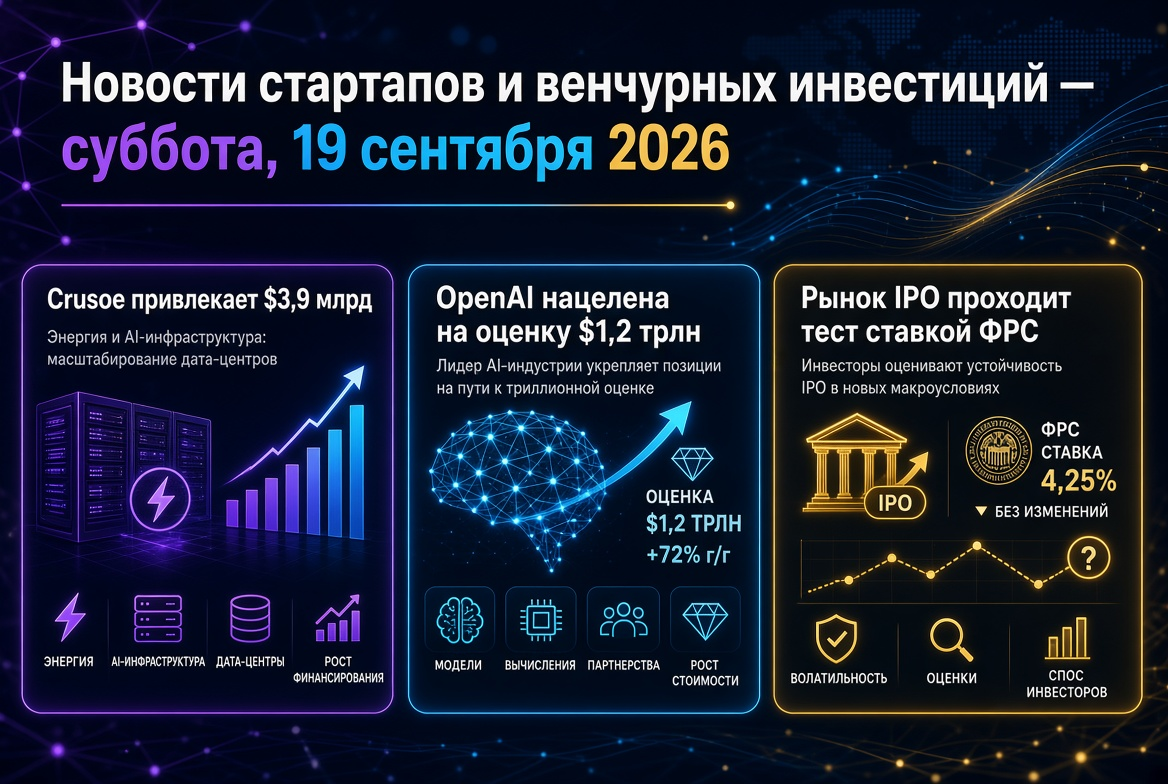
In addition to energy, large capital continues to flow into computing infrastructure for artificial intelligence. A platform for inference computing closed a Series F round of one and a half billion dollars at a valuation between eleven and thirteen billion dollars, processing over one billion inference requests daily across dozens of cloud clusters. A sovereign technology fund from the Middle East announced the closure of its first fund at approximately forty-nine billion dollars — exceeding its initial target — and continues to invest in semiconductors, AI platforms, and the creation of the largest AI campus in Europe.
Simultaneously, venture funds are financing adjacent segments: cloud databases for development using AI agents, autonomous pentesting tools for corporate cybersecurity, and specialised equipment for AI workloads. A British developer of AI chips secured a Series B round of around three hundred million dollars equivalent in euros at a valuation exceeding three billion dollars, highlighting the growing interest of venture capital in alternative suppliers of computing power outside traditional market leaders.
Defence Technologies: Record Influx of Venture Capital
Defence technology startups have become one of the fastest-growing segments of the venture market in 2026. By the end of the first half of the year, the volume of venture investments in this sector exceeded twelve billion dollars — almost double the figure from the previous year, and has already surpassed the total result for all of 2025. The main areas of investor demand include:
- Autonomous naval and aerial drone systems;
- Software for managing combat operations based on artificial intelligence;
- Solutions for fast and cost-effective production of next-generation weapons.
Geopolitical tensions across several continents are creating sustained demand from government clients, while venture funds view the defence sector as a rare niche with predictable long-term financing for contracts and low correlation with consumer technology market cycles.
Cybersecurity and Corporate AI: Steady Investor Demand
The corporate cybersecurity segment continues to attract significant capital amid the rising number of attacks using AI agents. A company specialising in protecting autonomous AI agents in corporate environments closed a Series C round of one hundred twenty-five million dollars with participation from several strategic investors from Asia and the United States. This confirms that the protection of autonomous systems is becoming a distinct investment category within the broader cybersecurity market, rather than merely an additional feature of existing products.
IPO Market: Preparing for a Wave of Mega Listings
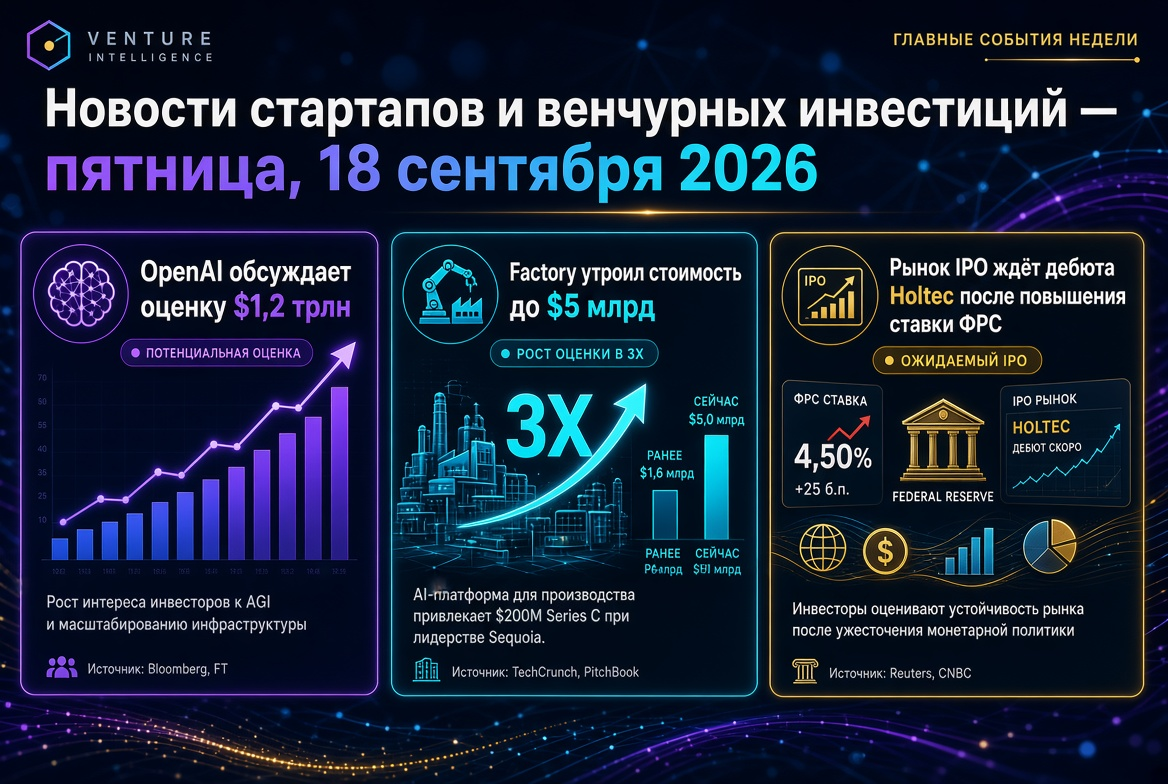
Investors are increasingly scrutinising preparations for potential mega IPOs in the second half of 2026. Among the candidates for public listing are an aerospace company with an estimated valuation of up to one and a half trillion dollars, a leading artificial intelligence lab targeting a valuation of around one hundred billion dollars, a payment service, and several major technology firms from Southeast Asia. In Hong Kong, there continues to be a wave of listings by Chinese technology companies: robotics manufacturers and AI model developers are actively applying for listings, capitalising on the favourable market conditions in the region.
For venture funds, the revival of activity in the IPO market is strategically significant: successful public offerings provide a long-awaited window for profitable exits and free up capital for new early-stage investments, thus supporting the entire venture financing ecosystem.
Capital Diversification: Fintech, Biotech, and Climate Technologies
Despite the dominance of the AI narrative, venture funds continue to diversify their portfolios. Significant rounds are being recorded in the fintech infrastructure segment, aerospace technologies — a large satellite manufacturer secured a Series D round of five hundred million dollars at a valuation of around seven billion dollars — as well as in energy storage: a California company in the field of industrial energy storage closed a Series C round at five hundred fifty million dollars. This diversification reduces the risks of overheating in individual segments and makes the venture ecosystem more balanced in the medium term.
Russia and CIS: Local Initiatives Amidst Global Boom
Against the backdrop of global growth, local venture ecosystems in Russia and CIS countries are also showing signs of revival. New specialised venture funds are emerging in the country, aimed at supporting projects involving AI agents and low-code development platforms. Industry-specific associations for venture investment are noting a growing interest among institutional investors in sector expertise, while regional acceleration programs are transitioning to a year-round format, working with technology entrepreneurs and business angels.
What This Means for Venture Investors and Funds
The cumulative events of the week indicate a structural shift in the venture market: capital is steadily moving from lightweight digital products to capital-intensive infrastructure bets — energy, computing, defence, and specialised equipment. For fund managers, this necessitates a reassessment of traditional risk assessment models and investment horizons, as such projects require larger checks, longer cycles, and deep industry expertise. At the same time, the revitalisation of the IPO market creates conditions for quality exits, which should support the influx of new capital into the venture industry in the coming quarters.
Overall, the market is entering a phase of mature but selective growth: investors are willing to commit record amounts, but preference is given to companies with clear unit economics, robust demand from corporate and government clients, and genuine technological advantages — rather than merely a loud narrative around artificial intelligence.