The Global Venture Market Enters July 2026 with Record Capital Levels, but Investors are Increasingly Distinguishing Between Technology Leaders and Projects Lacking Proven Economics
As of Wednesday, July 8, 2026, news surrounding startups and venture investments is painting a picture of a new cycle: the global market is once again in a growth phase, yet this growth has become significantly more concentrated. Venture funds, corporate investors, and sovereign capital are directing large investments into artificial intelligence, computing infrastructure, energy for data centres, defence technologies, quantum computing, legal tech, and industrial deep tech.
The main theme of the day is the transition of venture capital from the classic model of "rapid growth at any cost" to a model of strategic funding for critical technologies. Startups are increasingly being evaluated not just on their revenue growth rates but also on their ability to become part of a new technological infrastructure: energy, defence, computing, legal, or industrial.
For venture investors and funds, this signifies a change in investment logic. While there is ample liquidity in the market, capital distribution is uneven: mega funds and strategic investors compete for a limited number of companies, while mid-sized startups are encountering a more complex fundraising process, heightened demands regarding unit economics, and extended due diligence periods.
Proxima Fusion Becomes a Key Highlight of the Day: Fusion Energy Takes Centre Stage in the Venture Agenda
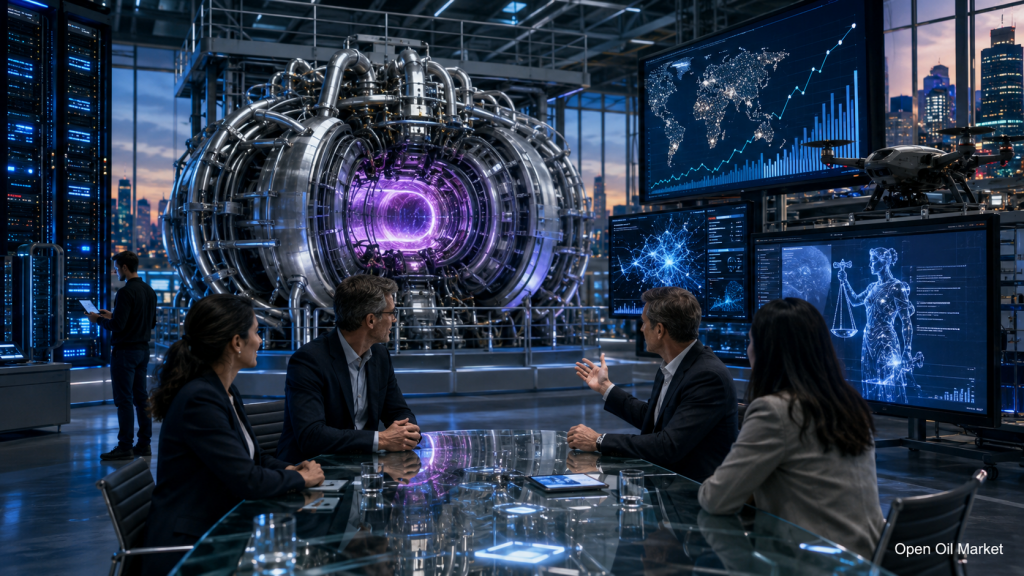
The most significant news in the venture market is Proxima Fusion's funding round of €411 million, with a valuation of approximately €2.4 billion. The German startup, which is working on nuclear fusion technology, attracted capital from strategic and financial investors, including Google, RWE, XTX Ventures, and East X Ventures. This deal stands out as one of the most notable deep tech rounds in Europe in 2026, reinforcing fusion energy as a distinct investment class.
For the startup ecosystem, this serves as an important signal: venture investments are increasingly being directed towards technologies with long commercialisation cycles but potentially systemic effects. Nuclear fusion is not only of interest to energy companies but also to Big Tech, as the development of artificial intelligence sharply raises demand for stable, inexpensive, and low-carbon electricity.
- Key Sector: Fusion energy and clean energy for AI infrastructure.
- Investment Rationale: Betting on long-term energy independence for data centres and industry.
- Risk for Funds: High capital intensity, technological uncertainty, and extended exit horizons.
Artificial Intelligence Remains the Main Magnet for Capital
AI startups continue to dominate global venture capital investments. In the first half of 2026, funding volumes for startups reached record levels, with the largest share of capital directed towards companies involved in artificial intelligence, AI infrastructure, computing platforms, robotics, defence tech, and healthcare AI.
However, the AI market is no longer homogeneous. Investors are increasingly distinguishing between three groups of companies:
- Frontier AI – Developers of foundational models and large AI platforms.
- AI Infrastructure – Chips, data centres, cloud computing, security, agent management, and MLOps.
- Applied AI – Industry solutions for law, medicine, industry, finance, e-commerce, and corporate processes.
Venture funds are becoming more cautious towards companies that label themselves as AI startups without a technological barrier. Simple integration of an existing model is no longer deemed sufficient for a high valuation. Priorities now include proprietary data, secure infrastructure, high margins, and repeatable sales models.
Norm Ai and Legal Tech: Corporate AI Becomes an Investment Standard
The legal AI segment received a new impetus following Norm Ai's round of $120 million, with a valuation of around $1.2 billion. The company is developing a full-stack model for legal and regulatory artificial intelligence, reflecting a broader trend: venture capital is shifting away from experimental AI tools towards applied systems that assist corporations in reducing costs, speeding up compliance processes, and automating complex professional tasks.
Legal tech is becoming particularly appealing to funds, as the sector combines a high average cheque size, complex regulatory barriers, and sustained demand from large corporations. Unlike consumer AI applications, corporate legal AI platforms can more quickly demonstrate value through time savings for lawyers, reduced operational risks, and faster decision-making processes.
Defence Tech and Autonomous Systems: Europe Accelerates Technological Mobilisation
One of the most notable trends in July is the uptick in defence tech. German company Quantum Systems secured $1.2 billion at a valuation of approximately $8 billion, sending a significant signal to the European venture market. The company operates in the segments of drones, autonomous systems, and software infrastructure for defence applications.
European funds are increasingly viewing defence technologies as a long-term investment market rather than a niche area. Rising demand from governments, NATO, industrial clients, and energy infrastructure is integrating defence tech into the broader deep tech ecosystem.
- Investors are focusing on autonomous drones, counter-drone systems, and robotic platforms.
- Corporations are seeking dual-use technologies for logistics, security, and industrial monitoring.
- Government programmes are creating long-term demand but increasing startups' dependence on political and budgetary cycles.
China and DeepSeek: The AI Race Becomes a Matter of Technological Sovereignty
The Chinese AI startup market remains a key area of focus for global investors. DeepSeek, one of the most prominent players in the Chinese AI ecosystem, is working on its own inference chip and, according to market reports, is preparing for a significant external funding round. This highlights to the venture market that AI is no longer restricted to models: control over computation is becoming a strategic asset.
Concurrently, Chinese authorities are considering restrictions on foreign access to the most advanced AI models. This enhances the geopolitical component of venture investments. Funds increasingly need to consider not only the technological quality of a startup but also the regulatory environment, export restrictions, access to chips, and the structure of international investors.
New Venture Funds: Capital is Available but is Becoming More Specialised
Amidst record funding for startups, new funds and specialised strategies are emerging. The venture firm Chemistry is raising approximately $500 million for a second fund focused on seed and Series A in software. In Europe, Climentum Capital has launched its second climate tech fund, with an initial closing at €60 million and a target volume of up to €100 million.
These examples illustrate an important shift: generic venture funds are giving way to specialised platforms. Limited Partners are increasingly keen to understand where the fund holds an advantage — be it in AI, climate tech, defence tech, fintech, enterprise software, biotech, or deep tech. For startups, this means a need to be more selective in choosing investors: not every fund with capital is a relevant partner.
Regional Landscape: The USA Leads, Europe Strengthens Deep Tech, India Returns to Growth
The geography of venture investments in 2026 is becoming more asymmetric. The USA and North America maintain their leadership thanks to AI mega-rounds, IPOs, and major M&A transactions. Europe is solidifying its position in deep tech, fusion energy, defence tech, fintech, and climate tech. The UK is showing robust momentum in capital attraction amidst the AI boom, while India is returning to growth following a period of more cautious funding.
For global investors, this implies that capital allocation strategies must consider not only the country but also the regional industry specialisation:
- USA – AI, cloud, chip infrastructure, frontier models, space tech.
- Europe – Deep tech, defence tech, energy transition, fusion, fintech, industrial software.
- India – Fintech, SaaS, consumer platforms, AI services, and B2B infrastructure.
- China – AI models, chips, robotics, industrial automation, but with high regulatory factors.
IPO and M&A: The Exit Market Again Influences Startup Valuations
The revival of IPOs and M&A has become an important factor for venture funds. After several years of weak liquidity, investors are once again seeing exit scenarios from mature technology firms. This supports late-stage valuations but simultaneously makes the market more demanding: public investors are evaluating not just growth but also margins, debt loads, revenue quality, and cash flow predictability.
For late-stage startups, the IPO window presents an opportunity, but not a guarantee. Companies with strong revenue, technological leadership, and clear unit economics may command a premium. Projects with inflated valuations, dependency on subsidies, or weak transparency will face discounts.
What Venture Investors and Funds Should Focus On
The key takeaway as of July 8, 2026, is that the venture market is growing, but is less tolerant of weak business models. Money is returning to startups; however, it is increasingly concentrated in companies that aim to play a role in the critical infrastructure of the new economy.
Venture investors should closely monitor several areas:
- AI Infrastructure: computing, security, agent systems, MLOps, and data pipelines.
- Energy Tech: fusion energy, grid infrastructure, storage, and energy supply for data centres.
- Defence Tech: autonomous systems, drones, cybersecurity, and dual-use software.
- Legal AI and Compliance Automation: corporate solutions with high average cheque sizes.
- Quantum Technologies and Post-Quantum Security: lengthy horizons, but with strategic demand.
- Regional Ecosystems: USA, UK, Germany, India, and China as different models of venture growth.
July 8, 2026, illustrates that news of startups and venture investments increasingly resembles a map of the future industrial, energy, and computing architecture of the world rather than a classic technology news feed. For funds, the main question now is not only which startup is growing the fastest, but which company is poised to become the infrastructural asset of the coming decade.