Current Startup and Venture Investment News as of 24 February 2026: Mega-Rounds in AI, Growth of Infrastructure Projects, Global Venture Deals, and Tech Companies Preparing for IPOs. Analytics for Investors and Funds.
By the start of the last week of February, the focus of global funds has shifted from broad capital deployment to targeted deals with clear technological differentiation. Venture investments in 2026 are increasingly concentrated around AI infrastructure, application models for industries, and companies capable of demonstrating monetisation within a 12-24 month horizon. In practice, this means a rise in the proportion of large cheques, stricter requirements for unit economics, and increased attention to enterprise contracts, rather than "pure" audience growth.
- Stronger Polarisation: mega-rounds for category leaders and a "thin" market for companies without clear advantages.
- Shift Towards AI Infrastructure: computing, data, development tools, security, compliance.
- New Norms for Terms: investors are increasingly insisting on protective mechanisms, burn-rate discipline, and a clear sales funnel.
Mega-Round of the Week: $1 Billion for World Labs and a Bet on “Spatial AI”
A key signal for the market has been the continuation of the race for the “next paradigm” in AI. One of the most discussed events has been the announcement of $1 billion raised by World Labs, founded by Fei-Fei Li. The thesis of the deal for venture funds and strategic investors is clear: models that "understand" and generate 3D environments open new markets in robotics, AR/VR, digital twins, and industrial modelling. Such funding rounds reinforce the trend towards the capitalisation of teams building foundational models and a layer of platform tools around them.
For venture capital, this marks an important indicator: investors are willing to pay a premium for teams with scientific depth, data access, and a clear roadmap for commercialisation through industry cases (manufacturing, logistics, healthcare, construction).
Super-Rounds around the “Core” of AI: Capital is Again Concentrating in a Few Ecosystems
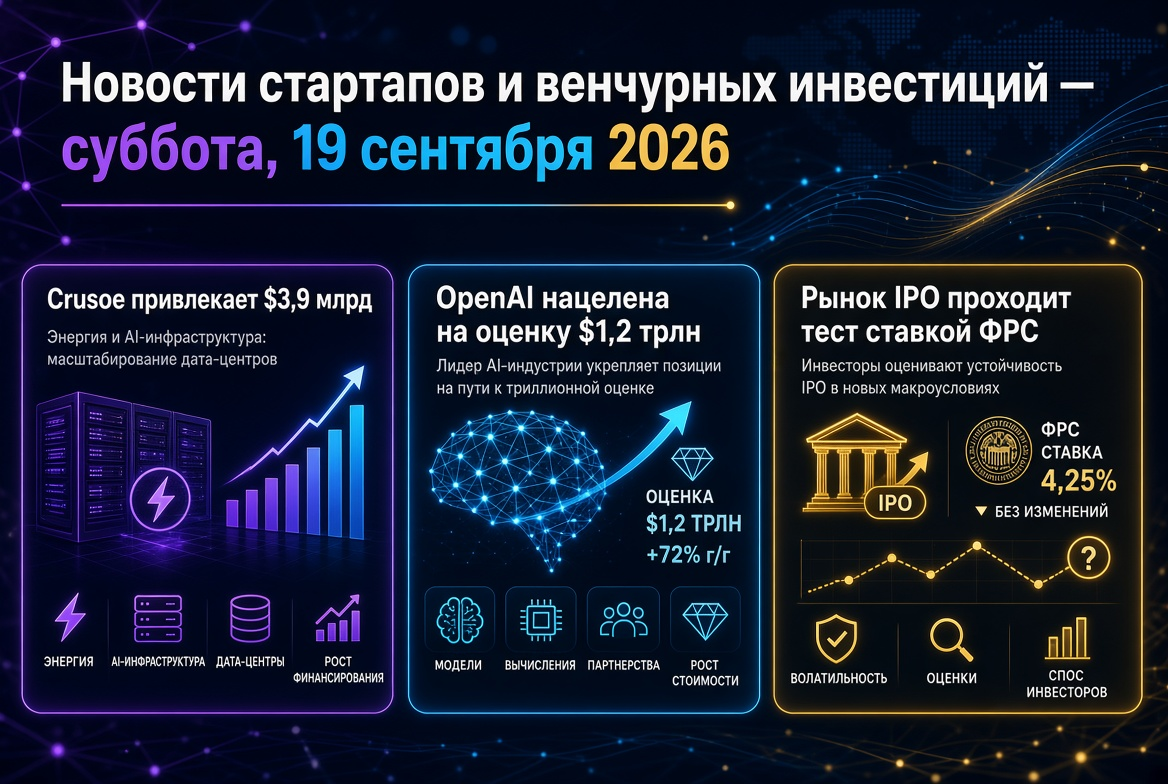
At a global level, the convergence of major tech players, clouds, and model developers continues. The market is discussing the structure of mega-deals around the largest AI platforms, where strategic investors are effectively "insuring" their own computing supply chains and long-term demand for accelerators. Negotiations for a super-large capital raise are at the forefront involving one of the market leaders in models, where potential investment volumes are measured in tens of billions of dollars, and valuations in hundreds of billions.
For second-tier startups, this creates a double effect:
- Increased Competition for Computation and rising costs of access to GPU/cluster resources.
- Accelerated Demand for Application Solutions that "fit into" existing platforms and are sold to enterprise clients.
- Increased Interest in Vertical AI Companies (finance, industry, energy, security), where domain data and integrations are crucial.
Middle Eastern Capital: New Anchor Investors and the “AI as State Infrastructure” Strategy
A distinct trend is the strengthening role of Middle Eastern funds and government structures, which are forming long-term positions in AI ecosystems. Investments by regional players in large AI companies are becoming not just financial but infrastructural: this involves building data centres, localising products, and incorporating models into national digital services. The market is discussing significant Saudi participation in one notable AI project, where the cheque is measured in billions of dollars and is accompanied by plans to expand data centre capacities.
For venture funds, this signifies the emergence of “anchors” of capital that:
- Support high valuations for segment leaders;
- Accelerate infrastructure deals (energy, cooling, sites, chips);
- Increase interest in startups that can scale globally and engage with regulators.
Deal Geography: The US Maintains AI Leadership, Europe Strengthens Regulatory Framework, Asia Exhibits Pragmatic Growth
In terms of venture investment structure, 2026 is increasingly shaping up to be the “year of AI deals” in the US—with a significant share of rounds exceeding $100 million at early stages in companies that are rapidly becoming unicorns. Europe, meanwhile, is focusing on sustainability, B2B, and compliance: investors are keen to fund solutions for security, data management, RegTech, and industrial AI.
An important context for European startups is the implementation calendar of the EU AI Act: as key dates approach, there is growing demand for tools that help companies adhere to requirements for transparency, risks, and model management. For venture capital, this creates a market for a “compliance layer” around AI and enhances the value of startups that initially build products with regulation in mind.
M&A and Corporate Venture Investments: Acquiring Competencies and Data Rather than Revenue
The mergers and acquisitions market in technology is gradually waking up, but the logic of deals is changing. Strategists and large firms are increasingly acquiring:
- Teams (acqui-hire) with rare expertise in models and infrastructure;
- Datasets and rights to industry data;
- Product modules that can be quickly integrated into existing platforms.
For startups, this means that value is increased not only by growth metrics but also by “integrability” into corporate structures: security, integrations, SLA, model manageability, and data quality control.
IPO Window in 2026: “Readiness for Public Offering” Becomes a Competitive Advantage
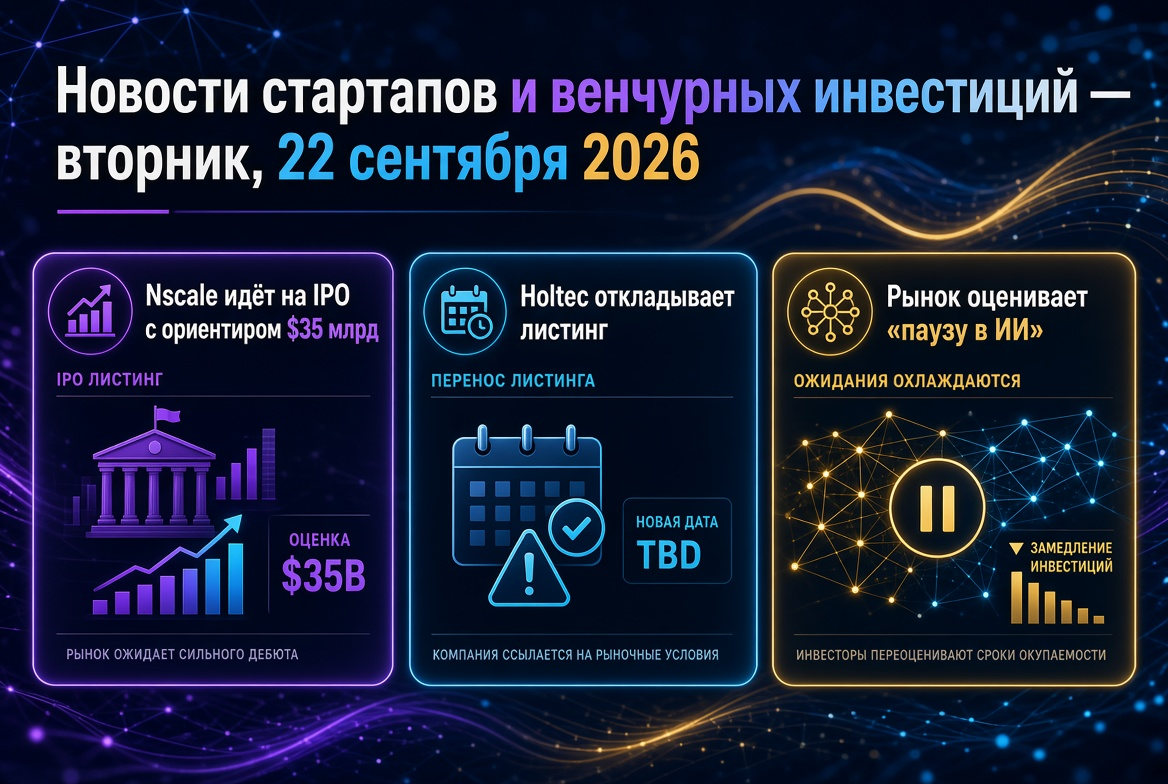
Against the backdrop of stabilising capital markets, increasingly more venture investors are discussing exit scenarios through IPOs for mature companies. The market expects primarily representatives from AI, fintech, enterprise software, and platform economics in listings and potential placements. However, the requirements for public offerings are tightening: investors and banks will scrutinise revenue predictability, margin, cost control, and resilience to regulatory risks.
Practical takeaways for companies planning an IPO within the next 12-18 months include:
- Shifting from a “growth story” to a story of efficiency (gross margin, retention, CAC payback);
- Strengthening compliance and cybersecurity contours;
- Building a portfolio of large clients and long-term contracts.
What This Means for Venture Funds and LPs: Tactics for the Coming Weeks
For venture investors and funds, the key task will be to balance participation in mega-rounds with seeking out less “overheated” deals at the intersection of AI and the real sector. In the coming weeks, it makes sense to focus on three baskets:
- AI Infrastructure: data management, development tools, computational optimization, security, MLOps.
- Vertical AI Startups: solutions tailored to specific industries with strong domain data and short deployment cycles.
- RegTech/Compliance: products that simplify compliance and reduce risk for enterprise clients.
Venture investments in 2026 are becoming more “production-oriented”: those who can quickly turn technology into revenue, scale sales, and maintain product quality under pressure will emerge victorious. For startups, this is a time when the correct go-to-market strategy and expense discipline can yield results as significant as a new funding round.