Oil Market: Brent at $88–89 Between Supply Shortages and Record Stock Growth in the US
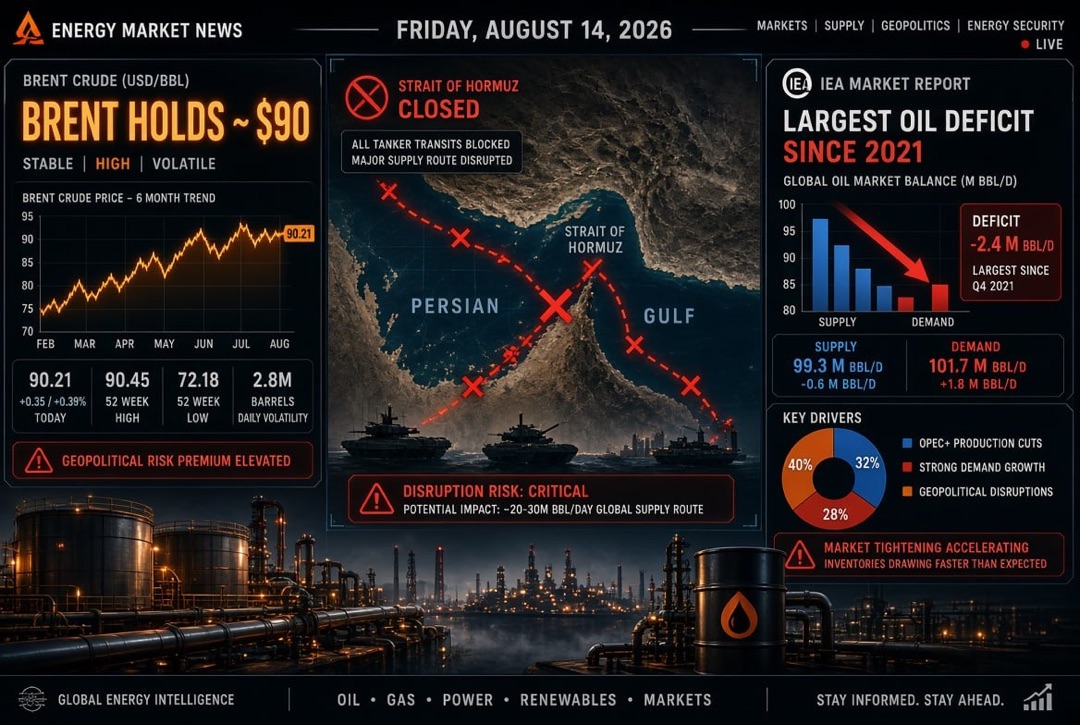
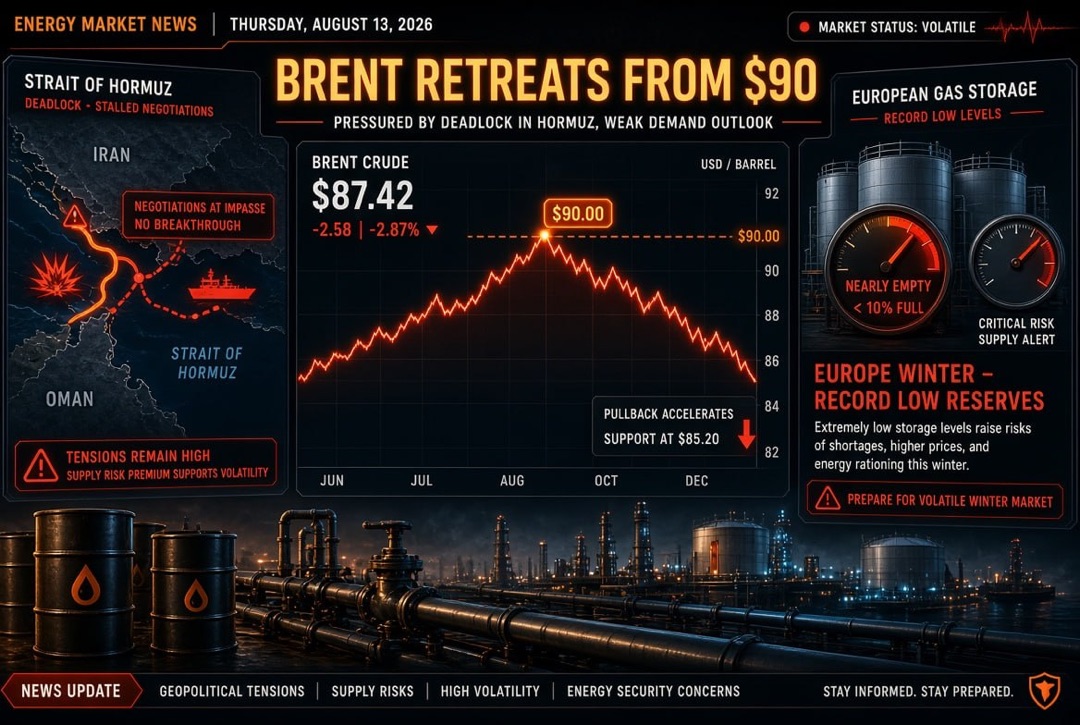
On Thursday morning, Brent is trading around $88 per barrel, while WTI is approximately $83, with prices dropping by more than $1 following a downgrade in global demand forecasts. The international benchmark closed at $88.98 the day before, briefly rising to $89.5 — about 24% higher than levels prior to the start of the US-Israeli military campaign against Iran in late February. The oil market is torn by conflicting factors:
- Supply Shortage: According to the latest monthly report from the IEA, the global oil market is losing about 1.8 million barrels per day in the third quarter due to the Middle East conflict and restricted shipping through the Strait of Hormuz.
- Record Stock Growth in the US: EIA data showed a 17.4 million barrel increase in commercial crude oil inventories over the week — the largest weekly gain since the beginning of 2023, which has cooled off the bulls.
- Brent Premium to WTI Expands: Middle Eastern supply disruptions hit Brent-linked barrels harder, while US production remains insulated from regional logistical risks.
- Speculative Positioning: Fund managers have reduced net long positions in Brent and WTI for the second consecutive week, taking profits amid uncertainty in negotiations.
Hormuz Crisis: US-Iran Negotiations Stalled, Attacks on Shipping Continue
Geopolitics remains the main price driver for oil and gas. Negotiations to unblock the Strait of Hormuz have hit an impasse: Washington claims "full control" over the waters and is ramping up pressure on Tehran by expanding sanctions and imposing a maritime blockade on Iranian ports. Simultaneously, escalation has spread to the Red Sea: a Houthi attack on a cargo ship in the Bab-el-Mandeb Strait resulted in the deaths of six sailors — the first casualties among crews in over a year, while American forces conducted a missile strike on a container ship in the Gulf of Oman. However, channels for dialogue are still open: reports indicate that negotiations between Iran and Oman regarding the phased reopening of the strait are in advanced stages, and expectations surrounding this have kept Brent below $90 rather than above $100. Any significant progress could quickly alleviate some military premiums; a failure to establish contact, conversely, poses a risk of renewed upward pressure on oil and LNG prices.
OPEC+: Final Quota Increase and Pause Until Year-End
The OPEC+ alliance has approved its final quota increase in the current series during the August meeting — an increase of 188 thousand barrels per day starting in September, concluding the re-entry of 1.65 million bpd of voluntary cuts from 2023 into the market. This decision is largely symbolic: actual production and exports from Persian Gulf countries are significantly lagging behind quotas due to military risks, damaged infrastructure, and logistical constraints. Analysts' base scenario anticipates a pause in quota changes in the fourth quarter and a shift to complex negotiations over production bases for 2027, which are expected to be tense in light of the UAE's exit from the organisation in May. The next meeting of key participants is scheduled for September 6.
Gas Market: Europe with Record Low Stocks Ahead of Winter
The European gas market is the second most significant topic of the day. TTF hub prices, following a spike of more than 10% at the start of the week, are holding in the range of €58–62 per MWh — approximately double the levels at the beginning of the year. The reasons for the tension are:
- EU gas storage is around 55–57% full — about 22 percentage points below the five-year average and at a record low for the season since observations began in 2009.
- LNG deliveries from Qatar through the Strait of Hormuz are experiencing disruptions, and competition with Asia for available liquefied natural gas cargoes is intensifying.
- An accident at Norway's Ormen Lange field, with extended repairs lasting until February 2027, is removing more than 1 billion cubic meters from the market during the heating season.
- The heat in Europe is maintaining demand for electricity for air conditioning, increasing gas consumption in generation.
Brussels has already lowered the mandatory storage filling target from 90% to 80% by November 1, although this is also in question at current injection rates. Commerzbank has raised its gas price forecast for the end of the year to €50/MWh, while Uniper anticipates a range of €50–60, as long as the strait remains closed. For Europe’s industry and energy sector, this signifies an expensive winter and the continuation of risk premiums in prices throughout the 2026–2027 timeline.
Sanction Pressure on Russia: New Package in the US Congress
The US House of Representatives is considering a bipartisan sanctions package targeting Russia's energy revenues, banking sector, and circumvention networks, with threats of increased tariffs for major buyers of Russian energy products. For the global oil market, this adds another layer of uncertainty: tightening secondary sanctions could reshape the flows of Russian oil and oil products to Asia and widen Urals discounts, while India and China continue to balance advantageous purchases against the risk of trading restrictions from Washington.
Russian Oil Products Market: Fuel Embargo Extended, Priority on Domestic Market
Russia's domestic fuel market remains under tight control following drone attacks on refineries and a summer surge in demand. The government has extended the total ban on the export of motor gasoline until January 31, 2027; restrictions on diesel fuel, marine fuel, and gasoil exports are in place until the end of August, with direct producers of diesel allowed to resume exports from September 1. Furthermore, a special order for fuel supply for agricultural producers during the harvesting campaign will remain in effect until November 1. Authorities estimate that the market has begun to stabilize partially, although in certain regions the gasoline situation remains tense. For the global oil products market, the extension of the Russian embargo signifies a reduction in diesel export supply and supports crack spreads for refineries in Europe, the Middle East, and Asia.
Power Generation and RES: Renewables Surpass Coal for the First Time
The global energy transition will reach a historic milestone in 2026: according to IEA forecasts, renewable generation will exceed coal generation for the first time, becoming the largest source of electricity in the world. Global electricity demand is expected to grow by 3.6% in 2026 and by 3.8% in 2027 — reaching approximately 30,700 TWh, driven by the electrification of transport and industry, air conditioning, and rapid expansion of data centres for artificial intelligence. Solar energy is projected to add around 600 TWh of production per year and will surpass wind, becoming the second largest renewable source after hydropower. In the EU, the share of coal in generation is set to fall below 10% for the first time in over a century, while the share of low-carbon electricity will approach 76% by 2027. Demand in China is expected to rise by about 5.5%, while in India, it will increase by 7%. Another trend is energy for AI: billions in investment are being directed towards storage, small modular reactors, and grid infrastructure, while European generators, including nuclear, are raising annual forecasts amid high electricity prices.
Coal: Paradox of the Energy Transition and Data Centre Demand
Despite the records in renewable energy, coal demonstrates resilience in areas where electricity demand is growing the fastest. In the US, coal generation surged by 13% last year — data centres and expensive gas brought coal-fired power plants back online and slowed their retirement. In China and India, conversely, coal production is declining due to the record introduction of solar and wind capacities — for the first time in five decades, both countries have shown a synchronous reduction. Overall, global coal consumption is reaching a plateau: the IEA expects a modest decline in coal generation until 2030 while maintaining its significant role in Asia's energy balance.
What This Means for Investors: Key Indicators for the Coming Weeks
The energy market remains a geopolitical market. The baseline scenario is for Brent to hold in the $85–92 per barrel range with the Strait of Hormuz closed, carrying asymmetric risks upward in the event of a breakdown in negotiations, and with potential for correction to $80 and below in case of breakthroughs in US-Iran dialogue. Investors and fuel market participants should monitor:
- The progress of negotiations between Iran and Oman regarding the phased reopening of the Strait of Hormuz and Washington's rhetoric;
- The rates of gas injection into European storage and TTF dynamics ahead of the heating season;
- The OPEC+ meeting on September 6 and initial signals regarding quotas for 2027;
- The fate of the US sanctions package against Russia's energy sector and the reactions from India and China;
- Weekly EIA reports on oil and oil product inventories in the US;
- Electricity demand statistics from data centres as a new structural driver for gas, coal, nuclear, and renewables.
The energy markets are experiencing one of the most tense periods in recent years: military premiums in oil, record low gas stocks in Europe, and the historic shift in global power generation are creating a new configuration for the energy sector, where volatility is becoming the norm, and energy security is the top priority for governments and companies across the globe.