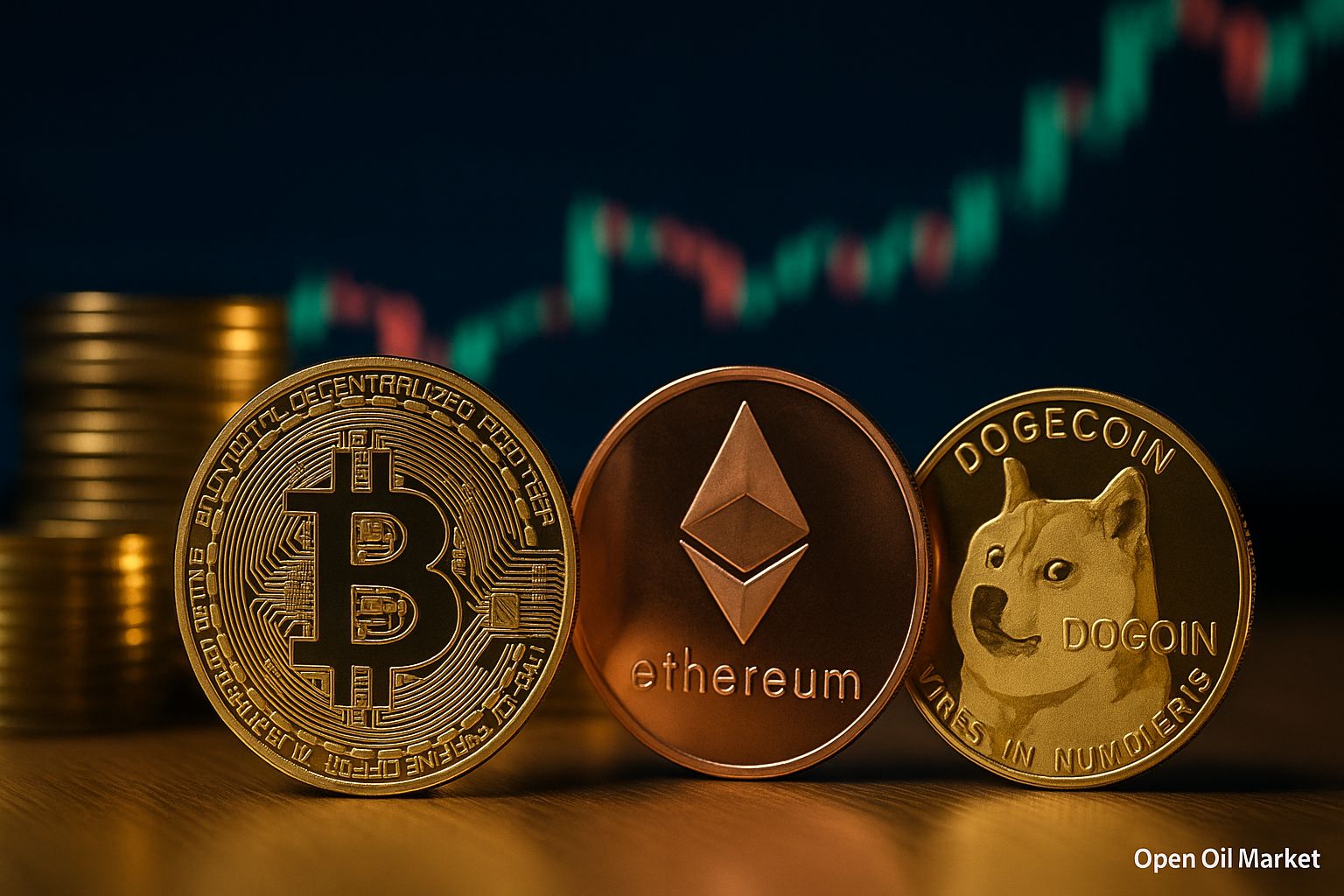
The Cryptocurrency Market Recovers: Bitcoin Remains Above $100,000, Ethereum and Altcoins Rise, Institutional Investors Maintain Confidence. Analysis and Overview of the Top 10 Cryptocurrencies as of 11 November 2025.
The cryptocurrency market is gradually recovering after the correction earlier in November: Bitcoin is once again holding above the psychological threshold of $100,000, while leading altcoins have stabilised and started to rise alongside it. Investors are exhibiting cautious optimism amid improving macroeconomic conditions (the resolution of the US budget crisis and signals of easing from the Federal Reserve); however, they remain vigilant ahead of the upcoming release of significant inflation data. The total market capitalisation of cryptocurrencies has reverted to approximately $3.6 trillion, recovering a substantial portion of its recent losses. The Fear and Greed Index remains in the "fear" zone (around 30), reflecting the tempered sentiment among market participants.
Bitcoin Recovers After the Correction
The flagship cryptocurrency, Bitcoin (BTC), has partly regained its losses following a sharp decline at the beginning of the month. On the night of 5 November, the BTC price fell below $100,000 for the first time since summer (to about $98,000), triggering a wave of liquidations. This decline coincided with tightened monetary policy: the Federal Reserve indicated the possibility of another rate hike in December, while the People's Bank of China constrained liquidity, prompting a flight of capital from riskier assets towards the dollar and gold.
By mid-November, Bitcoin had quickly returned above this crucial level, buoyed by positive news — the prolonged US government shutdown came to an end, alleviating political uncertainty. Currently, BTC is trading around $106,000, approximately 15% below its all-time high of around $126,000 reached in early October. The market is consolidating in the $100,000 to $110,000 range: resistance is noted at $110,000, with support around $100,000. Bitcoin's market share is approximately 60% of the total market capitalisation, underscoring its dominant position in the cryptocurrency space.
Ethereum and Altcoins Gain Momentum
The second-largest crypto asset, Ethereum (ETH), has also returned to an upward trajectory. The ETH price is currently around $3,600, rebounding from last week's lows, when the asset dipped to about $3,100. Current values are approximately 25% lower than the summer peak of nearly $5,000 recorded in August. Ethereum continues to serve as the foundational platform for decentralised finance (DeFi) and a myriad of other blockchain applications. Following its transition to Proof-of-Stake in 2022, the Ethereum network has become more energy-efficient, and the burning of transaction fees renders its token a potentially deflationary asset under high demand.
Most other altcoins are also in the "green zone", progressively recovering from the recent downturn. Major coins such as Binance Coin (BNB), XRP, Cardano (ADA), and Solana (SOL) are confidently rising in tandem with the market leader. The meme cryptocurrency Dogecoin (DOGE) remains within the top ten largest cryptocurrencies. Among second-tier altcoins, some have experienced unexpected surges: for instance, the price of Decred (DCR) soared nearly 70% in a single day, reflecting a resurgence in speculative activity (though such rapid growth typically precedes a correction).
Macroeconomic Background: Rates and Inflation
External macroeconomic factors continue to impact the cryptocurrency market. In recent months, the rhetoric from central banks has become increasingly hawkish: the US Federal Reserve did not lower rates at its last meeting and signalled the possibility of further increases, while the People's Bank of China limited liquidity. These measures have heightened concerns over economic overheating and instigated a sell-off of risk assets — bond yields have risen, the dollar has strengthened, adversely affecting digital assets.
The resolution of the US budget crisis has somewhat improved sentiment; however, new data is now of paramount importance. The Consumer Price Index (CPI) for October in the US is set to be released this week: if inflation continues to decelerate (following an annual rate of 3% in September), expectations for rate cuts in 2025 will intensify, whereas unexpected increases in the index will compel the Federal Reserve to maintain a tighter policy for a longer period. The macroeconomic landscape remains uncertain; thus, each new signal from regulators or economic statistics is capable of significantly influencing the cryptocurrency market.
Regulation and Global Adoption
The regulatory environment is becoming increasingly favourable for the industry. The Donald Trump administration in the US has adopted a pro-crypto stance: laws clarifying the legal status of digital assets have been enacted, and several industry figures have received pardons. In the European Union, the MiCA framework law is set to come into effect, establishing unified regulations for the crypto business. Crypto hubs like the UAE and Singapore continue to attract blockchain projects with lenient regulations and tax incentives.
Individual court rulings and government initiatives are also boosting investor confidence. Ripple's court victory against the SEC has removed significant uncertainty surrounding XRP and established a positive precedent for the industry. Additionally, authorities in Kazakhstan have announced plans to create a national crypto reserve of up to $1 billion, demonstrating an increasing interest in digital assets at the state level. Collectively, these factors are forming a positive backdrop for the ongoing development of the cryptocurrency market.
Institutional Interest and Capital Inflows
Since 2024, after the approval of the first spot Bitcoin ETFs in the US, interest from large investors in cryptocurrencies has surged. At the end of October, a record influx of capital was observed in crypto funds — approximately $450 million in one week (a significant portion of which went into BlackRock's Bitcoin ETF). Even recent market dips have not led to a mass exit from positions among institutional investors; the total assets under management of leading crypto funds remain close to their peak levels. This reflects the confidence of large players and imparts stability to the market. The increasing share of institutional capital enhances liquidity and gradually reduces volatility, thereby strengthening trust in digital assets across all categories of investors.
Top 10 Most Popular Cryptocurrencies
Below is a list of the ten most popular and largest cryptocurrencies at present, along with a brief description of each:
- Bitcoin (BTC) — the first and largest cryptocurrency, often referred to as "digital gold". Launched in 2009, it has become a popular means of value preservation and a hedge against inflation. The limited supply (21 million coins) ensures Bitcoin's dominance in the market, making it the primary price benchmark.
- Ethereum (ETH) — the second largest cryptocurrency by market capitalisation and a leading platform for smart contracts. It underpins DeFi and many other blockchain applications, with the ETH token used to pay fees on the network. The transition to Proof-of-Stake has improved Ethereum's energy efficiency, and the burning of transaction fees makes it a potentially deflationary asset amid high demand.
- Tether (USDT) — the largest stablecoin, pegged to the US dollar (1 USDT ≈ $1). It serves as a digital equivalent of the dollar in the cryptocurrency market and is widely used by traders to hedge against volatility and transfer funds between exchanges. The issuance of USDT is backed by reserves, maintaining its peg to $1.
- Binance Coin (BNB) — the internal token of the Binance exchange and the foundational asset of the BNB Chain blockchain. It is used to pay fees on the exchange (with discounts) and across Binance's ecosystem services. Due to Binance's scale, BNB consistently ranks among the market leaders by capitalisation.
- USD Coin (USDC) — the second largest stablecoin, also pegged to the dollar 1:1. Issued by the Centre consortium (Circle and Coinbase), USDC places emphasis on reserve transparency. It is actively used in decentralised finance and for transactions between platforms, ensuring stable pricing around $1.
- XRP (Ripple) — the token of the Ripple payment system, designed for fast and inexpensive international transfers. It acts as a "bridge" between various fiat currencies and targets banks and payment networks. The recent court ruling in favour of Ripple against the SEC has alleviated regulatory risks and increased interest in XRP.
- Cardano (ADA) — a blockchain platform developing with a scientific approach and rigorous code verification. It enables the issuance of smart contracts and decentralised applications, utilising the Ouroboros consensus algorithm (Proof-of-Stake). The ADA token is used for staking and transaction fees.
- Solana (SOL) — a high-speed blockchain with low fees, popular among DeFi applications and NFT platforms. It can process thousands of transactions per second, attracting developers of decentralised services. Despite experiencing outages in 2022, Solana has recovered and is once again among the top cryptocurrencies by market capitalisation.
- Dogecoin (DOGE) — the most well-known meme cryptocurrency, which started as a joke but has gained immense popularity. It has an unlimited supply and high inflation; however, its viral spread and support from enthusiasts allow it to maintain a strong position. It is used for quick small online payments.
- Tron (TRX) — a blockchain platform with high throughput, widely used for issuing and moving stablecoins (a significant portion of USDT operates on Tron due to low fees). The TRX token is used for transaction payments and operates decentralised applications within the Tron ecosystem.
Thus, as of mid-November 2025, the cryptocurrency market is confidently emerging from a recent turmoil. Bitcoin and leading altcoins have recovered a significant portion of their declines and are once again aiming for local maxima, while the rising presence of institutional investors contributes to market stability. Investors continue to closely monitor the actions of regulators and macroeconomic indicators — the future of this recovery largely hinges on whether it will evolve into sustainable market growth by the end of the year.