Current Cryptocurrency News for Tuesday, 16 December 2025: Bitcoin Dynamics, Altcoin Movement, Institutional Interest, Global Trends and Top 10 Cryptocurrency Overview. Analytics for Investors.
Today, the cryptocurrency market is demonstrating relative stability following a period of high volatility. Bitcoin is holding steady at around $90,000, whilst the majority of altcoins are lagging behind in performance. Investors are exhibiting cautious optimism: as the end of the year approaches, there is a noticeable uptick in interest towards digital assets. Let’s delve into the key events and trends currently shaping the cryptocurrency market.
Bitcoin: Consolidation at High Levels
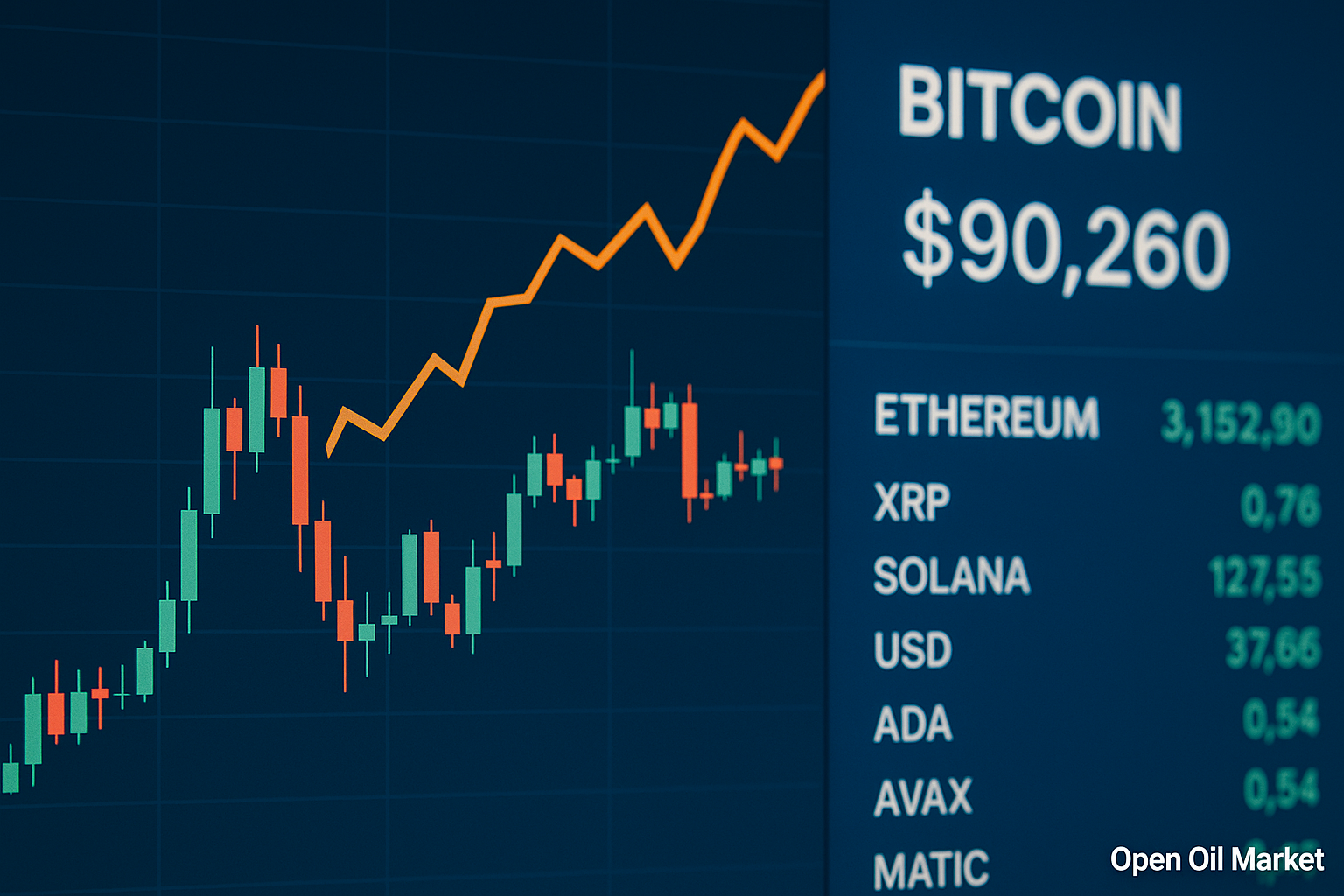
Bitcoin (BTC) remains the dominant cryptocurrency, trading in the vicinity of $90,000. Following its historic high of approximately $126,000 in early October, Bitcoin has corrected and is now consolidating around current levels. At the beginning of this week, the price of BTC is roughly 2% lower than it was at the end of the previous week, indicating a temporary easing of upward momentum. Macroeconomic factors, such as signals from the US Federal Reserve regarding a potential easing of monetary policy, have previously supported investor risk appetite; however, a sustained rally is yet to be observed. Analysts note that for Bitcoin to resume a strong upward trend, it needs to convincingly break the resistance range of approximately $94,000. Nevertheless, maintaining prices above key levels keeps BTC's market capitalisation around $1.7 trillion and its market share at about 59% – a figure that reflects the cryptocurrency's enduring leadership.
Ethereum and Leading Altcoins: Mixed Dynamics
The market for alternative cryptocurrencies (altcoins) is presenting a heterogeneous situation. Ethereum (ETH), the second largest cryptocurrency by capitalisation, is trading around $3,150, remaining above the psychologically significant level of $3,000. Following the completion of network upgrades and the transition to Proof of Stake (PoS), the platform continues to attract investors, thanks to its pivotal role in decentralised applications. However, ETH, along with several other leading altcoins, has displayed a decline in recent months – many tokens are trading below their autumn peaks. For instance, the altcoin season index has dropped to its lowest levels since mid-summer, indicating that only a few major coins have outperformed Bitcoin in returns over the past 90 days. Bitcoin's dominance at around 59% means that the cumulative market share of other cryptocurrencies has diminished, with capital largely flowing towards the more resilient assets.
Despite the general slowdown of altcoins, some projects have distinguished themselves with sharp growth. The privacy coin Zcash (ZEC) has unexpectedly emerged as a leader, with its price soaring by hundreds of percent over the last three months, drawing attention as one of the most lucrative assets of the autumn. Meanwhile, many other major altcoins remain under pressure. Solana (SOL), which had previously showcased a powerful rally (reaching all-time highs above $150 in September), is now trading around $130, having lost some value following the recent market correction. The BNB token from the Binance exchange, which surged above $1,000 in September, has retraced to levels around $880–$900. A similar downward trend in the last quarter has been observed for Cardano (ADA), Toncoin (TON), and other assets in the top 10. Consequently, investors are currently adopting a cautious stance towards altcoins, favouring Bitcoin and Ethereum as relatively safer digital assets.
Institutional Inflows and Investor Sentiment
There is a growing interest in cryptocurrencies among institutional investors. According to recent reports, global investment products focused on digital assets recorded inflows of approximately $700 million over the past week, marking the third consecutive week of positive net flows. The total capital under management by crypto funds has reached around $180 billion, reflecting a gradual return of confidence among large players in the market. Experts describe the sentiment as “cautiously optimistic”; investors are increasing their exposure to cryptocurrencies, albeit without taking on excessive risk. Interest is primarily concentrated on the largest assets – Bitcoin, Ethereum, and XRP, which lead in demand within institutional circles. However, certain concerns persist: the market's volatility and the still uncertain economic environment are limiting aggressive purchases. Nevertheless, the gradual resumption of capital inflows suggests that some investors are once again willing to consider cryptocurrencies as a promising investment avenue.
Regulation and Global Adoption
In the realm of regulation and widespread adoption of cryptocurrencies, the end of 2025 has been marked by significant developments. In the US, regulators have taken steps towards the market: the Securities and Exchange Commission (SEC) has approved several Exchange-Traded Funds (ETFs) based on Bitcoin, as well as hybrid products incorporating both Bitcoin and Ethereum. This decision is a landmark, providing institutional and retail investors easier access to crypto-assets via traditional exchanges. In Europe, the comprehensive regulatory framework known as MiCA (Markets in Crypto-Assets) has come into force, standardising the rules governing cryptocurrencies across EU countries and enhancing market transparency. Simultaneously, major financial companies are exploring blockchain technology: for instance, JPMorgan has launched a tokenised money market fund on the Ethereum blockchain this month, illustrating the integration of traditional finance with distributed ledger technologies.
Regulatory approaches worldwide are gradually taking shape. In some countries, a stringent stance is observed: in Russia, authorities have confirmed that they do not plan to allow the use of cryptocurrencies as a payment method, confining them to the role of investment assets. Conversely, several jurisdictions in Asia and the Middle East continue to implement crypto-friendly initiatives, establishing special economic zones for blockchain businesses and even discussing state support for individual cryptocurrency projects. Overall, 2025 has been a period during which the global community has moved closer to achieving a balance between the innovations of the crypto market and the need to control risks for investors and the financial system.
Top 10 Most Popular Cryptocurrencies
As of December 2025, the most popular and capitalised cryptocurrencies include the following projects:
- Bitcoin (BTC) – the first and largest cryptocurrency, "digital gold". Price around $90,000; BTC's market share is nearly 60% of the entire market.
- Ethereum (ETH) – the leading smart contract platform and altcoin number one. Worth approximately $3,150; widely used for decentralised finance (DeFi) and applications.
- Binance Coin (BNB) – the token of the largest cryptocurrency exchange, Binance. Price ~ $890; powers the Binance Smart Chain ecosystem, used for exchange fees and services.
- XRP (Ripple) – a cryptocurrency aimed at facilitating fast international payments. Current price around $2; interest in XRP has surged following clarification of the token's legal status and partnerships in the banking sector.
- Solana (SOL) – a high-performance blockchain for decentralised applications. Price ~ $130; attracts developers with its transaction speed and scalability, despite recent outages and price corrections.
- Dogecoin (DOGE) – the most well-known meme coin and a popular speculative asset. Price around $0.13; originated as a joke but remains at the top due to community support and media mentions.
- Cardano (ADA) – a blockchain platform with a scientific approach to development. Price ~ $0.40; the project is evolving slowly but focuses on reliability and scalability, attracting long-term investors.
- Tron (TRX) – a platform for smart contracts and entertainment, known for its activity in Asia. Current price around $0.28; the Tron network is used for issuing stablecoins and dApp applications, showing steady growth in its user base.
- Toncoin (TON) – the cryptocurrency of the Telegram Open Network ecosystem. Price ~ $2–3; gaining popularity thanks to support from the Telegram messenger, although TON's volatility remains high.
- Polkadot (DOT) – a multi-chain platform (parachains) that connects different blockchains. Current price ~ $10; the project focuses on the interoperability of networks, attracting developers to create independent blockchain parachains under a unified infrastructure.
Market Outlook
As the new year approaches, the cryptocurrency market is entering a phase of reassessment and expectation. Many analysts have revised their forecasts for the end of 2025: after a tumultuous rise in the first half of the year, market participants faced a prolonged correction in autumn. The so-called “Christmas rally” has yet to materialise – December has passed without sharp surges. However, potential drivers remain on the horizon: improvements in the macroeconomic situation, the launch of new exchange products, and technological upgrades in networks could provide growth momentum at the beginning of 2026. Investors continue to monitor news closely on a global scale: from central bank decisions on interest rates to progress in regulation and the implementation of blockchain technology in the real sector. Despite short-term uncertainties, the cryptocurrency market retains its position as one of the most dynamic and discussed sectors of finance. The cautious optimism accumulated by the end of 2025 could lay the foundation for a new phase of development for the crypto industry in the coming year.