Current Global News in Oil, Gas and Energy as of December 16, 2025: Oil and Gas Prices, Energy Market, Renewable Energy, Coal, Refineries, Processing and Global Trends. A Detailed Review for Investors and Energy Sector Participants.
The latest events in the fuel and energy complex (FEC) as of December 16, 2025, attract the attention of investors and market participants due to their ambiguity. Ukrainian President Volodymyr Zelensky announced his readiness to abandon aspirations for NATO membership in exchange for security guarantees from the United States and Europe—this move instills hope for a potential de-escalation of the protracted conflict. At the same time, sanctions pressure on Russia is only increasing: the European Union has indefinitely extended the freeze on Russian assets until the end of the conflict and is discussing in early 2026 a complete ban on remaining Russian oil supplies, while already agreeing to plans to permanently stop importing Russian gas by 2027. Fundamental factors of oversupply and decelerating demand continue to dominate the global oil market—prices for benchmark Brent crude remain around the lower boundary of $60 per barrel, reflecting a fragile balance of power. The European gas market demonstrates relative stability: underground gas storage in the EU is over 85% full, providing a buffer before winter and keeping prices at moderate levels. Meanwhile, the global energy transition is gaining momentum—with new records set for generation from renewable sources in various regions, although countries are not yet abandoning traditional resources for the reliability of their energy systems. In Russia, following past price surges, authorities continue implementing a set of measures aimed at stabilizing the domestic fuel market. Below is a detailed overview of key news and trends in the oil, gas, electricity, coal, and renewable sectors, as well as markets for oil products and processing as of this date.
Oil Market: Oversupply Keeps Prices at Multi-Year Lows
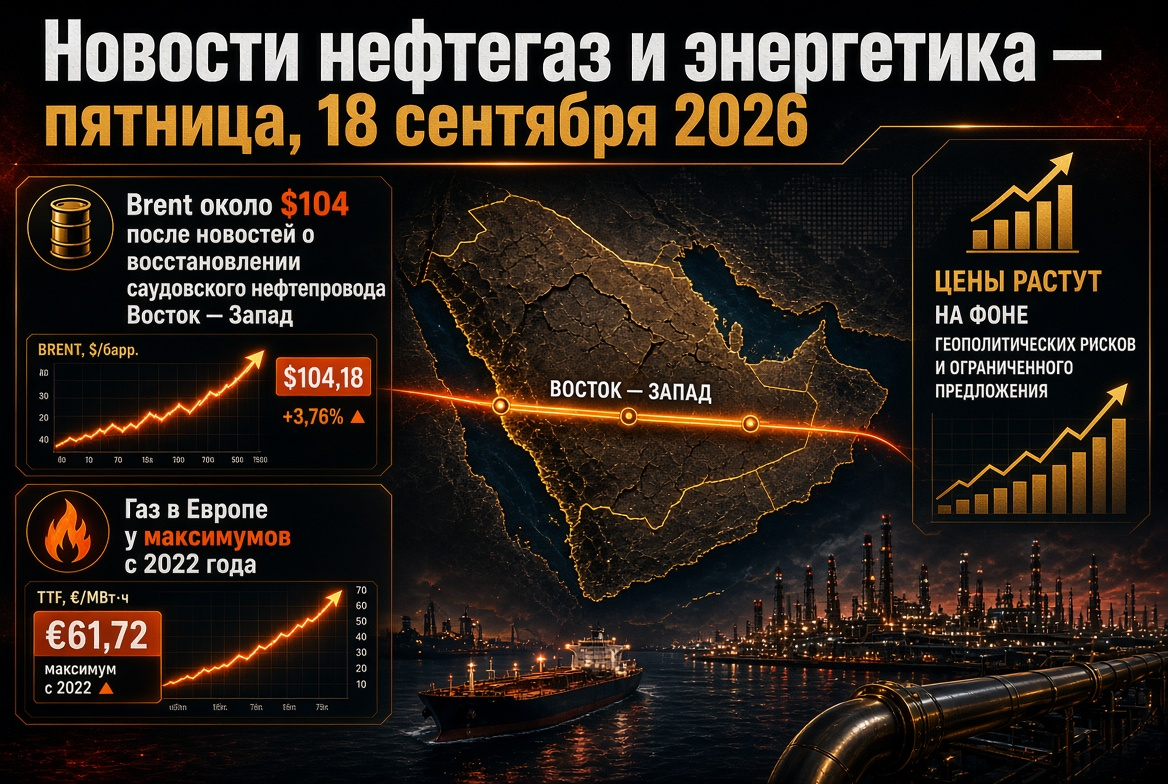
Global oil prices remain relatively stable but low, influenced by fundamental factors. The North Sea blend Brent trades around $60–62 per barrel, while the American WTI is near $57–59. Current quotes are approximately 15% lower than levels a year ago, reflecting a gradual market correction after the peaks of the energy crisis of 2022–2023. The main cause of downward pressure on prices remains oversupply amid moderate demand growth. In September, global oil production hit a record 109 million barrels per day, and although in November volumes slightly decreased (by about 1.5 million barrels per day) due to targeted OPEC+ restrictions and disruptions among certain producers, total supply remains abundant. Global oil inventories have risen to a four-year high of about 8 billion barrels, indicating an oversupply of around 1–2 million barrels per day for much of the year. OPEC+ signals readiness to maintain or even strengthen production limits through 2026, aiming to prevent further price declines. Sanctions on exporters such as Russia and Iran have reduced their oil exports, but this has proven insufficient to create a significant shortfall in the market—other players, including countries in the Middle East, have increased supplies. The market structure approaches contango (with nearest futures prices below those further out), indicating expectations of sustained oversupply in the short term. Meanwhile, geopolitical risks—from the conflict in Eastern Europe to instability in the Middle East—continue to support the market, preventing prices from falling too low. As a result, oil prices balance within a narrow range, remaining at multi-year lows yet without sharp declines, reflecting a fragile equilibrium between oversupply and uncertainty factors.
Gas Market: Comfortable Reserves in Europe and Impact of Mild Weather
The European gas market appears calm and balanced at year-end. Storage levels in the EU remain high—around 85% of total capacity—significantly above average historical values for December and ensuring supply reliability even with increased gas withdrawals in winter. Exchange prices for gas remain relatively moderate: January futures at the TTF hub in Europe trade around $350 per thousand cubic metres (about $35 per MWh), which is several times lower than peak crisis values from the year before last. This is attributed to several factors: firstly, relatively mild weather forecasts for the second half of December have lowered heating demand expectations. Secondly, active diversification of supplies has paid off—Europe continues to receive stable volumes of liquefied natural gas (LNG) from the U.S., Qatar, and other countries, compensating for reduced pipeline imports from Russia. Moreover, the EU has politically agreed to permanently abandon Russian gas by 2027, stimulating the signing of long-term contracts with alternative suppliers and the development of its own infrastructure (LNG terminals, interconnections).
The global gas market also exhibits moderate dynamics. In the U.S., natural gas prices (Henry Hub) have dropped approximately 20% in the first half of December—to below $5 per million British thermal units—amid anomalously warm weather and increased production. Northern Asia, traditionally the largest LNG consumer, does not face shortages this winter: China and Japan have accumulated sufficient reserves, and spot prices in Asia remain relatively subdued. Thus, the gas sector enters winter in fairly robust condition. Despite geopolitical tensions and long-term changes in the supply structure, the short-term outlook is favourable: ample supplies, stable prices, and the market's capability to absorb demand spikes without serious disruptions. Certainly, sudden cold anomalies or supply disruptions could temporarily spike prices, but currently, there are no signs of a new gas crisis.
Electric Power: Rising Demand and Need for Network Modernisation
The global electricity sector is undergoing significant structural changes amid rising demand and the energy transition. Electricity consumption in many countries is hitting record highs. In the U.S., a historic maximum of approximately 4.2 trillion kWh is expected for the end of 2025, driven by the growth of data centers (including for AI and cryptocurrency), as well as ongoing electrification of transport and heating. Similar trends are observed in other regions: globally, electricity demand is increasing by about 2–3% annually, outpacing the growth rate of the global economy, reflecting digitalisation and the shift from fossil fuels to electricity across various industries.
The generation structure is moving towards cleaner sources, yet infrastructure challenges are becoming increasingly acute. In Europe, the share of renewable sources in electricity generation in the third quarter of 2025 approached 50% for the first time, but this required compensation for generation variability through traditional capacities. Periods of weak winds or droughts (affecting hydropower) forced some countries to temporarily ramp up production at gas and even coal power plants to cover demand. Electricity supply networks are experiencing increased pressure due to the redistribution of energy flows between regions: for instance, excess solar generation in the south must flow to northern consumers, and so on. The EU plans expansive updates and extensions to electricity grid infrastructure, along with market rules reforms—particularly streamlining permitting for renewable generation and energy storage to alleviate bottlenecks; otherwise, by 2040, up to 300 TWh of renewable energy may go unused due to network limitations.
Energy experts highlight several priority directions to ensure the sustainability of energy systems amid the energy transition:
- Modernisation and expansion of electricity grids for effective energy transfer between regions and integration of renewable sources.
- Widespread deployment of energy storage systems (industrial batteries) that can smooth peak loads and balance renewable output.
- Maintaining sufficient reserve capacities (gas, hydro, and nuclear power plants) for anomalous demand peaks or generation interruptions from renewables.
Implementing these measures requires significant investment but is critically important for maintaining supply reliability. In conclusion, the electricity sector enters 2026 with record demand and a growing share of green generation; however, the successful transition to a low-carbon system will depend on the infrastructure's ability to adapt to new realities.
Renewable Energy Sources (RES): New Records and Global Growth
The renewable energy sector continues to break records and increase its share in the global energy balance. The year 2025 marked a historic event: the total generation from RES (including wind, solar, hydro, and others) first exceeded that from coal globally. The rapid growth of both solar and wind generation enabled the cover of the increase in electricity demand—specifically, solar power stations delivered over 300 TWh of additional energy in the first half of the year, comparable to the annual consumption of a medium-sized country. Concurrently, global coal-fired power generation slightly decreased, reducing the share of coal in electricity generation to approximately 33%, while RES reached around 34%.
Recent achievements in the area of RES include:
- A record for wind generation in the UK—on December 5, wind farms reached a capacity of 23.8 GW, covering over 60% of the country's electricity needs that day.
- China continues to lead in expanding clean energy: the total installed capacity of RES in China reached approximately 1889 GW (about 56% of all capacities), with more than half of new car sales in the country being electric. This has helped keep CO2 emissions on a plateau for the past one and a half years.
- Renewable energy dominates the structure of new capacity additions. By the end of 2025, over 90% of all new power plants worldwide were for solar, wind, and other RES projects, with the shares of gas and coal in new construction minimal.
- Investment in "green" energy is breaking records also in developing countries: for instance, in the Philippines, nearly 480 billion pesos' worth of RES projects were approved in 2025, while several countries in the Middle East and Latin America launched large-scale support programmes for solar and wind generation.
Despite these impressive successes, the RES sector faces several challenges. Regulatory uncertainty and network limitations in some regions mean that part of the RES potential remains untapped. Experts urge governments and businesses to accelerate efforts to integrate renewable sources: setting ambitious targets, streamlining bureaucratic procedures for new projects, investing in smart grids and energy storage. Nevertheless, the overall trend is clear—renewable energy is becoming the main driver of generation growth worldwide, gradually displacing hydrocarbon sources and bringing the global energy system closer to a more eco-friendly and sustainable model.
Coal: Declining Demand and Price Reductions Amid Energy Transition
The coal sector in 2025 is experiencing pressure from the energy transition and competition from cleaner sources. Global demand for coal has stabilised and begun a gradual decline in several key economies. In China and India—the countries traditionally consuming the lion's share of coal—new RES has largely underpinned this year's growth in electricity generation, allowing coal consumption to remain stable or even decrease in relative terms. Consequently, the share of coal-fired generation worldwide has decreased by over 1 percentage point compared to the previous year.
Global thermal coal prices also reflect weakened demand. By the end of the year, prices for Australian benchmark thermal coal fell below $110 per tonne, nearing the lowest levels seen in recent months. Since the beginning of 2025, coal prices have declined by approximately 15–20%, aided by high stockpiles, recovery from previous disruptions, and a relatively mild winter in major consuming regions. European coal price indices strengthened slightly in the autumn amid reduced nuclear generation and low RES output during certain weeks; however, the overall trend remains downward.
The structural reduction of coal's role in the energy systems of developed countries continues. Many states are accelerating their coal phase-out plans: in Europe, the last projects to decommission coal-fired power plants will conclude by the end of the decade, while in Australia, one of the largest power stations in Queensland has announced its early closure six years ahead of schedule; in the U.S., coal's share in generation has dropped to 16% and will continue to decline with the introduction of new RES and gas capacities. Nonetheless, coal remains a significant component of global energy—about one-third of electricity generation is still provided by coal-fired power plants, and for several developing countries, coal remains a cheap and accessible fuel for industry. In the coming years, the demand for coal may fluctuate depending on market conditions—gas prices, weather, and economic activity. However, the long-term outlook suggests a gradual sunset of the coal era: investments are shifting to clean energy, financial markets are pricing in an accelerated withdrawal from fossil fuels, and the coal sector is increasingly moving to the periphery of the global FEC.
Oil Products: Stabilisation of Fuel Prices Post-Autumn Shortage
The oil products market at the end of 2025 is showing signs of stabilisation after the turbulence seen in the autumn. In October and early November, disruptions at several major refineries (planned maintenance and unplanned shutdowns) led to local shortages of diesel and kerosene in select markets. Against this backdrop, global refining margins surged to peaks comparable to those immediately following the start of the conflict in 2022—particularly high were crack spreads for diesel, given its increased demand in the heating season and industry.
However, by mid-December, the situation had normalised. Many refineries resumed full capacity operations, catching up on fuel output. Stocks of gasoline and distillates in the U.S. and Europe began to recover, reducing wholesale prices. Retail gasoline prices in the U.S. have fallen from summer peaks and are now approximately 5–10% lower than a year ago, thanks to cheaper oil and stabilisation in demand. In Europe, diesel prices have also retreated from recent highs, easing inflationary pressure on the transport sector. In Asia, where there has been a boom in aviation fuel demand due to a recovery in air travel throughout the year, kerosene imports have increased by winter, saturating the market and halting price growth.
It is noteworthy that changes in global trade of oil products continue to be influenced by geopolitics. Since February 2023, EU countries have ceased importing Russian oil products, redirecting purchases to the Middle East, Asia, and the U.S. Russia, in turn, has redirected some diesel and gasoline exports to Africa, Latin America, and the Middle East. This reorientation requires time for the market to balance, but overall, the global fuel supply system has adapted: fuel shortages are not observed, although logistics have become more extended. Looking ahead to early 2026, new changes are possible—if the European Commission implements intentions to fully prohibit purchases of Russian oil, this would indirectly affect the oil products market, forcing EU refineries to operate solely on alternative feedstock. Nevertheless, at present, the oil products market is entering winter relatively calmly: the supply of gasoline, diesel, and aviation fuel is sufficient to meet demand, with prices fluctuating within a familiar seasonal range without signs of a new price shock.
Oil Refining (Refineries): Industry Modernisation and Transition to Clean Fuels
Refineries worldwide are undergoing a period of transformation, striving to adapt to changing demands and environmental regulations. In Europe, a clear trend is emerging: refineries are pivoting to produce cleaner fuel types. Under the pressure of stricter EU emission reduction standards and competition from new high-tech refineries in the Middle East and Asia, European refiners are investing billions of euros to modernise. The key goal is to increase the output of eco-friendly products, such as sustainable aviation fuel (SAF), biodiesel, renewable propane, and other biofuels that are experiencing growing demand from the transport sector.
Another area of growth is deep processing and integration with petrochemicals. Major oil companies aim to enhance margin yields by refining oil not only into fuel but into petrochemical products (plastics, fertilisers, etc.). Many modern refineries are effectively turning into integrated complexes capable of flexibly adjusting output based on market conditions—for example, ramping up jet fuel or mazut production when demand rises or processing part of the feedstock into naphtha for petrochemicals.
Key trends in the transformation of refining include:
- Decarbonisation of processes: implementation of carbon capture technologies, transitioning to hydrogen fuels, and utilising renewable energy to supply the refineries themselves to reduce the carbon footprint of production.
- Optimisation of capacities: closure of outdated and less efficient refineries in areas with excess capacities (such as in Europe) and launching new, modernised facilities closer to growing demand centres—in Asia, the Middle East, and Africa.
- Flexibility in feedstock: capability to process various types of feedstock—from traditional oil of different grades to biofeedstock (vegetable oils, waste) and synthetic crude. This allows refineries to adapt to supply changes triggered by sanctions or market conditions.
The global volume of crude oil processing in 2025 is on the rise, following the recovery in fuel demand. According to industry forecasts, by 2026, overall refinery throughput worldwide may reach around 84 million barrels per day, surpassing the levels of 2024–2025. A significant portion of new capacity additions is concentrated in the Middle East (e.g., the expansion of major Saudi and Kuwaiti complexes) and Asia (new refineries in China and India), where domestic demand for fuel and petrochemicals is increasing. Meanwhile, regional restructuring continues: North America and Europe consolidate the industry, focusing on efficiency and sustainability, while modern "full-cycle" plants are being built in developing economies.
Sanction and geopolitical factors have also impacted refining. Russian refineries, facing embargoes on exporting certain products and periodic restrictions, have redirected sales to the domestic market and friendly countries while the Russian government enforced temporary export bans and quotas on gasoline and diesel in the autumn of 2025 to stabilise domestic prices. These measures led to market saturation and a subsequent drop in gasoline prices in Russia by December. In the long term, international experts expect global oil refining to increasingly shift to regions of oil demand consumption and growth in the demand for oil products, adapting to the "green" transition—from the production of alternative fuel types to reducing emissions. The refining sector enters 2026 in relatively favourable condition—margins for most players remain positive due to the previous period of high prices. However, future success in the sector will depend on its ability to change: to produce cleaner fuel, operate more efficiently, and fit into the new energy reality, where the share of oil is gradually decreasing.