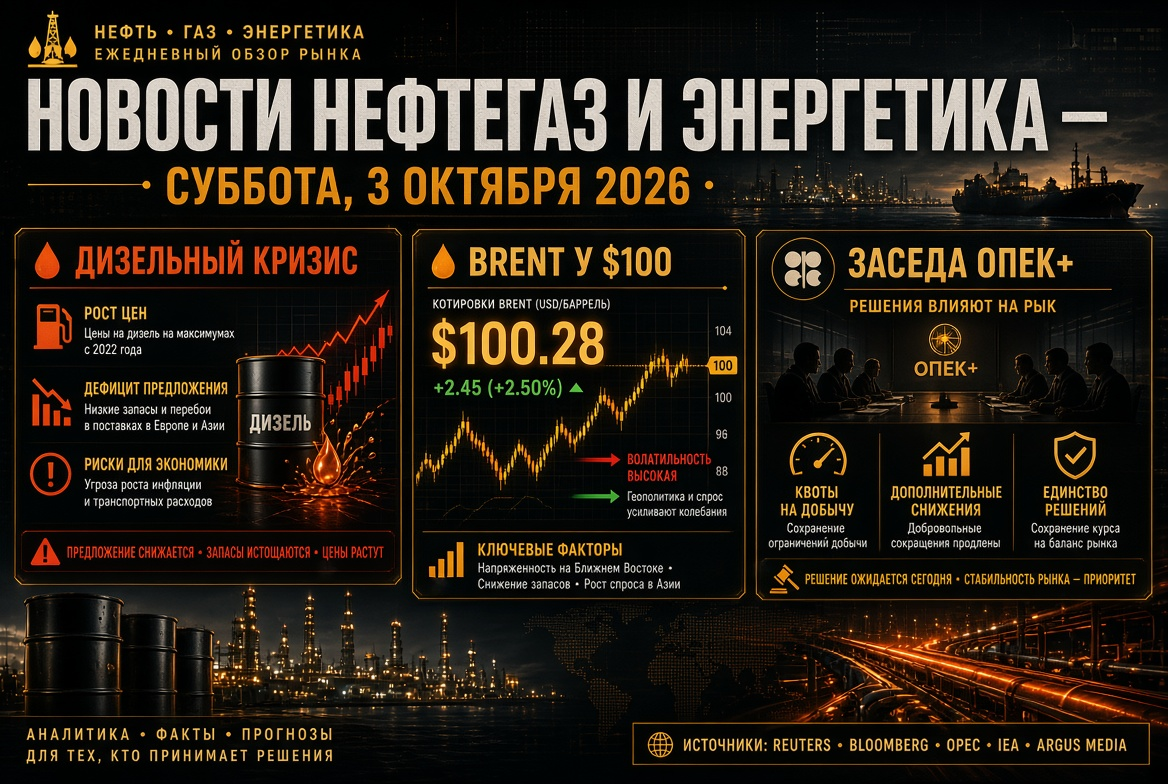
Economic Events and Corporate Reports on Saturday, 14 March 2026: Analysis of the Global Economy, Asian Companies, and Key Signals for Investors in the S&P 500, Euro Stoxx 50, Nikkei 225, and MOEX Markets
Saturday, 14 March 2026, may not seem like a particularly eventful trading day for global markets, but for investors, it is not a "blank date"; rather, it serves as an important moment for reassessing risks ahead of the upcoming week. With the United States and much of Europe in a weekend mode, the primary focus shifts towards a limited number of macroeconomic publications as well as corporate reports from Asia and the Asia-Pacific region. For the global investment environment, this indicates that sharp movements in stocks, bonds, commodities, and currencies are unlikely on Saturday, but days like this help to set the agenda for market openings on Monday.
For investors in the CIS, the global environment holds particular significance: the dynamics of inflation, credit flow, and consumer activity in Asia, the operating mode of Russian exchanges, as well as the absence of any new major releases from the US, all contribute to amplifying the importance of data already published during the week. In such conditions, it is vital for investors not so much to await a deluge of news, but to prioritise appropriately before the start of the next trading session.
Summary Introduction: Why This Day Matters for Investors
14 March is characterised by low liquidity and heightened sensitivity to already published data. Whereas on weekdays markets digest dozens of releases simultaneously, on Saturday, investors focus on a few central narratives:
- assessing the resilience of the global economy after the releases from the first half of March;
- translating the impact of Asian statistics onto the opening of the week;
- analysing individual corporate reports from companies outside of the US;
- preparing for a new wave of macroeconomic publications on Monday.
Economic Events of the Day: Where to Find Key Signals
The main characteristic of Saturday is a narrow yet potentially significant macro calendar. On such days, the impact of one or two publications on expectations regarding interest rates, currencies, and commodity assets may exceed the normal influence. Investors continue to evaluate the Chinese macro landscape, which remains one of the key indicators for commodity demand, the industrial cycle, and sentiment in emerging markets.
Key Areas of Focus
- monetary, credit, and banking indicators in Asia;
- point-in-time inflation publications in the Middle East;
- the effect of previously released data from the US, Europe, and China on expectations for the upcoming week.
Special attention should be given to China. The weak dynamics of February's credit flows recorded the day before intensify discussions around the state of domestic demand, the effectiveness of stimuli, and the prospects for industrial recovery. For commodity markets, industrial metals, energy, and cyclical stocks, this is one of the most crucial signals of March. If the credit impulse remains weak, the market will be more cautious regarding growth prospects in Asia and export-oriented companies globally.
The US and Europe: The Lack of New Releases as a Separate Factor
In the US and leading European countries, Saturday does not entail full stock market activity, meaning that markets will not receive a new influx of large corporate reports or statistical data. This does not diminish the significance of the day; rather, it alters the character of the analysis. Investors continue to reassess already published data concerning inflation, demand, industry, interest rates, and consumer activity.
For the S&P 500 and Euro Stoxx 50 indices, this translates to the following:
- the reaction to previous macro data remains incomplete;
- growth sectors and cyclical stocks may begin the week with varying dynamics depending on the interpretation of the inflation backdrop;
- demand for defensive assets and the dollar may persist if investors do not see signs of an acceleration in global demand.
This is precisely why Saturday's analysis often proves to be more valuable than a busy weekday context: it allows for distinguishing short-term noise from strategic market trends.
Asia in Focus: Corporate Reports That May Influence Monday
While the American and European corporate calendar for 14 March appears almost empty, the Asian segment provides at least a few reference points for the market. For investors, both the numbers themselves and the sectors to which the issuers belong are vital. Against the backdrop of heightened interest in the industrial cycle, defence technologies, business digitalisation, and energy infrastructure, even a limited number of releases can be significant.
Most Notable Corporate Publications of the Day
- Meridian Energy Limited – publication of operational results;
- AVIC Airborne Systems Co., Ltd. – annual report;
- AVIC Aviation High-Technology Co., Ltd. – annual report;
- Yonyou Network Technology Co., Ltd. – annual report.
This assortment of companies generates several thematic lines. Meridian Energy is relevant for investors in electric power and sustainable infrastructure. AVIC Airborne Systems and AVIC Aviation High-Technology signal developments in China's industrial and defence technology segments. Yonyou Network reflects the state of corporate digitalisation, cloud services, and the demand for IT solutions from businesses.
For the global market, these reports are important primarily as indicators of sentiment in Asia. Should the results be robust, interest in industrial, technology, and infrastructure stories in the region will be supported. Conversely, if the reports come with cautious management guidance, the market might deduce a slower recovery in corporate profits throughout 2026.
The Russian Market and MOEX: What Investors from the CIS Should Consider
For the Russian audience, the key factor is the operating mode of the Moscow Exchange. From 14–15 March 2026, the stock and derivatives markets will not be trading, hence there will be no immediate market reaction to external signals. This renders Saturday an opportune day for evaluating positions, reassessing risk parameters, and preparing for the next active session.
In practice, this implies:
- local stocks and derivative instruments will not provide an immediate response to the global news flow;
- investor focus shifts towards external markets, oil, currencies, and Asian benchmarks;
- it is crucial to assess in advance how the global agenda may influence the stocks of exporters, banks, and commodity companies at the next opening.
For the MOEX index, Saturday becomes not a trading day but a day of preparation. This is particularly significant in circumstances where commodity and currency factors might shift sentiment even before the main Russian session commences.
Corporate Reports by Regions: Where There’s Void and Where There’s Cause for Reaction
Examining the global landscape by regions reveals a heterogeneous picture.
The US
- there are virtually no significant public reports on Saturday;
- for the S&P 500, the primary driver is the reassessment of previously released data and rate expectations.
Europe
- for Euro Stoxx 50, Saturday also passes without a substantial flow of large publications;
- focus is on the implications of already published data as well as preparation for the new reporting week.
Asia
- this is where rare but notable corporate publications are concentrated;
- for the Nikkei 225, the direct effect is limited, but the regional context may influence overall risk perception in Asia.
Russia
- the reporting flow is restricted, and market reactions are delayed due to the trading mode;
- for investors, analysing the external context is more relevant than awaiting internal stimulus on Saturday itself.
What This Means for the Global Investment Environment
From an investment perspective, 14 March is a day of positioning rather than trading. Such dates are especially beneficial for institutional and retail investors, as they allow for an assessment, free from informational noise, of which themes will define the upcoming week. Currently, three global lines remain in focus:
- the resilience of Asian demand and the quality of China's recovery;
- the trajectory of inflation and the rates of major central banks;
- the dynamics of corporate profit outside the US, particularly in industry, energy, and technology.
Should the Asian signals weaken, commodity assets, cyclical companies, and emerging market markets may experience pressure. Conversely, if corporate reporting and macro data prove resilient, investors may return to focusing on the industrial cycle, infrastructure, and selective technology stories.
What Investors Should Pay Attention to by Day's End
As Saturday concludes, investors should finalise several practical takeaways:
- the primary risk lies not in the volume of news but in how the market will open on Monday after interpreting it;
- against the backdrop of a limited calendar, the significance of each Asian release and corporate commentary increases;
- for portfolios oriented towards the global environment, it is advisable to keep a close watch on China, the energy sector, defensive currencies, and rate-sensitive stocks;
- for investors from the CIS, it is crucial to assess in advance how external factors may impact Russian assets during the next full trading session.
The conclusion for the market on this day appears as follows: Saturday, 14 March 2026, is not a pause but a transitional stage between a data-rich week and a new cycle of market reactions. It is precisely on days like these that the most considered investment decisions are formed.