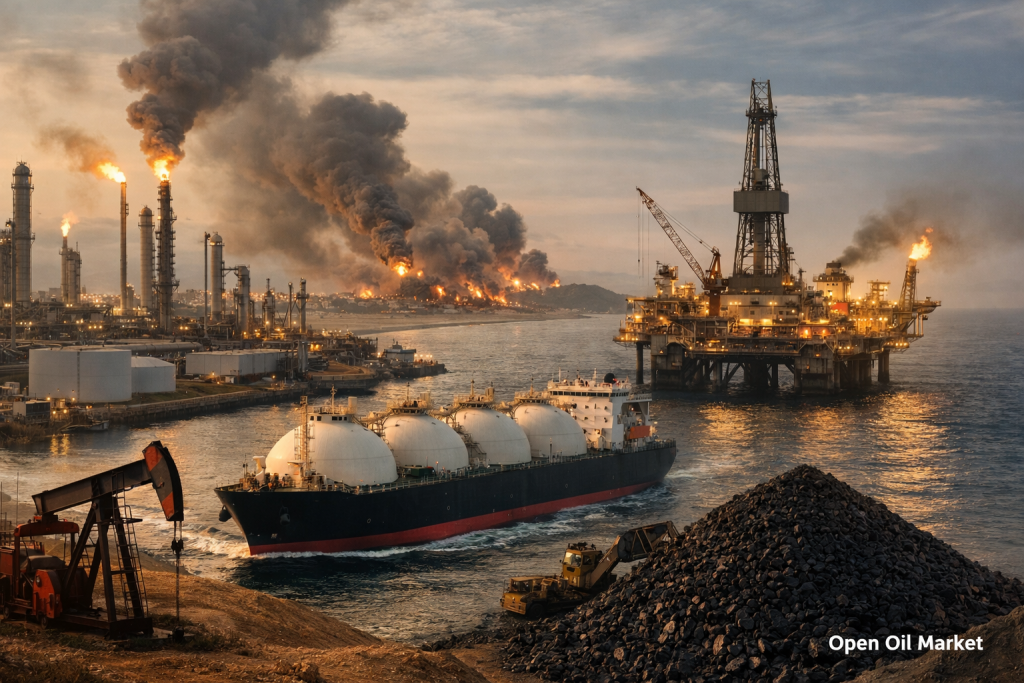
Key News from the Fuel and Energy Sector as of 27 September 2025: Oil and Gas, Energy Security in Asia, Investment in Renewable Energy, Sanctions, and Internal Measures in Russia. Analysis for Investors and Market Participants.
Current events in the fuel and energy sector (FES) as of 27 September 2025 highlight a simultaneous stability in major commodity markets along with persistent geopolitical tensions. Oil prices remain close to their recent peak levels due to risks of supply constraints and severe Western sanctions, while the European gas market enters winter with comfortable inventory levels. In Russia, the authorities are extending emergency measures to combat fuel shortages by restricting the export of oil products. Meanwhile, the global energy sector continues its shift towards a 'green' transition – investments in renewable energy are at record levels, and leading companies are revising their strategies in light of new demand forecasts. Below is a detailed overview of key news and trends in the oil, gas, energy, and commodity sectors as of the current date.
Oil Market: Prices Close to Peaks Amid Supply Risks
By the end of the week, global oil prices remain elevated. The benchmark Brent mixture is trading around $68 per barrel (after reaching a 7-week high of approximately $69 midweek), while the American WTI is in the range of $64–65. These levels are a few percent higher than at the start of the month, although still below year-ago figures. The situation in the oil market is influenced by several factors:
- Unexpected Decline in US Inventories. According to the Energy Information Administration (EIA), commercial oil inventories in the US fell by approximately 0.6 million barrels in the past week. This unexpected drawdown has signalled limited supply and supported prices.
- Geopolitical Risks. The situation in Eastern Europe remains unstable, impacting oil infrastructure. In recent days, drone attacks on oil infrastructure in Russia have increased, damaging pipeline hubs and port terminals. These events heighten fears of supply disruptions for Russian crude.
- Resumption of Some Supplies. A restraining factor for prices has been news of an agreement in Iraq to resume oil exports from the Kurdistan region (after a months-long pause). Furthermore, the peak of summer demand has passed; with the onset of autumn, fuel consumption seasonally declines.
At the end of the week, a slight correction was observed in the oil market as some investors took profits after the rally, causing Brent quotes to dip below $69. Nevertheless, prices remain close to recent peaks. The market balance remains fragile—on one hand, participants fear a supply deficit in the event of further sanctions or disruptions, while on the other, they anticipate increased supplies in the fourth quarter due to a steady increase in OPEC+ production and the return of Kurdish oil to the market. The next ministerial meeting of the OPEC+ alliance is scheduled for 5 October and will provide new guidelines on production policy.
Gas Market: Comfortable Inventories in Europe Restrain Prices
The situation in the natural gas market is relatively stable. European countries have proactively accumulated significant fuel reserves ahead of the heating season: underground gas storage (UGS) facilities in the EU are over 90% full, creating a solid buffer in case of a cold winter. The high level of inventories, along with diversified supply routes, has kept gas prices from experiencing sharp fluctuations. Additional factors influencing the gas market include:
- Successful Summer Fillings. Mild weather and conservation measures allowed Europeans to fill storage facilities without urgency. According to Gas Infrastructure Europe, by the end of September, the average level of UGS in the EU exceeds last year’s levels at the same date.
- Increased LNG Imports. Weak demand for liquefied natural gas (LNG) in Asia has freed up additional volumes for Europe. As a result, LNG supplies to the EU remain high, partially offsetting a decrease in pipeline supplies from Russia and planned maintenance at North Sea fields.
- Moderate Prices. Wholesale gas prices in Europe (TTF index) are being maintained in the range of €30–35/MWh—significantly lower than peak values in 2022. The balance of supply and demand with full storage allows prices to remain at a comfortable level.
Thus, Europe enters winter relatively shielded from gas shocks. Even in the event of severe weather, the established reserves reduce the risk of shortages, although much will depend on the duration of the cold and the situation in the global LNG market.
Russian Market: Fuel Shortages and Extended Export Restrictions
In the internal market of Russia, the problem of fuel shortages has intensified this autumn. In several regions, there is a continued shortage of automotive fuel—primarily petrol and diesel. This is attributed to a simultaneous spike in seasonal demand (the autumn harvest campaign has increased fuel consumption) and a drop in supply from refiners. Some refineries have been forced to reduce production due to emergency shutdowns caused by increased drone attacks.
To stabilise the situation, the Russian government has extended and tightened export restrictions on fuel:
- Ban on Petrol Exports. The temporary measure introduced at the end of August has now been extended at least until the end of 2025. The complete ban applies to the export of automotive petrol for all producers and traders, except for supplies under intergovernmental agreements.
- Partial Ban on Diesel Exports. Until the end of the year, the export of diesel fuel is prohibited (this mainly affects independent traders; limited export options remain for oil companies with their own refineries).
According to Deputy Prime Minister Alexander Novak, the emerging deficit is local and will be resolved by releasing reserve volumes to the domestic market. Authorities expect that stringent export restrictions will saturate fuel stations within the country, curb the rise in wholesale prices, and ensure priority supply of fuel to agricultural producers and other consumers. It is noteworthy that the reduction in exports of Russian diesel has already led to a small increase in stock prices for this fuel in Europe. However, for Moscow, internal stability is currently paramount: preventing a fuel crisis ahead of winter has become a strategic task for the government.
Sanctions and Geopolitics: Continued Confrontation Without Easing
Western countries continue to intensify sanctions pressure on the Russian energy sector. The US is publicly urging Europe to expedite its departure from Russian energy supplies to reduce Moscow's revenues. Concurrently, the European Union is preparing a new package of sanctions aimed at closing remaining loopholes: discussed measures include a complete ban on the re-export of Russian oil products via third countries and enhanced monitoring to enforce the oil price cap.
Diplomatic efforts to resolve the conflict have yielded no results: hostilities continue, and all previously imposed sanctions remain in place. This restrains the export of energy resources from Russia and complicates cooperation—Western businesses continue to shy away from new projects in Russia.
Asia: India and China Focus on Energy Security
India and China – the largest Asian consumers of energy resources – continue to increase imports of oil, gas, and coal in 2025, prioritising the energy security of their economies. India accounts for more than half of the global demand growth for oil, outpacing China. Meanwhile, Delhi is actively taking advantage of discounts on Russian Urals oil, increasing its purchases to record levels. Indian refineries are processing the raw materials received, fully meeting domestic needs and exporting surplus oil products.
China, despite economic slowdowns, remains a key player in the global energy market. Beijing is diversifying its supply channels: signing new long-term contracts for LNG imports (e.g., with Qatar and the US) and investing in oil and gas production overseas. Simultaneously, China is gradually increasing its hydrocarbon production, though this is insufficient to meet total demand. Both India and China are investing in the development of renewable energy sources but are unlikely to forego traditional hydrocarbons in the coming years—oil, gas, and coal still constitute the backbone of their energy balance.
Renewable Energy: Record Investments and New Initiatives
The transition to clean energy worldwide is gaining momentum. According to the IEA, global investments in renewable energy are set to exceed $2 trillion in 2025—more than double the expenditure in the oil and gas sector. The primary inflow of capital is directed towards the development of solar and wind generation, as well as the related infrastructure (electricity networks, storage systems).
At the September Climate Week in New York, world leaders reaffirmed their intentions to significantly increase renewable energy capacity by 2030. A comprehensive set of measures has been proposed:
- Accelerating Permitting Processes. Reduce timelines and simplify approval procedures for the construction of wind and solar power plants.
- Expanding Support for Clean Energy. Introduce additional incentives: green tariffs, tax preferences, and government guarantees for investors.
- Increase Funding for Renewables in Developing Countries. Direct more funds to projects in economies with growing energy demand, where the share of green investments is still small.
The rapid growth of renewable energy is already changing the energy balance: the share of solar and wind in electricity production is reaching record levels, and the cost of these technologies has significantly decreased over the last decade. Renewable energy enhances energy security and reduces costs, enabling countries to decrease dependence on fuel imports. However, the mass adoption of renewable energy requires the establishment of robust energy storage systems and the upgrading of power grids to maintain balance during periods without sun or wind. Major oil and gas companies are already responding to these trends, directing a portion of profits from traditional businesses towards the development of renewable energy, hydrogen technologies, and storage infrastructure, to remain competitive in the new environment.