Oil, Gas, and Energy Sector News – Sunday, 4th January 2026: OPEC+ Maintains Production Policy; Sanction Pressures Intensify; Gas Market Stability; Acceleration of Energy Transition
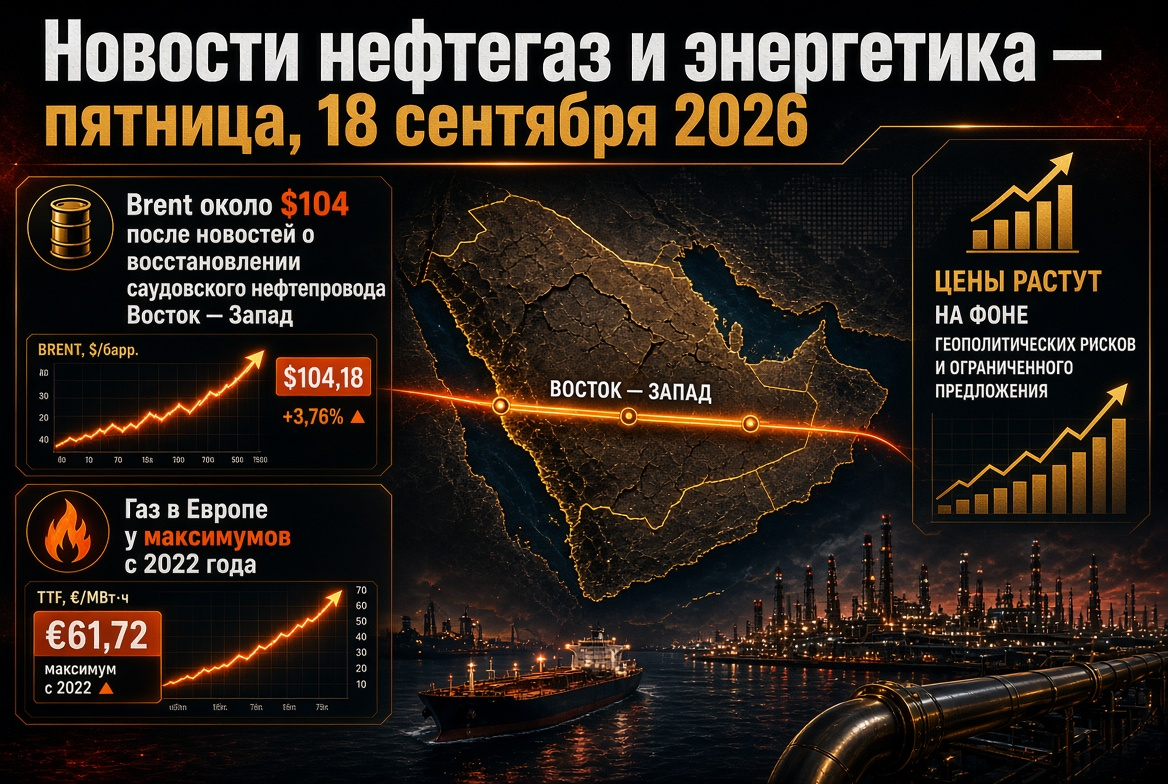
Current events in the fuel and energy complex (FEC) as of 4th January 2026 attract investors' attention due to a combination of market stability and geopolitical tension. The focal point is the meeting of key OPEC+ countries, where it was decided to maintain existing production quotas. This implies an ongoing surplus of supply in the global oil market, keeping Brent prices around $60 per barrel (almost 20% lower than a year ago, following the most significant drop since 2020). The European gas market shows relative resilience: even in the midst of winter, gas volumes in underground storage facilities in the EU remain above historical averages, which, alongside record LNG imports, keeps gas prices at moderate levels. Simultaneously, the global energy transition is gaining momentum – many countries are setting new records in renewable energy generation while investments in clean energy are rising. However, geopolitical factors continue to create uncertainty: the sanctions confrontation surrounding energy exports not only persists but intensifies, leading to spot supply disruptions and altering trade routes. Below is a detailed overview of key news and trends in the oil, gas, electricity, and commodities sectors as of this date.
Oil Market: OPEC+ Decisions and Price Pressure
- OPEC+ Policy: In its first meeting of 2026, OPEC+ decided to keep production unchanged, fulfilling its promise to halt quota increases for Q1. In 2025, the alliance already increased combined production by nearly 2.9 million barrels/day (about 3% of global demand), but the recent sharp decline in prices has prompted countries to act cautiously. Maintaining these restrictions aims to prevent further price declines, although opportunities for growth remain limited – the global market continues to be well-supplied with oil.
- Supply Surplus: Analysts forecast that in 2026, oil supply will exceed demand by approximately 3-4 million barrels per day. High production volumes in OPEC+ countries, alongside record output in the US, Brazil, and Canada, have led to significant oil inventory accumulation. Onshore storage facilities are full, and tanker fleets are transporting record volumes of oil, indicating market saturation. This exerts pressure on prices: Brent and WTI remain locked in a narrow corridor around $60.
- Demand Market Factors: The global economy is showing moderate growth, sustaining global oil demand. A slight increase in consumption is expected, primarily from Asia and the Middle East, where industry and transport are expanding. However, slowdowns in Europe and strict monetary policies in the US are dampening demand growth. In China, the government's strategy of replenishing reserves smoothed out price fluctuations last year: Beijing actively purchased cheap oil for strategic reserves, which established a sort of price floor. In 2026, China has limited room for further reserve accumulation, meaning its import policy will be a decisive factor for the oil market.
- Geopolitics and Prices: Geopolitics continues to represent a key uncertainty for the oil market. Prospects for a peaceful settlement of the conflict in Ukraine remain unclear; correspondingly, sanctions against Russian oil exports continue to be in place. If progress occurs during the year and sanctions are lifted, the return of significant Russian volumes to the market could exacerbate oversupply and exert additional downward pressure on prices. For now, the maintenance of restrictions supports a certain balance, preventing prices from falling too low.
Gas Market: Steady Supplies and Price Comfort
- European Reserves: EU countries entered 2026 with high gas reserves. By early January, Europe’s underground storage facilities were filled to over 60%, only slightly below record levels from a year ago. Thanks to a mild start to winter and energy-saving measures, the withdrawal from gas storage is occurring at moderate paces. This creates a solid buffer for the remaining cold months and calms the market: exchange prices for gas are holding in the ~$9-10 per million BTUs (roughly €28-30 per MWh on the TTF index), significantly lower than the peaks of the 2022 crisis.
- LNG Imports: To compensate for reduced pipeline supplies from Russia (by the end of 2025, Russian gas exports via pipeline to Europe fell by more than 40%), European countries have ramped up liquefied natural gas (LNG) purchases. In 2025, LNG imports into the EU increased by approximately 25%, mainly due to supplies from the US and Qatar, as well as the commissioning of new terminals. The stable influx of LNG has helped smooth out the effects of reduced Russian gas and diversify supply sources, enhancing Europe’s energy security.
- The Asian Factor: Despite Europe’s focus on LNG, the balance in the global gas market also depends on demand in Asia. Last year, China and India increased gas imports to support industry and power generation. Simultaneously, trade tensions led China to reduce purchases of American LNG (additional tariffs on energy carriers from the US were introduced), redistributing some demand towards other suppliers. If Asian economies accelerate in 2026, competition between Europe and Asia for LNG shipments may intensify, potentially driving prices up. However, for now, conditions are balanced, and under normal weather conditions, experts expect relative stability in the gas market.
- Future Strategy: The European Union aims to solidify the progress made in reducing dependence on Russian gas. The official goal is to completely cease gas imports from Russia by 2028, which entails further expansion of LNG infrastructure, development of alternative pipeline routes, and an increase in domestic production/substitution. Simultaneously, governments are discussing extending targeted regulations for storage levels in the coming years (minimum 90% by 1st October). These measures should ensure resilience in the event of harsh winters and market volatility in the future.
International Politics: Intensified Sanctions and New Risks
- Escalation in Venezuela: At the beginning of the year, a high-profile event took place: the US undertook military action against the Venezuelan leadership. American special forces captured President Nicolás Maduro, accused by Washington of drug trafficking and power usurpation. Concurrently, the US has tightened oil sanctions: in December, a naval blockade of Venezuela was announced, and several tanker shipments of Venezuelan oil were intercepted and confiscated. These measures have already reduced Venezuelan oil exports – in December, it fell to approximately 0.5 million barrels/day (almost half of the November level). While production and processing in Venezuela continue to operate normally, the political crisis creates uncertainty for future supplies. The market is factoring in these risks: although Venezuela's share in global exports is small, the American hardline signals to all importers the potential consequences of circumventing imposed sanctions.
- Russian Energy Carriers: Dialogue between Moscow and the West regarding the revision of sanctions on Russian oil and gas has yielded little result. The US and EU are extending existing restrictions and price caps on raw materials from Russia, linking any easing to progress on Ukraine. Moreover, the American administration signals its readiness for new measures: additional sanctions against companies in China and India that help transport or purchase Russian oil circumventing established limits are under discussion. The market perceives these signals as contributing a “risk premium,” especially in the tanker segment, where shipping and insurance costs for oil of questionable origin are increasing.
- Conflicts and Supply Security: Military and political conflicts continue to influence energy markets. Tensions persist in the Black Sea region: during the holidays, reports emerged of strikes on port infrastructure related to the Russia-Ukraine standoff. While this has not caused serious export disruptions, the risk for oil and grain transportation through maritime corridors remains high. In the Middle East, contradictions between key OPEC players – Saudi Arabia and the UAE – have intensified due to the situation in Yemen, where UAE-backed forces have conflicted with Saudi allies. Nevertheless, within OPEC, these disagreements have not hindered cooperation: historically, the cartel has aimed to separate politics from the common goal of maintaining oil market stability.
Asia: India and China's Strategies in the Face of Challenges
- India's Import Policy: Faced with tightening Western sanctions, India is forced to navigate between the demands of allies and its own energy needs. New Delhi has not officially joined the sanctions against Moscow and continues to purchase significant volumes of Russian oil and coal on favourable terms. Russian commodity supplies account for over 20% of India's oil imports, and the abrupt cessation of these imports is deemed impossible. However, logistical and financial constraints are being felt: by the end of 2025, Indian refineries slightly reduced their purchases of raw materials from Russia. According to traders' estimates, in December, Russian oil supplies to India decreased to approximately 1.2 million barrels/day – the lowest level in recent years (compared to a record of ~1.8 million barrels/day the previous month). In seeking to avoid shortages, India’s largest oil refining corporation, Indian Oil, activated an option to supply additional volumes of oil from Colombia and is exploring contracts with Middle Eastern and African suppliers. Simultaneously, India demands preferential conditions; Russian companies offer Urals oil to India at a discount of ~$4-5 compared to Brent prices, maintaining the competitiveness of these barrels even under sanction pressure. In the long term, India is increasing domestic production: the state-owned ONGC is developing deep-water fields in the Andaman Sea, and initial drilling results are promising. However, despite these steps towards self-sufficiency, the country will remain heavily dependent on imports in the coming years (over 85% of consumed oil comes from overseas purchases).
- China's Energy Security: The largest economy in Asia continues to balance between increasing domestic production and enhancing the import of energy resources. China, which did not join sanctions against Russia, has taken advantage of the situation to increase purchases of Russian oil and gas at reduced prices. By the end of 2025, China’s oil imports approached record highs, reaching around 11 million barrels/day (only slightly less than the peak in 2023). Gas imports – both LNG and pipeline – remain at a high level, which ensures fuel supply for industrial enterprises and power generation during the economic recovery. At the same time, Beijing is annually increasing its own production: domestic oil output reached a historic high of ~215 million tonnes in 2025 (≈4.3 million barrels/day, +1% year-on-year), while gas production exceeded 175 billion m3 (+5-6% over the year). Although increasing domestic production helps meet part of the demand, China still imports about 70% of its consumed oil and ~40% of its gas. In effort to enhance energy security, Chinese authorities are investing in the exploration of new fields, technologies to increase oil recovery, and expanding storage capacities for strategic reserves. In the coming years, Beijing will continue to build significant oil reserves, creating a “buffer” against potential market shocks. Thus, India and China – the two largest consumers in Asia – flexibly adapt to the new conditions, combining import diversification with the development of their resource base.
Energy Transition: Renewables Records and the Role of Traditional Generation
- Growth in Renewable Generation: The global transition to clean energy continues to accelerate. By the end of 2025, many countries recorded historic highs in electricity generation from renewable sources. In the European Union, total output from solar and wind power plants first surpassed production from coal and gas-fired power plants. In the US, the share of renewables in electricity generation exceeded 30%, and the total amount of energy obtained from solar and wind for the first time exceeded that produced by coal power plants. China, remaining the global leader in installed renewable capacity, introduced tens of gigawatts of new solar panels and wind turbines last year, renewing its own records in "green" energy. According to estimates from the International Energy Agency, total investments in the global energy sector exceeded $3 trillion in 2025, with over half of this funding directed towards renewable energy projects, grid modernisation, and energy storage systems.
- Integration Challenges: The impressive growth of renewable energy, while beneficial, introduces new challenges. The main issue is ensuring the stability of the energy system with an increasing share of variable sources. In 2025, many countries faced the necessity of balancing increased solar and wind generation with traditional generation reserves. In Europe and the US, gas-fired power stations remain crucial as flexible capacities that cover peak loads or compensate for declines in renewable output during adverse weather. China and India, despite extensive renewable projects, continue to commission modern coal and gas stations to meet rapidly growing electricity demand. Thus, the energy transition phase is characterised by a paradox: on one hand, new "green" records are being set, while on the other, traditional hydrocarbon sources remain essential for the reliable functioning of energy systems during the transition period.
- Policies and Goals: Governments worldwide are intensifying incentives for "green" energy – tax breaks, subsidies, and innovative programmes aimed at accelerating decarbonisation are being implemented. Major economies are declaring ambitious goals: the EU and the UK aim to achieve carbon neutrality by 2050, China by 2060, and India by 2070. Nevertheless, achieving these goals requires not only investments in generation but also the development of storage and distribution infrastructure. Breakthroughs in industrial storage are anticipated in the coming years: the cost of lithium-ion batteries is decreasing, and their mass production (especially in China) has risen by dozens of percentages year-on-year. By 2030, global storage capacity is expected to exceed 500 GWh, which will enhance the flexibility of energy systems and allow for further integration of renewables without risking interruptions.
Coal Sector: Stable Demand amid Green Transition
- Historic Highs: Despite the transition towards decarbonisation, global coal consumption reached a new record in 2025. According to the IEA, it amounted to about 8.85 billion tonnes (+0.5% compared to 2024), driven by increased demand in the energy and industrial sectors in several countries. Particularly high coal usage continues in the Asia-Pacific region: rapid economic growth, coupled with a shortage of alternatives in certain developing countries, sustains significant demand for coal fuel. China – the largest consumer and producer of coal in the world – is once again nearing peak consumption levels: annual production at Chinese mines exceeds 4 billion tonnes, which almost completely meets domestic needs. India has also increased coal use to provide around 70% of its electricity generation.
- Market Dynamics: Following the price shocks of 2022, global thermal coal prices stabilised within a narrower range. In 2025, coal prices fluctuated in equilibrium between supply and demand: on one side, there was high demand in Asia and seasonal variations (e.g., increased consumption during hot summer months for air conditioning), while on the other, increased exports from countries like Indonesia, Australia, South Africa, and Russia kept the market balanced. Many nations have announced plans to gradually reduce coal use to achieve climate goals, yet no significant decline in coal’s share is anticipated in the next 5-10 years. For billions of people worldwide, electricity from coal-fired power plants continues to provide essential stability in energy supply, especially where renewables are not yet capable of fully replacing traditional generation.
- Outlook and Transition Period: Global coal demand is expected to begin decreasing significantly only by the end of the decade, as larger renewable capacities come online, along with the development of nuclear power and gas generation. Nevertheless, the transition will be uneven: local spikes in coal consumption may occur in certain years due to weather factors (e.g., droughts reducing hydropower output or severe winters). Governments must balance energy security with environmental commitments. Many countries are introducing carbon taxes and quota systems to stimulate the phase-out of coal while simultaneously investing in retraining workers in the coal sector and diversifying the economies of coal-producing regions. Thus, the coal sector remains significant, although the “green” agenda in developed countries gradually restricts its long-term prospects.
Refining and Oil Products: Diesel Shortages and New Restrictions
- Diesel Shortage: By the end of 2025, a paradoxical situation developed in the global oil products market: oil prices were falling while refining margins, especially for diesel fuel, significantly increased. In Europe, the profitability of diesel production rose by about 30% over the year. The reasons are both structural and geopolitical. On one hand, the EU's ban on imports of oil products produced from Russian oil has curtailed the available supply of diesel and other light petroleum products in the European market. On the other hand, military actions led to attacks on refineries: for instance, strikes on Ukrainian refineries and infrastructure limited local fuel production. Consequently, diesel supplies in the region are constrained, and prices remain high despite the overall affordability of oil.
- Limited Capacities: Globally, the refining industry faces a shortage of available capacities. In developed countries, major oil companies have closed or repurposed several refineries in recent years (partially for environmental reasons), and no new processing projects are anticipated to come online in the near future. This indicates that the oil products market remains structurally deficient in certain types of fuel. Investors and traders expect that high margins on diesel, jet fuel, and gasoline will persist at least until new capacities are introduced or demand decreases due to the shift to electric vehicles and other energy sources.
- Impact of Sanctions and Regional Aspects: Sanction policies continue to influence refining and trade of oil products. The Venezuelan state-owned company PDVSA, for example, has accumulated significant stockpiles of heavy oil residues (bunker fuel) due to export restrictions: US sanctions have severely limited the sale opportunities for this raw material. This creates shortages of bunker fuel in regions previously dependent on Venezuelan supplies, forcing consumers to seek alternative suppliers. In other regions, however, opportunities arise: some Asian refineries are increasing utilisation by processing discounted Russian oil and then partially satisfying demand in Africa and Latin America, where fuel shortages are felt.
Russian Fuel Market: Continuation of Stabilisation Measures
- Export Restrictions: To prevent shortages in the domestic market, Russia is extending emergency measures implemented in autumn 2025. The government has officially prolonged the complete ban on the export of gasoline and diesel fuel until 28th February 2026. This measure releases additional fuel volumes for domestic consumption – estimated at 200,000 to 300,000 tonnes per month, which were previously destined for export. Consequently, fuel stations within the country are better supplied during the winter period, and wholesale prices have significantly retreated from the peak values observed at the end of summer.
- Financial Support for the Sector: Authorities are maintaining a comprehensive set of measures to encourage refiners to direct sufficient fuel volumes to the domestic market. From 1st January, excise duties on gasoline and diesel fuel were raised (by 5.1%), increasing the tax burden; however, oil companies continue to receive compensation through a damping mechanism. The “damping” compensates for part of the discrepancy between high global prices and lower domestic prices, allowing refineries to avoid losses when selling fuel domestically. Thanks to subsidies and compensation, plants find it economically viable to redirect products to domestic fuel stations, maintaining stable prices for end consumers.
- Control and Prompt Response: Relevant agencies (Ministry of Energy, FAS, etc.) continue daily monitoring of the fuel supply situation across regions. Increased control over refinery operations and the logistics of shipments has been enforced – authorities have stated their readiness to immediately deploy reserve stocks or impose new restrictions should disruptions occur. A recent incident at one of the southern refineries (Ilsky plant in the Krasnodar region suffered a drone attack, resulting in a fire) confirmed the effectiveness of this approach: the accident was quickly contained, and disruptions in gasoline supplies were avoided. As a result of the comprehensive measures, retail prices at fuel stations remain under control: over the past year, their increase has been only a few percent, close to overall inflation. Ahead of the 2026 sowing campaign, the government aims to continue proactive measures, avoiding new price spikes and ensuring uninterrupted fuel supply for the economy.
Financial Markets and Indicators: Energy Sector Response
- Stock Dynamics: Stock indices of oil and gas companies broadly reflected the decline in oil prices at the end of 2025. On Middle Eastern exchanges, which are oil-dependent, a correction occurred: for example, the Saudi Tadawul fell by about 1% in December, while the shares of major global oil and gas corporations (ExxonMobil, Chevron, Shell, etc.) showed slight declines amid falling profits in the upstream segment. Nevertheless, in the first days of 2026, the situation stabilised: investors priced in the anticipated decision from OPEC+ and perceived it as a factor of predictability, resulting in neutral to positive dynamics in industry stock prices.
- Monetary Policy: The actions of central banks exert indirect influence on the fuel and energy sector. In several developing countries, a monetary easing policy has begun: for example, the Central Bank of Egypt reduced the key rate by 100 basis points in December after a period of high inflation. This supported the local stock market (a +0.9% increase in the Egyptian index over the week) and may stimulate domestic energy resources demand. Conversely, in major world economies, interest rates remain high to battle inflation, which slightly cools business activity and dampens fuel consumption growth but simultaneously prevents capital outflows from commodity markets.
- Currencies of Resource-Exporting Nations: The currencies of energy-exporting countries maintain relative stability despite the volatility in oil prices. The Russian rouble, Norwegian krone, Canadian dollar, and a number of currencies from Gulf states are supported by large export receipts. By the end of 2025, amid falling oil prices, these currencies weakened only slightly, as many of the mentioned countries’ budgets are balanced against lower prices. The presence of sovereign funds and currency pegs (like in Saudi Arabia) also moderates fluctuations. For investors, this signals relative reliability: resource-driven economies enter 2026 showing no signs of a currency crisis, which positively impacts the investment climate in the energy sector.