Fresh Startup and Venture Capital News as of 2 March 2026: Megarounds in Artificial Intelligence, AI Hardware, Fintech, and Biotech, Capital Concentration and Key Trends for Venture Funds and Investors
Capital Market: “Megarounds” Set the Tone
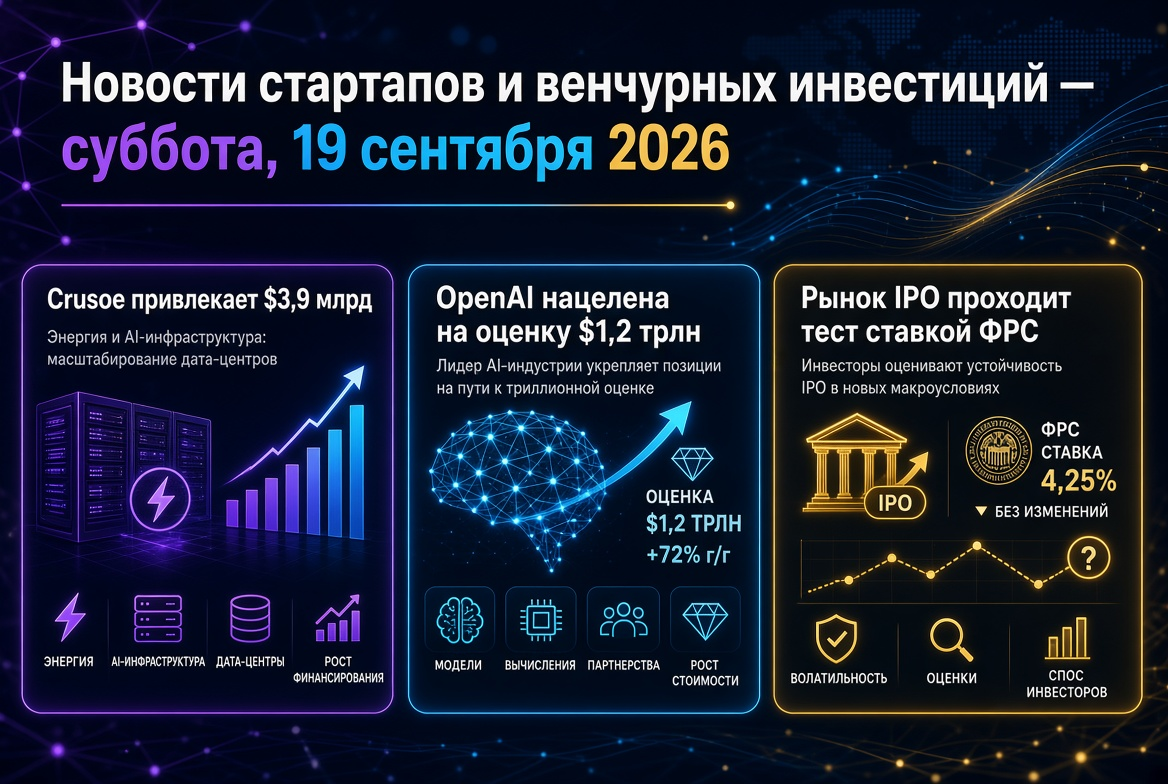
February reinforced the “winner-takes-most” trend: an increasing amount of capital is flowing into a small number of companies perceived as platforms—those with ecosystems, infrastructure partnerships, and sustained corporate demand. Such deals are altering the behaviour of LPs and GPs: larger funds are intensifying their concentration, while smaller ones are being forced to seek earlier entry points or niche markets (industrial verticals, security, regulation, compliance).
- Implications for Investors: The value of access to “hot” rounds and secondary deals (secondaries) is growing, as is the importance of structuring (liquidation preferences, ratchet, pro-rata).
- Implications for Startups: Financing the “mid-market” has become more challenging without strong unit economics metrics and a clear go-to-market strategy, even when a good product is available.
AI as Infrastructure: Capital Flows into Computing, Cloud, and Agent Systems
The venture logic surrounding AI has conclusively shifted from a “demo effect” to infrastructure: those controlling computing, data, distribution channels, and corporate integrations gain an advantage in margins and customer retention. On the buyer side (enterprise), the focus is on ROI, security, and manageability (observability, policy, governance), not solely on model quality.
- Agent Systems: Demand is rising in areas where automation is linked to measurable outcomes—accounting, procurement, logistics, support, compliance.
- Infrastructure Agreements: These increasingly accompany rounds and form “quasi-vertical” integration between model vendors, cloud services, and chips.
- Strategic Investors: Corporates participate in rounds not for PR reasons, but for access to products, exclusives, and shared roadmaps.
AI Hardware and Chips: A Focus on Energy Efficiency and Specialisation
A separate layer of the agenda concerns accelerators and specialised chips for inference. Investors continue to fund teams promising lower total cost of ownership (TCO) and energy efficiency, particularly for industrial cases and edge computing. European and American projects in the AI chips segment illustrate that money is available if a company can demonstrate a manufacturing plan, partnerships, and competitive differentiation in performance per watt.
- Investment Thesis: The “second after the leader” market remains risky, but opportunities arise from a shortage of computing power, rising energy costs, and the need for local (sovereign) supply chains.
- Risk: Dependence on manufacturing partners, long product development cycles, and technological “gaps” at the software and compiler levels.
Fintech Returns—But in a New Package
By early 2026, fintech deals are increasingly described not merely as “payments or banking” but as “financial infrastructure with an AI overlay.” Areas of highest interest include:
- B2B Platforms: Financing for small and medium enterprises, working capital management, risk scoring, and anti-fraud.
- Infrastructure: Compliance-as-a-service, KYC/KYB, transaction monitoring, reporting, and regulatory requirements.
- Savings and Pensions: Products where value is created through automation, personalisation, and cost reduction.
For venture funds, fintech is again attractive provided there is discipline regarding CAC/LTV and clear monetisation strategies, rather than “growth at any cost”.
Biotech and Healthtech: Capital Seeks Clinical Certainty
Biotechnology remains one of the few segments where large rounds are justified by “built-in” risk logic: the investor purchases an option on clinical data. Here as well, selection is intensifying—platforms with clear mechanisms of action, early-stage validation, and partnerships with pharma are more readily financed. A specific focus is on AI-in-bio, not as an abstract “generative” layer but as a tool for reducing research costs, patient recruitment, and trial design.
- What the Market Likes: Transparent endpoints, verifiable reproducibility, and plans for production and regulatory strategies.
- What Raises Concerns: Overestimation of “speed of discovery” without proof of translation into clinical outcomes.
Climate and Energy: Growing Interest in Applied Solutions
In climate tech, the practical approach is strengthening: energy management systems, industrial efficiency, energy storage, network optimisation, and digital twins for production and logistics. Investors want to see viable customers at early stages—industrial contracts and pilots that can evolve into scalable implementations.
- Commercial Quality Signals: Long-term contracts, cost savings for clients, and quick payback periods.
- 2026 Factor: Co-financing with corporates and government programmes, especially for infrastructure projects.
Funds and LPs: Capital Redistribution and New Rules of Engagement
On the LP side, requirements continue to tighten: fund investors seek shorter pathways to liquidity, managed risk, and transparent reporting. This is reflected in three trends:
- More “Strategic” Funds: Corporate CVC structures are expanding their mandates into deep tech and AI.
- Focus on Secondaries: Secondaries are becoming a mechanism for managing liquidity and entering market leaders without the classical risks of early-stage investment.
- Portfolio Restructuring: Funds are more frequently making follow-on investments in strong companies while reducing the “long tail” of experiments.
Exits and M&A: The Window Opens, But Selectively
Mergers and acquisitions are becoming more visible in the tech sector, but buyers are acting selectively. The highest demand is for teams and products that fill specific “gaps” in platforms: security, data management, corporate integrations, and specialised AI tailored to industries. The IPO window remains more of a prospect for a limited number of the largest companies; for others, M&A and secondary sales appear to be a more realistic path.
What Venture Investors Should Do This Week
In the short-term tactics (March 2026), discipline prevails: assessing revenue quality, retention realities, and scaling cost efficiency is crucial. At the same time, it is important not to overlook the “second wave”—companies that are not raising record rounds, but demonstrate high efficiency and a rapid path to profitability.
- Focus on Metrics: Revenue growth, net retention, gross margin, implementation cost, and CAC payback time.
- Check Infrastructure Dependencies: Computing, chip suppliers, contractual constraints with clouds, and regulatory risks.
- Look at “Vertical AI”: Industries with stringent economics and regulations often provide a better path to a paying audience.
The agenda for 2 March 2026 confirms that the venture market has transitioned into a phase of concentration where large deals dictate psychology, and the quality of business models dictates access to capital. Artificial intelligence remains at the core, but competitive advantage is shifting towards infrastructure, energy efficiency, and corporate integration. For funds, this is a time for tougher selection and more flexible tools (structuring, secondaries, syndicates), while for startups, the emphasis is on proving not only technology but also growth economics.