Current News in Oil, Gas and Energy as of 18 November 2025: Oil and Gas Prices, EU Sanctions, Production, Export, Fuel Market, Energy Sector, Renewable Energy, and Coal Sector. Insights for Investors and Energy Companies.
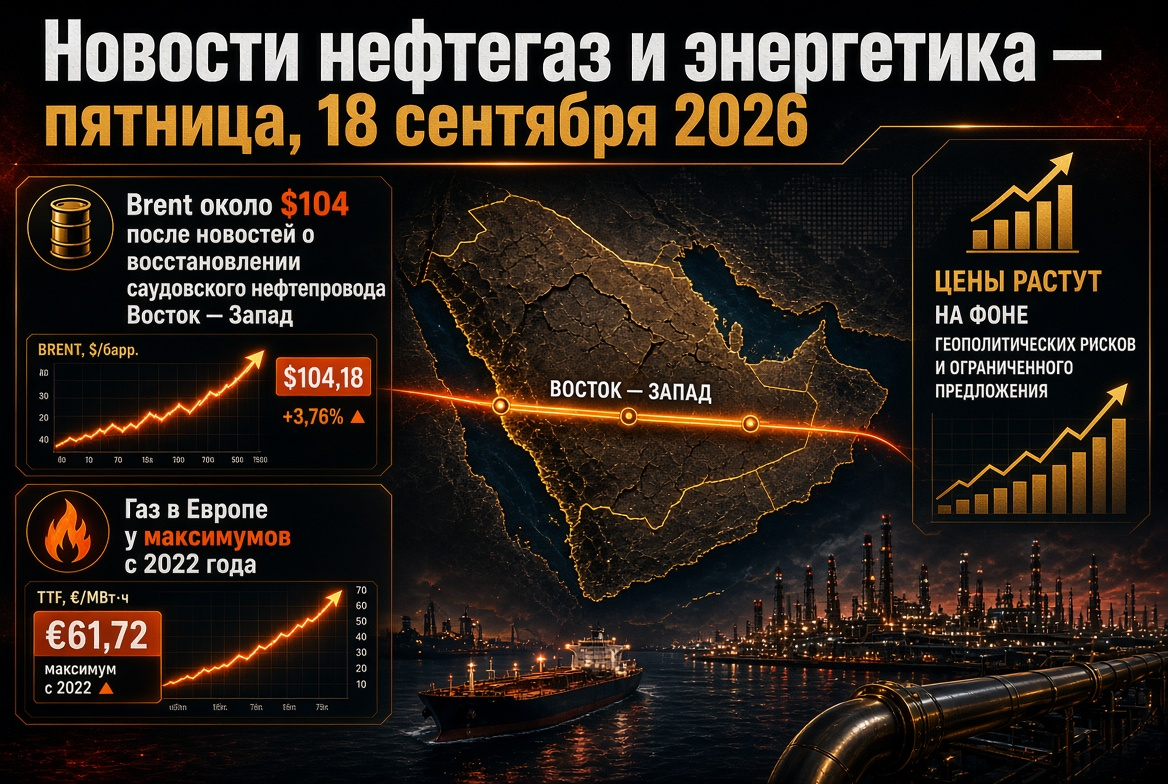
By mid-November 2025, global energy markets are displaying mixed dynamics. Oil prices are under pressure due to an oversupply: Brent quotes hover around $64 per barrel (WTI at approximately $60), close to the lows of recent months. The increase in production by OPEC+ countries and partners outpaces moderate demand, resulting in an oil surplus in the market. Simultaneously, the European gas market is experiencing a price lull—exchange prices have dipped to one-and-a-half-year lows (around $380 per thousand cubic metres) thanks to full storage and mild weather conditions. Within Russia, unprecedented measures have been adopted to stabilise the domestic fuel market following a summer spike in petrol prices. On a geopolitical level, sanctions pressure is intensifying: the European Union and the United States are discussing new restrictions on oil and gas exports, though their implementation faces challenges. This overview covers current news and trends in the oil and gas markets, the situation in Russia's fuel and energy complex, as well as developments in the coal, electricity, and renewable energy sectors.
Oil Market
In November, bearish sentiments prevail in the oil market. After a brief rise last week, prices are decreasing once again: Brent is trading within the $60–65 per barrel range, indicating weakness in demand. Investors note that global oil supplies have increased significantly more than consumption: since the beginning of the year, total supply has risen by about 6 million barrels per day (primarily due to increased output by OPEC+ countries), while demand growth has been much more modest. As a result, global fuel stocks are high, and the market is facing a surplus, which is putting downward pressure on prices.
An additional factor of uncertainty stems from risks surrounding Russian oil exports. Late last week, a drone attack temporarily disrupted operations at an oil terminal in Novorossiysk, causing a brief spike in prices; however, the swift restoration of operations alleviated the tension—with Brent returning to a downward trend around $64 by the start of the new week. Thus, even geopolitical incidents currently only affect the market in the short term, yielding to fundamental influences. Market participants are also evaluating the consequences of sanctions: despite tightening Western restrictions, supplies from Russia remain stable due to redirection to alternative channels and discounts for buyers.
- OPEC+ Policy: Exporters from the OPEC+ alliance maintain their commitment to gradual production restoration plans, which have been in place since the beginning of the year. By the end of 2025, countries have returned much of the volumes previously restricted voluntarily back to the market. Recent statements from OPEC+ representatives indicate their readiness for further voluntary adjustments to production in 2026—meaning they are prepared to cut back on offers again if the market situation deteriorates (for example, if prices fall below acceptable levels). So far, key producers signal that they will not rush into new production cuts while prices remain above critical thresholds ($50 and above).
- Demand and Stocks: Weak macroeconomic conditions are restraining oil consumption growth. China's economic slowdown, high interest rates in the US and Europe, and other factors are limiting global demand for the commodity. However, in some segments, demand remains resilient: the onset of the winter heating season supports demand for petroleum products, and the global aviation sector and road transport show gradual growth. The record summer demand (tourism, road transport) prevented prices from falling deeper. Nevertheless, the accumulation of stocks in key regions (the US, China, Europe) and increased exports from certain supplier countries (including Iran and Venezuela) continue to exert price pressure.
- Geopolitics and Sanctions: Global risks persist, but their impact on prices remains limited. Armed conflicts and tensions in the Middle East are creating a moderate premium in prices; however, significant supply disruptions are not occurring. Western countries continue to bolster sanctions pressure on the Russian oil sector: the EU approved a ban on the import of petroleum products produced from Russian oil in third countries last summer (with some exceptions), which will come into effect in February 2026 and effectively closes off supply routes to Europe. Moreover, new measures are being discussed—including possible restrictions against any refineries that have purchased Russian oil in recent months; however, implementing such ideas faces technical complexities and resistance from parts of the business community. For its part, the US administration has adopted a tougher stance: President Donald Trump expressed his willingness to support legislation that would impose sanctions on countries trading with Russia while threatening similar measures against Iran. Although such radical steps have yet to be executed, the rhetoric itself heightens long-term uncertainty for oil exporters. Nevertheless, Russian oil continues to find its way to global markets—analysts note that buyers in Asia and the Middle East are confidently absorbing volumes redirected from Europe, even if this requires additional discounts.
Natural Gas Market
The gas market remains relatively calm this autumn. In Europe, gas prices have dropped to their lowest levels in approximately 18 months: around $370–380 per thousand cubic metres on the TTF index, significantly lower than last winter's peaks. This is due to a combination of comfortable supply and moderate demand. Storage facilities in European countries were filled remarkably early and are currently at about 90% as of mid-November, providing a safety cushion for the start of the heating season. Mild weather in Europe during the first half of autumn and an increase in generation from renewable energy sources have also reduced the need to draw gas from reserves, helping to maintain market stability.
Steady LNG import flows have also contributed to stability. European importers continue to actively receive liquefied gas from various sources—from the US and Qatar to Africa and Asia. New liquefaction projects in the US and the Middle East are expanding global capacities, creating a surplus supply. Alternative pipeline supplies also remain stable: Norway, Algeria, and other North African countries are reliably exporting gas to the EU, compensating for the almost complete cessation of direct imports from Russia. Russian gas transit through Ukraine is now minimal, while supplies along the southern route (through Turkey and the Balkans) are limited and only meet the needs of particular Eastern European states. Overall, the diversification of sources has allowed Europe to pass last winter without fuel shortages, and the market is currently looking ahead to the winter of 2025/26 with relative confidence.
- European Balance: Thanks to early stockpiling and reduced consumption, the European gas balance appears robust. According to industry monitoring, by the start of the heating season, underground gas storage in the EU was filled to nearly 95%, exceeding long-term average levels. Gas consumption in Europe, which declined in 2022–2023 due to the energy crisis, has stabilised and even shown slight growth in 2025 (5% year-on-year in the first half of the year, attributed to industrial recovery and hot weather). However, the current level of demand remains below pre-crisis levels—as enterprises implement energy efficiency measures and households conserve energy due to previously high prices. This means that even with modest demand growth, the current stocks should suffice to meet winter peaks.
- Global LNG: The liquefied natural gas market continues to play a crucial role in meeting the requirements of Europe and Asia. In 2025, new LNG export capacities are being introduced—both in the US and in Gulf countries—which increases the volume of fuel available in the market. The competition among suppliers has intensified, and spot prices for LNG remain relatively low for this season. Asian markets are currently showing balanced demand: in Northeast Asia, LNG inventories have also been built up, and the absence of extreme cold at the beginning of winter is preventing price spikes. This allows for additional tankers to be diverted to Europe if necessary. Meanwhile, major consumers, such as China, are entering into long-term contracts for LNG supply, laying the groundwork for price stability in the future.
- Russia and New Routes: The Russian gas industry continues to redirect its exports to the east. Pipeline gas supplies to Europe have fallen to historical lows (essentially remaining only through the remaining Ukrainian corridor and the "Turkish Stream" for selected countries), while exports to Asia are increasing. In 2025, "Gazprom" has ramped up the transit through the "Power of Siberia" pipeline to China to record levels, nearing its design capacity to meet the rising demand from Chinese consumers. Concurrently, Russia is developing its LNG projects on the Arctic shelf: the first phase of the "Arctic LNG-2" plant became operational at the end of last year, and in 2025, new capacities aimed primarily at Southeast Asian markets are gradually coming online. These steps are intended to offset the loss of the European market and ensure that extraction companies remain busy. Although transporting gas to new regions poses logistical and pricing challenges, Russia is solidifying its presence in the Asian market by entering into long-term contracts with China, India, and other importers.
Domestic Fuel Market in Russia
Following the summer crisis in the domestic fuel market, the situation is gradually normalising. Recall that, at the end of summer, prices for automotive fuel in Russia spiked sharply, reaching record levels due to supply shortages and increased export costs due to a weak rouble. To stabilise the situation, the government had to take strict emergency measures: a temporary ban on gasoline exports and part of diesel fuel supplies was implemented at the end of July to redirect maximum volumes to the domestic market and saturate filling stations. Initially, the restrictions applied to traders and small refineries; however, they were later expanded—the ban on gasoline exports was even extended to major producers, while diesel fuel exports outside the Eurasian Economic Union were restricted for all but direct oil companies, conditional on monitoring internal supplies.
By mid-November, it can be stated that the measures taken have had a noticeable effect. Wholesale fuel prices on the St. Petersburg exchange have significantly retreated from the peak values of September, and retail prices at filling stations have ceased rising. According to Rosstat, in the first half of November, average gasoline prices in the Russian Federation even dipped slightly—the first decrease in over a year. In regions most affected during the summer (e.g., in southern subjects and Crimea), fuel supply has been normalised: shortages of AI-95 and AI-92 gasoline have been eliminated, and stocks are sufficient for current consumption. The government has extended the temporary ban on gasoline exports until 31 December 2025 to stabilise the market during the autumn-winter period. At the same time, authorities are working on long-term mechanisms to prevent fuel crises—from adjusting the dampening formula and excise policy to encouraging oil refiners to boost fuel production in the off-season.
- Crisis Management Measures: To overcome the fuel crisis, Russian authorities have employed a range of tools. A complete ban on automobile gasoline exports has been enacted, and the export of diesel fuel and fuel oil has been significantly restricted. Oil companies have been mandated to prioritise the needs of the domestic market. Additionally, minimum sales norms for fuel through exchanges have been increased to ensure that small wholesalers and independent filling stations have access to resources. These measures were accompanied by agreements with large oil refineries regarding increased processing of oil and supplies to the domestic market, particularly in remote regions where there was a fuel shortage.
- Market Stabilisation: By October-November, the trend has shifted—the rise in prices has halted. Exchange prices for 'Regular-92' and 'Premium-95' gasoline have decreased by dozens of percent from September’s peaks. Following wholesale trends, prices at filling stations have also begun to stabilise: a decrease of 10–30 kopecks per litre has been recorded in several regions. Filling station networks report ample fuel reserves, the elimination of queues, and a return to normal demand levels. Consequently, the domestic petroleum products market has entered winter in a balanced state, without signs of shortages.
- Outlook and Regulation: The unprecedented restrictions on fuel exports are temporary. The official ban on gasoline exports is in effect until the end of 2025, and the government will decide on its extension or cancellation based on the circumstances. Simultaneously, long-term measures are under consideration: a protective duty on the export of petroleum products could be introduced, which would automatically restrain exports during spikes in global prices; enhancements to the compensation mechanism for oil workers to incentivize delivery to the domestic market; and increasing reserve fuel stocks at state oil depots. Also of focus is the modernisation of oil refineries and the logistics of supplies to remote regions to eliminate local disruptions. Energy sector participants expect that a combination of market incentives and state control will prevent a recurrence of the crisis next spring and summer.
Government Policy and Cooperation
Russian authorities continue to implement a long-term energy strategy, adapting the fuel and energy complex to the new realities of sanctions pressure and the global energy transition. In 2025, the emphasis is on supporting the oil and gas sector through investment incentives and expanding cooperation with friendly countries. Despite external constraints, the government aims to ensure the sustainable development of the sector and access to new markets.
- Tax Incentives for the Sector: The Russian government is currently finalising a package of measures aimed at alleviating the tax burden on oil and gas companies and stimulating the development of new fields. Among the discussed measures are the expansion of the application of the additional income tax (AIT) for new oil and gas extraction projects, an extension of benefits on mineral extraction tax (MET) for hard-to-reach and depleted fields, as well as a temporary reduction of export duties on raw materials for projects in priority regions. These relaxations are expected to come into force in 2026 and help industry companies maintain investment levels even amidst sanctions and limited access to foreign capital.
- Diversification and New Projects: One of the strategic goals is the diversification of the energy sector. The government is stimulating the development of new segments—from liquefied natural gas (LNG) production to hydrogen energy and the manufacturing of renewable energy equipment. In 2025, funding for infrastructure aimed at increasing LNG exports (construction of terminals in the Far East and the North) continues, as do projects for extracting rare earth metals and components required for renewable energy technologies. Concurrently, Russia is investing in its own extraction and processing technologies to reduce dependence on imported equipment and services. This reorientation is aimed at enhancing the resilience of the fuel and energy complex in the face of external constraints and increasing competitiveness in the global energy resources market.
- International Cooperation: In light of limited interaction with Europe, Russia is actively strengthening energy ties with partners in Asia, the Middle East, Africa, and Latin America. Throughout the year, new agreements for the supply of oil and petroleum products have been established with several countries: India is continuing to increase its long-term purchases of Russian oil, China is boosting gas imports and participating in financing large-scale projects (for instance, constructing petrochemical facilities in Russia), and Gulf states are investing in joint extraction projects. Additionally, Russia and OPEC+ maintain close coordination: regular consultations with Saudi Arabia and other participants enable joint management of the oil market. These partnerships are supportive for the Russian fuel and energy complex to redirect energy resource flows, seek new markets, and offset lost revenues from the European market.
- Sanction Risks: Despite ongoing efforts, external risks remain. As noted, Western nations are considering further tightening sanctions against Russian energy exports. While the USA and the EU are currently acting cautiously, wary of undermining the global energy market with drastic actions—for instance, experts estimate that Washington will likely avoid direct sanctions against Russian LNG at least until the end of the decade to prevent gas shortages for its allies—the rhetoric from some politicians remains hard-line, creating uncertainty. Russian companies are compelled to account for scenarios involving possible secondary sanctions aimed at buyers of Russian oil and gas in third countries. Such developments would necessitate deeper reconfiguration of export logistics and could impact new long-term contracts. In this context, Russian leadership is focused on hastening the formation of its own infrastructure (tanker fleets, insurance, service provisions) to ensure uninterrupted exports should external circumstances worsen further.
Coal Sector
The year 2025 presents challenges for the Russian coal industry. Following a price surge in 2021–2022, the world coal market has entered a downturn phase, and this year, quotes have remained comparatively low, sharply reducing export profitability for Russian companies. Intense competition in the Asian direction and sanctions restrictions in Europe have caused significant portions of Russia's coal enterprises to experience financial difficulties. Many mines are scaling back production, and several companies are on the verge of halting operations. According to the Ministry of Energy, combined losses for Russian coal companies exceeded 110 billion roubles in 2024, and this negative trend is continuing into the current year.
Despite this, the industry is striving to adapt to the new conditions by redirecting supplies and cutting costs. Russian coal exports are gradually shifting toward Asia, where there remains a certain demand for competitively priced raw materials from Russia. Even though the European market is effectively closed to Russia, domestic coal producers are actively engaging with buyers in China, India, Turkey, and other countries. By the end of the year, the global market situation has improved slightly for suppliers: the approaching winter and reduced production in certain regions (such as China due to safety and environmental measures) have led to a slight uptick in prices for thermal coal. Nevertheless, the current price levels are still insufficient to guarantee the profitability of most Russian projects, particularly given the rising logistics costs.
- Production Cuts: In Russia's largest coal mining region, Kuzbass, production continues to decline. Over the first nine months of 2025, coal production in the Kemerovo region is estimated to have decreased by approximately 5–6% compared to the same period last year. Many companies have been forced to suspend unprofitable capacities, particularly at remote sites and mines with high costs. Export shipments are also fluctuating: as of October 2025, Russian coal exports decreased by 1% compared to the previous month, totalling 17.3 million tonnes; however, cumulatively, since the beginning of the year, exports remain slightly above last year's levels (+3.6% for 10 months, thanks to high shipments earlier in the year). The decline in demand for thermal coal in traditional markets is forcing Russian producers to maintain production at lower levels and await more favourable market conditions.
- Coking Coal: The metallurgical (coking) coal segment is also facing challenges. The global steel industry is showing weak dynamics, particularly in China, which limits the demand for coke and the raw materials for its production. Russian coking coal exports by sea have decreased, and by autumn, volumes shipped through southern ports had fallen to multi-year lows. Analysts estimate that with current prices, over 20% of Russian coking coal producers are operating at a loss, while even the largest players in the sector are balancing around the breakeven point. This is prompting companies to reassess investment programmes, postpone the launch of new faces, and focus on the most efficient assets.
- Asian Markets and New Opportunities: Despite the difficulties, Russian coal is finding buyers in Asia, where its competitive pricing attracts some consumers. Notably, in 2025, coal shipments to India saw significant increases: in October, Russian coal exports to India grew by 43% compared to September and doubled the volumes of October 2024. Indian energy and metallurgical companies took advantage of the price drops to secure additional volumes that other players declined. Additionally, some non-traditional buyers have shown interest—for example, Taiwan has initiated trial purchases of Russian thermal coal via Far Eastern ports this year, drawn by supply stability and discounts. China remains the largest Asian market: after a slight decrease in imports during autumn due to high domestic inventories, demand in northern provinces of China is rising again with the onset of colder weather, and market participants expect an increase in Russian coal purchases by China in November and December. At the same time, South Korea has reduced imports from Russia, returning to traditional suppliers (Australia), highlighting the competitive struggle for market share. Overall, the sector's prospects are linked to two factors: first, the restoration of price balance through the reduction of unprofitable capacities (closure or temporary conservation of loss-making mines); and second, the increasing demand in Asia, which could gradually lift prices. The Russian government, for its part, has tasked the development of support measures for coal miners—from subsidising transport tariffs to preferential lending—to mitigate the socio-economic consequences of the sector’s downturn.
Electricity Sector
In 2025, Russia's electric power sector faced atypical loads but demonstrated resilience. An abnormally hot summer led to historical peaks in electricity consumption in several regions: the widespread use of air conditioning and cooling equipment pushed load levels on networks to record highs. For instance, on 14 July, the Unified Energy System of the South recorded an absolute maximum of summer electricity consumption, reaching 21,219 MW, surpassing the previous record set a year earlier. Similar records were noted in other systems—practically all territorial energy systems updated summer demand peaks. Additionally, during the winter 2024/25 period, the country also experienced record loads, surpassing summer figures, indicating an overall increase in energy consumption as the economy recovers and extreme weather phenomena become more frequent.
Despite the heightened loads, the energy system successfully managed these challenges. Generating companies and dispatch services mobilised necessary capacity reserves: hydropower plants increased output during peak consumption periods, and gas and coal-fired power stations were swiftly brought to maximum capacity to meet demand, while electricity transmission networks operated smoothly without major disruptions. Even on the hottest days of summer, systemic outages were avoided—reserve capacity proved sufficient, confirming the reliability of the Russian Unified Energy System. In regions with particularly high loads (for example, in the North Caucasus and the South of Russia), reserve mobile gas turbine units were deployed, and energy flows from neighbouring areas were utilised. All of this ensured uninterrupted power supply for consumers.
- Demand Records: The summer months of 2025 were marked by numerous new electricity consumption records. Heatwaves in July raised daily electricity consumption to unprecedented levels across many regions. Alongside southern regions, significant load increases were recorded in Siberia and central areas—growth in air conditioning use, cooling systems in enterprises, and heightened industrial activity resulted in peak hours exceeding last year's figures by 5–7%. The System Operator of the Unified Energy System reported dozens of new historical peaks set across various parts of the country from June to August. Overall electricity consumption in Russia for the first ten months of 2025 grew by approximately 2% year-on-year, reflecting economic recovery and increases in the electrical intensity of certain sectors.
- Network Reliability: The Russian energy system demonstrates a high level of reliability even under extreme loads. During the summer, energy companies successfully navigated peak periods by redistributing power flows and activating reserves. Intensive preparations have been undertaken for the 2025/26 autumn-winter period: necessary repairs were conducted on key power plant blocks, additional fuel reserves (coal, gas) at thermal power plants have been secured, and emergency cross-border flow modes between energy systems have been rehearsed. The Ministry of Energy forecasts that even in the event of anomalously low temperatures in winter, generation and network capacities will suffice to meet demand without implementing restrictions. Special attention is given to southern regions, where another increase in winter consumption is anticipated—the modernisation of networks and installation of new substations in the Krasnodar Territory, Dagestan, and Crimea should mitigate local outages. Overall, industry experts note that lessons learned from past years have been considered: dispatch discipline has been strengthened, power manoeuvrability has increased, allowing for optimistic views towards upcoming winter peaks.
Renewable Energy
The renewable energy sector (RES) is continuing its vigorous growth worldwide, reflecting the acceleration of the global energy transition. The year 2025 has become another record year for the introduction of new capacities: many countries are commissioning gigantic solar and wind power plants, with investments in clean energy reaching an all-time high. According to the International Energy Agency, global capital investments in renewable energy in 2025 surpassed investments in oil extraction for the first time: approximately $580 billion versus $540 billion, respectively. This indicates a shift in priorities—an increasing number of countries and companies are betting on solar, wind, and other low-carbon technologies. China maintains its leadership in this area: the total installed capacity of RES in the PRC has already surpassed that of fossil fuel power plants, signifying the scale of change. The European Union is also increasing its share of 'green' generation—over 40% of electricity in the EU was generated from renewable sources (hydropower, wind, solar, and biomass) by the end of the year. These achievements reduce the demand for hydrocarbons in the energy sector and gradually decrease the carbon intensity of the global economy.
In Russia, renewable energy is developing at a more modest pace but is steadily advancing. The initial effect of high oil and gas prices last year provided an additional impetus for RES projects: both the government and business recognised the importance of diversification. By the start of 2025, the total capacity of renewable generators (excluding large hydropower plants) reached approximately 6.6 GW, compared to 6.5 GW a year earlier. Throughout this year, new solar and wind parks have been commissioned in various regions—from the Astrakhan Region and Stavropol Territory (wind farms) to the Sakha Republic (Yakutia), where small solar power plants for remote settlements have started operating. Consequently, by the end of 2025, it is expected that the total installed capacity of RES in Russia will exceed 7.5 GW, marking a roughly 15% year-on-year growth. While these figures are unimpressive compared to global leaders, the trend remains upward for Russia.
- Growth of RES in Russia: The Russian renewable energy sector is incrementally increasing its volumes each year. Wind farms and solar photovoltaic stations constructed through support programmes are gradually coming online, expanding the 'green' segment. Official data indicates that in the first three quarters of 2025, electricity generation from RES in Russia rose by approximately 20% compared to the same period last year. The greatest growth has been brought about by new wind farms in the south of the country and a major solar station in the Orenburg region. As a result, the share of RES (excluding hydropower) in Russia’s overall energy balance is approaching 1.5–2%. While this is still a modest figure, it is steadily increasing.
- Outlook and Support: Development of renewable energy is treated by authorities as a priority direction for the diversification of the fuel and energy complex and the reduction of the economy's carbon footprint. A state programme stimulating RES (a scheme for renewable energy capacity supply contracts) has been extended until 2035, ensuring investors' return on investments contingent upon localising equipment production. It is anticipated that by 2030, the installed capacity of renewable sources could exceed 15 GW if all proposed projects are implemented. In addition to large-scale generation, there is focus on distributed energy: an increasing number of businesses and households are installing their own solar panels and small wind turbines, particularly in regions with support for microgeneration. International cooperation also plays a role—Russian companies are studying the experiences of leading countries in developing hydrogen energy and energy storage, with the aim of integrating these technologies in the future. Ultimately, incremental expansion of RES strengthens energy security, opens new industrial sectors (such as renewable energy equipment production), and improves environmental conditions.