Current News in the Oil and Gas Sector and Global Energy as of 9 December 2025: Oil, Gas, Coal, Renewables, OPEC+ Policies, Sanction Risks, Demand in Asia and the State of the Global Energy Market.
Global Oil Prices
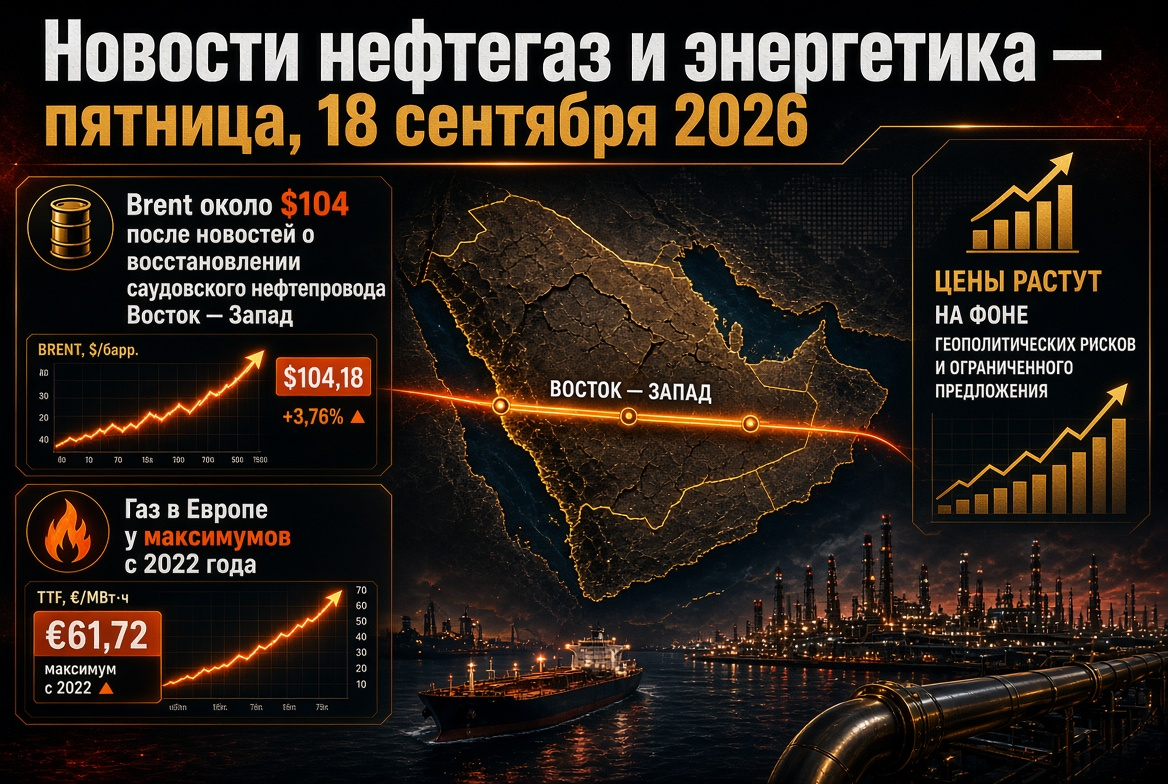
On Tuesday, global oil prices remained under pressure, slightly below recent highs. Brent futures fell to approximately $62.9 per barrel, while WTI dropped to $59.2. Market participants are anticipating the US Federal Reserve's decision on interest rates on 9–10 December, with markets assessing the likelihood of a 25 basis point cut at around 84%. Easing monetary policy could boost demand for oil; however, the prospects of a peace agreement regarding Ukraine and the potential easing of sanctions are curbing price increases.
- Expectations of a rate cut by the US Federal Reserve are encouraging risk-taking and energy demand.
- Discussions regarding Ukraine remain without significant progress, maintaining uncertainty about the future volume of Russian oil on the global market.
- OPEC+ decisions stabilise production, limiting short-term fluctuations in supply.
Negotiations on Ukraine and New Sanctions
The slowdown in peace negotiations concerning Ukraine this week has intensified uncertainty in the energy market. The Ukrainian and Russian sides have not yet made substantial progress: key disagreements revolve around security guarantees and the status of disputed territories. Ukrainian President Volodymyr Zelensky met with EU leaders in London, while former US President Donald Trump advanced his own peace plan, which could lead to a sharp increase in Russian oil supply in the event of an agreement.
- The G7 currency union and the EU are discussing a complete ban on maritime services for Russian tankers instead of the current price cap.
- The US administration is increasing pressure on Maduro's regime in Venezuela: strikes have been conducted against drug-trafficking ships, and steps to change the regime are being discussed.
- Independent Chinese refiners are increasing their purchases of sanctioned Iranian and Russian crude, utilising new quotas and price discounts.
OPEC+ and Production Quotas
At the recent meeting in early December, OPEC+ countries agreed to conduct annual assessments of member production capacities. This innovation aims to align quotas with actual production capabilities and bolster investor confidence in the cartel's agreements. Representatives from Saudi Arabia noted that the decisions taken would stabilise the market and reward those investing in increased production.
- Capacity audits will commence in 2026 to establish baseline production levels for 2027.
- Nineteen OPEC+ countries will engage foreign consultants for their capacity assessments; Russia, Iran, and Venezuela will use alternative methods due to US sanctions.
- OPEC+ seeks to address the "actual gap" between quotas and current production levels in several countries.
Demand Growth in Asia: India and China
India is demonstrating record demand for petroleum products. In November, domestic fuel consumption reached a six-month high, with diesel sales seeing significant growth. New Delhi is actively purchasing Russian oil at substantial discounts, despite US pressure. During a recent visit by President Putin to India, guarantees of continuous fuel supplies were discussed; however, local refiners are cautiously diversifying their imports through non-Russian channels. This increase in demand reflects the economic recovery in Asia as it emerges from the pandemic.
- Diesel supplies to India rose by 12% month-on-month, while overall demand exceeded last year's levels by approximately 3%. State-controlled refineries plan to source oil from alternative sources in January.
- China is ramping up coal imports for the heating season: in November, purchases increased compared to October but remain below last year's volumes. Strategic stocks provide fuel reserves for 35 days.
- Given record energy consumption this winter, China will continue to rely on coal generation and fuel imports amidst production restrictions implemented in its campaign against overcapacity.
Natural Gas and Power Generation
Natural gas prices in Europe have fallen to their lowest levels in nearly a year and a half, attributed to warm weather, record LNG supplies from the US, and expectations of an easing of sanctions. January futures for TTF are trading at approximately $335–$340 per thousand cubic metres, while gas storage in the EU has stabilised above 70%. In the US, cold weather has led to a sharp increase in prices in the north-eastern region: wholesale prices at Algonquin have exceeded $20/MMBtu, prompting energy companies to revert to coal.
- Europe: A warm December and an abundance of LNG keep prices low, reducing the risks of fuel shortages for the heating season.
- US: "Record cold" weather in the north-eastern states pushes local prices up and increases demand for coal generation.
- Energy supply: The European Commission is preparing a centralised plan to modernise cross-border electricity grids to alleviate bottlenecks and reduce electricity costs.
- Increased electricity demand (including from data centres and AI) is prompting US firms (NextEra, Exelon) to enter into new "green" contracts and invest in capacity.
Renewable Energy and Climate Policy
At the COP30 summit in Brazil, countries agreed to increase financial support for climate adaptation; however, they refrained from strict commitments to phase out fossil fuels. The main theme remains the contradiction between oil and gas interests and global targets for emission reductions. China and India are strengthening their influence in the development of "green" technologies: China is promoting the export of solar panels and batteries, while India has launched new wind and solar parks. The outcome of the conference was the continuation of debates on climate ambitions — a programme for adaptation was formally adopted, but without specific timelines or monitoring mechanisms.
- A key decision from COP30 is a tripling of climate adaptation financing from developed countries.
- The final documents lack a stringent roadmap for phasing down oil and gas production: fossil fuel countries maintain their positions.
- Technologies: Manufacturers of "green" electronics are ramping up capacities. Wind and solar power plants continue to increase production alongside investments in energy networks.
Coal Market Trends
Due to rising natural gas prices, some consumers are reverting to coal. In the US, coal production and generation at coal-fired power plants are increasing: many companies are reducing their gas generation capacity in favour of cheaper coal. This leads to higher coal emissions but assures reliability in energy supply during peak winter months.
- US: Winter demand and record LNG exports are pushing gas prices higher, prompting energy companies to return to coal.
- Asia: China and India are maintaining high import purchases of coal for power generation. Despite seasonal fluctuations, shipment volumes remain significant.
- Prices: On the global market, coal prices have increased from the summer lows, although growth is limited by substantial coal stocks in Chinese warehouses.
Refining and Oil Products
The oil products market remains tight: global gasoline and diesel prices have risen due to seasonal demand. Major refineries are operating at full capacity to compensate for supply constraints and meet domestic needs. Potential easing of sanctions on Russia could alter the balance of oil product supplies and adjust price dynamics in the fuel market. Refineries are preparing for potential changes in supply routes for crude, increasing product inventories and reconfiguring logistics.
- Demand for diesel remains high, especially in Asian countries and emerging markets where economic activity is strengthening.
- European refineries are increasing fuel stocks and preparing alternative loading schemes in anticipation of possible revisions to sanctions.