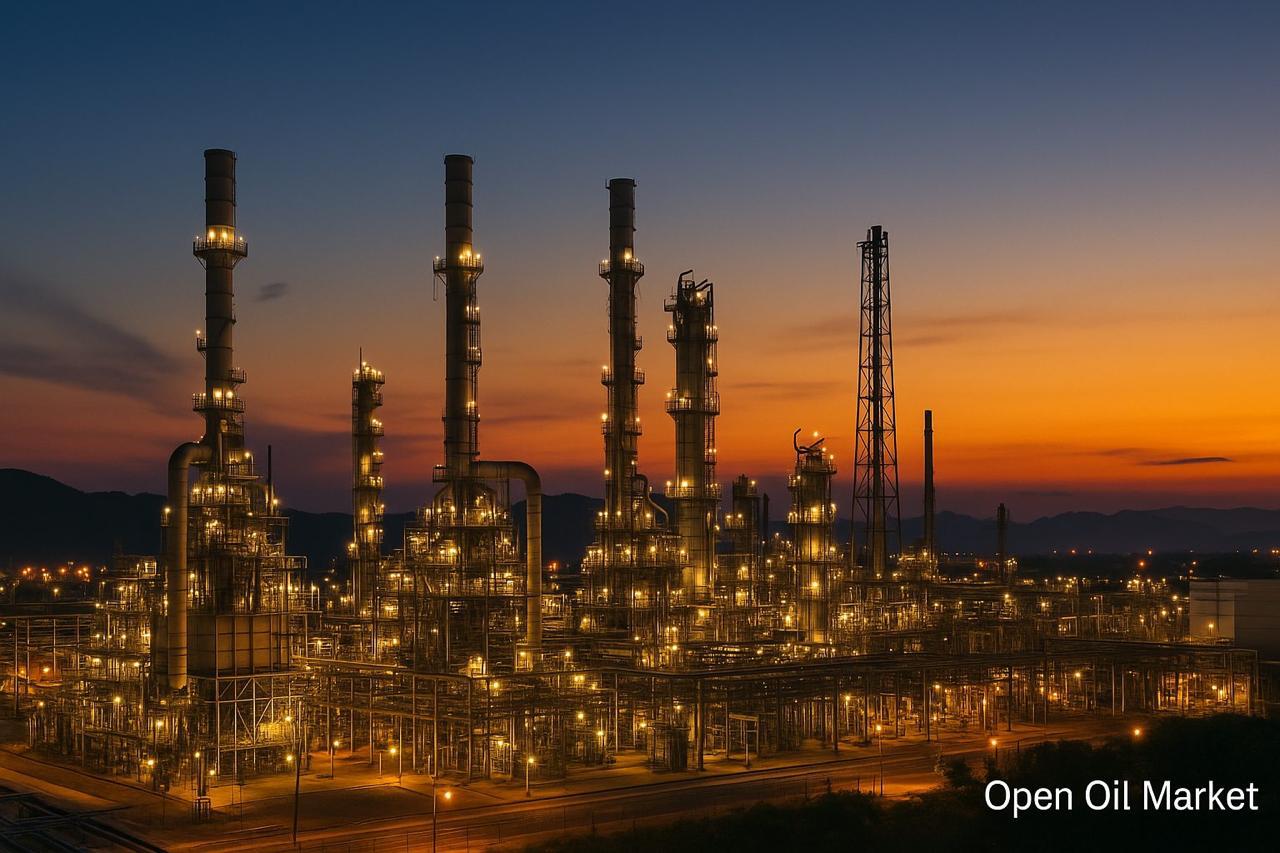
Current News in the Oil, Gas and Energy Sector as of 8 December 2025: The Situation on the Oil and Gas Market, Sanctions, Energy Security, Coal, Renewables, the Russian Fuel Market and Key Trends in the Fuel and Energy Complex.
The latest developments in the fuel and energy complex as of 8 December 2025 unfold against the backdrop of ongoing tensions between Russia and the West, alongside a relative stability in commodity markets as the winter season begins. Western nations have recently intensified their sanctions, implementing new restrictions on the Russian energy sector and closing loopholes to evade the embargo.
Simultaneously, global commodity markets exhibit relative stability. Oil prices have stabilised near recent lows with Brent holding in the range of $60–65 per barrel after a brief dip below $60, largely due to an abundance of supply. The European gas market enters winter with very high reserves, as gas storage facilities in the EU are over 90% full, keeping wholesale prices at a comfortable level (TTF around €30 per MWh).
Against this backdrop, the global energy transition is gaining momentum. Investments in renewable energy are at record levels, now surpassing investments in fossil fuel extraction. The share of 'green' sources in global electricity generation continues to rise steadily. However, oil, gas, and coal still form the foundation of the energy balance, meeting current demand and ensuring energy system security during this transitional period.
In Russia, the domestic fuel market has stabilised significantly by early December, thanks to emergency measures taken by the government in autumn. The acute shortage of petrol and diesel that emerged at the end of summer has largely been resolved; wholesaler prices have retreated from peak levels, independent petrol stations have resumed normal operations, and supply to regions has returned to normal. Authorities continue to impose restrictions on the export of petroleum products and support measures for oil refining to prevent a repeat of price spikes and shortages during the winter period.
Below is an overview of key news and trends in the oil, gas, electricity, renewables, and coal sectors, as well as the Russian fuel market as of the current date.
Oil Market: Oversupply and Weak Demand Weigh on Prices
Global oil prices remain depressed due to oversupply and moderate demand. The benchmark Brent is trading around $64–65 per barrel, while WTI stands at $60–61, approximately 10% lower than a year ago. Several factors are influencing the situation:
- OPEC+ Production Increases. The OPEC+ alliance is systematically raising supply. In December, production quotas were increased by an additional 100,000 barrels per day, bringing the total increase since April to approximately 2.7 million barrels per day. This is leading to a rise in global oil and petroleum product inventories.
- Weak Demand Growth. Global oil consumption is growing significantly slower than in previous years. The IEA forecasts a demand increase of only around +0.7 million barrels per day in 2025 (compared to over +2 million in 2023). Factors influencing this include slowing global economic growth, the effects of high prices from previous years (energy conservation), and structural shifts such as the accelerated adoption of electric vehicles. Weak industrial growth in China also limits the appetite of the world’s second-largest oil consumer.
Gas Market: High Reserves in Europe and Price Stability
The gas market approaches winter in a favourable condition. Gas storage facilities in the EU are filled to over 90% of capacity, providing a strong buffer and keeping prices low. TTF hub prices have stabilised around €30 per MWh, significantly lower than the peaks of last winter, indicating a balance of supply and demand in Europe.
- Europe Ready for Winter. Record gas reserves ensure a safety net even during severe cold spells. Sluggish economic growth and high renewable energy generation are suppressing gas consumption in the EU, so even in the event of colder weather, a significant portion of additional demand can be met from storage – the risk of shortages is minimal.
- Diversification of LNG Imports. Record LNG shipments from the US, Qatar, Africa, and other regions have helped fill European storages. During the summer, the EU took advantage of low spot prices and weak Asian demand to purchase maximum amounts of LNG and prepare for winter.
Thanks to accumulated reserves and diversified imports, Europe enters the heating season without signs of fuel shortages, and prices remain comfortable for consumers. Despite a reduction in domestic production and the near-total cessation of imports of Russian pipeline gas, joint purchases, energy conservation, and the accelerated introduction of renewable energy sources strengthen Europe’s energy security.
International Politics: Sanction Standoff Continues without De-escalation
- New Western Restrictions. In recent months, several additional sanctions have been imposed against the Russian fuel and energy complex. The US has blacklisted leading oil and gas companies in Russia. The EU approved a new package aimed at closing remaining loopholes to evade the embargo. The UK has added several foreign companies that assist in trading Russian oil to its sanctions list.
- Pressure on India and China. Under pressure from the West, major Asian clients of Moscow have been urged to limit cooperation. India has expressed a willingness to gradually reduce its purchases of Russian oil (a modest reduction is expected as early as December), while China has also received signals to curtail imports. However, both Delhi and Beijing are not rushing into concrete actions, stressing that their policies depend on national interests. Nonetheless, the prospect of diminished Asian demand intensifies uncertainty, and Russia is redirecting supplies to alternative markets.
Asia: India and China Strengthen Energy Security
Asian giants remain key drivers of global energy consumption growth. Despite external pressure, China and India prioritise energy supply availability and reliability, increasing imports of oil, gas, and coal on favourable terms.
- China and India. China is receiving record volumes of Russian gas and remains one of the main purchasers of discounted Russian oil and coal. India has also increased its imports of Russian oil to meet its needs. Both countries are in no hurry to reduce cooperation with Moscow, placing energy security above external pressures.
Overall, high demand from Asian countries compensates for stagnation in consumption in the West, maintaining global use of oil, gas, and coal at elevated levels. The drive for energy security compels Asian economies to diversify their sources and enter long-term agreements. Although China and India are gradually investing in clean energy, it is currently their purchases of traditional resources that largely determine the dynamics of the global energy market.
Electricity and Renewables: Record Demand and New Challenges
Global electricity consumption in 2025 has reached an all-time high, first exceeding 30,000 TWh. Renewable sources now supply around 30% of this electricity. The main contributions to demand growth are coming from developing Asian countries (notably China and India), as well as the spread of electric transport and electric heating.
- Infrastructure Upgrades. Worldwide, the modernisation of electrical grids and generating capacities is accelerating. Significant investments are being channelled into 'smart' grids, energy storage, and bolstering transmission lines. These efforts enhance power supply reliability and prepare networks for the increasing share of renewable generation.
Coal Sector: High Demand in Asia and Accelerated Phase-Out in the West
The global coal market in 2025 remains close to record levels of consumption, although dynamics vary by region. High demand persists in Asia, allowing global coal use to stay at its maximum, whereas the West is rapidly reducing its reliance on this fuel.
- East and West. In Asia (China, India), demand for coal remains high: these countries are ramping up production and imports to supply their energy and industry needs. Major exporters (Australia, Indonesia, South Africa, and Russia) continue to maintain high shipment volumes to the East. Simultaneously, in the West, coal is rapidly being phased out: stringent environmental regulations have reduced its share to minimal levels (in the EU, it accounts for only a few percent of generation, while in the USA, consumption has fallen back to 1970s levels). Until Asian economies significantly reduce their dependence on coal, global coal consumption will remain near record highs.
The Russian Fuel Market: Stabilisation after Crisis and Priority on Domestic Market
By autumn 2025, the domestic market for petroleum products in Russia has gradually stabilised following an acute supply crisis that occurred at the end of summer. Thanks to emergency government measures, the situation regarding petrol and diesel has been brought under control: shortages in most regions have been eliminated, and price increases have been halted.
- Export Restrictions and Stabilisation. The export ban on automotive petrol, introduced at the end of September, has been extended until 31 December 2025; restrictions on the export of diesel fuel also remain (independent traders are not exporting, while oil companies are permitted only limited exports). These measures, alongside subsidies for refiners have yielded results: wholesale prices have retreated from peaks, and independent petrol stations have resumed normal operations without supply disruptions, even in remote regions.
The government aims to maintain control over the fuel market at least until the end of winter while simultaneously working on long-term solutions to enhance the resilience of the sector.




