Current News in the Oil, Gas and Energy Sector as of 27 November 2025: Geopolitical Initiatives and Sanction Pressures, Oil Price Dynamics Amid Excess Supply, the European Gas Market Situation This Winter, Renewable Energy Development, Coal Sector Trends, and Stabilisation of the Domestic Fuel Market.
The latest developments in the global fuel and energy sector as of 27 November 2025 unfold amid conflicting trends. Unexpected diplomatic moves instil cautious optimism regarding the easing of geopolitical tensions: discussed peace initiatives aimed at conflict resolution provide hope for a gradual reduction of sanction pressures. This has already been reflected in a partial decrease of the 'risk premium' in commodity markets. Simultaneously, the West continues to maintain a tough sanction regime, preserving a challenging environment for traditional energy resource export flows.
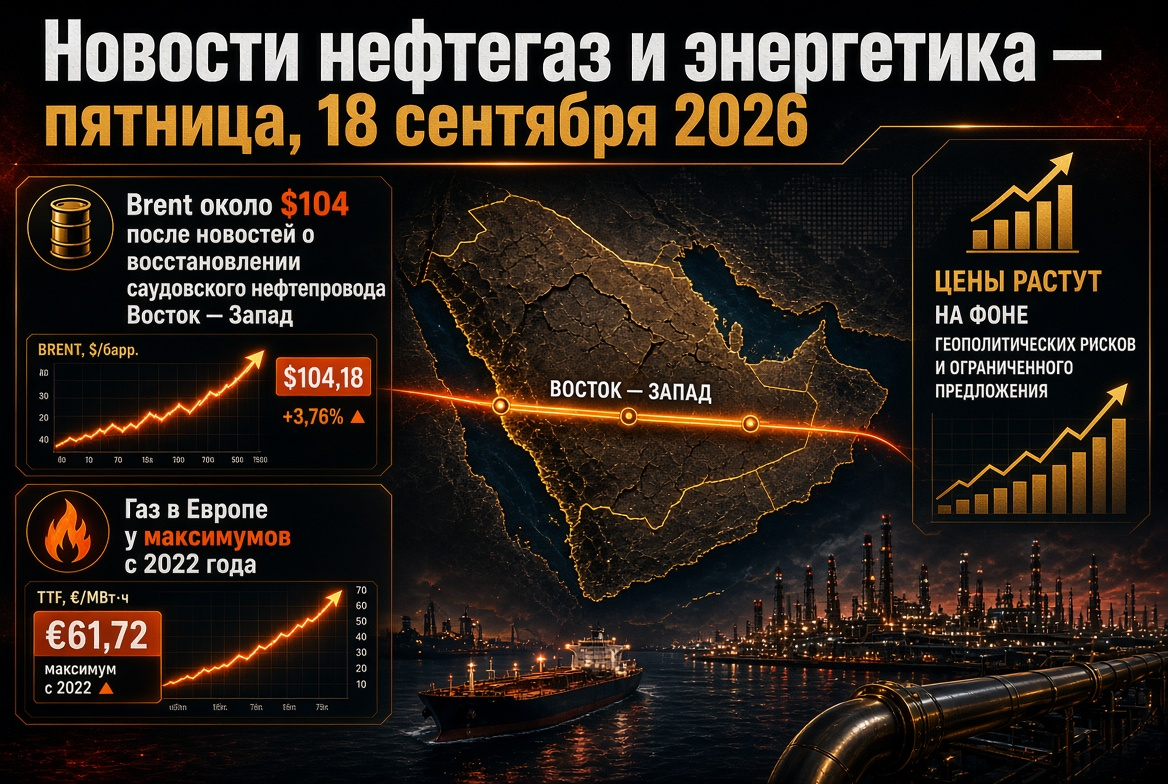
Global oil prices remain at relatively low levels under the influence of excess supply and weakened demand. Brent crude is trading around $61–62 per barrel (WTI – approximately $57), which is close to the lows of the past two years and significantly below last year's levels. The European gas market enters the winter in a relatively balanced state: underground gas storage facilities in EU countries are filled at around 75–78% of total capacity, providing a solid buffer against potential strains, while exchange prices remain relatively low. Nevertheless, the factor of weather uncertainty persists and could lead to increased volatility if cold weather sets in.
Concurrently, the global energy transition is gaining momentum – many countries are recording new records in power generation from renewable sources, although traditional resources are still required for the reliability of energy systems. Investors and companies are pouring unprecedented funds into green energy, despite oil, gas, and coal remaining foundational to global energy supply. In Russia, following a recent autumn fuel crisis, emergency measures taken by the authorities have stabilised the domestic gasoline and diesel market ahead of the winter season. Below is a detailed overview of key news and trends in the oil, gas, energy, and commodity sectors of the fuel and energy complex on the current date.
Oil Market: Peace Signals and Excess Supply Pressuring Prices
The global oil market continues to demonstrate weak price levels under the influence of fundamental factors. Brent crude is trading around $61–62, WTI – around $57, which is approximately 15% lower than a year ago. Price dynamics are shaped by several key drivers:
- Increase in OPEC+ Production. The OPEC+ oil alliance continues to methodically increase supply. In December 2025, the combined production quota for agreement participants will increase by approximately 137,000 barrels per day. Previously, since summer, monthly increments have ranged from 0.5–0.6 million barrels per day, restoring global oil and petroleum product stocks to levels close to pre-pandemic. Although further quota increases are postponed at least until spring 2026 due to concerns over market saturation, the current increase in supply is already creating downward pressure on prices.
- Slowing Demand. The growth rate of global oil consumption has significantly slowed. According to estimates from the International Energy Agency, the demand increase in 2025 will be less than 0.8 million barrels per day (compared to approximately 2.5 million in 2023). Even OPEC's own forecast has become more cautious – around +1.2–1.3 million barrels per day. The weakening global economy, effects from high prices in previous years, and energy-saving measures limit consumption. An additional factor is the slowing industrial growth in China, which is constraining the appetite of the second-largest oil consumer in the world.
- Geopolitical Signals. Reports of a potential peace plan for Ukraine from the U.S. have reduced the level of geopolitical uncertainty in the market, removing some of the previously built-in risk premiums. However, as real agreements have yet to materialise and the sanctions regime remains in place, complete market tranquillity has not been achieved. Traders are responding emotionally to any news: until peace initiatives are put into practice, their effects will be short-term and limited.
- Shale Production Constraints. In the U.S., relatively low prices are beginning to restrain the activity of shale producers. The number of drilling rigs in U.S. oil basins is declining as quotes fall to around $60 per barrel, making new wells less profitable. Companies are being more cautious, which threatens to slow down the increase in supply from the U.S. if such price conditions persist over a longer period.
The combined impact of these factors has led to a situation of slight oversupply in the market: global supply now slightly exceeds actual demand. Oil prices are confidently holding below last year's levels and are closer to recent lows. Several analysts note that if current trends persist, the average Brent price could fall to around $50 per barrel in 2026. For now, however, the market is trading within a relatively narrow range, not receiving strong impulses for either growth or a downturn.
Gas Market: Europe Enters Winter with High Storage Levels and Low Prices
The gas market's focus remains on Europe's passage through the heating season. EU countries have approached the winter cold with underground storage facilities filled to a comfortable level (around 75–80% of capacity at the end of November). Although this is somewhat lower than record levels from a year ago, the starting volumes are still significant and provide a serious buffer against prolonged cold weather. Thanks to this factor and active diversification of supply, European gas quotations are holding at low levels: December futures at the TTF hub are trading near €27/MWh (approximately $330 per thousand cubic metres), the lowest level in over a year.
The high level of storage has been largely facilitated by record imports of liquefied natural gas (LNG). Throughout the autumn, European companies have been actively procuring LNG from the U.S., Qatar, and other suppliers, nearly fully offsetting the reduction in pipeline supplies from Russia. More than 10 billion cubic metres of LNG have been arriving in Europe each month, allowing for early filling of storage facilities. An additional favourable factor has been the relatively mild weather at the beginning of the heating season: the warm autumn and late onset of cold weather are containing consumption and allowing reserves to be used more slowly than usual. However, the risk of intensified competition for LNG remains – if a harsh winter strikes in Asian countries, demand for gas there may skyrocket, diverting some supplies to the Asian market.
Overall, the European gas market currently appears resilient: gas reserves are significant, and prices are moderate by historical standards. This situation is beneficial for European industry and energy at the onset of winter, reducing costs and risks of disruptions. Nevertheless, market participants continue to closely monitor weather forecasts: an extremely cold winter scenario could quickly change the balance, accelerating gas withdrawal from storage and spurring price spikes by the end of the season.
Geopolitics: Peace Initiatives for Ukraine Amidst Ongoing Sanction Pressures
In the second half of November, promising developments emerged on the global stage. The United States presented an unofficial plan to resolve the conflict in Ukraine, which includes, among other things, a phased lifting of some sanctions against Russia. According to media reports, President Volodymyr Zelensky of Ukraine received signals from Washington regarding the desirability of swiftly adopting the proposed agreement, developed with Moscow's participation. The prospect of achieving a peace agreement instils cautious optimism: de-escalation of the conflict could eventually remove restrictions on Russian energy resource exports and improve the overall business climate in commodity markets.
However, tangible changes in the sanctions regime have not yet occurred – moreover, Western countries have continued to increase pressure. On 21 November, a new package of U.S. sanctions specifically targeting the Russian oil and gas sector came into effect. The largest companies, Rosneft and LUKOIL, are now included in the restrictions – foreign counterparties are required to completely cease cooperation with them by this date. Earlier in mid-November, the UK and EU announced new restrictive measures against the subsidiaries of Russian energy companies. The American administration has also indicated a willingness to impose additional harsh measures – including special tariffs on countries that continue to actively purchase Russian oil if no progress is observed on the political front.
Thus, there has not yet been a specific breakthrough on the diplomatic front, and the sanctions standoff remains fully intact. Nevertheless, the mere fact that dialogue continues among key players presents a chance that the most severe restrictions from the West may be temporarily deferred pending the outcome of negotiations. In the coming weeks, market attention will be focused on the development of contacts among world leaders. Positive shifts may improve investor sentiment and soften the rhetoric of restrictions, while a failure of peace initiatives threatens a new wave of escalation. The outcomes of these diplomatic efforts will have a long-term impact on energy cooperation and the rules of engagement in the global oil and gas market.
Asia: India Cuts Imports, China Maneuvers with Purchases
- India: Faced with increasing western sanction pressures, New Delhi has been compelled to adjust its energy policy. Previously, Indian authorities often emphasised the critical importance of Russian oil and gas for the country’s energy security; however, under U.S. pressure, Indian refiners have begun to cut purchases. The largest private oil refining company, Reliance Industries, ceased imports of Russian oil (Urals grade) to its Jamnagar complex as of 20 November – right before the new sanctions took effect. To maintain the Indian market, Russian suppliers had to offer additional discounts: December Urals oil shipments are selling for about $5–6 lower than Brent prices (whereas in the summer, the discount was around $2). Consequently, India continues to purchase significant volumes of Russian oil on favourable terms, although overall imports are expected to decrease in the coming months. Simultaneously, the country’s administration is taking long-term steps to reduce import dependency. Back in August, Prime Minister Narendra Modi announced the launch of a national program for deep-water oil and gas exploration. Within the framework of this 'deep-water mission', the state company ONGC has commenced drilling ultra-deep wells (up to 5 km) in the Andaman Sea; initial results are deemed promising. This initiative is expected to unveil new hydrocarbon reserves and bring India closer to its goal of gradually achieving energy independence.
- China: Asia's largest economy is also adapting to changes in the energy carriers import structure while simultaneously ramping up its own production. Chinese buyers remain the leading importers of Russian oil and gas – Beijing has not joined the western sanctions and has sought to take advantage of the situation by acquiring resources at reduced prices. However, the latest U.S. and European sanctions have necessitated adjustments: state traders in China temporarily suspended new purchases of Russian oil, fearing secondary sanctions. This gap has been partially filled by independent refiners. The latest Yulong refinery in Shandong Province sharply increased its purchases and, in November 2025, recorded historically high import volumes – about 15 large tanker shipments (up to 400,000 barrels per day) of mostly Russian oil (grades ESPO, Urals, Sokol). Yulong capitalised on several suppliers from the Persian Gulf cancelling shipments following the tightening sanctions, purchasing the released volumes. Concurrently, China is increasing its own oil and gas production: from January to July 2025, national companies extracted 126.6 million tonnes of oil (+1.3% compared to the previous year) and 152.5 billion cubic meters of natural gas (+6%). The increase in domestic production helps to partially meet the rising demand but does not eliminate the need for imports. Analysts estimate that in the coming years, China will still rely on external oil supplies for at least 70%, and gas for around 40%. Thus, the two largest Asian consumers – India and China – continue to play a vital role in global commodity markets, balancing import strategies with the development of their resource base.
Energy Transition: Renewable Energy Records and Balance with Traditional Energy
The global transition to clean energy is accelerating rapidly. Most large economies are setting new records for power generation from renewable sources (RES). In the European Union, by the end of 2024, total generation from solar and wind power plants surpassed that from coal and gas power plants for the first time. This trend has continued into 2025: the commissioning of new capacities has further increased the share of green electricity in the EU, while coal’s share in the energy balance has begun to decline after a temporary rise during the 2022–2023 energy crisis. In the U.S., renewable energy has also reached historic levels – at the beginning of 2025, more than 30% of total generation came from RES, and the total output of wind and solar energy surpassed electricity production from coal plants for the first time. China, the world leader in installed renewable energy capacity, continues to add tens of gigawatts of new solar panels and wind turbines each year, consistently breaking its own generation records.
Overall, corporations and investors around the globe are directing vast resources towards the development of clean energy. According to IEA estimates, total investments in the global energy sector will exceed $3 trillion in 2025, with more than half of these funds directed towards RES projects, modernising electric grids, and energy storage systems. At the same time, energy systems continue to rely on traditional generation to ensure stable electricity supply. The growing share of solar and wind introduces new challenges for balancing the grid during periods when renewable sources are not generating power (for instance, at night or during calm weather). To cover peak demand and reserve capacity, gas and, in some instances, coal power stations are still being employed. For example, in certain regions of Europe last winter, operators had to temporarily increase output at coal plants during periods of calm weather – despite environmental costs. Authorities in many countries are rapidly investing in energy storage systems (industrial batteries, pumped storage plants) and smart grids that can flexibly manage load. These measures are aimed at enhancing the reliability of energy supply as the share of RES increases. Experts predict that by 2026–2027, renewable sources may lead globally in electricity generation volumes, definitively surpassing coal. Nevertheless, in the coming few years, there remains a necessity to maintain traditional power plants as a safeguard against supply disruptions. Thus, the energy transition is reaching new heights but requires a delicate balance between green technologies and traditional resources.
Coal: High Demand and Relative Market Stability
Despite the rapid development of renewable energy, the global coal market continues to maintain significant volumes and remains a crucial component of the global energy balance. Demand for coal is consistently high, particularly in the Asia-Pacific region, where economic growth and the needs of the energy sector support intensive consumption of this resource. China, the world's largest consumer and producer of coal, has approached record levels of electricity generation from coal plants this autumn. In October 2025, output at Chinese thermal power plants increased by approximately 7% compared to the previous year, reaching a maximum for that month in history, reflecting increased energy consumption (the total electricity production volume in China in October set a multi-year high). Concurrently, coal production in China has fallen by approximately 2% due to stricter safety measures at mines, which prompted a rise in domestic prices. By mid-November, prices for thermal coal in China had risen to a maximum for the past year (around 835 yuan per tonne at the key port hub Qinhuangdao), stimulating an increase in imports. Coal import volumes in China remain high – it is expected that the country will import about 28-29 million tonnes by sea in November, compared to around 20 million tonnes in June. Increased Chinese demand is supporting global prices: the quotations for Indonesian and Australian thermal coal have reached multi-month peaks (30–40% above summer lows).
Other major importing countries, such as India, are also actively using coal for electricity generation – more than 70% of generation in India still comes from coal-fired power plants, and absolute coal consumption continues to rise along with the economy. Many developing Southeast Asian countries (Indonesia, Vietnam, Bangladesh, and others) are continuing to build new coal power plants to meet the growing demand for electricity from the population and industry. Major coal exporters (Indonesia, Australia, Russia, South Africa) are increasing production and shipments to take advantage of the favorable market situation. Overall, after the price spikes of 2022, the international coal market has returned to a more stable state. Although many countries are announcing plans to reduce coal use for climate goals, in the short term, this type of fuel remains indispensable for ensuring reliable energy supply. Analysts note that in the coming 5–10 years, coal generation, particularly in Asia, will retain a significant role, despite global decarbonisation efforts. Thus, the coal sector is currently experiencing relative equilibrium: demand is consistently high, prices are moderate, and the industry continues to serve as one of the fundamental pillars of global energy.
Russian Fuel Market: Price Stabilisation Amid State Initiatives
In the domestic fuel market of Russia, prompt measures are being taken to normalise the price situation following the acute crisis in early autumn. As early as late summer, wholesale prices for gasoline and diesel rose to record levels, causing local fuel shortages at several service stations. The government has been compelled to intensify market regulation: as of late September, temporary export restrictions on petroleum products have been in effect, while oil refineries have ramped up fuel output following the completion of scheduled repairs. By mid-October, thanks to these measures, exchange fuel prices turned down from peak levels.
The downward price trend has persisted into November. According to the Saint Petersburg International Commodity and Raw Materials Exchange, over the week leading to 26 November, the wholesale price of gasoline has decreased by a few percentage points. For instance, the price of Ai-92 gasoline has fallen by approximately 4% – to about 58,000 rubles per tonne, while Ai-95 has decreased by around 3% to approximately 69,000 rubles. The decline in diesel fuel prices has also continued: the exchange index for winter diesel has dropped by about 3% over the same week. As noted by Deputy Prime Minister Alexander Novak, the stabilisation of the wholesale market has already begun to impact retail prices – consumer gasoline prices have been decreasing for the third consecutive week, although only marginally (on average by a few kopecks per litre weekly). On 20 November, the State Duma passed a law aimed at ensuring priority supply of petroleum products to the domestic market. In summary, the actions taken have already yielded initial results: the autumn surge in prices has given way to a decline, and the situation in the fuel market is gradually normalising. Authorities aim to maintain control over prices and prevent new waves of fuel price hikes in the coming months.
Outlook for Investors and Market Participants in the Fuel and Energy Sector
The overall landscape of news in the oil, gas, and energy sector at the end of November 2025 reflects the complexity and multifaceted nature of the situation. On one hand, markets are influenced by excess supply and prospects for peace negotiations, which are easing prices and risks. On the other hand, ongoing sanction confrontations, local conflicts, and structural changes (such as the energy transition) continue to generate uncertainty. For investors and companies in the energy sector, this environment necessitates particularly careful risk management and a flexible strategy.
Market participants in the fuel and energy sector strive to balance short-term price volatility and geopolitical factors with long-term trends towards low-carbon energy. Oil and gas companies focus on improving efficiency and diversifying sales routes amid shifting trade flows. Concurrently, there is active exploration for new opportunities – ranging from developing promising fields to investing in renewable energy and storage infrastructure. In the near term, key benchmarks will be the outcomes of the expected OPEC+ meeting in early December and the progress (or stagnation) in diplomatic contacts regarding Ukraine. These events will shape market sentiment as we approach 2026. Given the current conditions, experts recommend adopting a measured, diversified approach: combining tactical steps to ensure business resilience with the implementation of strategic plans that take into account the accelerating energy transition and the new configuration of the global fuel and energy sector.