Current Startup and Venture Capital News for Thursday, 27 November 2025: AI Rounds, Megafunds, and Tech Market Trends. Analytical Review for Venture Investors and Funds.
As of late November 2025, the global venture capital market is steadily emerging from the protracted slump of recent years. Analysts estimate that the total volume of venture investments in the third quarter of 2025 reached approximately $97 billion—an increase of 38% compared to the previous year and the best quarterly result since 2021. The "venture winter" of 2022–2023 is firmly behind us, as the influx of private capital into tech startups accelerates. Large funding rounds and the emergence of new megafunds signal a return to risk appetite, although investors continue to act selectively and cautiously.
Venture activity is on the rise across almost all regions of the world. The United States maintains its leadership, particularly amid the surge in the AI sector. Investments in the Middle East have surged multiple times over the past year, while in Europe, Germany has surpassed the United Kingdom in total venture capital for the first time in a decade. The picture in Asia is mixed: India, Southeast Asia, and Gulf states are attracting record flows of capital, while China experiences relative decline. New tech hubs are emerging in Africa and Latin America. The startup ecosystems in Russia and the CIS are striving to keep pace despite external constraints. Overall, the global landscape points to the emergence of a new venture boom, although investors remain focused on the most promising and resilient projects.
Below are key events and trends shaping the venture market as of 27 November 2025:
- Return of megafunds and large investors.
- Record AI rounds and a new wave of "unicorns."
- Revival of the IPO market.
- Diversification of venture capital sector focus.
- Wave of consolidation and M&A deals.
- Renewed interest in crypto startups.
Return of Megafunds: Big Money Back in the Market
The largest investment funds and players are confidently returning to the venture stage, demonstrating a renewed appetite for risk. Following a period of downturn from 2022–2024, leading firms are resuming fundraising and announcing record-scale funds. Japan's SoftBank has unveiled the launch of Vision Fund III, amounting to approximately $40 billion, focused on cutting-edge technologies (AI, robotics, etc.). In the US, venture capital firm Andreessen Horowitz is planning a fund of around $20 billion for investments in late-stage AI startups. Meanwhile, sovereign funds from the Gulf are expanding their presence in the tech sector, investing billions of dollars in promising startups worldwide and launching initiatives to develop their own tech hubs. New venture funds are emerging across all regions, attracting significant institutional capital for investments in high-tech projects. This influx of "big money" is providing liquidity to the market and intensifying competition for the most promising deals, while also instilling confidence in the continued flow of capital.
Record Investments in AI: A New Wave of "Unicorns"
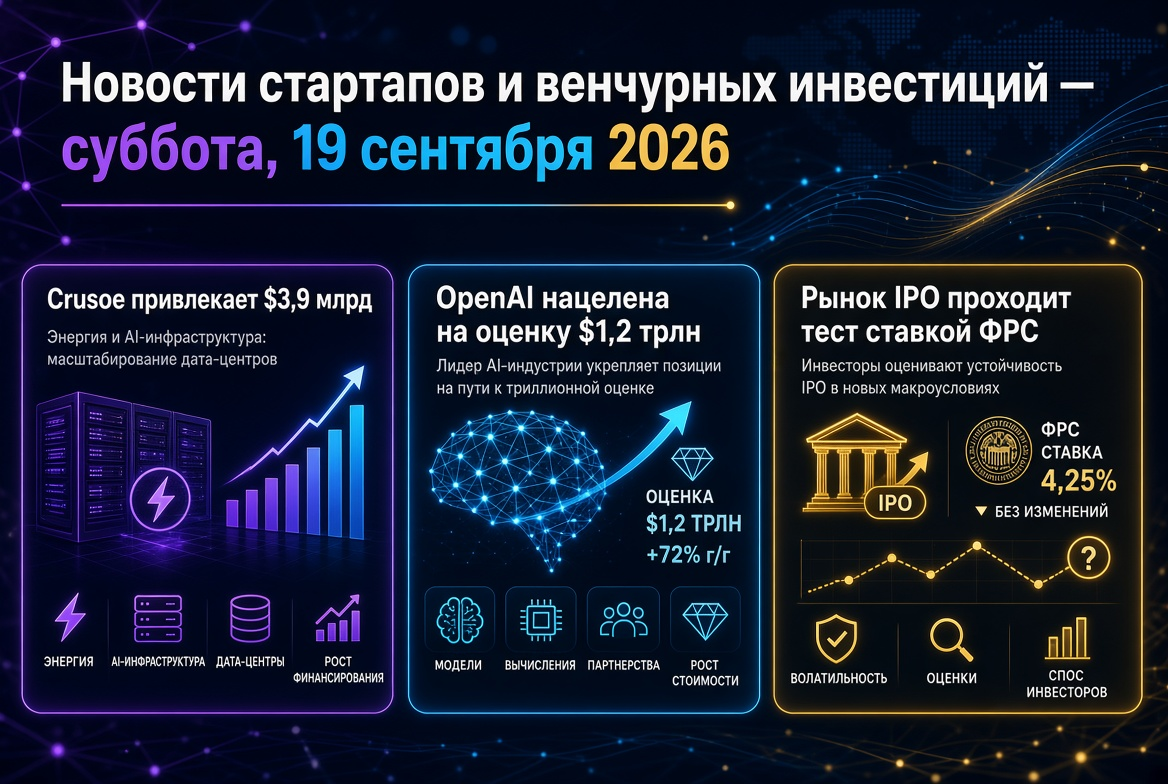
The artificial intelligence sector remains the main driver of the current venture boom, demonstrating record levels of funding. Since the beginning of 2025, AI startups have collectively raised over $160 billion solely in the US (about two-thirds of all venture investments in the country), and by the end of the year, global investments in AI are expected to exceed $200 billion—a previously unseen level. The cumulative valuation of the ten largest AI companies has approached an astronomical $1 trillion. The colossal influx of capital into AI is accompanied by the emergence of numerous new "unicorns." In October 2025 alone, approximately 20 startups with valuations above $1 billion materialised worldwide—marking a record monthly addition to the unicorn club. Investors are eager to fund projects in generative AI, AI infrastructure, autonomous systems, and other cutting-edge areas. Practically every week sees announcements of new mega rounds: for instance, in November, the American cloud AI infrastructure company Lambda secured approximately $1.5 billion, the predictive markets platform Kalshi raised $1 billion, and multimodal systems developer Luma AI garnered $900 million. While the explosive growth inspires optimism regarding technological potential, experts caution of signs of overheating in specific niches. This compels investors to take a closer look at valuations and select truly quality projects.
The IPO Market Revives: A New Wave of Public Offerings
The global IPO market is gradually emerging from a prolonged lull and gaining momentum. After nearly two years of inactivity, public offerings are once again becoming a sought-after exit mechanism for venture funds. In Asia, Hong Kong initiated the new IPO wave: in recent months, several large tech companies have gone public, collectively attracting billions of dollars in investment. For example, Chinese company CATL raised around $5 billion, reaffirming investor interest in IPOs in the region. The situation is also improving in the US and Europe: American fintech unicorn Chime recently debuted on the stock market, with shares rising about 30% on the first day of trading. Soon after, the platform Figma conducted an IPO, raising around $1.2 billion with a valuation of approximately $20 billion.
The crypto industry is also attempting to capitalise on the revival: fintech company Circle successfully went public last summer (with a market capitalisation of around $7 billion), while cryptocurrency exchange Bullish has filed for a listing in the US with a target valuation of approximately $4 billion. The resurgence of IPOs is crucial for the venture ecosystem: successful public offerings allow funds to recoup invested capital and confirm the viability of funded business models, returning liquidity to the market and strengthening investor trust.
Diversification of Sectors: Expanding Investment Horizons
In 2025, venture investments are encompassing a significantly broader range of sectors and are no longer solely focused on AI. Following last year's downturn, there has been a revival in fintech: new fintech startups are securing large rounds, particularly in payment systems and decentralised finance (DeFi). American fintech decacorn Ramp raised $300 million at a valuation of approximately $32 billion (the fourth round in 2025), indicating a return of investor interest in fintech. Robust growth is also occurring in climate ("green") technologies in response to the global demand for sustainable development, with investors funding projects in renewable energy and carbon reduction.
There is a renewed interest in biotechnology and medtech: large funds (especially in Europe) are forming specialised instruments to support pharmaceutical and medical startups. Space and defence technologies are also coming to the forefront—geopolitical conditions and the successes of private space companies are fostering investments in satellite constellations, rocket manufacturing, unmanned systems, and military AI. The sectoral focus of venture capital has broadened significantly, enhancing market resilience: even if the hype surrounding AI diminishes, other sectors are poised to pick up the baton of innovation.
Wave of Consolidation and M&A: The Industry is Changing Shape
High valuations for startups and intense competition in the markets are provoking a new wave of consolidation. Major mergers and acquisitions are again taking centre stage, reshaping the balance of power in the industry. Tech giants are keen to acquire cutting-edge innovations and talent, actively purchasing promising companies. A notable example is Google agreeing to acquire Israeli cybersecurity startup Wiz for approximately $32 billion, setting a record for the technology sector in Israel. Such mega deals demonstrate corporations’ willingness to invest in innovation in order to strengthen their positions. Overall, the surge in M&A activity and significant transactions indicates market maturation. Mature startups are merging with each other or becoming acquisition targets, while venture funds are afforded the opportunity for long-awaited profitable exits. Consolidation accelerates the growth of the most promising companies and simultaneously "cleanses" the ecosystem of weaker players, thereby improving the market.
Renewed Interest in Crypto Startups: The Market Awakens After the "Crypto Winter"
After a prolonged "crypto winter," the blockchain startup market has noticeably revived. In autumn, funding volumes for crypto projects reached a maximum in recent years. Large rounds are taking place in Web3 infrastructure and decentralised finance (DeFi), and venture capital is once again flowing into promising blockchain platforms. The resurgence of the cryptocurrency market has also played a role: Bitcoin has surpassed $100,000, igniting enthusiasm among investors. Venture funds that had long remained on the sidelines are gradually returning to the crypto sector; new specialised funds and incubators for Web3 startups are emerging. Naturally, volatility and regulatory risks remain, but cautious optimism is beginning to take shape: participants are striving not to miss another wave of growth. Cumulative investments in crypto startups in 2025 have already exceeded $20 billion—more than twice that of 2024—and could reach $25 billion by year-end. This indicates a renaissance in the sector: after the market was cleansed of speculation, the focus has shifted to real use cases for blockchain, attracting "smart" money.
Conclusion: Cautious Optimism and Sustainable Growth
By the end of 2025, cautious optimism reigns in the venture capital industry. Successful IPOs and large funding rounds indicate that the downturn period is over and the startup ecosystem is experiencing a new upswing. However, investors remain prudent: capital is increasingly flowing into startups with sustainable business models, proven economics, and tangible profit prospects. The substantial inflows into AI and other sectors inspire confidence in further market growth, yet players are keen to avoid repeating the mistakes of previous "bubbles," carefully selecting projects and assessing their potential realistically. The return of large-scale investors, the emergence of new "unicorns," and the success of IPOs have laid the foundation for a subsequent wave of innovation, but discipline and prudence among investors will determine the character of this growth. Despite the increased appetite for risk, the focus remains on the qualitative growth of startups and the long-term resilience of the market.