Key Oil and Gas Industry and Energy News for Friday, 2 January 2026: Oil, Gas, Electricity, Renewables, Coal, Refineries and Key Trends in the Global Energy Market for Investors and Industry Stakeholders.
Main Trends in the Global Energy Market
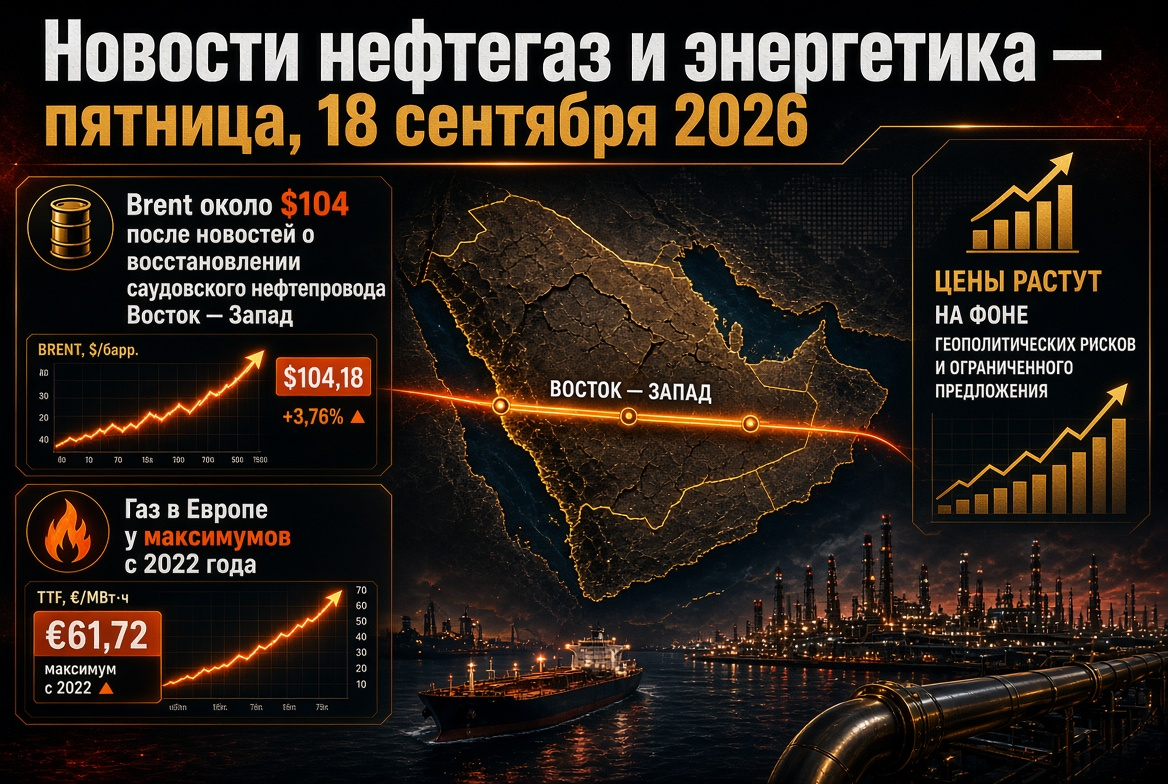
The year 2025 concluded for the oil and gas sector amid contradictory factors: oil prices dropped by nearly 20% due to fears of oversupply while geopolitical tensions sustained demand for "safe" assets. Analysts believe that the oil markets may face an oversupply in 2026, putting pressure on prices; however, local restrictions (the EU ban on oil products from Russia, attacks on refineries) limit exports and keep prices elevated, particularly for diesel.
Trends in the gas markets are changing more rapidly: Europe is winding down transit via Ukraine and aims to completely phase out Russian gas by 2028, while increasing imports of liquefied natural gas (LNG). Asia is also restructuring supply routes in response to trade disputes. Meanwhile, global electricity demand is growing, driven by the rapid development of data centres, artificial intelligence, and electric vehicles, which is spurring investment in renewable energy and energy storage.
Oil Market: Prices and Forecasts
- Price Environment: Experts forecast that in 2026, Brent oil will trade in the range of $60–65 per barrel. Overall supply is expected to exceed demand by nearly 4 million barrels per day, resulting in a build-up of inventories.
- OPEC+ Policy: OPEC+ countries have suspended production increases and maintained previously announced production cuts. The total level of cuts remains at around 3.2 million barrels per day, equivalent to approximately 3% of global demand.
- Demand: The global economy is demonstrating steady growth, leading to an increase in oil demand by several hundred thousand barrels per day in 2026. Significant consumption growth is seen in Asia and the Middle East, while US shale oil production is starting to decline slightly.
- Geopolitics: Prospects for a peaceful settlement in Ukraine could significantly alter the balance in the oil market. Lifting sanctions and returning Russian volumes to the market would increase supply, while their continuation would support prices.
Gas Market: Supplies and Demand
- Pipelines: Russian gas exports through pipelines to Europe fell by more than 40% by the end of 2025 due to the closure of the Ukrainian route. The EU plans to completely phase out imports of Russian gas by 2028, leaving only a few transit routes.
- LNG and Alternatives: European countries are actively increasing LNG purchases from the USA, Qatar, and other suppliers. Meanwhile, Asia has sharply reduced LNG imports from the USA following the introduction of tariffs on American energy. Demand for LNG in China and India continues to grow as these countries seek to diversify fuel sources.
- Regional Trends: Turkey is investing in gas infrastructure and storage to strengthen its energy security. In China, demand for natural gas is expected to grow until 2035–2045 (up to 620–650 billion cubic metres per year), stimulating further expansion of gas networks.
Renewable Energy and Electricity
- Electricity Demand: Electricity consumption in many countries is growing at record rates. In the USA, it may exceed 4.2 trillion kWh by 2026 thanks to the boom in data centres, the development of AI, and the electrification of transport and housing and communal services.
- Share of Renewables: The share of renewable sources in electricity generation is steadily increasing. By 2030, the total installed capacity of "green" generation may exceed 4.6 TWh (80% of which will be solar stations), and a noticeable increase in the share of wind and solar is expected in the coming years due to incentive policies and decreasing technology costs.
- Energy Storage: The deployment of battery systems is gaining momentum. Chinese manufacturers are leading in this area—with estimates indicating that their exports of lithium-ion batteries for storage increased by 75% in 2025. Global investments in storage are also increasing and may exceed $60 billion by the end of the year.
Coal Sector
- Global Demand: According to IEA forecasts, coal consumption is expected to reach a record 8.85 billion tonnes (+0.5% from 2024) in 2025 and begin to gradually decline towards the end of the decade as capacities in renewables, nuclear, and gas generation expand.
- Regional Dynamics: In India, coal demand has decreased due to heavy rains and growth in hydropower, while in the USA it has increased amidst rising gas prices. China, the largest consumer of coal (30% more than the rest of the world combined), showed stabilisation in 2025, but a reduction in coal's share of the energy balance is expected by the 2030s.
- Environmental Factors: Countries continue to balance climate goals and energy security. Even under decarbonisation pressure, the coal sector remains significant in several regions, creating uncertainty in policy and investments.
Refining and Oil Products
- Diesel Shortage: In 2025, the margin for European diesel increased by approximately 30% while oil prices fell. This is due to attacks on Ukrainian refineries and the EU's ban on fuel imports from Russian oil. Limited diesel supply supports high spreads in oil products.
- New Capacities: There are no large-scale projects planned for building refineries in developed countries, therefore the oil products market is experiencing a structural shortage. Investors expect that high margins on products will persist until refining capacities are increased.
- Venezuela: PDVSA is accumulating heavy residues in storage as sanctions limit the export of fuel oil and diesel. This exacerbates the shortage of marine fuel and affects regions dependent on Venezuelan exports.
Corporate Events and Projects
- Contracts and Investments: Major companies are signing significant agreements. Italian firm Saipem has secured a $425 million contract for the development of the largest gas field, Sakarya, in Turkey. British Harbour Energy has become the operator of the Mexican Zama field (≈750 million barrels of oil) and has concluded deals worth $3.2 billion in the Gulf of Mexico, solidifying its position.
- Mergers and Acquisitions: In December 2025, Harbour Energy acquired a 32% stake in the Zama project and established control over the LLOG asset in the Gulf of Mexico. This has made the company the operator of two of the largest independent projects in the region.
- Sanctions and Licences: Regulators continue to impact the energy sector. In Serbia, the NIS refinery (owned by Gazprom Neft) was granted a temporary OFAC licence until January 2026, allowing it to resume operations after a halt related to US sanctions.
Financial and Market Indicators
- Stock Market Trends: Major stock indices of energy companies reflect the situation in commodity markets. By the end of 2025, Middle East indices fell following a drop in oil prices (for instance, the Saudi index fell by 1%), while shares of large oil and gas companies showed only modest declines.
- Regulation and Monetary Policy: Central banks influence the investment climate. For example, in Egypt, a 100 basis point decrease in the key rate supported the stock market's growth by 0.9%, stimulating domestic demand. Similar measures are being discussed in other developing countries.
- Commodity Currencies: The currencies of energy-exporting countries remain relatively stable due to fiscal and budgetary mechanisms. The Russian rouble, Norwegian krone, and Canadian dollar are supported by revenues from oil and gas sales, which limits their volatility amid falling prices.