Latest Startup and Venture Investment News from 22 February 2026: Record AI Rounds, AI Infrastructure Deals, IPO Market Insights, and New Trends in Global Venture Capital
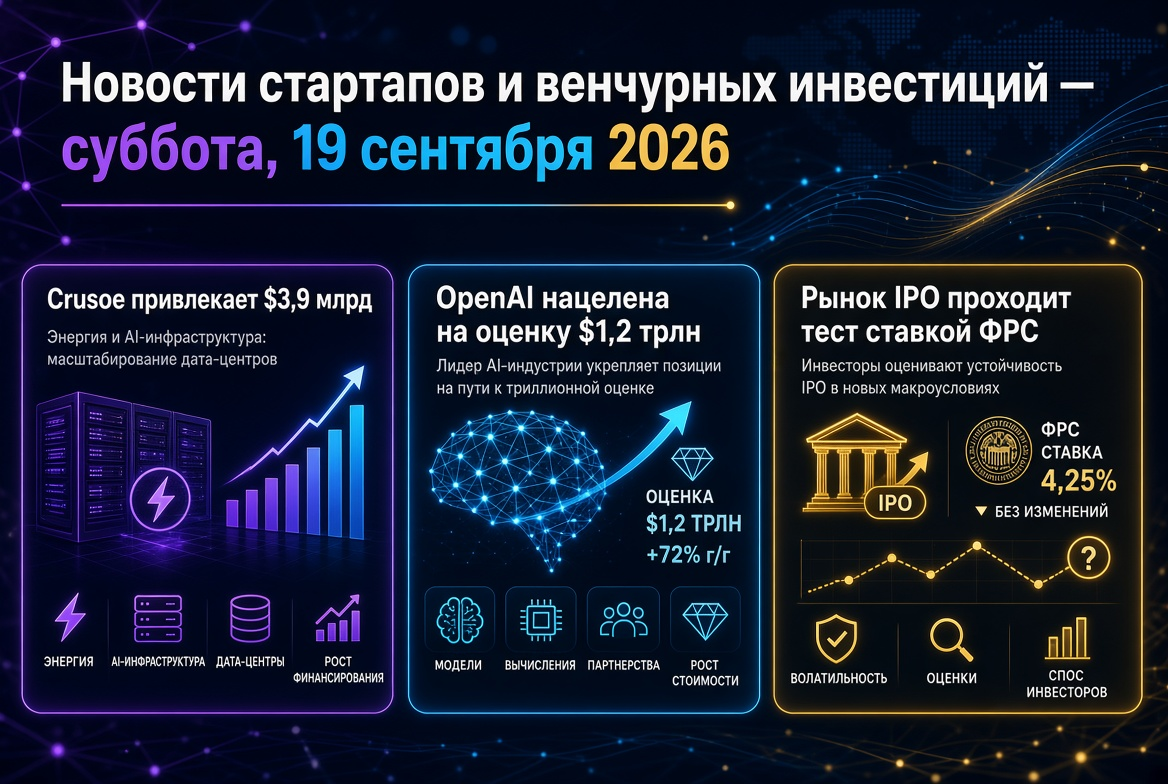
As of late February 2026, the global venture investment landscape remains characterised by a dual-speed dynamic. On one hand, artificial intelligence continues to attract the largest funding rounds—including 'historic' early-stage deals—while a new wave of deep tech emerges around the infrastructure for models and data centres. Conversely, the IPO window appears fragile yet again; public technology investors are reevaluating risk profiles and monetisation scenarios, directly impacting exit rates and the willingness of markets to embrace new listings.
Main Theme of the Week: Record AI Rounds and a 'Talent Premium'
Capital is increasingly being concentrated where venture funds perceive a chance for platform effects and long-term technological consequences. In the AI sector, this is reflected in two significant trends: (1) exceptionally large rounds in very early stages and (2) a pronounced 'premium' for teams and research leadership, even in the presence of limited current revenue.
- Megadeals are becoming the new norm in the upper segment: investors are 'purchasing options' on the creation of the next foundational AI layer (models, agent systems, environment learning, processing).
- Valuations are increasingly being predicated on a scarcity of skills and access to processing power, rather than conventional revenue multiples.
- Consortia are expanding: alongside venture funds, strategic investors (cloud providers, chip manufacturers, platforms) are increasingly drawn to the ecosystem and control of critical infrastructure.
Major Deals: From 'European Records' to Megamergers
Recent transactions illuminate the new scale of venture capital surrounding AI. Discussions are underway for circles that, not long ago, were characteristic of pre-IPO companies, while consolidation is intensifying at the level of large corporations and private giants.
- Ineffable Intelligence (London): a seed round of approximately $1 billion is being discussed, with a valuation target of around $4 billion (excluding new capital). The signal to the market is clear: the best teams can 'sell the future' significantly earlier than when a mature product emerges.
- SpaceX and xAI: a transaction has been announced that consolidates asset management, integrating AI and space infrastructure into a single strategy. For venture investors, this stands as an important indicator: 'vertical integration' (data → processing → products → channels) becomes an even more valuable competitive edge.
The conclusion for venture funds is clear: in 2026, a new upper layer of 'super rounds' is forming, where competition is not just for equity stakes, but also for access to processing, strategic partnerships, and talent.
AI Infrastructure and Chips: Money Follows Energy and Efficiency
The second line of demand focuses on hardware and infrastructure. The growing workloads in data centres have made energy efficiency and power management integral to investment theses. This is no longer merely about 'hardware'; it encompasses Total Cost of Ownership (TCO) savings, scalability of inference, and acceleration in product market entry.
- C2i Semiconductors: securing a round of approximately $15 million for power management solutions tailored for AI/cloud infrastructure.
- A separate 'vendor' ecosystem is forming around chip design, power systems, networks, and cooling, capable of delivering significant outcomes for venture investors through M&A.
- For later-stage investments, demand is increasing for companies that can demonstrate unit economics of implementation (energy savings, performance growth per watt, reduced capital expenditures per unit of processing).
LLMOps, Security, and Application Platforms: The Market Matures
Following a phase of 'model races', capital is now actively moving into the operational layer: observability, quality control, security, inference costs, and compliance. This domain sees venture investments increasingly reliant on sales and retention metrics, beyond merely technological narratives.
- Portkey (LLMOps): securing a round of approximately $15 million for the development of a platform to manage and operate LLM in production.
- In consumer and enterprise cybersecurity, significant late rounds continue as demand is fuelled by rising digital risks and an expanding attack surface.
- Winners in this segment will consolidate the market through packaging (security + observability + governance), thereby increasing the likelihood of subsequent M&A.
Fintech and IPO: The Window Opens and Closes with Volatility Penalising Optimists
Fintech remains a leading candidate to rejuvenate the IPO market; however, the reality of February indicates that even technically ready companies for listing are compelled to retreat amidst worsening sentiment. This directly influences venture exit strategies and the requirements for 'revenue quality' (margin, risk, compliance, stability).
- Clear Street: the company publicly adjusted its IPO parameters (lowering fundraising goals), subsequently delaying and later withdrawing its registration—an illustration of how swiftly the market can 'close' in the face of volatility.
- The thesis for later stages: investors demand not only growth but also sustainable economics—positive margins, controlled risks, and a clear pathway to profitability.
Biotech and Healthcare: M&A Becomes a Major Exit Route Once Again
For biotech startups and drug discovery platforms, the IPO window remains selective, whereas M&A is increasingly providing substantial exits. Strategists are willing to pay for assets that accelerate pipelines or close technological 'gaps'.
- Deals based on the 'cash + milestones' format are making a comeback: the buyer reduces risk while the startup gets the opportunity for significant payouts upon achieving clinical or commercial milestones.
- For venture funds, this means that thorough due diligence preparation (data, patents, regulatory strategy) is becoming as much of an asset as science itself.
Secondary Market Shares and Liquidity: Why Secondaries Are the Central Focus for 2026
As IPO exits happen in waves, the secondary market is becoming a crucial mechanism for liquidity redistribution. This impacts LP behaviour, fund strategies, and the negotiation positions of founders.
- GP-led secondaries are gaining momentum: managers are structuring liquidity around top-performing assets, extending the holding period for 'champions'.
- For LPs, this serves as a tool for balancing portfolios and managing timelines; for startups, it offers a way to alleviate the pressures of 'exit at any cost'.
- In practice, this elevates the importance of reporting quality and KPI transparency: assets with clear metric dynamics are easier to sell in the secondary market.
What This Means for Venture Investors and Funds: A Checklist for the Upcoming Quarter
The current situation demands discipline: the market is generous to leaders in AI and infrastructure but strict with those attempting to enter public markets without protection against volatility. Below are practical guidelines for venture funds, corporate venture units, and LPs.
Investment Priorities (Deal Flow)
- AI platforms that demonstrate differentiation in data/training/processing rather than just in interface.
- Infrastructure (chips, power, networks, cooling, orchestration) with a clear economic effect.
- LLMOps and security as an 'essential layer' for enterprise adoption.
Portfolio Company Priorities
- Enhance the focus on cash efficiency: CAC payback, gross margin, controlling burn multiple.
- Prepare a dual exit track: M&A and secondaries alongside IPO readiness.
- Accelerate legal and financial preparedness: IP, compliance, data quality—this reduces discounting in negotiations.
February 2026 highlights a key paradox in the venture market: capital is available, but not for everyone and not everywhere. The race for megaraounds in AI and infrastructure continues, where team, processing power, and platform hold sway. Meanwhile, the public market remains jittery, with the IPO window capable of closing abruptly, thereby increasing the value of M&A and secondary deals as liquidity routes. For venture investors, a winning strategy now involves combining an aggressive search for technological champions with stringent financial discipline in their portfolios.