Startup and Venture Capital News for Monday, 22 December 2025: Major Funding Rounds, AI Investments, Mega Fund Activity, Tech Company IPOs, and Key Global Trends in the Venture Market.
As we approach the end of 2025, the global venture capital market is steadily recovering from the prolonged downturn of recent years. Investors worldwide are once again actively funding technology startups, with multi-million dollar deals being struck and IPO plans for promising companies taking centre stage. Major venture funds and corporations are resuming large-scale investment programmes, while governments across various nations are amplifying support for innovative businesses. The influx of private capital is providing young companies with the liquidity needed for growth and scaling.
Venture activity is stretching across all regions of the globe. The United States continues to lead the way, driven by substantial investments in artificial intelligence. In the Middle East, the volume of investments in startups has surged compared to last year, thanks to generous funding from sovereign wealth funds. Europe is witnessing a shift in power dynamics: Germany has surpassed the United Kingdom for the first time in a decade in terms of total venture deal volume, bolstering the position of continental hubs. India, Southeast Asia, and other rapidly developing markets are attracting record capital, while in China, investors are adopting a more selective approach amid regulatory risks. The startup ecosystems in Russia and the CIS countries are also striving to keep pace despite external constraints. We are witnessing the formation of a new global venture boom: investors have returned to the market, although they are still approaching deals with caution and prudence.
- The Return of Mega Funds and Large Investors. Leading venture players are raising record funds and are once again flooding the market with capital, stimulating risk appetite.
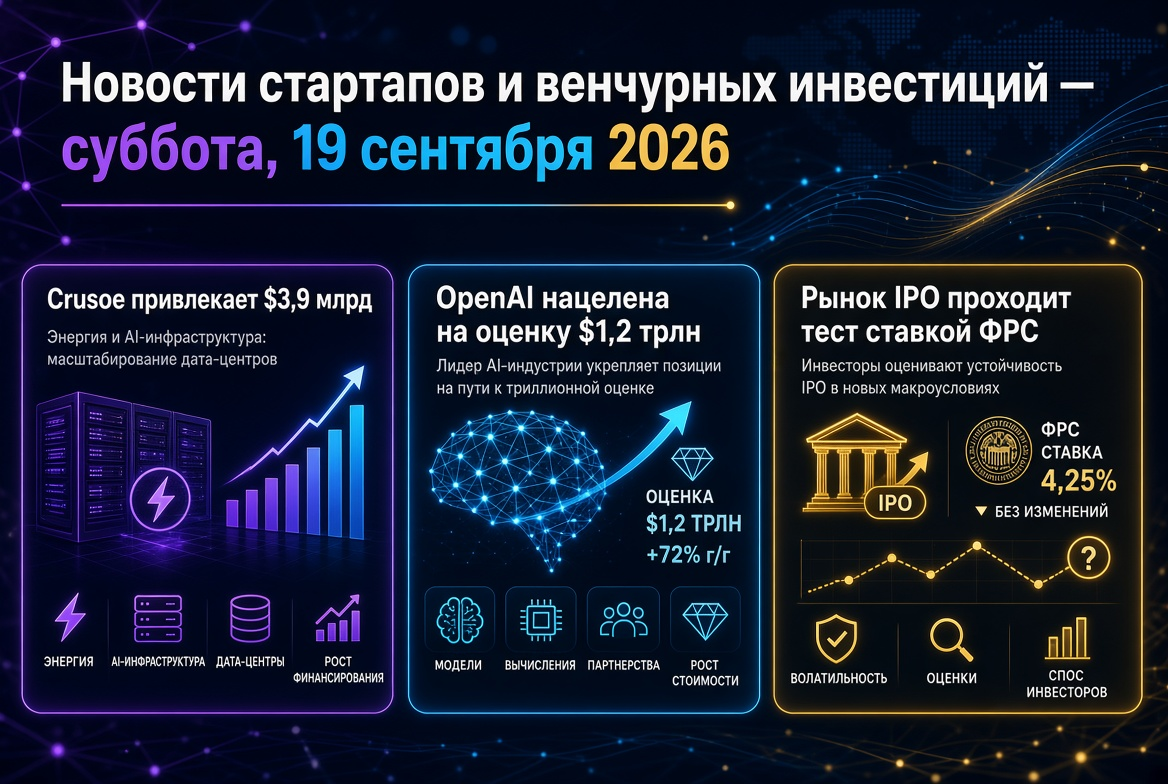
- Record Funding Rounds and New “Unicorns” in the AI Sector. Unprecedented investments are elevating startup valuations to unseen heights, particularly in the artificial intelligence segment.
- Revitalisation of the IPO Market. Successful public listings of tech companies and a wave of new listing applications confirm that the long-awaited “window of opportunity” for exits has reopened.
- The Renaissance of Crypto Startups. The rise of the cryptocurrency market has reignited investor interest in blockchain projects, ensuring a flow of capital into the crypto industry.
- Defence and Aerospace Technologies Attracting Capital. Geopolitical factors are driving investments in military technologies, space projects, and robotics.
- Diversification of Industry Focus: Fintech, Climate Projects, and Biotech. Venture capital is being directed not only towards AI but also to fintech, green technologies, and biotechnology, broadening the market’s horizons.
- A Wave of Consolidation and M&A Deals. High valuations of startups and competition for markets are prompting industry consolidation: significant mergers and acquisitions are creating new opportunities for exits and scaling.
- Global Expansion of Venture Capital. The investment boom is stretching beyond traditional centres, reaching new regions — from the Persian Gulf and Asia to Africa and Latin America.
- Local Focus: Russia and the CIS. New funds are emerging in the region to develop local startup ecosystems, signalling a gradual return of venture activity.
The Return of Mega Funds: Big Money Back in the Market
The largest investment players are triumphantly returning to the venture arena, marking a new surge in risk appetite. The Japanese conglomerate SoftBank has announced the establishment of Vision Fund III, amounting to around $40 billion, aimed at investing in advanced technologies — primarily in AI and robotics. Concurrently, SoftBank is making a record bet on OpenAI, seeking to invest more than $20 billion in the AI industry leader. Sovereign funds from the Gulf States have also become more active, pouring billions into technology projects and launching government mega-projects to develop the startup sector, thereby forming their own tech hubs in the Middle East. Simultaneously, new venture funds are cropping up around the world. American investors have amassed unprecedented reserves of "dry powder" — hundreds of billions of dollars in unallocated capital ready to be deployed. The influx of "big money" is filling the ecosystem with liquidity, supporting the growth of valuations for promising companies. The return of mega funds and large institutional investors not only intensifies competition for the best deals but also instills confidence in the industry regarding further capital inflow.
Record Rounds and New “Unicorns”: The Investment Boom in AI
The artificial intelligence sector remains the primary driver of the venture boom in 2025, setting new funding volume records. Investors are keen to back AI leaders, directing colossal sums towards the most promising companies. For instance, Elon Musk's startup xAI attracted around $10 billion in investment, while OpenAI received $8.3 billion at a valuation of approximately $300 billion. Both funding rounds were significantly oversubscribed, showcasing the excitement surrounding leading AI companies. Capital is flowing not only into AI applications but also into the infrastructure that supports them: one AI data storage startup is approaching the closure of a multi-billion dollar round at a record valuation — investors are prepared to finance even the "shovels and pickaxes" of the entire AI ecosystem. This investment boom is giving rise to a new wave of "unicorns," although experts warn about the risks of overheating in this segment.
The IPO Market is Reviving: A Window of Opportunity for Exits
The global market for initial public offerings (IPOs) has revived after a lengthy lull and continues to gain momentum. In Asia, Hong Kong has spearheaded a new wave of IPOs: in recent weeks, several major tech companies have gone public, collectively raising multi-billion dollar sums. These successful debuts confirm that investors in the region are once again willing to engage in public offerings. In the United States and Europe, the situation is also improving: American fintech "unicorn" Chime recently debuted on the stock market, with its shares surging 30% on the first day of trading. Following this, other well-known startups are preparing for their own market entries. According to insiders, SpaceX is planning an IPO in 2026 with a target valuation of around $1.5 trillion — potentially the largest offering in history. Thus, the "window" for new IPOs remains open for longer than many had anticipated.
The revival of IPO activity is vital for the venture ecosystem. Successful public exits enable venture funds to secure profitable exits and redirect freed-up capital into new projects. Despite a general cautiousness, the prolonged "window of opportunity" is encouraging more startups to consider going public, aiming to capitalise on favourable conditions.
The Renaissance of Crypto Startups: The Market Thaws
After an extended "crypto winter," the blockchain startup segment is coming back to life amid the recovery of the digital asset market. In 2025, Bitcoin reached historic highs (exceeding $85–90 thousand), reigniting venture investors' interest in the crypto industry. Capital is once again flowing into blockchain projects, ranging from infrastructure solutions and crypto exchanges to DeFi platforms and Web3 startups. Major niche funds have resumed activity in this segment, and new crypto startups are attracting substantial funding rounds on the wave of rising valuations. Although the volume of deals in the crypto sphere still lags behind the records of 2021, a steady trend towards recovery is evident.
Defence and Aerospace Technologies Receive Support
The geopolitical climate and rising defence budgets are stimulating an influx of investments into military and aerospace technologies. Startups creating innovations for the defence sector — from drones and cybersecurity to AI applications for the military — are receiving support from both the government and private investors. Commercial space projects are also receiving significant funding: the development of satellite constellations, on-orbit services, and new rocket technologies are gaining traction. Moreover, the heightened attention to dual-use robotics (for both military and civilian purposes) reflects the strategic importance of automation. Defence spending and competition in space make this sector one of the key areas for venture investments.
Diversification of Investments: Fintech, Climate, and Biotech on the Rise
In 2025, venture investments have diversified into a broader range of industries and are no longer limited to artificial intelligence alone. Following a downturn in recent years, there is noticeable rejuvenation in fintech: large funding rounds are taking place not only in the United States but also in Europe, Asia, and developing markets, supporting the growth of promising financial projects. Simultaneously, investors are showing increased interest in climate technologies and green energy — these sectors received record funding on the wave of the global sustainability trend. Activity in biotech is gradually recovering: developments of new drugs and medical platforms are once again attracting capital as the sector emerges from a period of declining valuations. Such diversification in industry focus makes the startup ecosystem more resilient, reducing the venture market's dependence on a single dominant trend.
Mergers and Acquisitions: Consolidation of Players
High company valuations and intense competition for markets are pushing the startup ecosystem towards consolidation. Major mergers and acquisitions are coming back into the spotlight, reshaping the power dynamics in the industry. A striking example is Google agreeing to acquire Israeli cybersecurity startup Wiz for $32 billion. Such mega-deals demonstrate that even industry leaders are willing to spend tens of billions to keep pace in the technological race. Overall, the current activity in M&A reflects the maturation of the industry: mature startups are merging with one another or becoming targets for acquisition by corporations, while venture funds gain opportunities for long-awaited profitable exits. Consolidation enhances the efficiency of the ecosystem, allowing companies to pool resources for accelerated growth and global expansion.
Global Expansion of Venture Capital: New Tech Hubs
The venture boom of 2025 is characterised by an increasingly broad geographical reach. Beyond traditional centres — the USA, Western Europe, and China — a significant inflow of capital is evident in the Middle East, South Asia, Africa, and Latin America. The Persian Gulf region is rapidly transforming into a new tech hub due to multi-billion dollar investments by Saudi Arabia and the UAE in startups. India and Southeast Asia are setting records in venture financing, while countries in Africa and Latin America are producing their own "unicorns" and growing local ecosystems. Investors are actively seeking opportunities worldwide, facilitating the establishment of a genuinely global startup market.
Russia and the CIS: Local Initiatives on the Rise
Despite sanctions and other restrictions, startup activity is reviving in Russia and its neighbouring countries. In 2025, several new venture funds with volumes of up to 10–12 billion roubles have been announced, aimed at developing local technology companies. Domestic startups are once again attracting capital and are even considering going public. For instance, one regional food tech project has secured investment at a valuation of several billion roubles and is preparing for an IPO — a sign of serious local ambitions. Additionally, foreign investors have recently been allowed to invest in Russian projects, gradually rekindling interest in overseas capital. Although the total volume of venture investments in the region remains modest, it is steadily increasing, signalling a gradual recovery of the market.
Conclusion: Cautious Optimism on the Eve of 2026
By the end of 2025, moderately optimistic sentiments prevail in the venture industry. Record funding rounds, the return of mega funds, and successful exits convincingly demonstrate that the market has emerged from stagnation and is once again generating significant opportunities for capital growth. At the same time, investors continue to exercise caution, drawing lessons from the sharp downturn of recent years. As we enter 2026, the industry is facing cautious optimism: further growth in venture investments is anticipated as new technologies develop; however, market participants remain prepared for potential corrections and will approach risk assessment diligently.