Current Cryptocurrency News for Sunday, 21 December 2025: Bitcoin Holds Key Levels, Ethereum Stabilises, Top 10 Cryptocurrency Overview, Institutional Trends and Global Market Expectations
As of the morning of 21 December 2025, the cryptocurrency market remains relatively stable, yet investor sentiment continues to be cautious. Bitcoin hovers around the $88,000 mark, attempting to stabilise after a recent decline. Ethereum and the majority of leading altcoins are trading without significant changes, showing no confident upward momentum. The total market capitalisation of cryptocurrencies fluctuates around $3-3.3 trillion, with market participants closely monitoring external factors and news in hopes of a potential 'Christmas rally' in the final days of the year.
Bitcoin Maintains Key Level
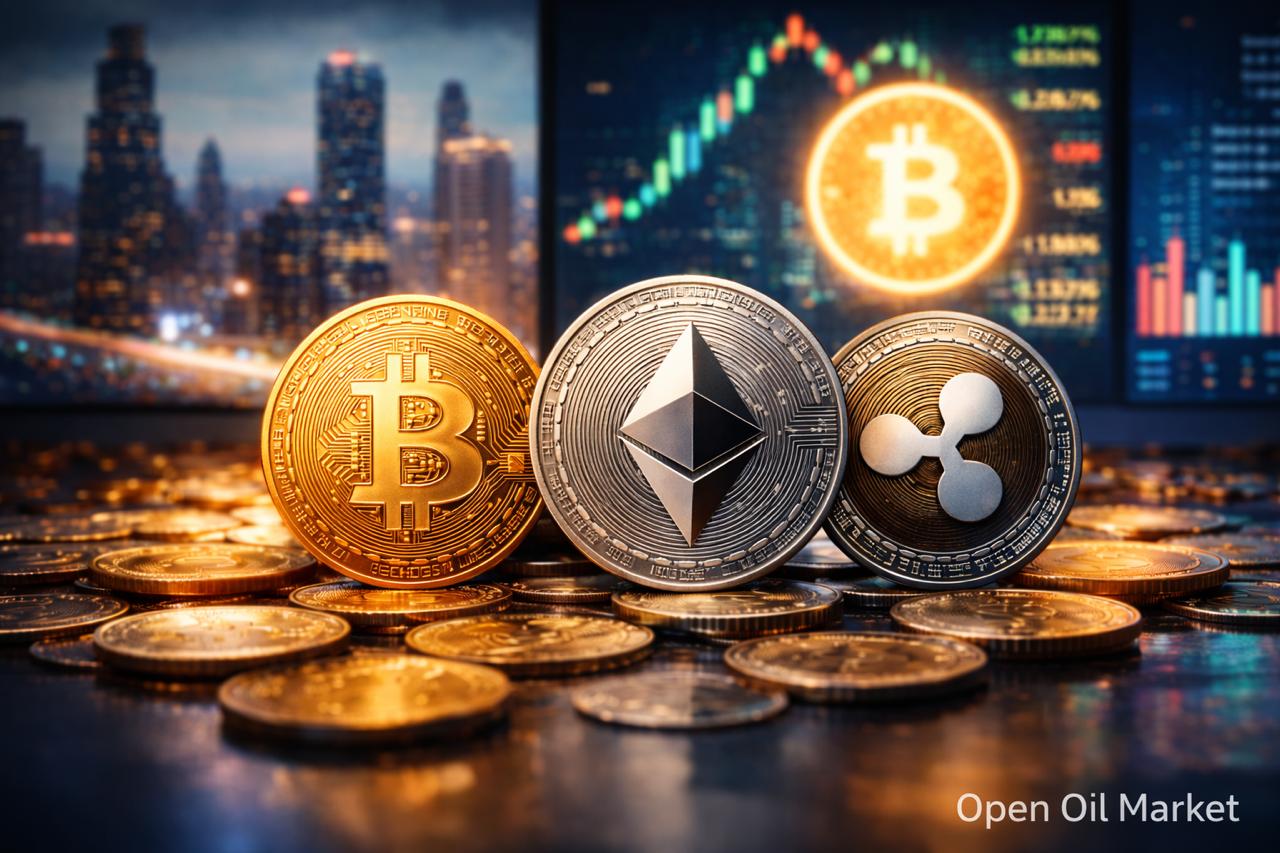
Bitcoin (BTC) is attempting to regain footing after a sharp decline experienced in the autumn. Just at the beginning of October, the flagship cryptocurrency reached an all-time high of approximately $126,000; however, in November, amid widespread profit-taking and liquidation of leveraged positions, the price dropped below $90,000, briefly sinking to ~$85,000. This level has since become an important support zone, from which BTC rebounded at the beginning of December. Bitcoin is currently trading within the $85,000–90,000 range, holding around the psychologically significant level of $88,000. The market capitalisation of BTC is estimated to be approximately $1.7-1.8 trillion (around 60% of the entire cryptocurrency market), reaffirming its dominant role within the sector.
Analysts observe that Bitcoin maintaining a level above ~$85,000 enhances hopes for the formation of a base for new growth. Holding this key support level allows for another attempt to breach the $100,000 mark should sentiment improve. Nonetheless, volatility remains heightened, with daily price fluctuations reaching several percentage points, reflecting market uncertainty. Investors are keeping a watchful eye on macroeconomic signals (inflation data, central bank decisions) and regulatory statements that could affect risk appetite. While Bitcoin consolidates, many participants see current levels as an opportunity for gradual accumulation of the asset before the New Year.
Ethereum Stabilises Post-Network Upgrade
Ethereum (ETH) demonstrates relative stability amid Bitcoin's fluctuations. In November, the second-largest cryptocurrency by market capitalisation underwent a significant correction: after rising towards $5,000 at the beginning of the month, Ether fell more than 30%, dropping to around $3,000. However, the situation improved in December thanks to the successful network upgrade Fusaka, aimed at enhancing scalability and reducing fees. The current price of Ethereum is holding around $3,000–3,100, which is above recent lows, indicating a return of moderate buyer interest.
The fundamental position of Ethereum remains strong. The transition to a Proof-of-Stake algorithm and the launch of upgrades to accelerate transactions have bolstered trust in the network. The market share of ETH stands at around 12-13%, maintaining its status as the second-largest digital asset. The Ethereum ecosystem continues to serve as the base for the majority of decentralised finance (DeFi) and NFT projects, with the volume of Ether staked reaching new highs in 2025. Investors are positively evaluating the rise in smart contract activity and the reduction in fees following the Fusaka upgrade. In the medium term, Ether has the potential for further recovery – with key targets set at returning to levels around $4,000, which were previously achieved earlier this year under favourable market conditions.
Altcoins: Selective Recovery
The broader altcoin market is trying to follow Bitcoin’s lead, but the growth is selective and uneven. Most major alternative cryptocurrencies have stabilised after the fall in November and are demonstrating moderate recovery, although lagging behind the dynamics of BTC. For instance, Solana (SOL), a competitor to Ethereum, is trading around $150 per coin, bouncing back from lows (~$130) thanks to positive news. Institutional inflows into Solana-based funds have exceeded $2 billion in recent weeks, supporting the price of SOL, while expectations for the launch of exchange-traded funds on Solana further stimulate investor interest. However, following a sharp rise in autumn, Solana has partially corrected, maintaining a capitalisation of around $60-70 billion and a place among the market leaders.
XRP (Ripple) gained attention in 2025 due to Ripple's legal victory against the SEC and the subsequent launch of the first spot ETFs on this token in the US. Against this backdrop, XRP rose above $3.5 in the summer, but then, paralleling the overall market, retraced and is currently holding around $2.0. Despite the correction, XRP has consolidated its position in the top 5: clarification of its legal status in the US has heightened trust from banks and payment companies using RippleNet for cross-border transfers. Dogecoin (DOGE), the most famous meme cryptocurrency, remains valued at around $0.15 per coin. DOGE remains among the top ten coins largely thanks to a loyal community and intermittent attention from public figures. Discussions surrounding the launch of an ETF on this token continue, with the first such products already receiving regulatory approval – their market debut is anticipated shortly.
Overall, the market capitalisation of all altcoins (excluding Bitcoin) is gradually recovering after the November slump, although interest in the most speculative assets remains tempered. Certain projects showcase outperforming dynamics against positive news – for instance, at the end of the year, local growth was observed in Zcash (ZEC) in anticipation of its own halving, although after that, its price corrected. Recent incidents in the DeFi sector (including protocol hacks) continue to remind investors of technological risks, which also limits the 'alt season'. Market participants prefer larger altcoins with strong fundamentals – such as Ethereum, Solana, and XRP – while less significant tokens are experiencing more prolonged declines. According to experts, a full-scale altcoin rally is likely only with a return of trust and a capital influx into the sector of risk assets.
Institutional Investors: Continued Interest in Crypto Assets
Despite recent volatility, the interest of large investors and financial institutions in cryptocurrencies remains significant. The year 2025 has marked an unprecedented influx of institutional investors into the cryptocurrency market. The US saw the launch of the first spot exchange-traded funds (ETFs) on Bitcoin and Ethereum, simplifying access to digital assets for major players. Large companies have continued to add cryptocurrencies to their reserves: for instance, MicroStrategy, under the leadership of Michael Saylor, has been increasing its BTC holdings throughout the year, demonstrating the strategic belief in long-term Bitcoin growth.
The autumn correction temporarily cooled institutional investor activity. In November, record outflows were recorded from cryptocurrency funds: one week alone saw over $1.2 billion withdrawn from Bitcoin ETFs – many decided to lock in profits after the rapid rise at the beginning of autumn. However, this outflow was largely short-term in nature. By December, the situation stabilised: capital inflows began to return to the sector, especially against the backdrop of new instruments emerging. In particular, the approval by US regulators of exchange-traded funds for certain altcoins (XRP, Dogecoin, Solana, etc.) broadens the range of available institutional products and attracts a new wave of interest. Large banks and asset managers continue to develop infrastructure for working with crypto assets – from custodial services to trading platforms. Worldwide, new crypto funds and trusts are being launched, and pension and hedge funds are incorporating digital currencies into diversified portfolios. Many professional investors are using the current market pause to enter positions at lower prices, anticipating a recovery of the upward trend in the medium term.
Cryptocurrency Regulation: Global Trends
By the end of 2025, the regulatory landscape for cryptocurrencies continues to evolve, forming clearer rules across various regions. In the United States, a shift is anticipated in the approach of regulatory authorities towards the industry. At the end of the year, the Securities and Exchange Commission (SEC) removed cryptocurrencies from its list of priority oversight areas for 2026, redirecting focus to the regulation of artificial intelligence and fintech. This step signals a potential reduction in pressure on the US cryptocurrency market and indicates that the industry is gradually ceasing to be perceived as the 'wild west' of finance. Moreover, numerous decisions on a range of new applications for launching spot ETFs – not only for Bitcoin and Ethereum but also for several leading altcoins (for instance, Solana and Cardano) – are approaching in the US. Market participants are optimistic: further approval of crypto ETFs by regulators is expected in the coming months, which would set an important precedent for the industry.
In the European Union, a comprehensive MiCA (Markets in Crypto-Assets) regulation is on the brink of coming into force, which from 2026 will establish uniform rules for crypto companies and investors across all EU countries. According to new requirements, crypto businesses in Europe will need to obtain licenses, comply with capital, disclosure, and anti-money laundering standards. It is expected that the implementation of MiCA will enhance trust in the European cryptocurrency market and attract more institutional investments due to a clear and unified regulatory framework.
Asian financial centres have also been actively shaping their crypto strategies in 2025. In Hong Kong, retail transactions involving major cryptocurrencies through licensed exchanges have been officially permitted – this move aims to attract crypto companies and capital that were previously directed towards mainland China (where direct transactions with crypto assets remain banned). Singapore and the United Arab Emirates are offering incentives and clear rules for the crypto industry, competing for the status of global crypto hubs. Meanwhile, the authorities in China maintain strict restrictions, focusing on the development of their own digital currency (the digital yuan) and state-approved blockchain projects.
Emerging markets are also not left behind: several countries are developing national strategies for dealing with digital assets. For example, Azerbaijan has prepared a legislative framework for regulating cryptocurrencies by the end of 2025 – covering aspects from taxation of transactions to licensing local exchanges. Such initiatives reflect a global trend: governments are seeking to control the rapidly growing sector while striving not to miss out on the economic benefits of its development. Overall, by the end of the year, the global regulatory landscape for cryptocurrencies is becoming more defined, which in the long term may reduce risks and attract new major participants into the industry.
Market Sentiment and Volatility
The gradual price recovery in December has slightly improved the psychological climate within the cryptocurrency market compared to the panic sell-offs of November; however, it is still too early to speak of a return to euphoria. The Fear and Greed Index for cryptocurrencies, which fell to an extremely low 10 points ('extreme fear') during the height of the November crash, has currently risen to ~35 points, which still corresponds to the fear zone. This indicates a prevalence of cautious sentiment: investors are approaching investments in risk assets with vigilance after experiencing turbulence. Trading volumes have stabilised gradually following a surge in liquidity during the sell-offs, although a natural decline is observed towards the end of the year. Upcoming festive and New Year holidays traditionally lead to reduced market activity, which, amid decreased liquidity, can provoke sharp price fluctuations in response to significant news.
External macroeconomic factors continue to exert a substantial influence on the sentiment of cryptocurrency market participants. In 2025, the correlation between Bitcoin and stock indices has intensified: cryptocurrencies, in the eyes of many investors, remain part of a broader category of risk investments. Persistently high inflation and strict central bank policy have restrained risk appetite throughout the year. Many expected that the US Federal Reserve would start lowering interest rates by the end of 2025, but there are presently no signals to that effect – the rate remains elevated, and the European Central Bank maintains a similar stance. Uncertainty regarding future moves by the Fed and the ECB dampens interest in cryptocurrencies: expensive capital decreases the influx of speculative capital into the digital asset market.
Nevertheless, a number of recent news items instil cautious optimism. For example, favourable inflation data or signs of monetary policy easing could quickly enhance market sentiment. At the beginning of December, the absence of a new US government shutdown and a general rise in stock indices provided a temporary boost to risk appetite, supporting the prices of Bitcoin and Ethereum. Overall, uncertainty in the global economy and finance keeps volatility at heightened levels: traders are keenly responsive to every regulatory statement or publication of important macroeconomic indicators. At the same time, a gradual maturation of the market is observed: more and more investors are considering traditional factors (interest rates, inflation, geopolitics) when working with cryptocurrencies, signalling the integration of this asset class into the global financial system.
Forecasts and Expectations
The key question concerning cryptocurrency investors as December 2025 draws to a close is whether the recent correction will serve as a springboard for new growth or if the period of heightened volatility will persist. Historically, the end of the year often brings festive 'Santa rallies' in the cryptocurrency market; however, there are no guarantees that this scenario will play out again. Optimistic analysts believe that the main factors for decline have already been priced in: weak hands capitulated in November, the market has cleared itself of excessive euphoria, and positive triggers may soon emerge. Such drivers include the potential acceleration of approvals for new ETFs as well as prospects for easing central bank policies, which could bring liquidity back into the market. Some investment banks, like British Standard Chartered, maintain a bullish outlook on cryptocurrencies: their updated forecasts suggest Bitcoin could rise to $150,000-$200,000 and Ethereum could reach $7,000-$8,000 over the next 12-18 months, provided the macroeconomic environment is favourable and institutional inflows continue.
Conversely, cautious observers point to several risks that could delay renewed growth. The high cost of borrowed capital in the global economy, increased regulation in the US or China, as well as potential new shocks (such as significant cyberattacks or bankruptcies within the industry) could extend the phase of instability. Many experts agree that a return to a sustainable bullish trend requires several conditions: reduced inflation and interest rates, fresh capital influx (including from institutions), and increased trust in the industry through successful infrastructure development and security provision. As long as these prerequisites are lacking, the market will likely spend the remaining days of 2025 consolidating, balancing between hopes for renewed growth and fears of new upheavals. Nonetheless, the vast majority of participants are looking ahead to 2026 with cautious optimism, anticipating a new growth cycle in the industry following the upcoming Bitcoin halving in spring 2024 and the further proliferation of cryptocurrencies in the global economy.
Top 10 Most Popular Cryptocurrencies
- Bitcoin (BTC) — ~$88,000. The first and largest cryptocurrency (≈60% of the entire market) with a fixed supply of 21 million coins; viewed as 'digital gold.' Bitcoin attracts heightened demand from institutional investors and serves as a hedge against inflation risks.
- Ethereum (ETH) — ~$3,000. The second-largest digital currency by capitalisation (≈12-13% of the market) and leading platform for smart contracts, forming the basis of DeFi and NFT ecosystems. Ethereum has transitioned to a Proof-of-Stake algorithm and is frequently updated to improve scalability, reinforcing its position as the 'digital oil' of the blockchain world.
- Tether (USDT) — ~$1.00. The largest stablecoin (market capitalisation of approximately $160 billion), pegged to the US dollar in a 1:1 ratio. Widely used for trading and transactions in the cryptocurrency markets, providing high liquidity and functioning as a form of digital cash.
- Binance Coin (BNB) — ~$600. The token of the largest cryptocurrency exchange, Binance, and the native asset of the BNB Chain blockchain (capitalisation ≈ $100 billion). Used for fee payments, participation in new token launches (Launchpad), and within the ecosystem’s smart contracts. Despite regulatory pressure on Binance, BNB maintains its position in the top 5 due to broad utility and coin burning programmes.
- XRP (Ripple) — ~$2.0. The token of Ripple’s payment network, designed for fast cross-border transfers (capitalisation ≈ $110 billion). In 2025, XRP significantly strengthened following Ripple's court victory against the SEC and the launch of exchange-traded funds on this asset, regaining investor confidence. XRP is sought-after in banking blockchain solutions and remains one of the most recognised cryptocurrencies.
- Solana (SOL) — ~$150. A high-speed blockchain platform for decentralised applications (DeFi, gaming, NFTs) with low fees (capitalisation ≈ $70 billion). SOL experienced considerable growth in 2025 due to ecosystem development and expectations of launching investment products based on Solana. The coin remains in the top 10, offering investors a combination of technology and scalability prospects.
- Cardano (ADA) — ~$0.55. A blockchain platform renowned for its scientific approach to development (capitalisation ≈ $20 billion). Despite autumn volatility, ADA remains among the top ten thanks to an active community and regular network updates aimed at enhancing efficiency. Expectations surrounding the launch of ETFs on Cardano and the development of DeFi applications based on it sustain interest in this project.
- Dogecoin (DOGE) — ~$0.15. The most famous 'meme' cryptocurrency (capitalisation ≈ $20-25 billion), created as a joke but having gained enormous popularity. DOGE is supported by a loyal community and periodic attention from notable figures. The coin's volatility is traditionally high, yet Dogecoin demonstrates remarkable resilience in investor interest from cycle to cycle.
- TRON (TRX) — ~$0.28. The cryptocurrency of the Tron platform (capitalisation ≈ $25-30 billion), popular in Asia for launching decentralised applications and issuing stablecoins. The TRON network attracts users with low fees and high throughput, with a significant portion of USDT trading occurring on Tron. Active ecosystem development and support for DeFi/gaming projects help maintain TRX within the top 10 of the market.
- USD Coin (USDC) — ~$1.00. The second-largest stablecoin, issued by Circle and fully backed by US dollar reserves (capitalisation ≈ $50 billion). USDC is widely used by institutional investors and in the DeFi sector for payments and value preservation due to its high transparency and regular auditing of reserves. It competes with Tether by offering a more regulated and open approach to stablecoins.
Cryptocurrency Market Status as of the Morning of 21 December 2025
- Bitcoin (BTC): $88,000
- Ethereum (ETH): $3,000
- Ripple (XRP): $2.0
- Binance Coin (BNB): $600
- Solana (SOL): $150
- Tether (USDT): $1.00
- Total Market Capitalisation: ~ $3.2 trillion
- Fear & Greed Index: ~ 35 (fear)