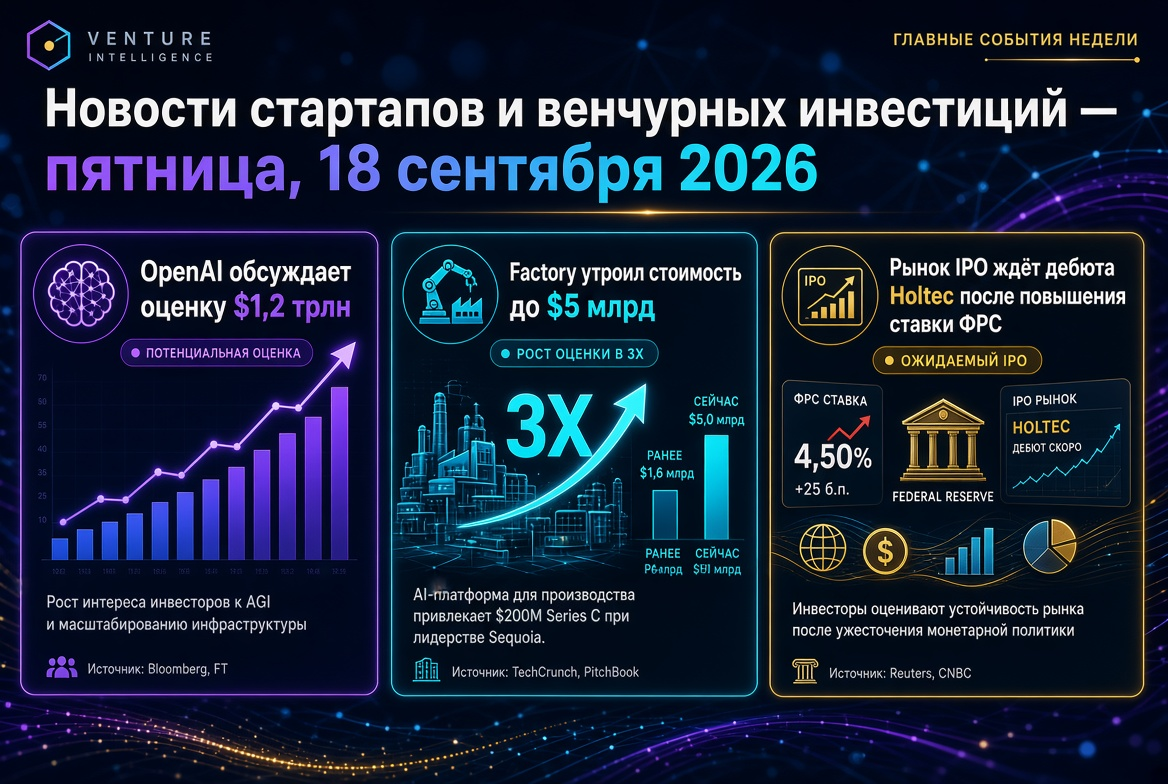
Fresh Updates on Startups and Venture Investment for Friday, 21 November 2025: The Return of Mega Funds, Major AI Rounds, Revitalised IPOs, a Wave of M&A, Growing Interest in Crypto Startups, and New Unicorns. A Detailed Overview for Venture Investors and Funds.
As we approach the end of November 2025, the global venture market is confidently recovering from the downturn experienced in recent years. According to industry analysts, the total volume of venture capital investment reached approximately $97 billion in the third quarter of 2025, marking a nearly 40% increase compared to the previous year, and representing the best quarter since 2021. The "venture winter" of 2022–2023 appears to be behind us, with a noticeable acceleration of private capital flow into technology startups. Large funding rounds and the launch of new mega funds signal a resurgence in investors' appetite for risk, although they continue to operate selectively and cautiously.
A rise in venture activity is evident across all regions. The United States continues to lead, particularly in the artificial intelligence sector, while investment volumes in the Middle East have doubled over the past year. For the first time, Germany has surpassed the UK in the number of deals in Europe, and growth in India and Southeast Asia offsets the slowdown in China. Tech hubs are also forming in Africa and Latin America; the startup ecosystems in Russia and the CIS countries are striving to keep pace despite external constraints. Overall, the global market is gaining momentum, though investors remain selective, primarily backing the most promising and resilient projects.
- The Return of Mega Funds and Large Investors. Leading venture players are raising record capital and reintroducing substantial investments to the market, rekindling risk appetite.
- Record AI Rounds and a New Generation of Unicorns. Mega funding rounds in the AI sector are driving up startup valuations and giving rise to a wave of new companies valued at over $1 billion.
- The Revival of the IPO Market. Successful public offerings by tech companies and new listing plans confirm that the long-awaited "window" for exits has reopened.
- Diversification of Sectors. Venture capital is flowing not only into AI but also into fintech, green technologies, biotech, defence projects and other sectors—investment focus is broadening.
- A Wave of Consolidation and M&A. Major mergers and acquisitions are reshaping the industry landscape, creating opportunities for lucrative exits and accelerated growth for companies.
- The Return of Interest in Crypto Startups. Following a prolonged "crypto winter," blockchain projects are once again attracting significant funding and investor attention.
- Local Focus: Russia and the CIS. New funds and initiatives for developing local startups are emerging in the region, capturing investor interest despite external constraints.
The Return of Mega Funds: Big Money Back on the Market
The largest investment funds and institutional players are returning to the venture arena, signalling a renewed appetite for risk. Following the decline in VC fundraising during 2022–2024, leading firms are resuming capital raising and launching mega funds, demonstrating confidence in market potential. For instance, the Japanese conglomerate SoftBank is forming its Vision Fund III with a target size of around $40 billion, while in the US, Andreessen Horowitz is raising a record fund of approximately $20 billion with a focus on late-stage investments in AI startups.
Sovereign wealth funds from Gulf countries are also becoming more active, pouring billions into technology projects and developing government megaprograms to support the startup sector—world-class tech hubs are being established in the Middle East. Simultaneously, many new venture funds are being created worldwide, attracting significant institutional capital for investments in high-tech sectors. Renowned firms from Silicon Valley have also accumulated a stockpile of "dry powder": in the US alone, funds have amassed hundreds of billions in uninvested capital ready to deploy as market confidence returns. The influx of this "big money" provides liquidity to the startup ecosystem, supporting the growth of valuations for promising companies. The return of mega funds and large investors not only heightens competition for the best deals but also instils confidence within the industry regarding continued capital inflow.
Record Investments in AI: A New Wave of Unicorns
The artificial intelligence sector serves as the primary driver of the current venture upturn, exhibiting unprecedented levels of funding. Approximately half of all venture investment in 2025 is directed towards AI startups, with global investments in AI expected to exceed $200 billion by year-end. Investors are keen to secure positions within this sector, channeling enormous funds into the most promising projects. For instance, California-based OpenAI has raised around $13 billion in total, while French startup Mistral AI has secured approximately €1.7 billion (around $2 billion)—both of these mega rounds have sharply increased company valuations and underscore the excitement surrounding AI startups.
This investment boom is giving rise to a new generation of unicorns—companies valued over $1 billion. Recently, the number of such startups has swiftly increased again. In October 2025 alone, around 20 new unicorns emerged globally, marking the highest monthly tally in the past three years. Despite expert warnings regarding potential market overheating, investor appetite for AI startups shows no signs of waning.
The IPO Market Comes Alive: Opportunities for Exits
Against the backdrop of rising valuations and capital inflow, technology companies are once again actively preparing to go public. Following a nearly two-year lull, a new wave of IPOs is emerging. In Asia, it was kickstarted by Hong Kong: several major tech companies have gone public in recent months, collectively raising billions in investments. For example, Chinese battery manufacturing giant CATL successfully launched its shares, raising around $5 billion, indicating that investors in the region are once again willing to participate actively in IPOs.
The situation is also improving in the US and Europe. American fintech unicorn Chime recently made its debut on the stock exchange, with its shares soaring approximately 30% on the first trading day. Shortly thereafter, design platform Figma completed its IPO, raising about $1.2 billion with a valuation of approximately $15–20 billion; its shares also rose steadily in the initial days. In the second half of 2025, several other notable startups, including payment service provider Stripe and several other highly-valued companies, are preparing to go public.
Even the crypto industry is striving to capitalise on this revival: for instance, fintech company Circle successfully completed its IPO in the summer (its shares then surged significantly), while cryptocurrency exchange Bullish has filed for listing in the US with a target valuation of around $4 billion. The return of activity in the public offerings market is crucial for the entire venture ecosystem: successful exits allow funds to realise profitable returns and reinvest freed-up capital into new projects, thereby further supporting industry growth.
Diversification of Sectors: Broader Investment Horizon
In 2025, venture investments are covering a much wider range of sectors and are no longer solely concentrated in artificial intelligence. Following last year's downturn, fintech shows a noticeable revival: significant funding rounds are taking place not only in the US but also in Europe and emerging markets, boosting the growth of promising financial services. Concurrently, interest in climate technologies and green energy is rising—these areas are attracting record investments amid the global trend towards sustainability.
Appetite for biotechnology is also returning: the emergence of new pharmaceuticals and medical online platforms is once again drawing capital as valuations in the sector recover. Additionally, amid increased attention to security, investors are more actively supporting defence technology projects. Thus, the focus of venture capital is expanding, making the entire startup ecosystem more resilient and reducing the risk of overheating in specific segments.
A Wave of Consolidation and M&A Deals
High startup valuations and fierce market competition have led to a new wave of mergers and acquisitions. Major tech corporations are reengaging in active deal-making, reshaping the power dynamics within the industry. For example, Google has agreed to acquire Israeli cybersecurity startup Wiz for approximately $32 billion—a record sum for the Israeli tech sector.
Such mega-deals demonstrate the tech giants’ desire to secure key technologies and talent. Overall, the current activity in the M&A sector and large venture deals indicates market maturation. Established startups are merging with one another or becoming acquisition targets for corporations, while venture investors are finally gaining opportunities for long-awaited profitable exits. This wave of consolidation accelerates company growth and rejuvenates the ecosystem by cleansing it of weaker players.
The Return of Interest in Crypto Startups
Following a prolonged "crypto winter," the market for blockchain startups is noticeably reviving. In autumn 2025, funding for crypto projects reached its peak levels in recent years. New major funding rounds are occurring in Web3 infrastructure and decentralized finance, as capital once again flows into promising blockchain platforms. The resurgence of interest has been further driven by the cryptocurrency market's growth: Bitcoin has surpassed the psychological threshold of $100,000, stimulating renewed enthusiasm from investors in the sector.
Venture funds, which were previously cautious about crypto assets, are resuming investments in projects that straddle technology and finance. New initiatives are also emerging: for instance, funds focused on crypto startups and incubators for Web3 projects are being launched. Although recent events have taught investors to be prudent (volatility and regulatory risks remain prevalent), they are gradually increasing their presence in the crypto sector, aiming not to miss out on the potential growth of new technological platforms.
The Local Market: Russia and the CIS
In Russia and neighbouring countries, several new venture funds have emerged over the past year, while government entities and corporations have launched programmes to support technology startups. Despite relatively modest overall investment volume and persisting barriers (high interest rates, sanctions, etc.), the most promising projects continue to attract funding. The gradual establishment of the venture infrastructure is already creating a basis for the future—when external conditions improve, global investors will be able to return to the region more actively.
Conclusion: Cautious Optimism
The prevailing sentiment in the venture capital industry is one of moderate optimism. The rapid growth in startup valuations (especially in the AI segment) partly resembles the dot-com boom era and raises concerns regarding potential market overheating. However, the current enthusiasm simultaneously channels immense resources and talents into new technologies, laying the groundwork for future innovative breakthroughs. By the end of 2025, it is clear that the startup market has revived: record funding volumes are being recorded, new IPOs are on the horizon, and funds have amassed unprecedented capital reserves.
At the same time, investors have become noticeably more discerning, preferring to invest primarily in projects with sustainable business models and real growth potential. The key question is whether the high expectations surrounding the AI boom will be met and if other sectors can match its attractiveness for capital. For now, the appetite for innovation remains strong, and the market looks to the future with cautious optimism.