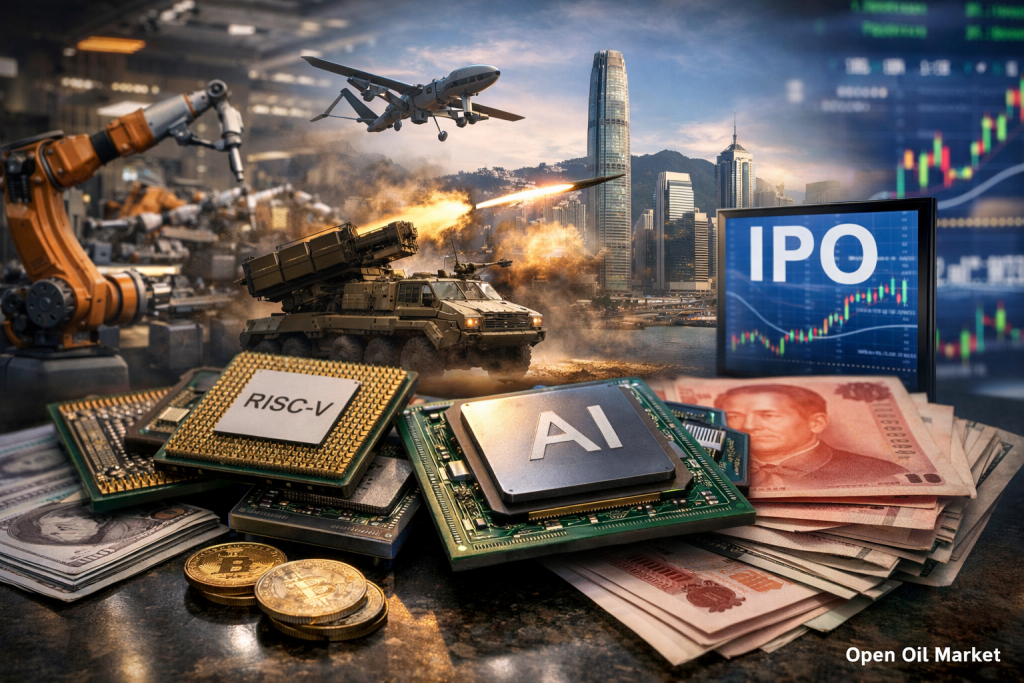
Latest Startup and Venture Capital News as of 14 April 2026: Growth in AI Infrastructure, Defence Tech, Fintech, and IPO Preparations
The global startup and venture capital market enters Tuesday, 14 April 2026, in a state of high capital concentration alongside increasing selectivity. Funds are available in the market, but they are increasingly being directed not towards "everything technology," but rather to niche segments where real demand, scalable infrastructure, and a clear path to liquidity are evident. Leading the charge are AI startups, chip makers, network infrastructure, defence technologies, and fintech platforms that are reducing costs in global transactions.
For venture investors and funds, this signals a new market configuration. It's no longer sufficient for a startup to simply show revenue growth; its position in the new technology stack has become critical: who controls computation, who owns data access, who creates infrastructure for artificial intelligence, and who can swiftly progress to an IPO or strategic sale. Today's agenda in global venture capital is shaping around these themes.
The Venture Market Kicked Off 2026 with Record Scale, But Capital is Concentrating Among a Few
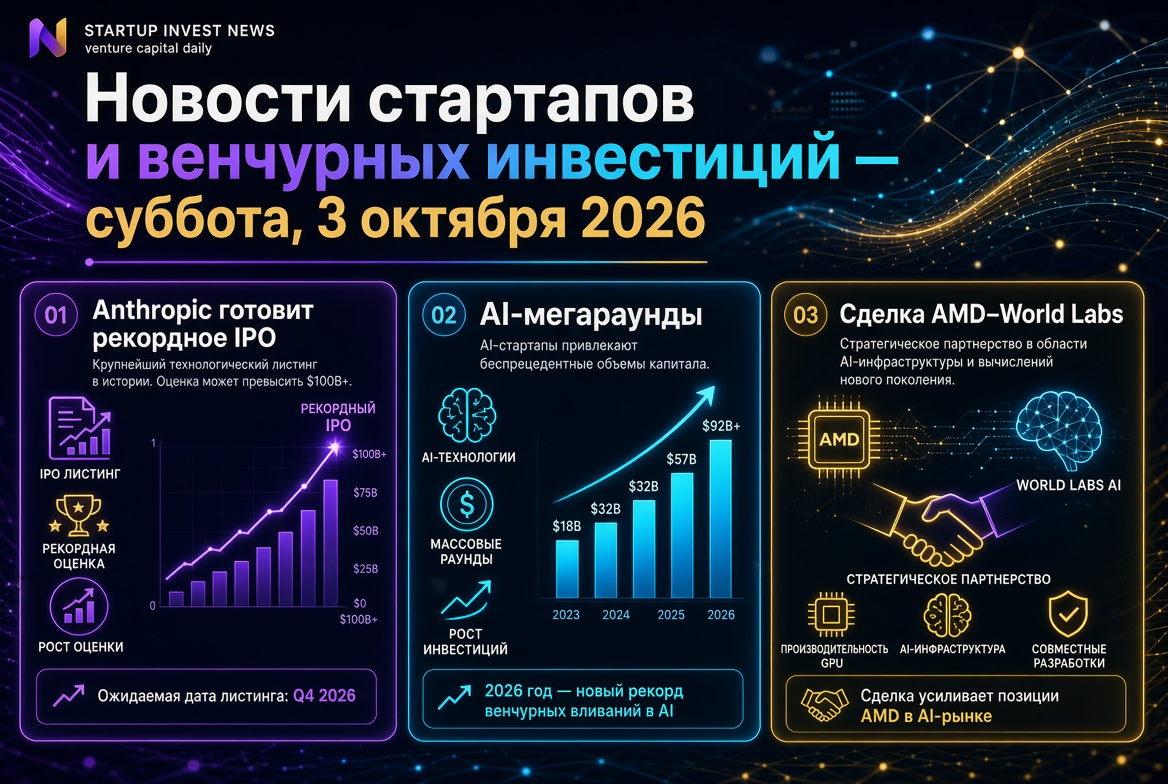
The first quarter of 2026 has been historic for global venture capital. The total amount of funding for startups has reached record levels, with a significant portion attributed to the largest late-stage deals. This is an important signal for the market: venture investments have accelerated again, yet the growth is uneven. Investors are more willing to pay lofty valuations for clear leaders than to distribute capital broadly.
- Capital concentration is intensifying. A few massive deals in AI accounted for a significant portion of the quarterly volume.
- The USA remains the centre of gravity. The North American market continues to dominate late-stage rounds and technology growth stages.
- Early-stage investing is alive but has become tougher. There is sufficient funding for seed and Series A rounds; however, investors are noticeably raising their quality requirements concerning teams, markets, and product velocity.
For funds, this signifies a straightforward conclusion: the startup market remains liquid primarily for those companies that have already proven their capacity to become the infrastructure for the next technology cycle.
AI Startups Have Evolved Beyond Model Development — Now Capital is Flowing into Infrastructure
The most significant topic as of 14 April is the shift from abstract interest in artificial intelligence towards concrete AI infrastructure. Venture investments are increasingly channelled into companies building the computational, networking, and semiconductor foundations of the new AI market.
Where Money is Concentrating Today
- Chip architectures and alternatives to traditional providers;
- Networking solutions for AI clusters and data centres;
- Computational infrastructure for scaling inference and training;
- Middleware between models and enterprise integration.
The deal with SiFive highlights this shift vividly. The company secured $400 million, betting on the server CPU market based on RISC-V. Concurrently, Aria Networks raised $125 million to develop networking infrastructure for artificial intelligence. In other words, the market is now financing not only those writing models but also those selling the "bricks and mortar" for the AI economy.
For investors, this is more valuable than mere hype. Infrastructure-focused AI startups fit better into long-term investment cycles, provide clearer strategic value, and are more often objects of interest for major technology corporations.
Physical AI and the Industrial Stack Are Becoming a Distinct Investment Class
Another notable trend is the rising interest in physical AI. This is no longer limited to software solutions, but encompasses companies at the intersection of artificial intelligence, robotics, industry, transportation, energy, and automation. The new $1.3 billion fund, Eclipse, targeting this segment, illustrates how venture capital is attempting to take a position in the real economy rather than solely in cloud services.
Why this is important now:
- Corporations want to see direct economic benefits from AI, not merely experiments;
- Industrial markets offer long contracts and more predictable revenue;
- Robotic systems, autonomous solutions, and "smart" manufacturing are better insulated against price erosion than many SaaS models.
Consequently, startups engaged in industrial AI, robotics, semiconductor design, and automation stacks are gaining strategic weight in fund portfolios. This direction is particularly appealing to investors seeking not just rapid valuation growth but also long-term platform value.
Defence Tech Has Become a Mainstream Element of Venture Capital
Defence technologies are now among the fastest-growing segments of the global startup market. The recent $2 billion round for Shield AI, with a valuation of $12.7 billion, and AEVEX's preparation for an IPO targeting up to $2.35 billion, indicate that defence tech is emerging from the niche and establishing itself as a bona fide growth class for major funds.
The investment thesis here is built around several factors:
- Accelerating military budgets and weaponry modernisation;
- Demand for autonomous systems, drones, and software-defined platforms;
- Willingness from public markets to pay for companies connected with drone economy and national security stacks.
For venture investors, this is no longer exotic but one of the few segments where a large addressable market, political support, and high barriers to entry are combined. Amid geopolitical turbulence, defence tech appears increasingly institutionalised as a direction for venture investments.
Asia is Regaining Momentum: China is Once Again Shaping a Significant Portion of the Global Agenda
After years of caution towards the Chinese startup market in 2024-2025, the situation is changing in spring 2026. Asia has demonstrated its best quarter in startup funding in over three years, with China re-emerging as one of the capitals of investment.
Three signals stand out:
- Increased fundraising for VC funds themselves. In China, new capital for venture funds reached record levels in just the first two months of the year.
- Strong AI rounds. ShengShu garnered approximately 2 billion yuan to develop its AGI direction.
- Resurgence of IPO focus. StepFun is restructuring its corporate structure in preparation for potential listings in Hong Kong, indicating renewed interest in exits via Asian exchanges.
For global funds, this signals that the Asian startup market can no longer be considered merely a source of risk. It is gradually returning as a source of growth, particularly in AI, semiconductors, and applied corporate technologies.
Fintech Remains Selective, But Capital is Flowing into Payment Infrastructure and Cross-Border Transactions
Fintech is not the main beneficiary of the current boom; however, the segment is far from weak. Capital is increasingly directed towards infrastructural solutions related to money movement rather than new consumer apps. The $94 million round for OpenFX exemplifies how venture investments are shifting towards platforms that reduce the cost and time of international transfers.
Special interest surrounds startups operating at the intersection of:
- stablecoin rails and enterprise payments;
- B2B cross-border settlements;
- financial infrastructure for payroll, neobanks, and treasury;
- regulator-friendly scaling models.
An additional note — Europe. London is solidifying its position as the largest global fintech hub, with the European market for funding approaching that of the United States. This elevates European fintech startups as a more significant part of global deal flow, particularly for funds seeking growth outside the overheated AI valuations in the US.
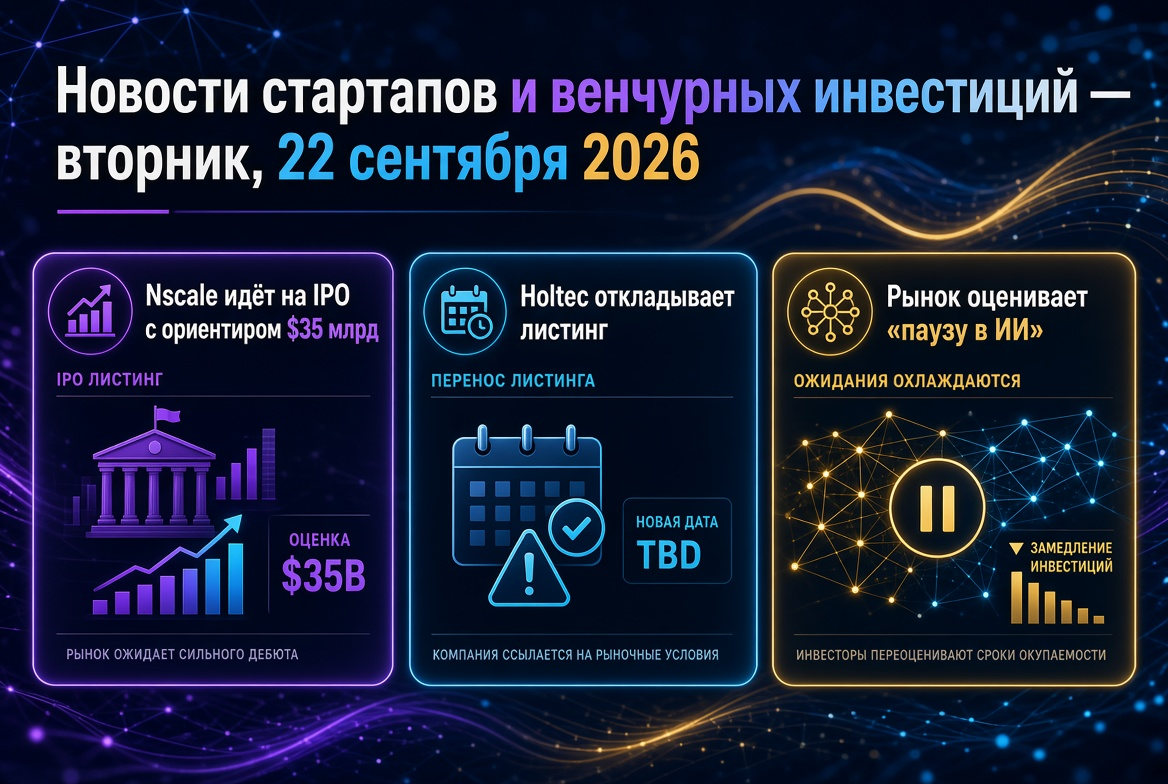
The IPO Window is Cracking Open, but the Exit Market Remains Selective
One of the primary concerns for any fund is not how to enter a deal but how to exit it. Here, the market is sending moderately positive signals. In the USA on 13 April, several issuers went on the roadshow, while private markets are increasingly preparing for new public offerings. This does not signify a complete opening of the IPO window but suggests that the market is gradually acclimatising to the new normal.
The key markers include:
- Investors are again willing to discuss placements of technology and biotech companies;
- Defence and infrastructure startups are receiving a higher likelihood of exit;
- The M&A market remains a vital liquidity channel and often appears more realistic than traditional IPOs.
Even the largest private AI companies are already thinking in terms of the public market. This is evident from their IPO preparations, newfound discipline in corporate governance, and attempts to test future demand. For funds, this signifies that in 2026, the quality of exit strategy is once again becoming a central factor in evaluating startups.
What This Means for Venture Investors and Funds on Tuesday, 14 April
In the upcoming session and next few weeks, investors should not only focus on eye-catching headlines but also on the market architecture. It is not simply "AI companies" that are succeeding but those building the layer without which AI cannot scale.
- Priority #1: AI infrastructure, semiconductors, networking, physical AI.
- Priority #2: Defence tech as a structural long-term bet.
- Priority #3: Fintech infrastructure and cross-border rails.
- Priority #4: Asia, especially China and Hong Kong, as a source of new deal flow and potential exits.
The key takeaway is simple: the startup market in 2026 has not widened but has grown more expensive and professional. Venture investments are flowing to areas where there is infrastructural value, high product complexity, and a clear path to scaling. For funds, this is not a market of passive participation but of precise selection in themes and platforms.
Conclusion: The main theme of the day is not merely the growth of AI but the transition of capital into the infrastructural layer of the new technological economy. It is around this that valuations, deals, future IPOs, and the best opportunities for global venture capital are currently forming.