Latest Venture Capital and Startup News for Sunday, 16 November 2025: The Return of Mega Funds, Record AI Rounds, Revival of IPOs, M&A Wave, Renewed Interest in Crypto Startups, and New Unicorns. A Detailed Review for Venture Investors and Funds.
By mid-November 2025, the global venture capital market is confidently continuing its recovery following the downturn of recent years. According to industry analysis, total venture investments reached approximately $97 billion in the third quarter of 2025 – nearly 40% higher than the previous year, marking the best quarter since 2021. The “venture winter” of 2022–2023 is behind us, and the influx of private capital into technology startups is noticeably accelerating. Large funding rounds and the launch of new mega funds signal a return of risk appetite among investors, although they remain selective and cautious in their approach.
This venture upswing is observed globally. The United States leads the way (particularly in the AI segment), while investment volumes in the Middle East have doubled. In Europe, Germany has surpassed the United Kingdom for the first time, and in Asia, growth in India and Southeast Asia compensates for declines in China. Tech hubs are emerging in Africa and Latin America, while the startup scenes in Russia and the CIS continue to evolve despite limitations. Overall, the global market is gaining strength, although investors continue to invest selectively – focusing on the most promising and resilient projects.
- The Return of Mega Funds and Major Investors. Leading venture players are raising record capital and flooding the market with investments, reigniting risk appetite.
- Record AI Rounds and New Unicorns. Mega funding rounds in the artificial intelligence sector are inflating startup valuations and birthing a new generation of unicorns.
- Revival of the IPO Market. Successful public offerings by tech companies and new listing plans confirm that the long-awaited “window” for exits has reopened.
- Diversification of Sectors. Venture capital is flowing not just into AI but also into fintech, green technologies, biotech, and other sectors – the investment focus is expanding.
- A Wave of Consolidation and M&A. Major mergers and acquisitions are reshaping the industry landscape, creating opportunities for profitable exits and accelerated growth for companies.
- Renewed Interest in Crypto Startups. Following the crypto winter, blockchain projects are once again receiving substantial funding and investor attention.
- Local Focus. New funds and initiatives are emerging in Russia and the CIS to support local startups, attracting investor interest despite prevailing constraints.
The Return of Mega Funds: Big Money Back in the Market
The largest investment funds and institutional players are confidently returning to the venture arena, signalling a new surge in risk appetite. Following a decline in VC fundraising from 2022 to 2024, leading firms are resuming capital-raising efforts and launching mega funds, demonstrating faith in the market's potential. For instance, Japanese conglomerate SoftBank is launching a new Vision Fund III with a target of approximately $40 billion. In the U.S., Andreessen Horowitz is raising a record fund of about $20 billion, focusing on late-stage AI startups.
Sovereign funds from the Middle East are also becoming active, pouring billions into high-tech projects. Concurrently, dozens of new funds are emerging across all regions, attracting significant institutional capital for investments in technology companies. The return of such “mega structures” means that startups will have more opportunities to secure funding, while investor competition for the best projects intensifies.
Record Investments in AI: A New Wave of Unicorns
The artificial intelligence sector is the main driver of the current venture boom, exhibiting record levels of funding. Around half of all venture investments in 2025 are directed towards AI startups, with total global investments in AI expected to exceed $200 billion by the end of the year – an unprecedented level for the industry. This excitement is driven by the promise of AI technologies to significantly increase efficiency across various sectors and unlock multi-trillion-dollar markets – from manufacturing automation to personal digital assistants. Despite warnings of market overheating, funds continue to ramp up investments, wary of missing the next technological revolution.
The massive capital influx is leading to a concentration of resources among industry leaders: a large share of investments is going to a few market frontrunners. For example, French startup Mistral AI raised around $2 billion, while OpenAI secured $13 billion; both mega rounds significantly increased their respective valuations. Such deals inflate startup values but also funnel resources towards the most promising directions, creating a foundation for future breakthroughs. In recent weeks, several startups announced large funding rounds – a testament to this trend: UK-based Synthesia secured $200 million (valuation of approximately $4 billion) to develop its AI video generation platform, while U.S. firm Armis raised $435 million in a pre-IPO round (valuation of $6.1 billion) to expand its IoT cybersecurity platform.
Revival of the IPO Market and Exit Prospects
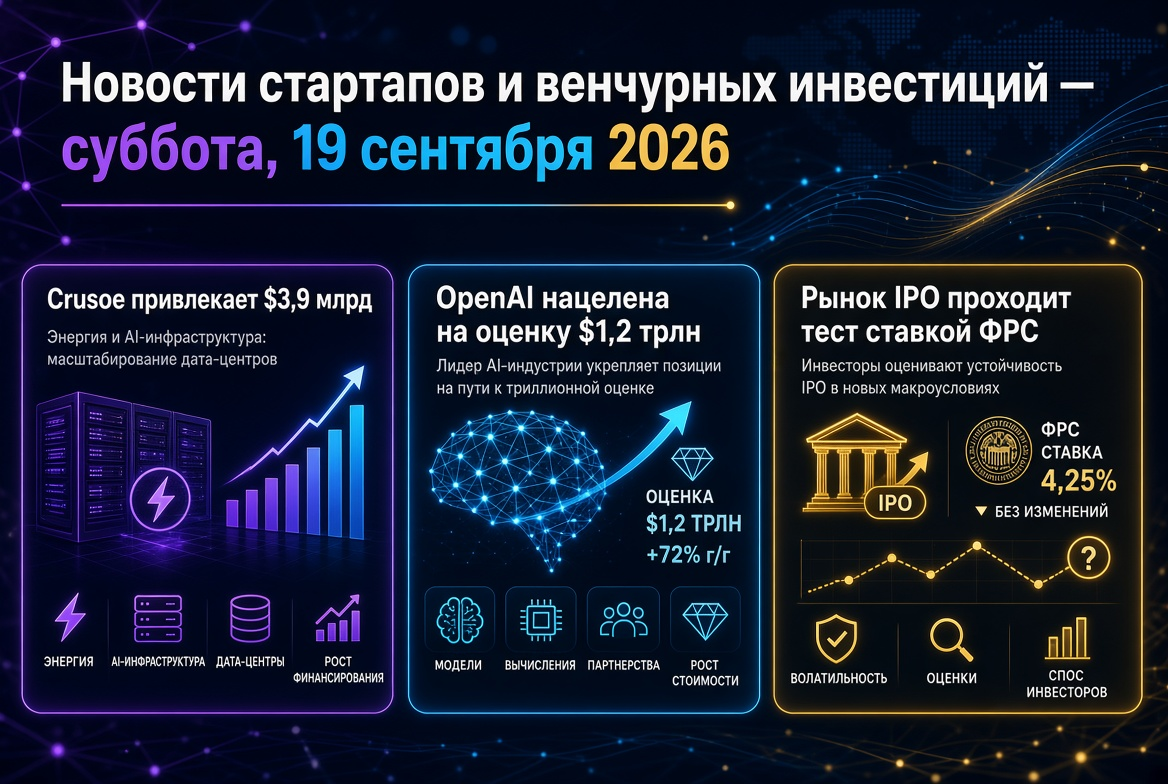
Against the backdrop of rising valuations and capital influx, tech companies are once again preparing to go public. Following nearly two years of dormancy, there has been a surge in IPOs as the primary exit mechanism for venture funds. Several successful public offerings have confirmed the reopening of a “window” of opportunities. For example, American fintech unicorn Circle conducted an IPO with an estimated valuation of around $7 billion – this debut has restored investor confidence in the market's appetite for new tech issuers. Following suit, several large private companies are eager to take advantage of the favourable situation. OpenAI is considering its own IPO in 2026 with a potential valuation of up to $1 trillion, which would be unprecedented for the sector.
Improved market conditions and clearer regulations (such as the passage of stablecoin legislation and the anticipated approval of Bitcoin Exchange Traded Funds) instil confidence in startups: the public market has once again become a viable option for capital raising and exits for investors. The return of successful IPOs is crucial for the venture ecosystem, as profitable exits allow funds to recoup capital and redirect it into new projects, completing the investment cycle.
Diversification of Sectors: Broadening the Investment Horizon
In 2025, venture investments are covering a significantly broader array of sectors, no longer limited to artificial intelligence alone. Following last year's downturn, fintech is bouncing back: large rounds are taking place not only in the U.S. but also in Europe and emerging markets, driving growth in new financial services. Simultaneously, on the wave of sustainability, investors are actively funding climate-focused and green projects. Space and defence technologies are also gaining traction, with funds increasingly investing in aerospace projects, unmanned systems, and cybersecurity. Therefore, the investment focus is expanding: in addition to AI innovations, venture capital is flowing into fintech, green startups, biotech/medtech, defence projects, and other areas. This diversification makes the startup ecosystem more resilient and reduces the risk of overheating a single segment.
A Wave of Consolidation and M&A Transactions
High valuations and competition have led to a new wave of mergers and acquisitions. For instance, Google is acquiring Israeli startup Wiz for approximately $32 billion. This M&A activity indicates that the ecosystem has matured: established startups are merging or being acquired by corporations, while venture funds get opportunities for profitable exits and capital returns.
Renewed Interest in Crypto Startups
Following an extended “crypto winter”, the market for blockchain startups is noticeably reviving. In autumn 2025, funding for crypto projects reached its highest levels in recent years: regulators clarified the environment (stablecoin legislation, ETF prospects), and financial giants have returned, leading to an influx of capital. Crypto startups, having undergone a cleansing of speculative projects, are gradually restoring trust and once again attracting the attention of venture and corporate investors.
Local Market: Russia and the CIS
In Russia and neighbouring countries, several new venture funds have emerged over the past year, with state entities and corporations launching programmes to support technology startups. Despite the relatively modest total investment volume and prevailing barriers (high interest rates, sanctions, etc.), the most promising projects continue to attract funding. The gradual formation of a local venture infrastructure is creating a foundation for the future — by the time external conditions improve and global investors are able to re-enter the region more actively.
Conclusion: Cautious Optimism
A moderately optimistic sentiment prevails in the venture capital industry. The rapid rise in valuations (especially within the AI segment) recalls the dot-com boom and raises concerns of overheating; however, this current excitement is directing vast resources and talent towards new technologies, laying the groundwork for future innovative breakthroughs. By the end of 2025, the startup market has clearly revived: record funding volumes are being recorded, new IPOs are on the horizon, and funds have accumulated record amounts of capital. At the same time, investors have become more discerning, primarily investing in the most promising projects with sustainable business models.
The key question remains: will the high expectations for the AI boom be fulfilled, and can other sectors catch up in attractiveness? As long as the appetite for innovation remains strong, the market looks forward to the future with cautious optimism.