Oil Market: The Geopolitical Premium Rapidly Deflates
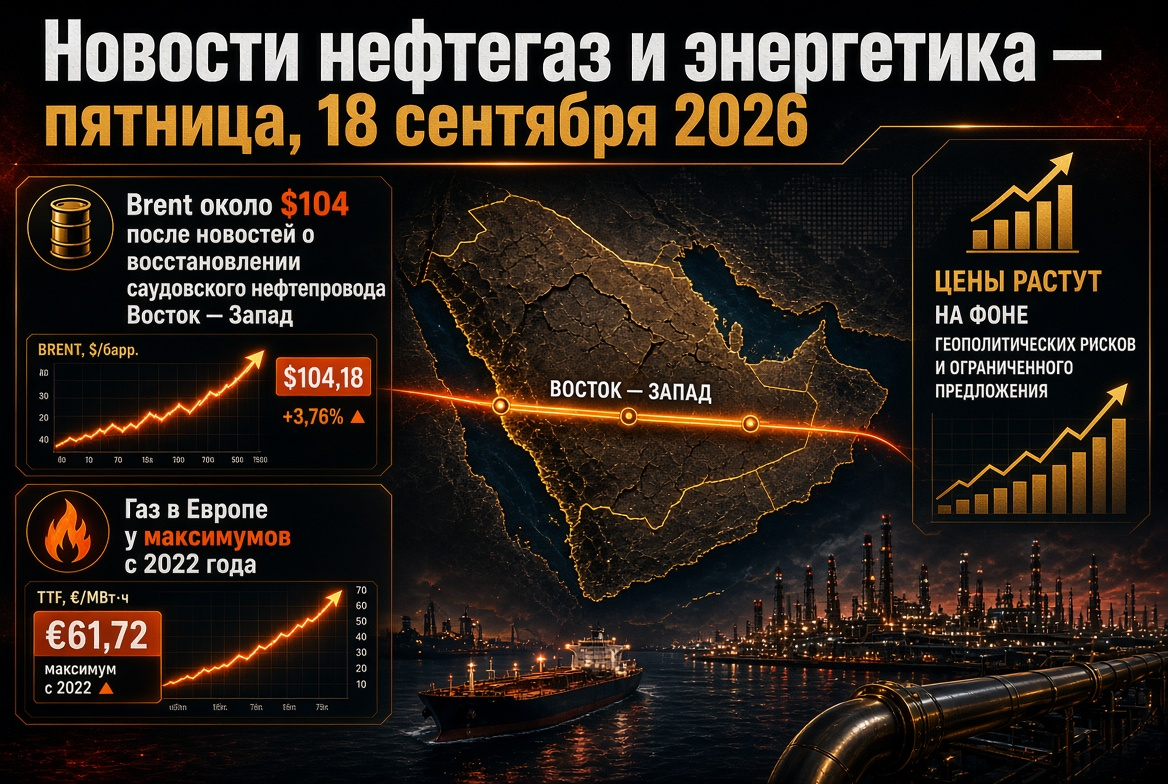
Oil prices are currently undergoing a swift reassessment of risks. Following reports that Washington has backed away from launching new strikes on Iranian targets and both sides agreed to halt their exchanges of fire, the market began aggressively pricing in a scenario of normalised shipping in the Persian Gulf. October futures for Brent, which were trading near $90 per barrel not long ago, plummeted more than $6 on Monday, stabilising around $85 by Tuesday morning. American WTI is holding steady near $81 per barrel.
Key factors influencing the oil market this week include:
- De-escalation in the Middle East: The prospect of reopening the Strait of Hormuz means a return to the market of significant volumes of Middle Eastern oil, thereby easing the risk premium that has kept prices above $90 for months.
- Surplus forecasts: Analysts anticipate a notable oversupply in 2026 — US production remains at record levels, Brazil achieved an all-time high in production in June, and the easing of sanctions on Iran adds extra barrels to the market.
- Weak demand: The recovery in consumption in Asia is slower than expected, while high prices during the first half of the year have driven energy-saving measures and a switch to alternative sources.
For traders and oil companies, this indicates high volatility: any disruption in the negotiation process could send prices back to $90, while confirmed reopening of the strait may lead to further corrections.
OPEC+ Concludes its Production Boost Cycle
The OPEC+ alliance, which will operate as a "Group of Seven" (Saudi Arabia, Russia, Iraq, Kuwait, Kazakhstan, Algeria, and Oman) after the UAE's exit on May 1, 2026, has agreed on a final quota increase. The main parameters of the decision are:
- From September, total production will increase by an additional 188,000 barrels per day — the same increment as in June, July, and August.
- This step concludes the process of reversing voluntary output cuts of 1.65 million barrels per day introduced in 2023; from February to August, quotas had already risen by approximately 940,000 b/d.
- After September, the alliance will take a pause: complex negotiations regarding baseline production levels for 2027 are anticipated, assessing the actual production capacities of each participant.
At the same time, OPEC+ has warned of threats to energy supply due to attacks on infrastructure, confirming its readiness to slow down or retract increases if the market balance deteriorates. The coincidence of the final quota increase with the potential reopening of the Strait of Hormuz heightens bearish risks for oil prices in the second half of the year.
The Strait of Hormuz: The First Phase of a Major US-Iran Deal
The US President has stated that Washington and Tehran are discussing the full restoration of shipping through the Strait of Hormuz in the coming days, calling it the first phase of negotiations that will be followed by discussions of Iran's nuclear programme. Iran, for its part, officially denies any direct contacts with the US side, emphasising that consultations are only being held with Oman regarding a temporary secure route and management mechanisms for the strait. The issue of vessel transit fees remains contentious: Tehran insists on its control over the artery, while the US declares it will not allow tolls to be collected.
Under normal conditions, approximately one-fifth of global oil supplies pass through the Strait of Hormuz, along with a significant portion of Qatari LNG. Thus, the outcome of the negotiations will determine the trajectory of both oil and gas prices until the end of the year. The market is pricing in an optimistic scenario; however, the experiences of recent months — marked by the fallout of a ceasefire in July — remind us of the fragility of any agreements.
Europe's Gas Market: Low Stocks and High Prices
The European gas market is in noticeably worse shape than it was a year ago. September futures at the TTF hub are trading around $696 per thousand cubic metres, which is almost one and a half times higher than last year's levels. The filling of European gas storage facilities stood at only about 57% by early August, compared to more than 85% a year earlier, with market participants increasingly discussing the risk of not achieving target storage levels before the heating season begins.
The causes of tension in the EU gas market include:
- a shortage of Middle Eastern LNG supplies due to the blockage of the Strait of Hormuz;
- intense price competition with Asian buyers for available liquefied gas cargoes;
- the phased withdrawal of the EU from Russian gas: restrictions on spot LNG have been in place since April 2026, with bans on short-term pipeline contracts effective since mid-June.
LNG: Imports to Europe Hit Two-Year Low
In July, LNG deliveries from terminals into Europe's gas transmission system amounted to approximately 8.4 billion cubic metres — a decrease of 17% compared to June and 26% lower than in July of the previous year. This marks the lowest monthly volume in almost two years. From January to July, approximately 81.1 billion cubic metres were delivered to the network, which is 2.5% below the 2025 level. Terminals are operating at reduced capacity, and some contracted volumes are being redirected to premium Asian markets. The potential reopening of the Strait of Hormuz and the return of Qatari volumes could change the situation; however, the effect is unlikely to be felt before autumn — during peak gas storage loading operations.
Electricity and RES: Renewable Generation Surpasses Coal
Against the backdrop of gas shortages, the global energy transition is accelerating. According to the International Energy Agency, renewable energy sources are expected to surpass coal in terms of global electricity production for the first time in 2026. Electricity generation from RES will increase by more than 8%, and their share in the global energy balance will rise from 33% to 37% by 2027. Solar energy remains a key driver: an additional 600 TWh of production annually is anticipated, propelling solar to second place among renewable sources after hydroelectric power. The LNG supply crisis and high gas prices further enhance the investment appeal of solar power plants and energy storage systems, reducing importers' reliance on volatile fuel markets.
Coal: A Temporary Support Amid High Gas Prices
The coal sector is crossing a symbolic threshold — while conceding its primacy in global generation to RES, it remains critically important for energy security in Asia. High prices for gas and LNG support demand for thermal coal in China, India, and Southeast Asia, where coal-fired power plants cover peak summer loads. For exporters such as Indonesia, Australia, Russia, and South Africa, this signals steady sales, although the medium-term trend is clear: the share of coal in the global energy balance will diminish as new RES capacities and storage systems come online.
The Russian Fuel Market: Gasoline Export Ban Extended to 2027
The domestic market for petroleum products in Russia remains in a state of acute imbalance. The government has extended the complete ban on the export of automotive gasoline until January 31, 2027 — this measure applies to both producers and traders. The situation in the regions remains complex:
- in several areas, queues at gas stations, fuel dispensing limits, and local shortages of AI-95 are being reported;
- retail prices in certain regions have exceeded 100 roubles per litre;
- oil refining has dropped to minimal levels in several years due to unscheduled shutdowns of refineries damaged by drone attacks;
- the deficit is partially being compensated by supplies from Belarus, as well as purchases from India and Kazakhstan;
- the expansion of export restrictions on diesel fuel is under discussion, and the Federal Antimonopoly Service has intensified its checks on oil traders.
Experts do not expect a rapid decline in prices: the extension of the embargo is more likely to reduce volatility in wholesale quotes, while a noticeable improvement in the balance may not occur until at least the fourth quarter — assuming the recovery of refining capacities.
What This Means for Investors: Key Milestones of the Week
Wednesday, August 5, 2026, is set to become a pivotal day for the commodities and energy sectors. Investors and energy market participants should focus on:
- the progress of negotiations between the US and Iran and official announcements regarding the status of the Strait of Hormuz — the main driver for Brent and WTI;
- the gas market's reaction: the dynamics of TTF quotes and the pace of gas injections into European storage facilities;
- signals from OPEC+ regarding parameters for the 2027 deal following the final September quota increase;
- developments in the fuel crisis in Russia and potential new regulatory measures;
- corporate reports from major oil and gas companies that confirm the sector's resilience to price volatility.
The baseline scenario suggests that, with de-escalation confirmed, Brent may drift towards $80 per barrel amid rising supply, while the European gas market will remain expensive until at least the return of Middle Eastern LNG volumes. For long-term investors, the key structural trend remains the acceleration of the energy transition: 2026 will be remembered as the year renewable energy first surpassed coal in global electricity production.