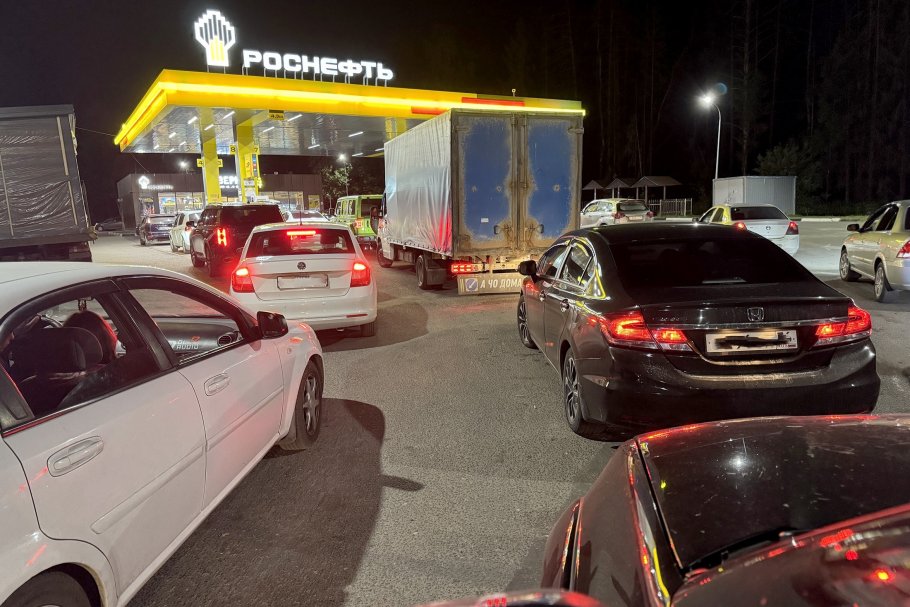
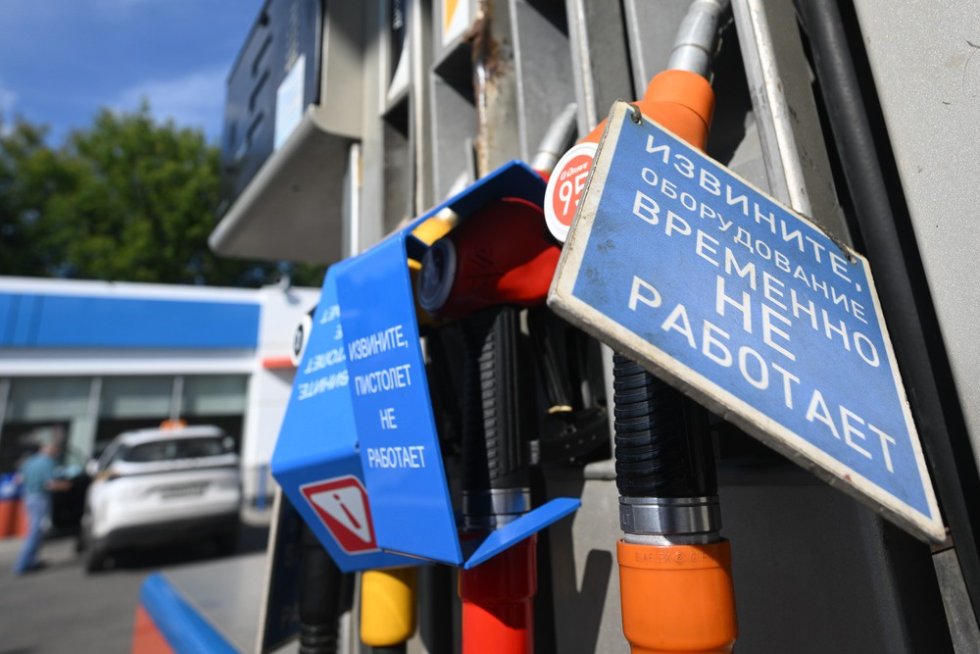
As for whether the decline in trading has affected wholesale or retail prices for AI-95, it is too early to say. The petrol is becoming more expensive on the exchange and at filling stations, albeit moderately. According to Rosstat, the growth in retail prices for AI-95 is even slightly lower than that of AI-92—3.7% compared to 3.8%. Both figures exceed the inflation rate since the beginning of the year (3.19% as of May 4). Exchange quotations are rising, nearing the year's highs, but still far from the historical records set last autumn. However, the peak season for demand has only just begun. Last year, prices on the exchange and at filling stations surged from the start of summer, which is still a fortnight away.
The decline in exchange sales of AI-95 petrol amounts to twenty percent.The Ministry of Energy is confident that the domestic market is currently well supplied with light petroleum products (petrol, diesel, jet fuel), and the logistics of supply are functioning steadily with no reported disruptions in regional supply. Fuel reserves are at sufficient levels and will be deployed if necessary to smooth out demand and supply fluctuations. The industry is prepared to manage the seasonal increase in demand in an orderly manner, the department emphasizes.
In Russia, AI-92 petrol is traditionally considered to be socially significant. However, over the past two to three years, there has been a growing consensus within the industry and expert community that AI-95 has significantly encroached upon the cheaper AI-92, particularly in urban areas. Notably, due to the growth of domestic tourism, during holiday seasons, the demand for AI-95 sometimes even surpasses that for AI-92.
Given this context, if the supply of AI-95 petrol on the exchange has decreased due to declining production, prices are likely to begin rising first in the wholesale sector, followed by retail. Conversely, if weak demand is the culprit, prices both wholesale and at filling stations may stagnate or even diminish. In such a scenario, this would be a concerning signal for both the domestic oil refining sector and the economy as a whole. There is also a potential third scenario wherein AI-95 petrol is sold in bulk through direct contracts, bypassing the exchange altogether.
In Russia, regulations dictate that producers must sell 15% of their production volume for petrol and 16% for diesel on the exchange, and these quotas are being met, as noted in a conversation with "RG" by Dmitry Gusev, Deputy Chairman of the Supervisory Board of the "Reliable Partner" Association and a member of the Expert Council for the "Russian Filling Stations" contest. Therefore, asserting a decline in volumes may be inappropriate. It is quite possible that sales have shifted to direct contracts through small wholesale networks outside the exchange. This is a valid and normal sales channel; the exchange is not the only conduit for petroleum products to the domestic market, but it serves as an indicator of market activity.
Indeed, this raises the question of pricing. In Russia, the market has become accustomed to relying on the exchange. However, if the scenario unfolds as the expert suggests, it may cease to be a genuine indicator of market conditions.
At present, it is premature to speak of a decline in demand. However, with production statistics kept private, we can only speculate on whether fuel production has suddenly decreased. An expert postulates that the issue could stem from a shortage of certain additives or their high costs (which are used in the production of AI-95 petrol).
Alternatively, demand might genuinely be falling. According to Sergey Frolov, Managing Partner at NEFT Research, the reasons for decreased demand include an economic downturn, the extended May holidays (with many opting for time off from May 1 to 17), and reduced supply amid ongoing unplanned repairs at oil refineries.
Yet, oil refineries suffered from unplanned outages last year as well, and this year's holidays were shorter. Thus, it is more likely that there is a decline in demand from automotive tourism enthusiasts.
However, Frolov believes that the situation hinges on the number and duration of unplanned refinery shutdowns. The market dynamics depend not on demand but rather on supply. For AI-95 petrol, increasing output from refineries and blending it with various high-octane components can raise supply levels. Conditions for this are already established by regulators. Furthermore, imports are likely to increase from abroad (potentially from Belarus, Kazakhstan, and China).
In addition, as highlighted by Sergey Tereshkin, General Director of Open Oil Market, AI-95 petrol is not accounted for in subsidy calculations for oil producers from the budget. Therefore, exchange quotations for AI-95 experience greater volatility than prices for AI-92 and diesel. Regulators may mitigate these risks through export restrictions; however, bans on fuel exports have now become commonplace in the Russian fuel market.
The risks of rising prices could become more pronounced after July, according to experts. In May and June, oil producers will likely attempt to hold fuel prices in check amid anticipated agreements with regulators.
Frolov posits that retail prices will remain constrained within the range of "inflation plus 2%" (reflecting excise duty increases at the start of the year).
Gusev urges a broader view of the situation, reminding us that the fuel market encompasses more than just petrol and diesel. Liquefied petroleum gases (LPG) are priced based on market dynamics, unlike petrol. In fact, wholesale and retail prices for petrol and diesel are regulated by the state. At filling stations, prices are targeted according to the inflation rate, while on the exchange, price increases above 0.01% are prohibited. The implications of this for investment in oil refining remain unclear, but we may learn more in a few years, the expert asserts.
Source: RG.RU