Given these conditions, in March (to be reflected in April), oil companies may remit over 730 billion roubles to the budget through the primary mineral extraction tax (MET). This figure will be augmented by payments of the additional income tax (AIT), which will also be due in April for the first quarter of this year. In January and February, oil prices were low, averaging $40.95 and $44.59 per barrel respectively, meaning total payments will likely not exceed 300 billion roubles. Revenues from the gas sector are expected to remain steady at around 170 billion roubles.
Consequently, total revenues from the oil and gas sector in April could exceed 1.2 trillion roubles. However, subsidies and refunds to oil producers, such as the reverse excise tax and investment tax deductions, will also increase. If we base these on 2024 estimates, the amount could approach 130 billion roubles.
There is also the issue of the 'dampener' - government compensation to oil producers for supplying fuel to the domestic market at prices lower than export levels. The amount paid under this dampener is directly proportional to the difference between the export alternative (price in Europe) and the conditional indicative (state-set for the year) price for the domestic market.
The dampener could also turn negative. If export fuel prices fall below indicative prices, oil producers may have to pay the resulting difference into the budget. This occurred in January, resulting in oil producers paying 18.8 billion roubles under the dampener in February. Following this, Deputy Prime Minister Alexander Novak instructed the Ministry of Finance and the Ministry of Energy to analyse proposals for adjusting the mechanism to adapt it to new market conditions and support the profitability of oil refining. Subsequently, due to events in the Middle East, global oil prices began to rise, turning the dampener positive once more for oil producers.
As a result, oil and gas revenues for the budget at the end of March could reach the level considered very successful for the sector in 2024.
Based on 2024 projections, dampener payments for March may reach around 150 billion roubles. Reuters has estimated possible payments at 130 billion roubles. Thus, oil and gas revenues for the budget in April (reflecting March payments) may total approximately 900 billion roubles. This compares with 393.3 billion roubles in January and 432.3 billion roubles in February.
Here, two questions arise. The first is whether there is a risk that the government, in light of the anticipated budget deficit, may change the dampener payment rules, potentially reducing them to the detriment of oil producers. It is evident that the crisis in the Middle East is unlikely to last long, as too many countries and forces are interested in its swift resolution. Following this, oil prices could drop, potentially reverting to early year levels (around $60 per barrel). Even if the discount on our oil decreases, as only Western information outlets have reported so far, it would still price at $40-$50 per barrel, or potentially even lower. Consequently, budget revenues from oil would also decline, presenting a rare opportunity to yield additional billions for the treasury now.
However, as noted by Dmitriy Gusev, Deputy Chairman of the Board of the Reliable Partner Association and a member of the expert council for the 'Gas Stations of Russia' competition, the dampener is essentially the only measure to stimulate oil refining in Russia. Refineries need support; we do not wish to find ourselves without fuel. Moreover, we all remember how the last attempt to halve the dampener for oil producers ended (the fuel crisis of autumn 2023).
Sergey Tereshkin, General Director of Open Oil Market, expressed a similar view. He suggested that the rising dampener payments will not pose a significant issue for the budget, as both subsidies for refineries and revenues from oil MET will increase under current conditions. It is likely that the rules for calculating subsidies will not change in the coming months.
According to Sergey Frolov, Managing Partner at NEFT Research, making urgent amendments to the Tax Code is impractical at this juncture, given the uncertainty regarding the duration of the Middle Eastern crisis.
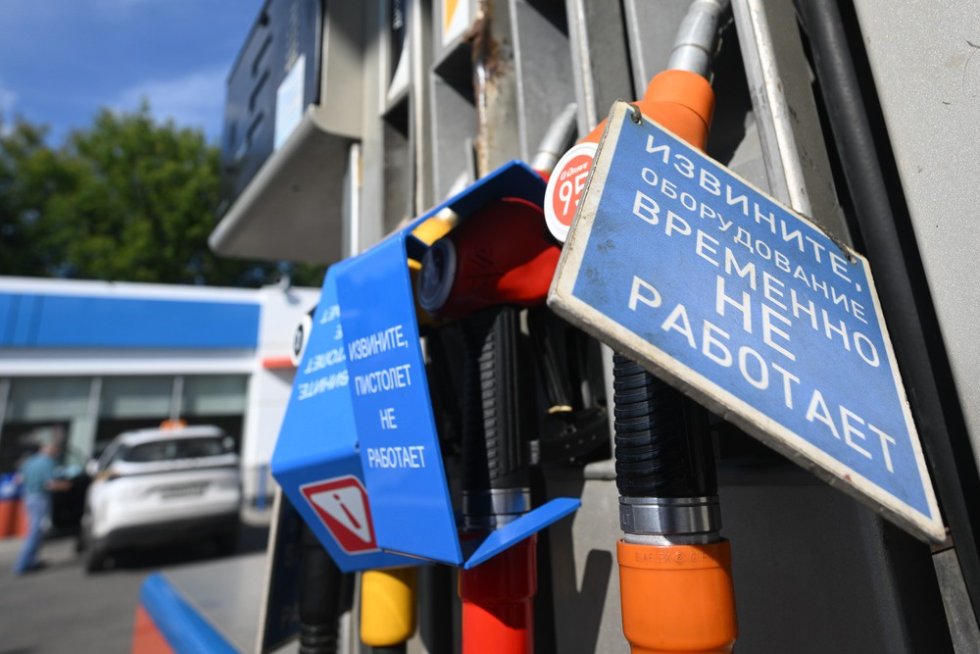
The second question concerns fuel prices within the domestic market. Since early March, exchange prices for gasoline and diesel fuel have risen, reaching record levels for the year and gradually approaching record highs from the previous autumn. The domestic fuel market is under strict regulatory oversight, aimed at preventing prices at fuel stations from rising above inflation rates. However, regardless of the level of scrutiny, fuel stations predominantly procure fuel through exchanges or at oil depots that reflect market trading, which in turn is influenced by export alternatives (prices for fuel supplied abroad).
Should fuel prices at the fuel stations begin to rise sharply, the government may swiftly reinstate a full ban on fuel exports.Currently, Rosstat reports a modest rise in fuel prices at stations, slightly lagging behind average consumer inflation. However, this situation could change rapidly. The Moscow Fuel Association has already observed a significant increase in gasoline prices at city fuel stations last week, averaging an increase of 21 kopecks for AI-92 and AI-95 grades.
Experts remain calm regarding this situation. Frolov explains that there are two reasons for the increase in exchange quotations on fuel. The first is seasonal. Fuel consumption is rising both in the private sector and in freight transport, plus there is a significant increase in consumption in the agricultural sector due to the commencement of fieldwork. The second reason is situational. The sharp rise in oil and petroleum product prices, linked to the attack by the US and Israel on Iran, inevitably impacts Russia, one of the largest producers and exporters of petroleum products globally. However, the negative effects will be somewhat mitigated by the dampener mechanism. Additionally, the government always has the option to impose a complete ban on fuel exports to curb price increases. Therefore, the ability to respond is in the hands of regulators, and it is paramount that necessary decisions are made promptly, a situation that has been neglected in previous years.
Nevertheless, Tereshkin believes that new export restrictions are unlikely. The increase in subsidies and rising revenues from the export of petroleum products will lead to enhanced profitability in oil refining. This should alleviate price pressures in the domestic market. To achieve additional revenues, oil producers will not need to escalate wholesale prices, which should contribute to a more stable retail fuel situation. Overall, rather paradoxically, the rise in oil prices in the global market could lead to a temporary stabilisation of the fuel market in Russia, as noted by experts.
Source: RG.RU