Petrol and diesel price growth limited: what does this mean for filling station prices?
06/18/2026
1605
The daily increase in gasoline and diesel fuel (DT) prices on the Russian exchange is capped at 0.01%. Price adjustments are permitted to decline by 3% per day. These regulations have been implemented on the St. Petersburg exchange.
In practical terms, this means that prices on the exchange are effectively frozen, at least in terms of increases. However, they have risen significantly since the beginning of the year: AI-92 gasoline by 25%, AI-95 by 33%, and DT by 34%. This peculiar price ceiling prevents sharp fluctuations due to news about attacks on Russian oil refineries (NPZ) or soaring global oil prices amid the Middle Eastern crisis. With such an incremental growth limit, exchange quotes can rise by no more than approximately 0.2% over the course of a month. For bulk fuel buyers—large agricultural, transport, and construction companies—this means they no longer need to fear unpredictable cost increases due to fuel price hikes. For petrol stations (AZS), it suggests the filling station economy will not deteriorate day to day or week to week. Such concerns have often led to inflated prices at AZS or, at times, even to a halt in their operations. However, the above considerations primarily apply to bulk fuel buyers on the exchange, whereas a significant portion of fuel is sold on our market bypassing the exchange.
As noted in an interview with "RG" by Yuri Stankevich, Deputy Chairman of the State Duma's Committee on Energy, the decision was made as an emergency measure in response to a sharp spike in exchange prices. The main goal is to artificially limit speculative price increases during trading sessions and to cool down the overheated market. However, it is important to understand that this measure applies solely within the framework of organised exchange trading. It does not directly extend to over-the-counter contracts and the small wholesale segment. In these sectors, pricing is determined by the balance of supply and demand, as well as long-term contracts between suppliers and buyers. Although the exchange indicator serves as a benchmark for the market, limiting growth on the exchange does not automatically guarantee an end to rising fuel prices in the over-the-counter segment or among small wholesalers. Nevertheless, the stabilisation of exchange prices may exert psychological pressure on participants in other market segments and slow down inflationary expectations there.
According to Dmitry Gusev, Deputy Chairman of the Supervisory Board of the "Reliable Partner" Association and a member of the Expert Council of the "AZS Russia" competition, growth has not been frozen; it has merely been suspended to prevent wholesale prices from surging while maintaining the economy at AZS and among small wholesalers. The measure will impact over-the-counter contracts, as they are oriented towards exchange quotes. The influence on small wholesalers will be less significant, as this market segment currently does not face any restrictions. However, the expert believes such measures may eventually be required.
A different perspective on the issue comes from Sergey Tereshkin, CEO of Open Oil Market, who believes that the market will always find a loophole. According to existing regulations, the exchange accounts for only 15% of physical gasoline sales by producers and 16% for DT. Over 80% of produced fuel is sold through other channels. Most importantly, this measure is unlikely to benefit fuel retail, as prices for AI-92, AI-95, and DT in the over-the-counter segment are close to the mark of 110,000 rubles per tonne.
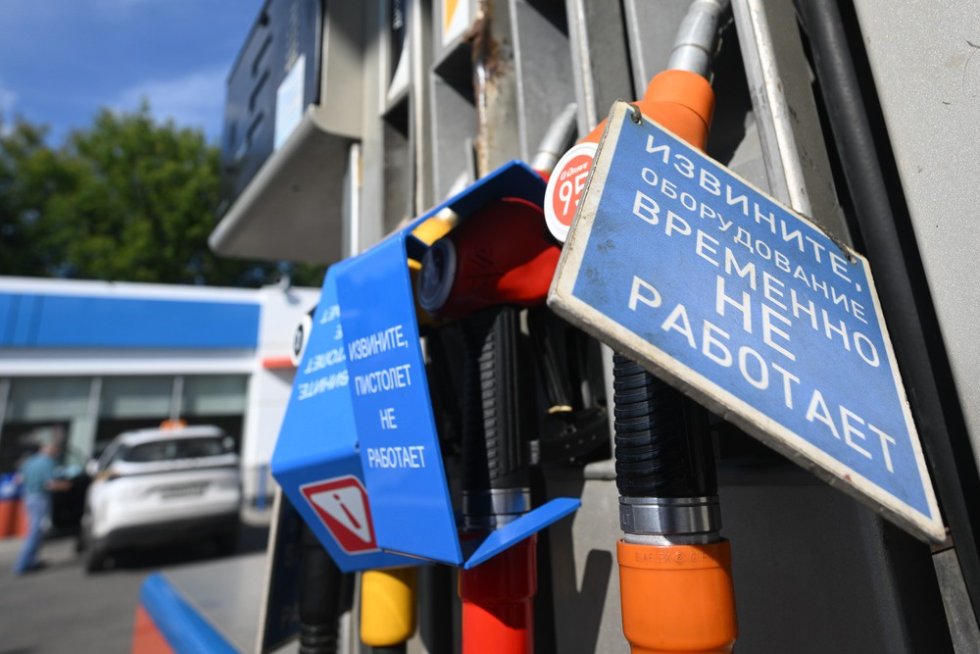
It is also worth noting that the price increases on the exchange and at AZS are not due to the greed of oil producers or filling station owners. Current issues lie in disruptions and delays in fuel supplies as well as risks of fuel shortages. There is indeed an element of "unhealthy" panic in the market, but limiting the supply of fuel at AZS cannot be entirely explained by panic alone.
The limitation on the daily price growth step on the exchange makes sharp upward price spikes impossible
As pointed out by Sergey Frolov, Managing Partner of NEFT Research, measures to prevent price surges are being taken against the backdrop of a genuine supply shortage and skyrocketing demand. Prices at major networks of AZS, owned by vertically integrated oil companies (VINKs) that manage the entire production chain from oil extraction to fuel sales at AZS, will be maintained at levels closely aligned with inflation. It is simply a matter of waiting some time for the government measures to begin taking effect. The situation at independent AZS (which represent more than half of the stations in Russia) is more complicated—not merely due to pricing, but also the ability to acquire the required volumes of fuel. Some will raise prices; others may halt operations. Independent AZS will find it even more challenging to compete against VINK AZS. While sales of ancillary goods and services can be beneficial, if fuel prices are significantly higher or if it is unavailable altogether, customers simply will not come, emphasizes the expert.
In Stankevich's view, there is no direct and immediate relationship between exchange restrictions and retail prices. The cost of a litre of fuel at a filling station consists of numerous components: wholesale prices, transportation costs, the margins of AZS networks, and, crucially, fiscal burdens (excise taxes). In Russia, the dynamics of retail prices are traditionally more inert and smoothed compared to the wholesale market due to a damping mechanism (government payments to oil producers for supplying fuel to the domestic market at prices below export levels) and oversight from the Federal Antimonopoly Service. Nevertheless, if exchange prices were to continue rising uncontrollably, this would inevitably lead to increased costs for AZS owners and subsequent price increases for end consumers. Freezing exchange prices allows this chain to be broken and creates conditions for stabilising or even potentially reducing retail prices in the future, provided stable demand and no new external shocks occur.
Currently, the decline in oil prices due to reduced tensions in the Middle East works in our favour. Following that, prices for petroleum products should also drop. However, a certain amount of time is required, and it is essential that peace is not disrupted by the parties involved. This raises the question of how long the growth limitation will be effective. In the immediate term, it may halt price increases and smooth out fuel price fluctuations. However, over a period of, say, one to two months, if supply issues persist, its impact will diminish. Extended manual market regulation typically leads to undesirable outcomes.
Overall, the exchange represents the most transparent segment of the fuel market, and any restrictions concerning exchange trading are likely to stimulate the market's shift "into the shadows," where prices are significantly above the exchange level, Tereshkin is confident.
However, Stankevich argues that setting upper limits on price changes is a classic tool of administrative regulation. The state and regulatory authorities are compelled to resort to manual control to stabilise the situation in the short term. However, it is premature to talk about a complete transition of the fuel market to manual management. Exchange trading with established limits is just one of the control tools. The market continues to operate based on fundamental economic factors: oil production volumes, refining, tax policy, and logistical costs. Therefore, we are talking about strengthening supervisory measures during a crisis period while basic market mechanisms continue to function, the expert highlights.
According to Gusev, people should still pay attention to alternative modes of transport—not horses and donkeys, but gas-powered vehicles and the rapidly developing market for electric vehicles. One can choose a vehicle that consumes fuel which will not cause irritation regarding price, the expert believes.
Meanwhile
In Sevastopol, there has been an increase in the availability of gasoline in free sale. Fuel supplies have managed to increase, and authorities are preparing for a gradual lifting of sales restrictions. Additionally, the QR-code refueling system will still be maintained to regulate queues at AZS. A correspondent from "RG" checked the situation in the region. On June 17, fuel became available in free sale at 11 AZS. Their number is growing each day. On June 16, there were ten of these stations, and on June 15, eight. Motorists are feeling hopeful. Those who have been unable to obtain fuel for a long time have been able to refuel, albeit only 20 litres at a time. This restriction has been in place in Sevastopol since May 22.
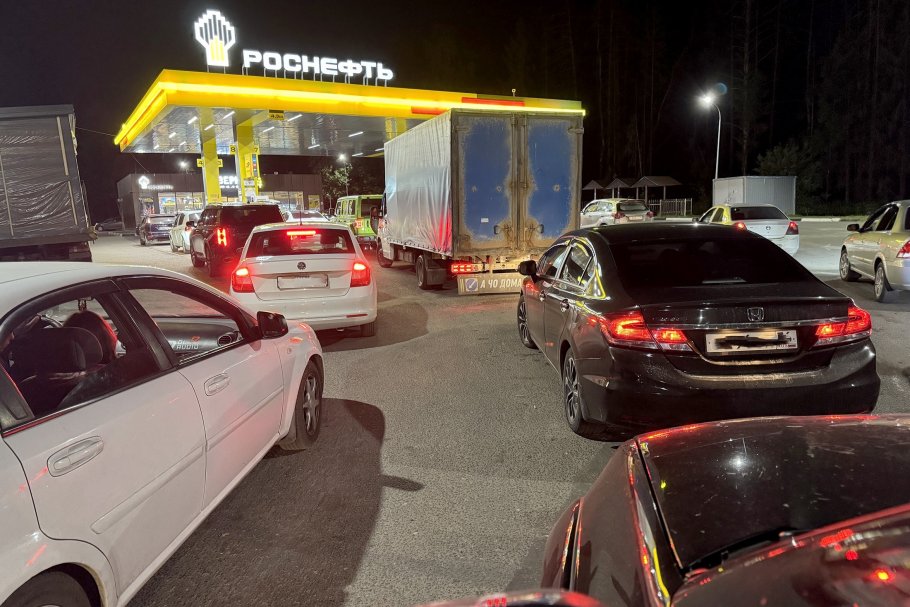
Queues began forming at the AZS from 8 AM on Wednesday. Over 60 cars were waiting at the "ATAN" filling station on Stoletovsky Avenue. This AZS had AI-92 and AI-95 Ultra fuel available for free sale. Motorists have organised queues in such a way as not to block the roadway or intersections. Sales begin at 9 AM, and at 9:20, an air raid alert is announced. At that moment, the AZS does not release fuel. People wait patiently. Motorists are responsive and willingly answer questions.
"It has become easier to get fuel in the last couple of days," says Kia driver Sergey. "You can fill up with AI-92 almost everywhere; AI-95 is a bit rarer."
Priority is given to releasing gasoline and diesel fuel for communal and emergency services, public transport, and law enforcement agencies. QR codes are provided to residents for the remaining volumes.
Source:
RG.RU