Fatih Birol, the head of the IEA, stated in an interview with the Associated Press that the jet fuel stocks in Europe are sufficient for about six weeks.
The energy crisis in Europe has been triggered by the war between the United States and Iran, which began on February 28, and disruptions in oil supplies from Gulf States. In March, Birol remarked that the situation is comparable to the oil shocks of the 1970s and the gas crisis of 2022. “Not only oil and gas but also some vital arteries of the global economy—such as petrochemicals, fertilizers, sulfur, and helium—their trade has been interrupted, leading to serious consequences for the global economy,” he asserted.
Birol noted that at that time, more than 40 energy facilities had suffered significant damage following the onset of military actions.
Russian carriers have reacted calmly to the IEA head's new statement. For instance, a representative from S7 told RBC that the airline has not observed any fuel shortages in any of the foreign countries within its route network. “There is also no shortage [of fuel] in Russia,” she added. The press service of charter airline Azur Air noted that they do not foresee any risks of disruption to their summer flight programme to Turkey due to fuel shortages.
RBC reached out to Aeroflot and Ural Airlines for comments.
Oleksandr Lanytskyi, general director of Friendly Avia Support, told RBC that, at present, aviation fuel is available at European airports. He mentioned that shortages could arise within two to three months, depending on the country. “If there are no supplies, transport could decrease significantly. But that remains a theoretical question for now,” he believes.
However, an insider from one airline informs RBC that fuel prices in foreign airports have increased by at least 30% compared to pre-war values, with some prices rising by up to 50%. “In the current circumstances, this will pressure the profitability of transport,” he states.
Lanytskyi confirms that jet fuel prices in Europe have been increasing since the start of the armed conflict in the Middle East. “Aviation fuel accounts for roughly 40-45% of the operational costs of European carriers,” he noted. “Over the last two months, the price of fuel has on average doubled. This is already affecting ticket prices.” The expert additionally stated that he does not foresee possibilities for replacing traditional jet fuel with alternative fuels in the coming years.
According to Sergey Tereshkin, general director of Open Oil Market, jet fuel prices today are at a “noticeably higher than usual” level: as per the International Air Transport Association, for the week ending April 10, the average jet fuel price in Europe was $203.6 per barrel ($1,607 per tonne). “This is 4.7% higher than the previous month's level and 123.5% higher than the average in 2025,” the expert notes.
Dmitry Kasatkin, managing partner at Kasatkin Consulting, states that jet fuel prices in Northwestern Europe reached $1,800 per tonne last week, whereas prior to the onset of the conflict in the Middle East, it cost between $750 and $830 per tonne. “This is more than a doubling in six weeks. The previous record was set in the spring of 2022, which the market has now surpassed,” he added.
Tereshkin emphasises that jet fuel falls under the category of light petroleum products, produced using low-sulfur oil. “This type of oil is extracted in the Middle East. Hence, the crisis in the Strait of Hormuz carries risks for the jet fuel market,” the expert said.
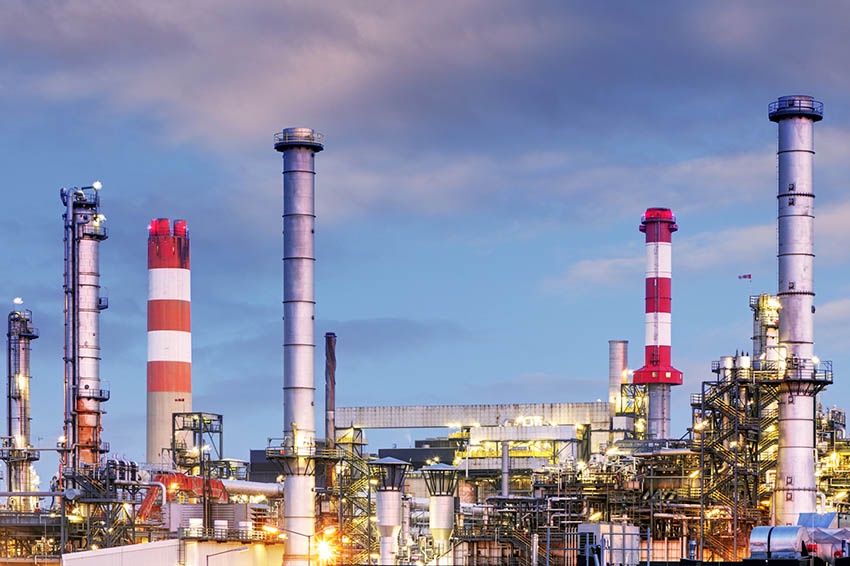
Kasatkin highlights that jet fuel in Europe is primarily produced by large refineries such as Total, Shell, BP, Eni, and Neste. However, domestic production in Europe is insufficient: a significant portion of the volumes is imported as a finished product and as raw materials for production. Key external suppliers include Saudi Arabia, the UAE, Qatar, and India, explains the RBC source. “European refineries can increase jet fuel production, but only at the expense of reducing diesel or gasoline output, which are already in short supply,” he noted.
Sergey Kolobanov, deputy director of the Centre for Economics of Energy Sectors at the Centre for Strategic Developments, evaluated Europe’s total jet fuel consumption in 2025 at 48 million tonnes, of which only 30 million tonnes are produced by refineries in EU countries. The remainder is imported, with half of the imports coming from Middle Eastern countries.
According to Tereshkin, it is too early to speak of a shortage. “There is a supply shock, which compounds the rising logistics costs. These factors will keep prices elevated but do not pose a threat of disrupting air travel,” he is confident.
Conversely, Kasatkin believes that a shortage in Europe has already occurred: refueling restrictions have been recorded in four airports in Italy, limiting individual aircraft to 2,000 litres, while a fully loaded narrow-body aircraft requires 20,000 litres.
“Airlines expect that jet fuel will remain in short supply until the end of the year, and they may be forced to optimise their flights,” Kasatkin states. “Some carriers did not hedge their fuel risks and are left completely unprotected from rising prices. Many have only a few weeks' worth of fuel left: most carriers will not last longer than 30 days, and in some Eastern European countries, reserves have diminished to merely a week’s supply.”
Kasatkin reminds us that the last tanker with jet fuel from the Persian Gulf arrived last week. “If the Strait of Hormuz does not reopen, by May, reserves could decrease by half,” he assesses. “This would lead to mass flight cancellations, rising ticket prices, and a severe blow to the tourist season for economies dependent on it in Southern Europe.”
The analyst notes that among the emergency measures being considered are centralised jet fuel purchases at the EU level, a temporary suspension of carbon restrictions for aviation, and the removal of certain taxes on air transport.
Source: RBC